Report on:
Mawshang VILLAGE under UMsnING C&RD BLock
District: Ri Bhoi
18th jan, 2024
COMMUNITY LED LANDSCAPE MANAGEMENT PROJECT
The Government of Meghalaya with financial help from the World Bank is implementing the Meghalaya Community Led Landscape Management Project (MCLLMP). The project will cover the entire state of Meghalaya and implementation of community led plans will be rolled out in phase manner throughout the state. The Meghalaya Basin Management Agency (MBMA) will facilitate community-led planning by providing support, technical inputs and funding.
The project is intended to strengthen community-led natural resources management in selected landscapes within the 11 districts of the state. This would be achieved through a variety of planning, capacity building, and on-the-ground interventions to promote the conservation, sustainable use of natural resources, social inclusion and community mobilisation; building traditional knowledge and learning, mapping of natural resources management; strengthening the community institutions and creating linkage with financial institutions and community organizations.
The project interventions include preparation of community led natural resource management plans. The CLLMP has the following three components:
Strengthening Knowledge and Capacity of Communities for NaturalResources Management
Community-Led Landscape Planning and Implementation
Project Management and Governance
The project objective is “to manage and conserve the natural resources, especially forests, soil and water sources, in a manner that supports the financial and physical well-being of communities in the State”
The CLLM-Programme focuses on increasing the capacities of communities and traditional institutions (TI) by adopting a landscape approach to manage their natural resources such as soil, springs and other water sources, forests and bio-diversity, etc.
The project will be planned and implemented in about 400 villages across the state.
CLLMP has a strong focus on institution-building at the village-level, by ensuring systematic capacity-building on technical and social skill-sets.
The project will also extend such training to communities beyond the targeted villages and support efforts made by them to access funding from various rural and natural resources initiatives and schemes.
The programme will also invest in improving the process and outcome delivery, by developing and adhering to effective systems and procedures, supported by the appropriate technology.
Benefits for community (Skills and Capacity relating to technical and managerial areas like NRM and Conflict resolution
Benefits to traditional institutions (village councils, traditional leaders, community-based organizations, SHGs etc) through Knowledge sharing, promotion of innovative approach, access to technology, technical managerial and financial support.
It is estimated that the project will impact around 1 lakh partners (of which 50% are women) who depend on land, forest, agro forestry.
Through the project, 55000 Ha of targeted area will be ensured with availability of water, biological resources and soil productivity, which will in turn benefit around 400 villages and the outcomes delivery can be summarized as follows.
The Project is executed by the MBMA in collaboration with other partners particularly, SIRD (for training and capacity building), Department of Soil and Water Conservation, Water Resource Department, Forest Department, specifically with respect to technical inputs, safeguards management and Community NRM plan preparation
2018-2023 (5 years)
Introduction
Mawshang Village falls under Umsning C&RD
block of Ri-Bhoi district in the state of Meghalaya. The village is
at a distance of 45 Kms from Nongpoh, the district headquarters of
Ri Bhoi District and is at a total distance of 96 Kms from the state
capital, Shillong. It falls under Raid Nongkhap with a total
geographical area of 254.36 ha and a total population of 427
villagers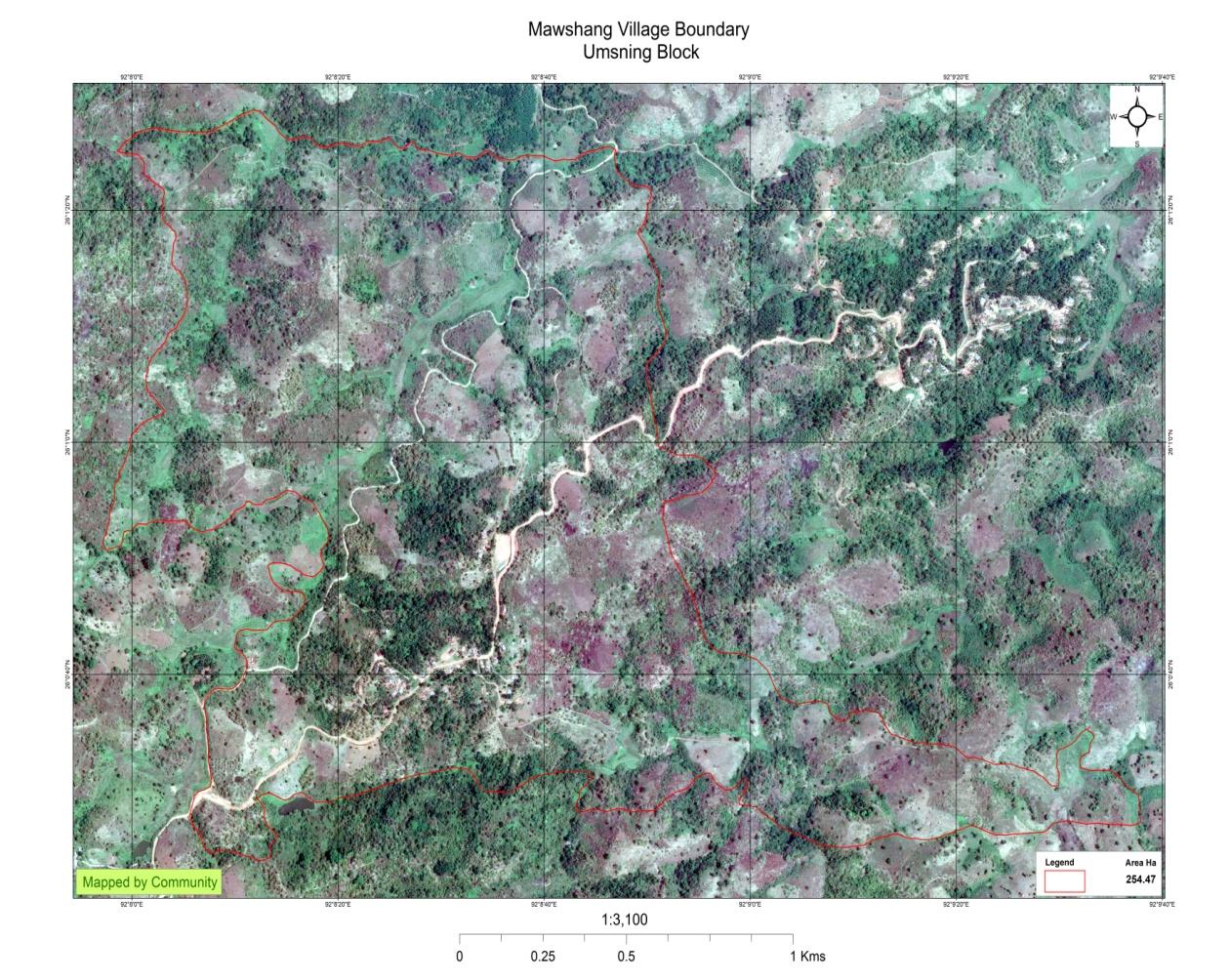
Mawshang village was founded in the year 1965 by villagers who shifted in Mawshang from Panmyndai Hali. They shifted in Mawshang as they were not content living at Panmyndai anymore. At the beginning there were 15 households when the village was founded and all the inhabitants were Christians. As per folklores this village is called “Mawshang” because there were a Maw (Rocks) in the past that waged war on each other. These Maw includes Mawroi, Mawring, Mawkhla and Mawlong, these rocks had their own dogs and these dogs would continue to “Shang” (bark) while the rocks wage war on each other. And hence “Maw” comes from these rocks and “shang” comes from the barking of the dogs and the village was named Mawshang.
As time passed the village has grown in terms of population and development. Most of the villagers are farmers and they cultivate rice, ginger, betel leaves, betel nut, turmeric, chili, and various kinds of indigenous fruits and vegetables. The village now consists of 63 households and there are various organizations like youth organizations and women organizations in the village. The village has benefitted from the Government schemes like NRGS, old age pension scheme, scheme for the BPLs and schemes for electricity and roads that has led to development in the village. The village has a football ground, schools, and various water sources and spring for water supply in the village.
Social Profile
The total number of households is 63 and has a population of 427 people. Agriculture and its allied activities are highly in vogue, where some few others are also enrolled in government and teaching jobs and some few inhabitants are engaged in local businesses.
Village Accessibility: In order to reach Mawshang village, one must venture through the Umsning-Umsiang Maiong P.W.D. road lying 70 Km away from Umsning. Upon reaching the village name by Umtrai one must turn left in order to reach Mawshang village.
Literacy: As per the 2011 census, the village literacy rate has touched to the tune of 77%. There are two schools in the village, one primary School and one Secondary school.
Presently the village is run, managed and guided by its active Durbar as the highest authority in the village which is alternatively composed of the Seng Kynthei, (Women Wing) and Seng Samla (Youth Wing) all collectively aiming for the overall good and growth of the village. Other committees such as (1)Village Employment Council (VEC) and (2) women Self Help Group(SHG) are constantly active and vigil as well, working in due co-operation between themselves for a brighter tomorrow for the village.
Population 
As per Census 2011, Mawshang population is 282 and in 2020 the total population of Mawshang has been increased to 427. Out of this, 201 are males while the females count is 226. This village has 94 children in the age group of 0-4 years. Among them 46 are boys and 48 are girls.
| Age Group | Male | Female | Total |
| 0-4 | 46 | 48 | 94 |
| 5-14 | 50 | 58 | 108 |
| 15-30 | 61 | 70 | 131 |
| 30-60 | 36 | 41 | 77 |
| Above 60 | 8 | 9 | 17 |
BPL/APL Household:
| Particulars | No. of HH |
|---|---|
| BPL HH | 49 |
| APL HH | 14 |
Card Holding Household:
| Particulars | No. of HH |
|---|---|
| Total HH | 63 |
| Ration Card HH | 63 |
| PHH | 22 |
| AAY | 6 |
| NON- NSFA | 21 |
| Health Card HH | 0 |
Fuel Type:
| Fuel Type | Total HH |
|---|---|
| Charcoal | 0 |
| Biomass | 0 |
| Wood | 63 |
| LPG | 0 |
| Electric Heater | 0 |
| Kerosene | 0 |
OCCUPATION: The people of the village rely on
agriculture and forest products for their livelihood. The main
occupation of the villagers is farming followed by self employed,
Teachers, mason and Carpenters
Drinking Water: there is access to drinking water in the locality, but the supply is minimal. The locality is divided into five blocks and each block has access to only one common water source, and one of this block by the name Pamtyrkhap is facing difficulty when it come to access to drinking water as compared to the other four blocks because this block have more resident.
Jhum cultivation: mainly take up traditional approaches of cultivation like Jhum or the shifting cultivation
WATER BODIES
Springs- 7
Streams- 2
River- 2

LAND
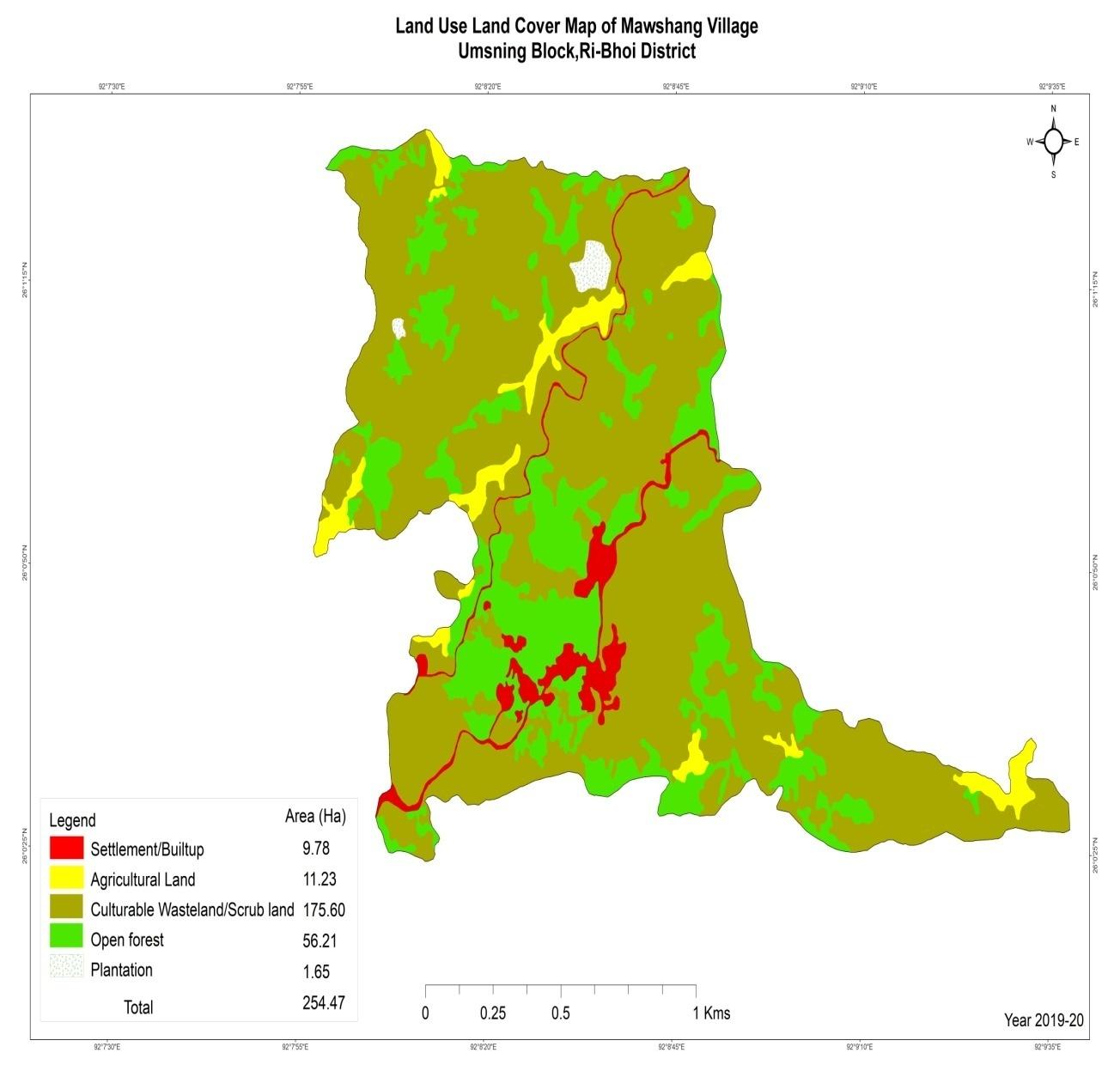
Forest- 94.4 Ha
Cultivable Land- 31.74 Ha
CLLMP ACTIVITIES
Ground Truthing Dated: 10th of January 2019
The CLLMP team met with Mr. Tralshon Trang, headman of Mawshang
village on the 10th of January 2019. He provided the team
with important information regarding the current scenario of the
landscape and the natural resource management under his
chairmanship.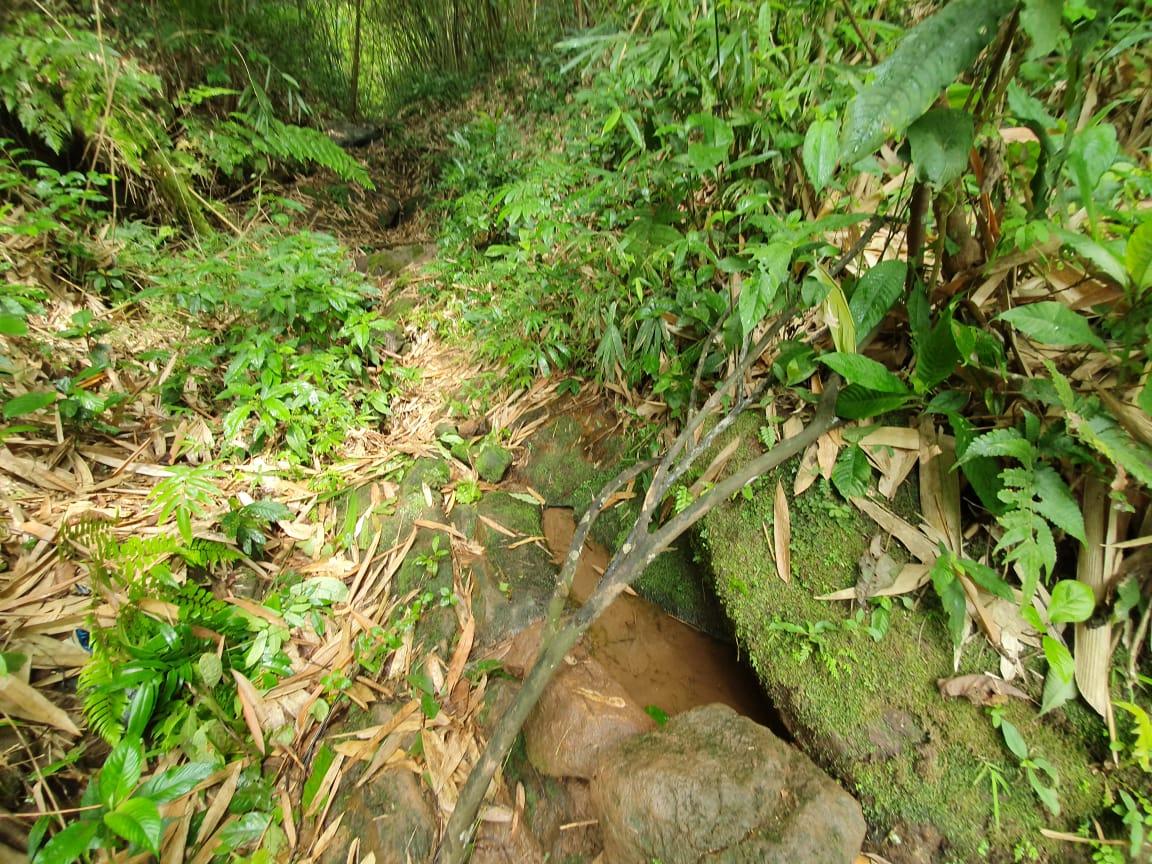
Figure: Ground Thruthing at Mawshang Village.
Case Findings & Selection parameters: -
1. There are 63 Households out of which 49 Households fall under the BPL category.
2. VEC actively performing.
3. Approximately 20-25 acres of community forest available.
4. Scope for Water Sources to be developed
5. Need for Community Nursery and Vermi-Compost
5. The Community members expressed their need to build a fish sanctuary.
The Village has been selected under the Community Led Landscape Management Project.
2. Sensitization Programme Dated: 10.01.2019
The District Project Manager and the Assistant Managers held a village Level sensitization Programme on the Community Led Landscape Management project on the 10th of January 2019.The villagers actively participated in the program, voicing out their concerns and questions regarding the project making it a huge success.
The CLLMP officials gave a brief introduction on Meghalaya Basin
Management Agency (MBMA) and elucidated about the various programmes
and projects that MBMA is working on, they then gave a detailed
introduction on the Community led Landscape Management Project
(CLLMP) and the different aspects and procedures that the villagers
and the CLLMP team should carry out during the course of the project
and the importance of the involvement of the community for the
CLLM-Project to be a success. They gave due importance to the
environmental aspects of the project and enlightened them on the
various benefits that the villagers could obtain from the
project.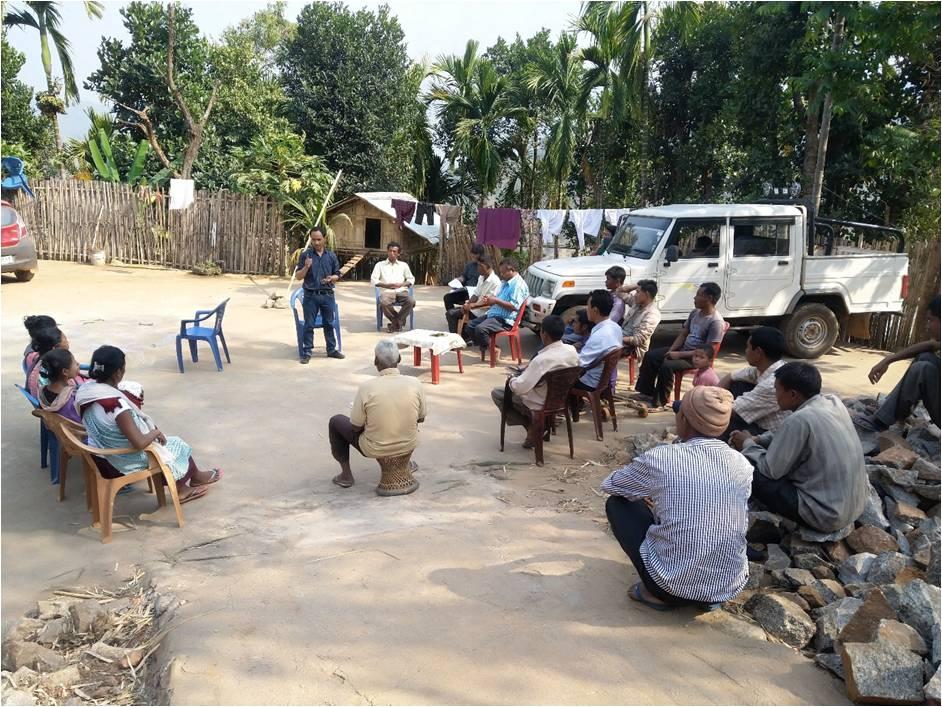
Figure: Sensitization program at Mawshang Village.
The Program was followed by an interactive session to answer the doubts and questions of the villagers.
2.2 Signing of Documents:
After the interactive session, the village signed the EOI, VGA and Green charter followed by the selection of candidates for the Village Natural Resource Management Committee. The Village Executive Committee (VEC) and the entire community carried out the procedure and elected the members of the VNRMC on the same day.
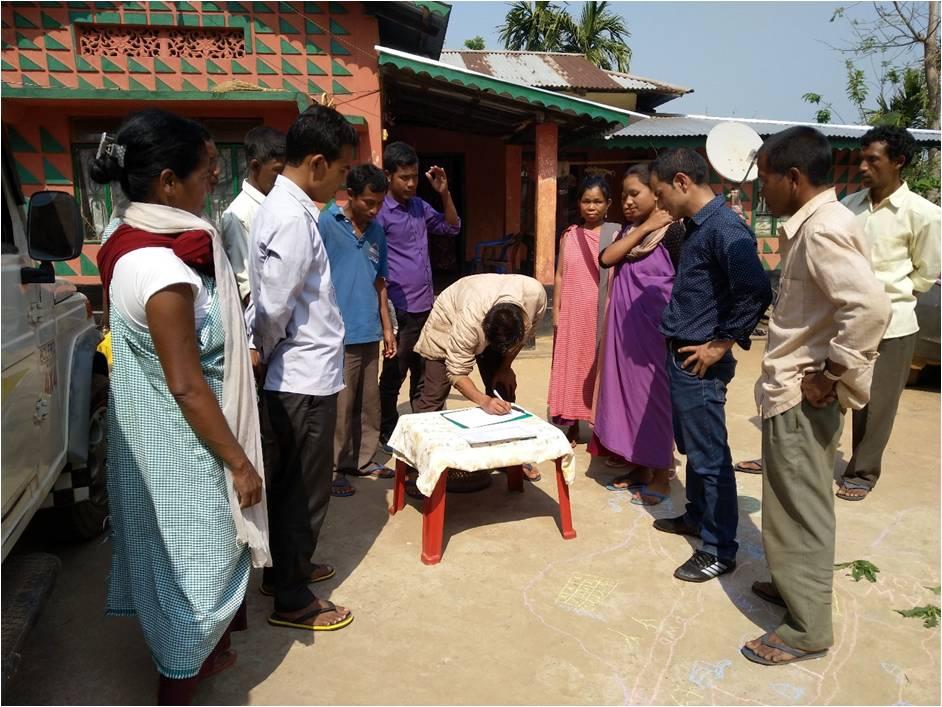
Figure: Signing of EOI and VGA
2.3 Formation of the VNRMC
The Formation of the Village Natural Resource Management Committee was done in a public meeting in the presence of the entire village and the CLLMP staffs. The community itself chose the President, the Secretary and the other executive members of the Committee.
Listed below are the members of the VNRMC:
|
|||||||||
|
Name in Full | Designation | Gender M/F | Age (Yrs) | Education | Occupation | Community | Religion and Denomination | Contact No and email address |
|
Tralshon Trang | President | Male | 43 | IX | Business | Khasi | Christian | 8794688261 |
|
Belis Trang | Secretary | Male | 26 | XII | Teacher | Khasi | Christian | 9366114511 |
|
Erima Matlai | Book keeper | Female | 23 | X | Farmer | Khasi | Christian | 9864309896 |
|
Rokes Umbah | Member | Male | 40 | IX | Farmer | Khasi | Christian | NA |
|
Shen Matlai | Member | Male | 26 | V | Farmer | Khasi | Christian | NA |
|
Rones Matlai | Member | Male | 31 | II | Farmer | Khasi | Christian | NA |
|
Narbon Trang | Member | Female | 40 | IV | Farmer | Khasi | Christian | NA |
|
Thras Matlai | Member | Female | 40 | II | farmer | Khasi | Christian | NA |
|
Thias Trang | Member | Female | 42 | III | Farmer | Khasi | Christian | NA |
| Village Community Facilitators | ||||||
| Sl.No. | Name | Gender | Age | Education | Contact Number | Role |
| 1 | Ibaialam Trang | Female | 20 | XI | 7005433757 |
|
| 2 | Pairos Trang | Male | 21 | XII | 8413993206 | Project management M&E |
| 3 | Ninestar Trang | Male | 25 | XII | 9612697873 | Environmental management & GIS |
| List of Procurement members | |||||
| Sl. No | Name | Gender | Age | Education | Contact Number |
| 1 | Tralshon Trang | Male | 45 | IX | 6909279372 |
| 2 | Belis Trang | Male | 27 | XII | 936614511 |
| 3 | Jolis Trang | Female | 43 | IX | NA |
| 4 | Jlen Trang | Female | 44 | IX | NA |
| 5 | Binaris Matlai | Female | 20 | XII | 9864309896 |
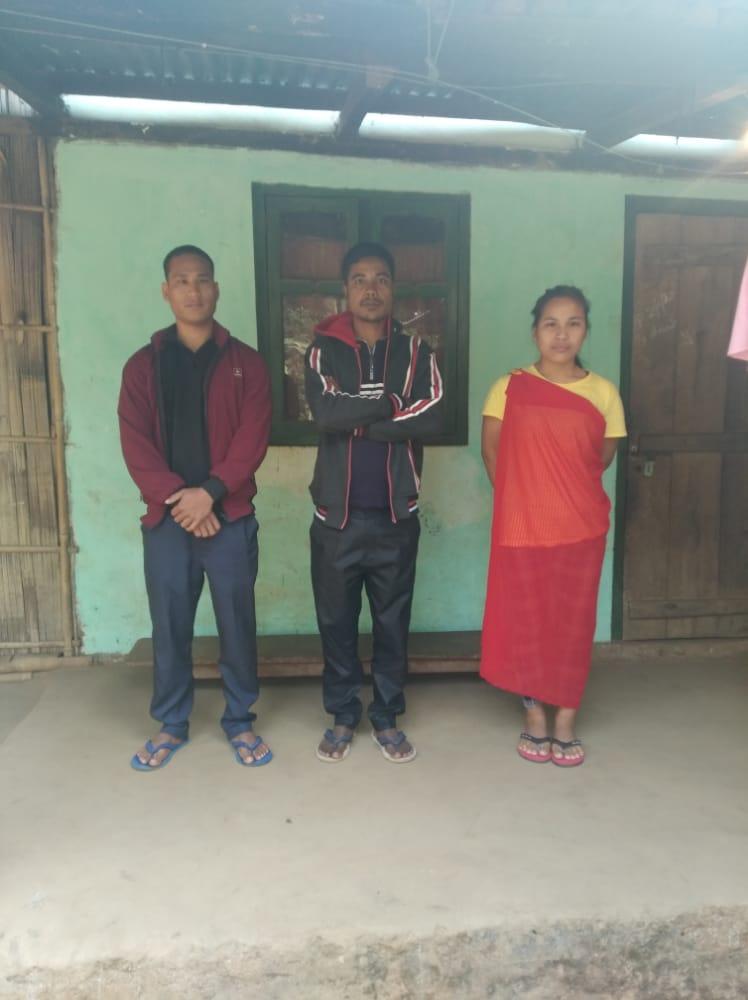
Figure:The Village Community Facilitators(VCF) of Mawshang Village.
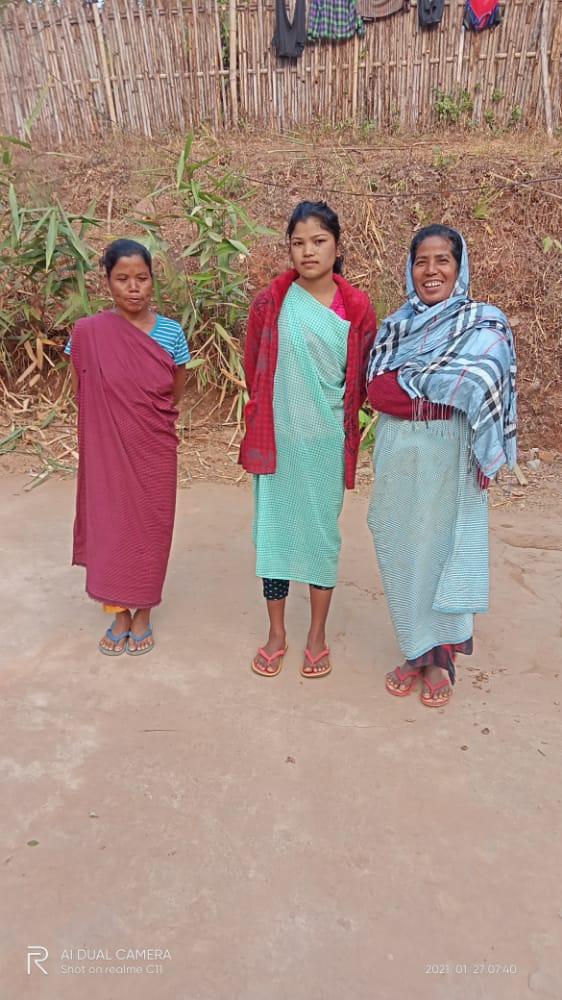
Figure: The Procurement Committee of Mawshang VNRMC.
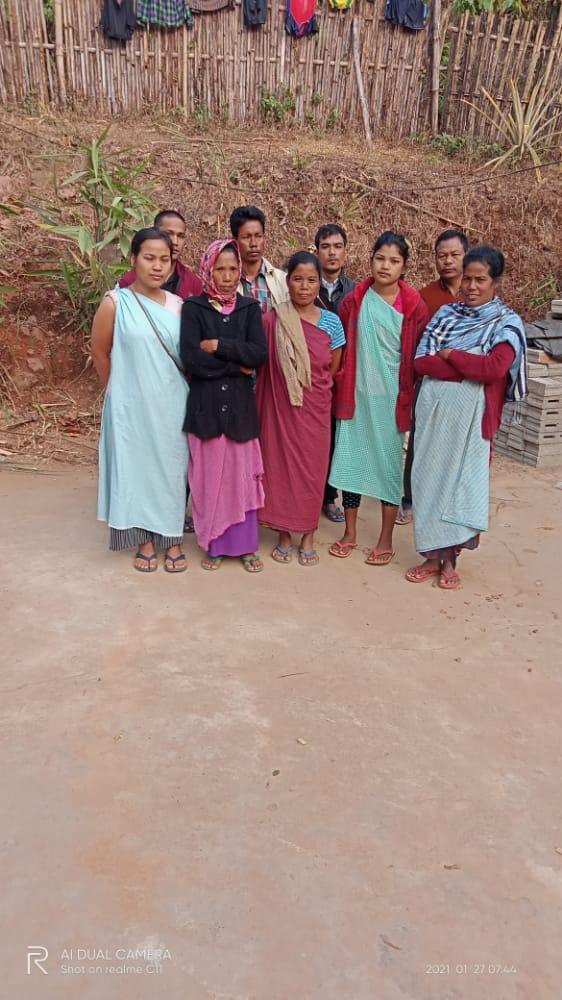
Figure: Member Of VNRMC of Mawshang Village.
3. Opening of Bank Account.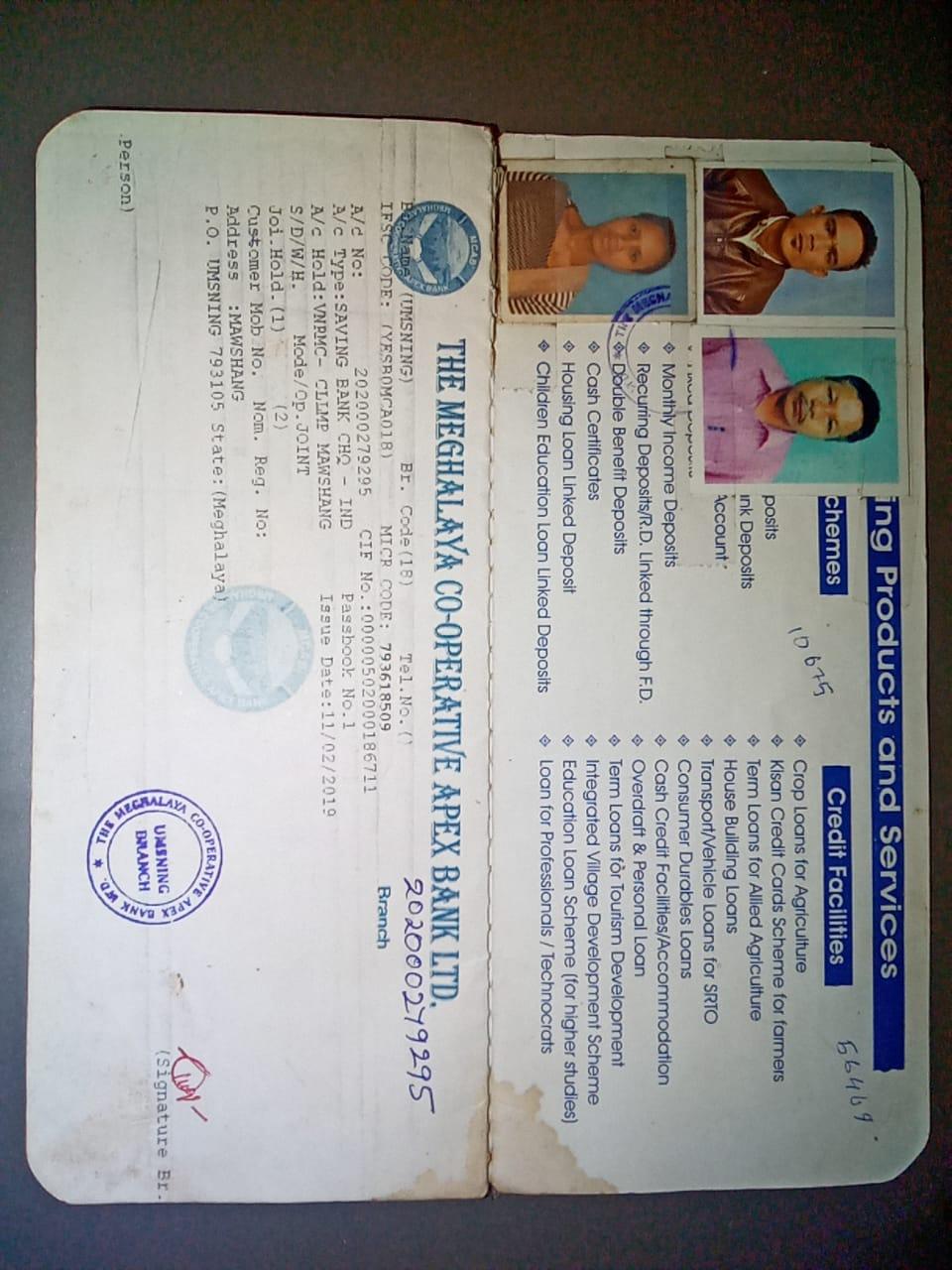
The opening of the bank account was initiated after the village signed the EOI (Expression of Interest), the VGA (Village Grant Agreement) and the Green Charter. Mawshang village opened their VNRMC account after this.
The Accountant of CLLMP Team Ri Bhoi District trained the Purchasing and Procurement Committee of Mawshang Village and trained the members on the following topics:
Topics Covered:
Principles of Community Procurement
Benefits of Community Procurement
Important aspects undertaken by Community Procurement.
Procurement Process/Steps
Function of Purchase Committee
Important Procurement records to be maintained
Financial limits and methods
4. Participatory Rural Appraisal Exercise
13th March 2019
PRA exercise at Mawshang Village took place in the 13th of March 2019. There were a total of 15 villagers taking part in this exercise who contributed their time and knowledge to this project.
The initial stage of Participatory Rural Appraisal (PRA) exercise
at Mawshang Village, commenced with a meeting cum orientation
program on CLLMP. While conducting the meeting, the community
members were made aware of the various PRA exercises to be conducted
for the development of the Community Natural Resource Management
Plan (CNRMP) of the village, the community members’ contribution in
the exercise and the objectives to be achieved. The key informants
(the VNRMC and the VCFs) helped facilitate maximum participation.
The dates and time for conducting the various Participatory Rural
Appraisal (PRA) exercises were fixed in consultation with the
community members and all were requested to participate in the
exercise. The schedule and time was announced at the end of the
meeting. 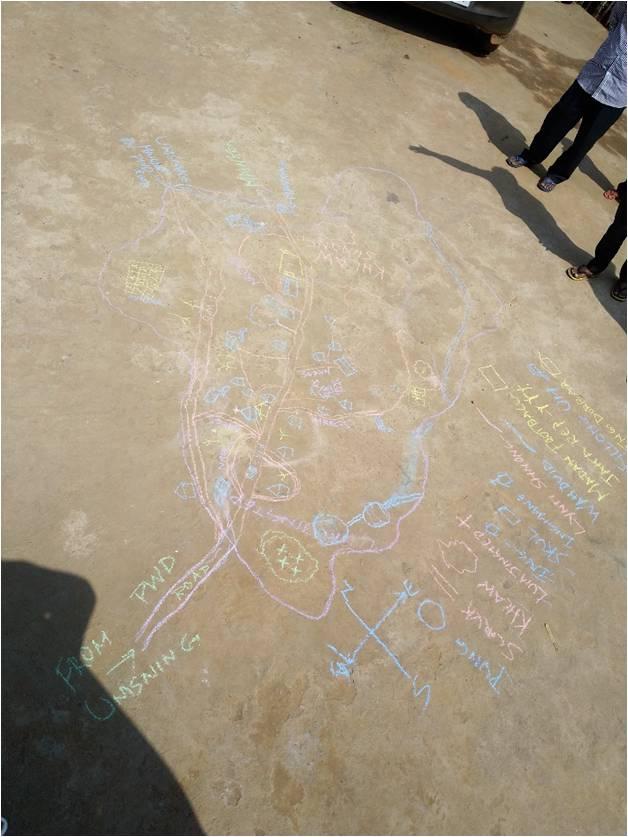
Participants on the 13.03.2019:
CLLMP officials: Smt. Fondaliza Sohphoh (AM- Knowledge Management) Shri. Willbert Kurkalang (M&E) and the DPMU CLLMP Team
Community members: Shri. Tral Trang (Chairman), Shri. Belis Trang(Secreatry) Smt. Erima Matlai(Book-Keeper) Shri.Rokes Umbah , Shri. Shen Matlai, Shri. Rones Matlai, Smt. Narbon Trang, Smt. Thras Matlai, Smt. Thias Trang (VNRMC Members), Shri. Prios Trang, Shri. Wanrahbok Amsieh, Smt. Binaris Matlai (VCF) and other community members
Commencement of PRA.
Introduction: Participatory Rural Appraisal (PRA) is the process of involving local people in the analysis and interpretation of their own situation of a given rural area. The local people i.e. the participants take a leadership role in collecting, analyzing, interpreting and presenting information and in this process impart knowledge and development insight to the specialists and extension agents
For management of natural resources, participatory Rural Appraisal is conducted to establish rapport with the village community as well as to identify and define problems for prioritization in the village itself. It is a way of learning from and with community members to investigate their need assessment, analyze and evaluate constraints and opportunities and find out priorities in the area of agriculture, small scale rural enterprises and any other social and economic development programs addressed to village development. Based on the principle of listening and learning,
Objectives of PRA exercise at Mawshang Village:
The Participatory Rural Appraisal (PRA) exercise at Mawshang was conducted with following objectives:
To identify the natural, human and economic resources of a village.
To identify the village problems and prioritize them with the help of the community members.
To prepare the Community natural Resource Management Plan of the village.
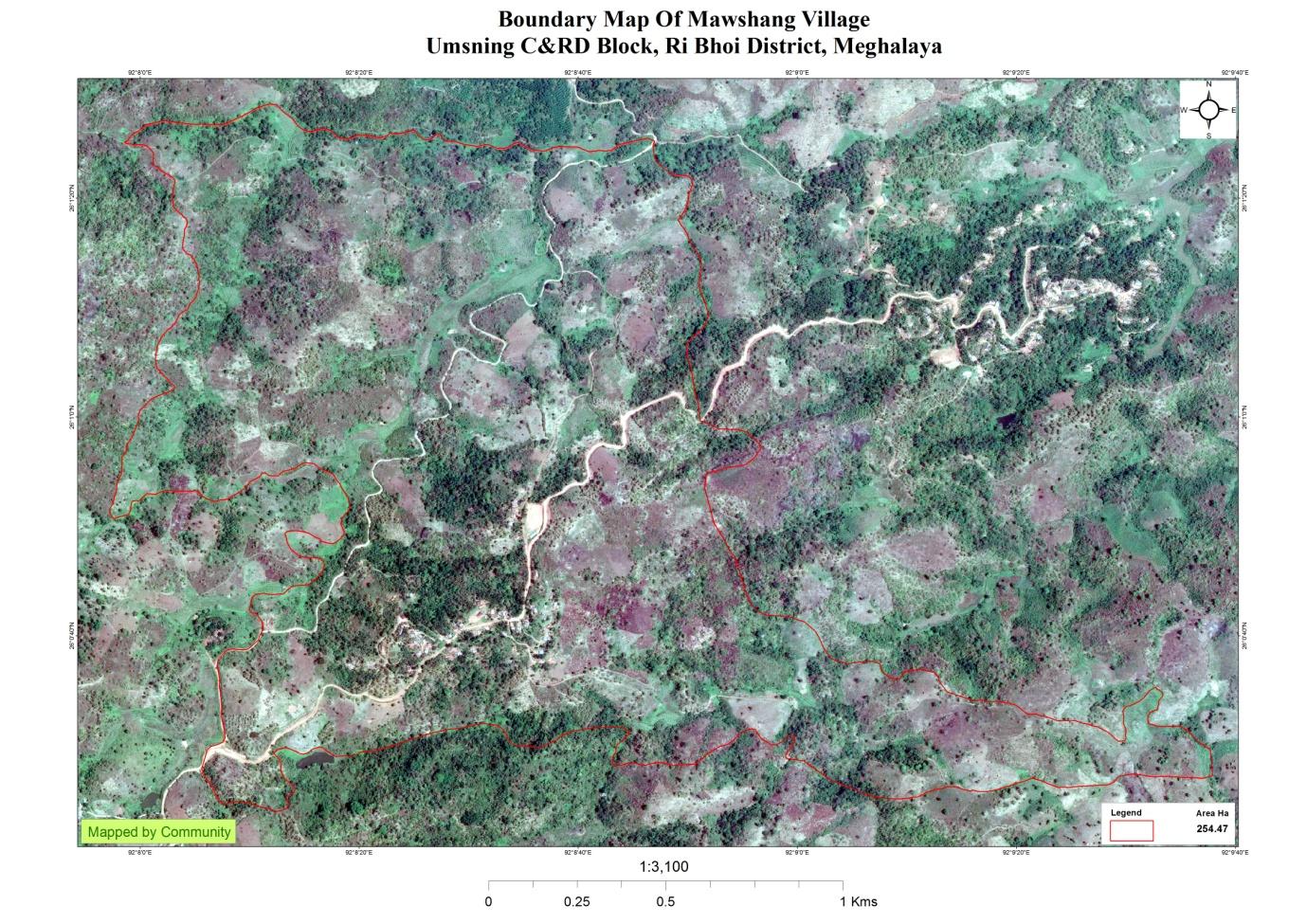
Activity 1: Village Boundary Mapping: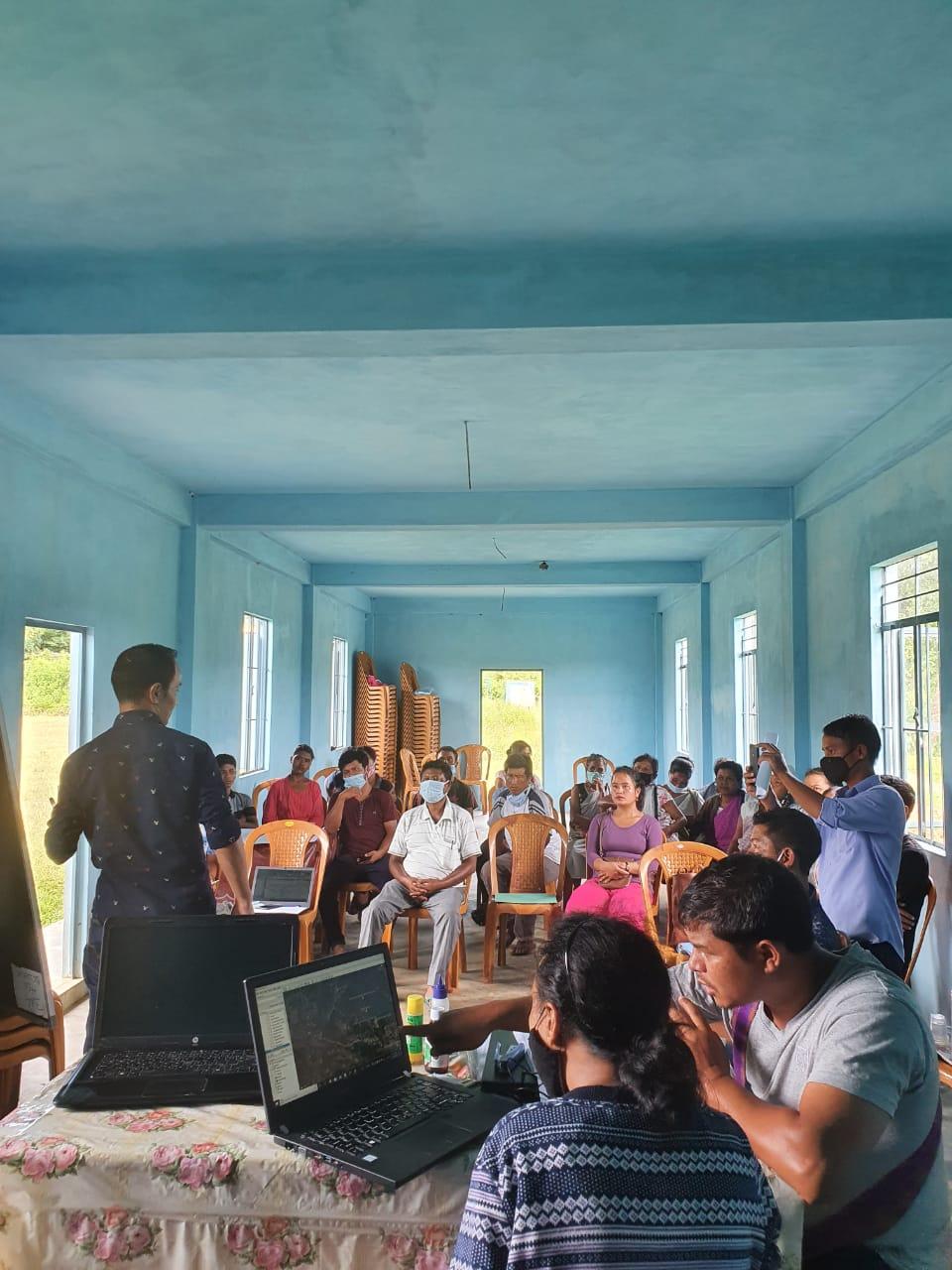
The GIS personnel along with the headman of Mawshang Village and outlined the boundary of the Village.
Activity 2: Drawing the Resource Map
The second step is to involve the local community in preparation of a village resource map as perceived by the community members to solicit their participation. Infrastructure, services and other village resources such as agricultural lands, wells, wastelands, cattle population etc. were mapped. Local people prepared the Resource Map by drawing it on a chart paper without much interference from outsiders.
This activity achieved the following purposes:
Rapport building and winning the confidence of the villagers.
Analyzed the spatial information, particularly studied problems and opportunities of villagers.
Got an impression about the village setting, physical layout, location of various houses and institutions.
Resource Map drawn by the community members.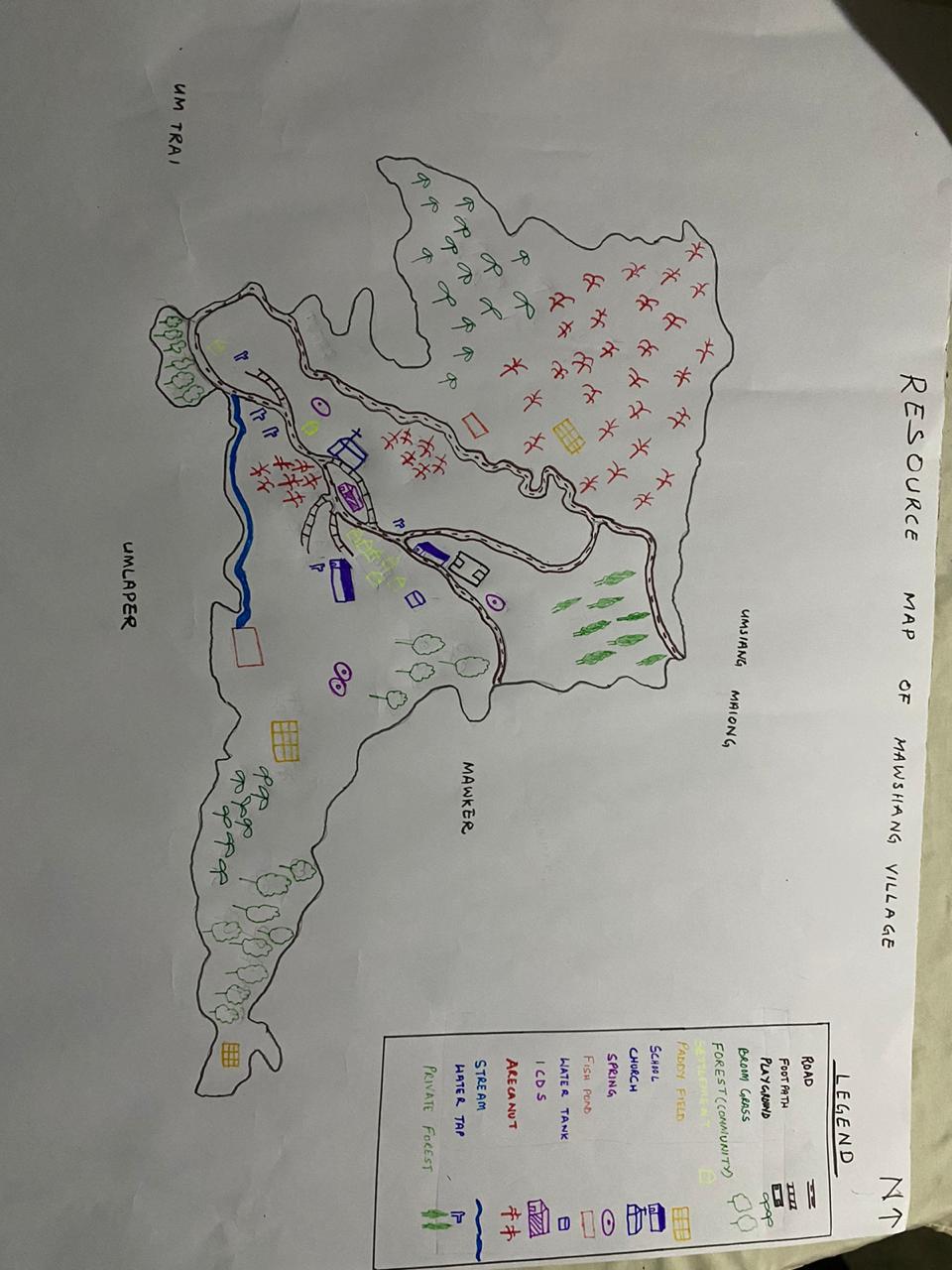
Findings Based on the Resource Map of Mawshang Village
Main agriculture produce is Paddy, Ginger ,Broom and Betel Nut(cash Crop).
There are 3 types of Forest ownership: Community, Private and Clan Owned.
Five springs are present in the village
Three main rivers are present and it flows across the boundary of the village .
Presence of Barren land
Seven dugout ponds for fisheries and water reservoir.
School: there is one lower and one upper primary school in the village.
Connectivity : PWD roads
Habitation is not confined to one place but spread all over the village.
One church is present in the village
Activity 3: Baseline Data Survey to fill the Environment and Social Template
Date: 26.11.2020
During the PRA exercise, the EE of Social and Environmental
Management and the community members were divided into groups to
fill the Social and Environmental Templates. Discussions and
consultations with social groups existing in the village were held
to gather basic village information regarding households,
demographic information, major crops and enterprises taken in the
village, trends of production and productivity of major crops in the
village and demographic distribution of village population.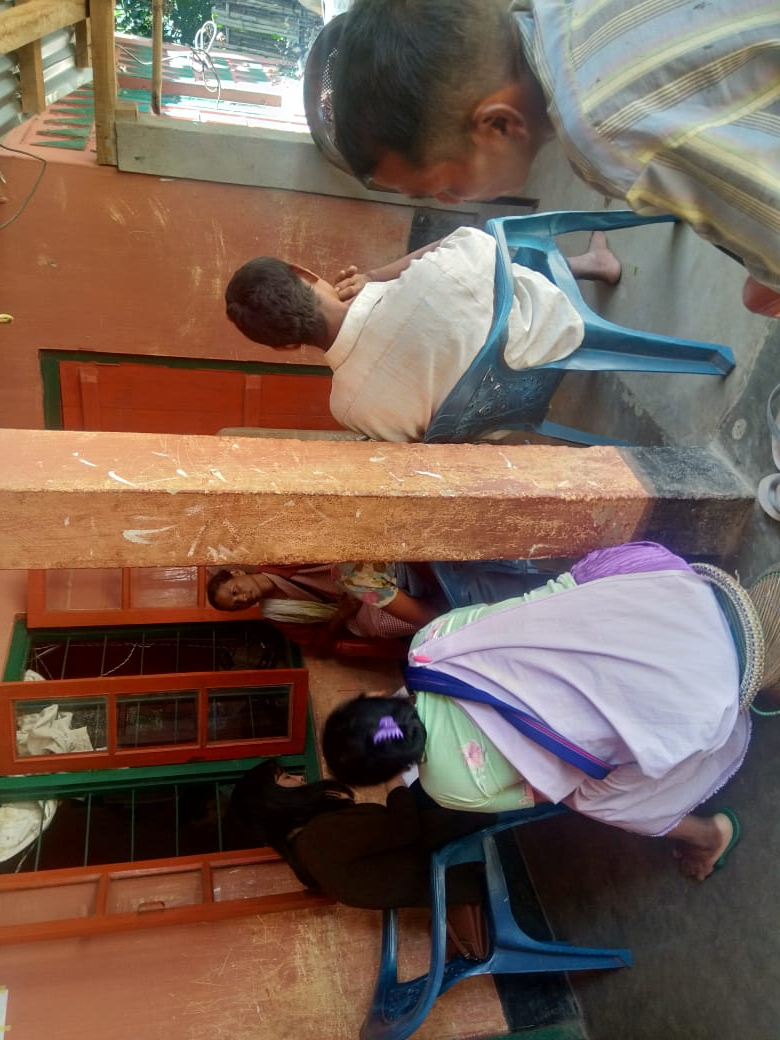
(Continuation of PRA)
Do people have sufficient access to supply of fodder, fuel wood, leaf litter?
Yes. People from the village get fuel wood from the private forest and from the community forest.
Has access to timber improved or reduced over the years? How is access for household use and commercial use managed?
Access to Timber has reduced over the years. They have to purchase from outside when needed.
Are the water bodies facing any threats?
Yes. One spring (Wah Umjngi) is facing threats due to Siltation of water bodies.
Do all people in the village have access to drinking water? What are the challenges?
Yes there is access to drinking water in the locality, but the supply is minimal.
The locality is divided into five blocks and each block has access to only one common water source, and one of this block by the name Pamtyrkhap is facing difficulty when it comes to access to drinking water as compared to the other four blocks because this block has more residing families.
Are there degraded areas in the village (open/ degraded forests, mining affected, high soil erosion etc.)?
Yes. There are degraded areas in cultivated land.
What has caused this degradation? Are there practices causing threats to availability and access to natural resources?
Yes. Excessive practicing of Jhum Cultivation, cultivation of Arecanut & Broomsticks.
What have been the changes in agricultural practices?
No Changes
Are there any challenges in farming?
The main challenge in farming has been the loss of soil fertility.
Another challenge in farming is Natural Disaster and wild animals like Wild Boars, Monkeys, Porcupine, Squirrel and Rats regularly come and destroy the crops.
How would you consider the health situation in your village?
The nearest CHC is at 2Km away, which is easily accessible for the community in the village.
Looking back a decade ago, there was a drastic change when it came to the health situation in a village, during the past; diseases such as Malaria and Dysentery are common. However, at present situations have improved wherein the previous diseases are less prevalent, besides mild fever or cold.
How is the situation of cleanliness, sanitation, access to toilets and waste management?
When it comes to cleanliness, the youth community organises a cleaning drive once in four months. While the SHG also has a responsibility in organising a cleaning drive in their own hamlets according to their own group.
Sufficient toilets are available in every household but the construction is poor. Grateful to the government. Support like Swachh Bharat Mission (SBM), 16 households have been able to procure good faeces facilities.
Who are the most vulnerable in the village? What can be done to improve their lives?
BPL families. Inclusion of BPL families during project implementation
What are the livelihood aspirations of the youth? Are there any avenues available?
The majority of the population turn to farming and Job-Cards under MGNREGA for employment.
None.
Do any committees/ institutions/ rules exist to manage and monitor natural resources in the village?
The VNRMC under the CLLMP is managing and monitoring the natural resources in the village.
What are some of the major issues of conflict in the village?
None. People in the village are living in a peaceful environment.
Have any of the above issues been discussed in village meetings?
Yes the village Dorbar have always discussed the issues and are doing their best to address any problems.
How do people resolve disagreements and conflicts?
Any disagreements or conflicts are addressed by the traditional institution of village governance called the Village Dorbar.
26.11.2020 (Continuation of PRA)
Activity 6: Seasonality Calendar
The CLLMP team also mapped the seasonal calendar of Mawshang Village to help identify heavy workload periods, periods of relative ease, credit crunch, diseases, food security, wage availability etc. This will prove helpful in project planning and project timeline framing.
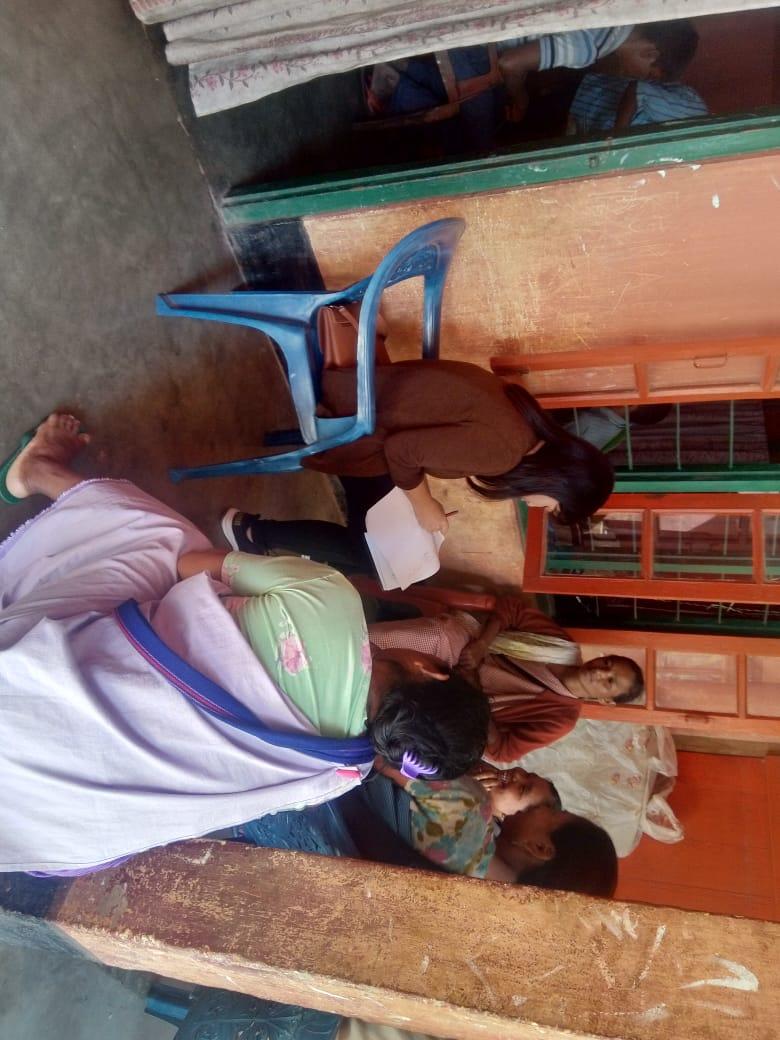
Figure: Preparation of Seasonality Calendar
Participants:
Shri. Tralshon Trang – President VNRMC
Smt. Narbon Trang – VNRMC Member
Smt. Jlen Amsieh - Community Member
Smt. Thias trang – VNRMC Member
Shri. Shral Khymdeit - Community Member
Shri. Rokes Umbah - VNRMC Member
| SEASONALITY CALENDAR | ||||||||||||||
|---|---|---|---|---|---|---|---|---|---|---|---|---|---|---|
| Sl No. | CRITERIA | JAN | FEB | MAR | APRL | MAY | JUNE | JULY | AUG | SEP | OCT | NOV | DEC | |
| 1 | Water Scarcity | 2 | 2 | 1 | 1 | 1 | 3 | 3 | ||||||
| 2 | Prone to sickness | 2 | 1 | 1 | 3 | |||||||||
| 3 | Seeking job outside | 1 | 1 | 1 | ||||||||||
| 4 | Rain Fall | 1 | 1 | 1 | 2 | 3 | ||||||||
| 5 | Free – Less work | 1 | 1 | 1 | ||||||||||
| 6 | Paddy Cultivation | 1 | 1 | 1 | ||||||||||
| 7 | Paddy harvesting | 1 | 1 | |||||||||||
| 8 | Betel Nut Tree Plantation | 1 | 1 | |||||||||||
| 9 | Betel Nut Harvesting | 1 | 1 | 2 | 3 | 3 | ||||||||
| 10 | Tree Plantation | 1 | 1 | |||||||||||
| 11 | Vegetable (crop cultivation) | 1 | 1 | 3 | 3 | |||||||||
| 12 | Vegetable (crop harvesting) | 2 | 1 | 1 | 3 | 3 | ||||||||
| 13 | Festive Season | 1 | 2 | 1 | ||||||||||
| 14 | Forest fire | 1 | 1 | |||||||||||
| 15 | Collection of Fuel wood | 2 | 1 | 1 | ||||||||||
| MAXIMUM | 1 |
| MODERATE | 2 |
| LESS | 3 |
Activity 7: Submission of the List of NRM activities proposed by the VNRMC.
The Finalized Community Natural Resource Management Plan of Mawshang Village.
|
Name of Proposed Interventions | Site |
|
Nos of HHs expected to Benefit | ||
|
|
|
||||
| 1 | Nursery | Umden |
|
|
|
|
| 2 | Contour trenches A | KhliehUmpynshit |
|
|
|
|
| 3 | Contour trenches B | Khlieh U Tngai |
|
|
|
|
| 4 | Afforestation | KhlawBalang KhlawShnong ( KhlawMawkhla) |
|
|
|
|
| 5 | Spring Chamber 1 | Umjngai |
|
|
|
|
| 6 | Spring Chamber 2 | Um Pynshit |
|
|
|
|
| 7 | Vermicomposting (8 units) | Jan ingSkul |
|
|
|
|
| 8 | Bench Terracing | LumMawreng |
|
|
|
|
| 9 | Head Work | Umjngai |
|
|
|
|
| 10 | Side Drain | Umjngai, Nongthymmai |
|
|
|
|
| 11 | Horticulture | Mawring |
|
|
||
| 12 | Agroforestry | Maw Wi |
|
|
||
| 13 | Forest Fire Control Line | Um Mukhla |
|
|
|
|
| 14 | Fencing | KhlawBalang KhlawShnong |
|
|
|
|
| 15 |
|
Unknown area | ||||
| 16 |
|
PdengShnong |
|
|
||
| 17 | Earthen Bun cum Bio fencing | KhlawMawkhla | Community |
|
||
| 18 |
|
KhlawMawkhla Khlaw Society KhlawBalang |
|
|
|
|
| 19 |
|
Umdont, Pamsohneru |
|
|
|
|
| 20 |
|
Umpynshit |
|
|
|
|
| 21 |
|
Wah Um jngai |
|
|
||
GIS Activities – MAWSHANG
| Sl.No | Parameters | Village Information |
| 1. | GPS Coordinates | |
| i | Latitude | 26.01366N |
| ii | Longitude | 92.14326E |
| iii | Elevation Reading (MSL) | 424M |
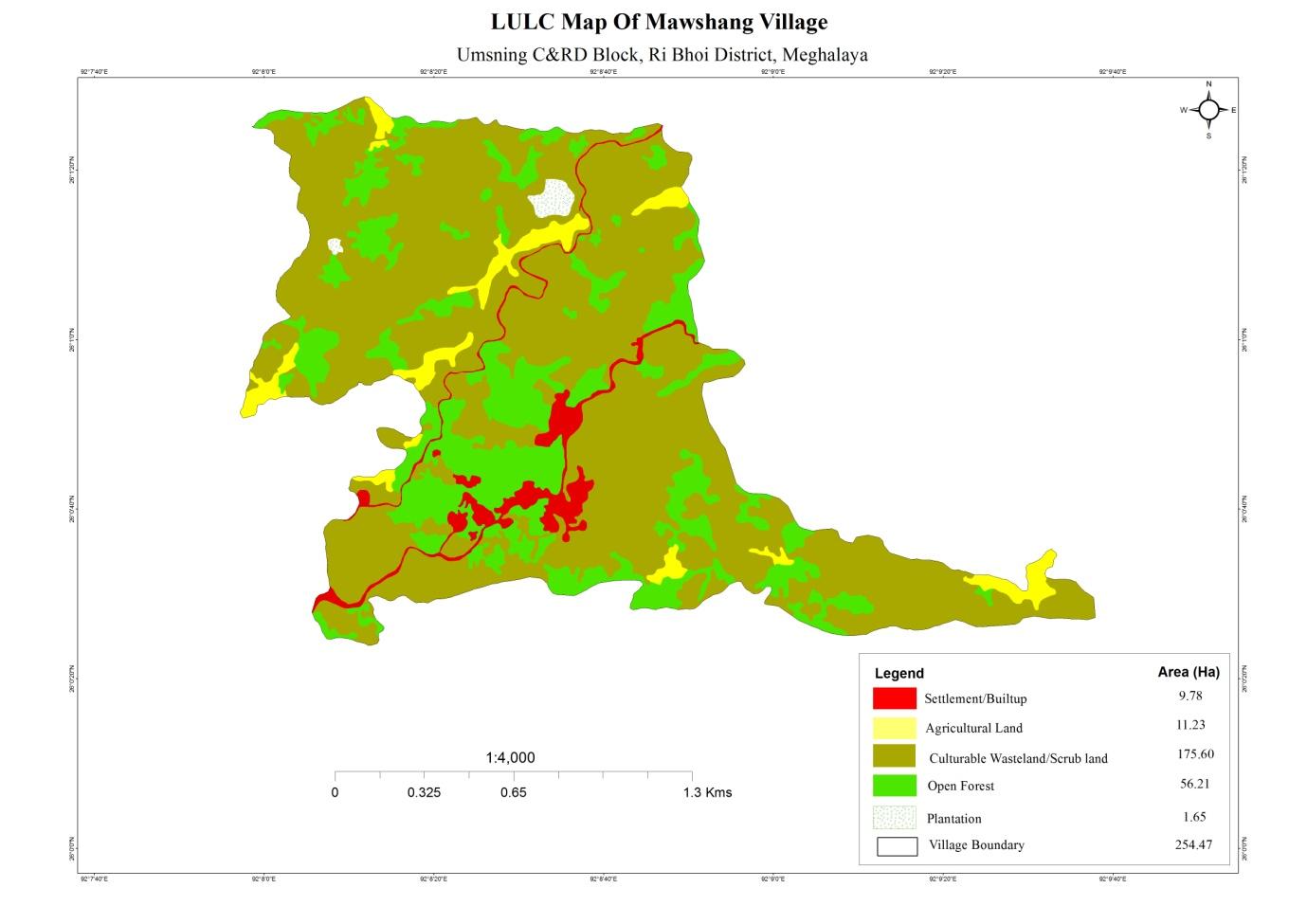
| 2. | Village Geographical Area(Ha) | 254.47 Ha |
| i | Total Forest Area ( including community, Clan, Pvt Forest) | 56.21 Ha |
| ii | Total Area of Water Bodies | - |
| iii | Total Area under Agri- Horticulture | 12.88 Ha |
| iv | Total Degraded land area (Ha) | 175.60 Ha |
| 3 | Average Annual Rainfall | 1000-1500 |
| 4 | Soil Type | Loamy soil |
Site 1: Sohliya
PROJECT IMPLEMENTATION
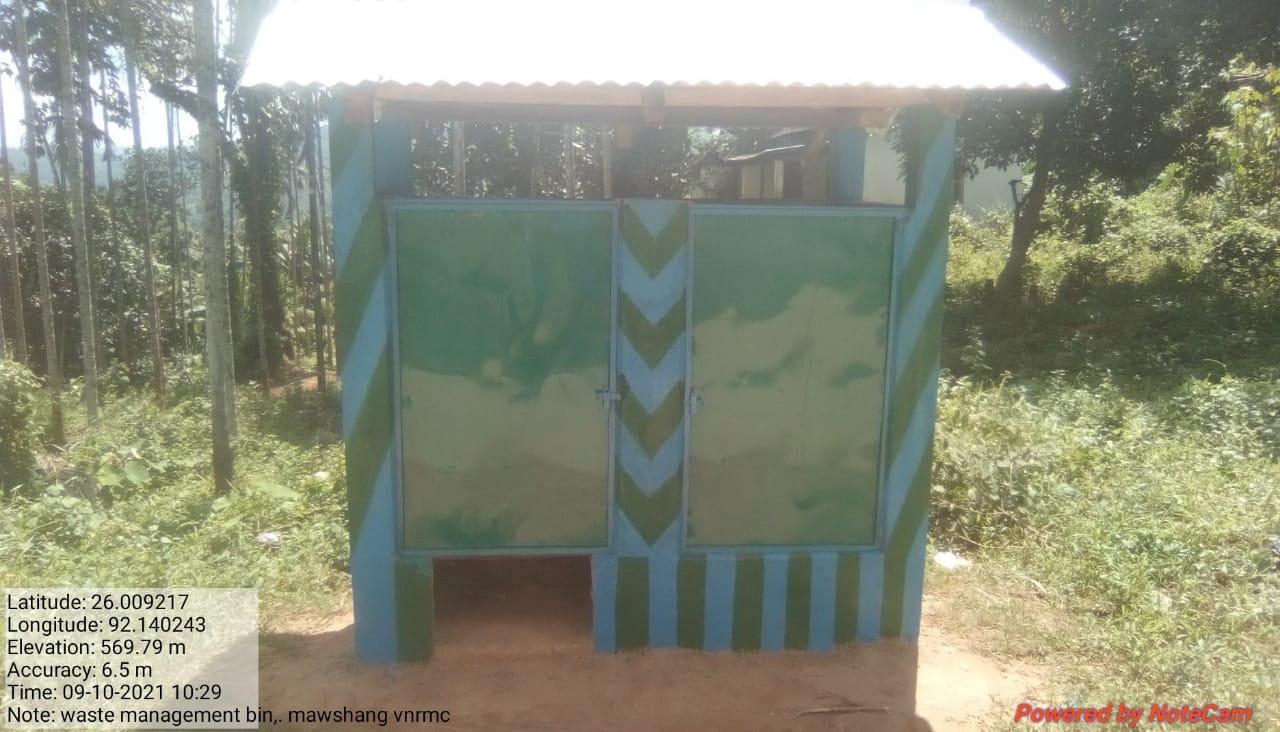
| Name of the Intervention | Location | Total Amount | Work Status |
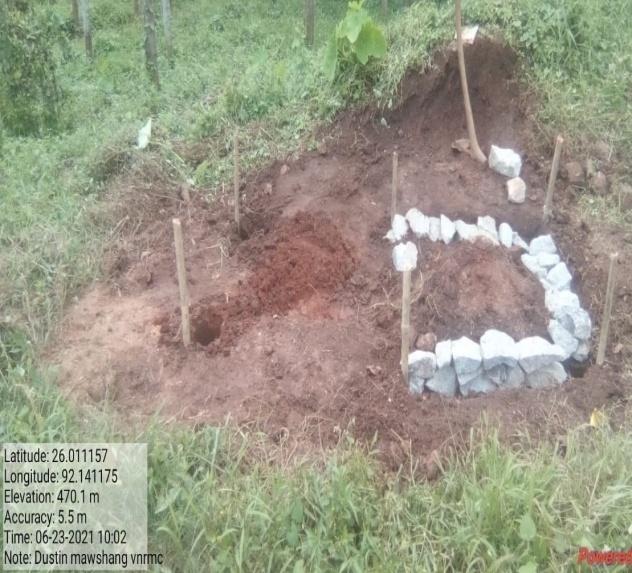
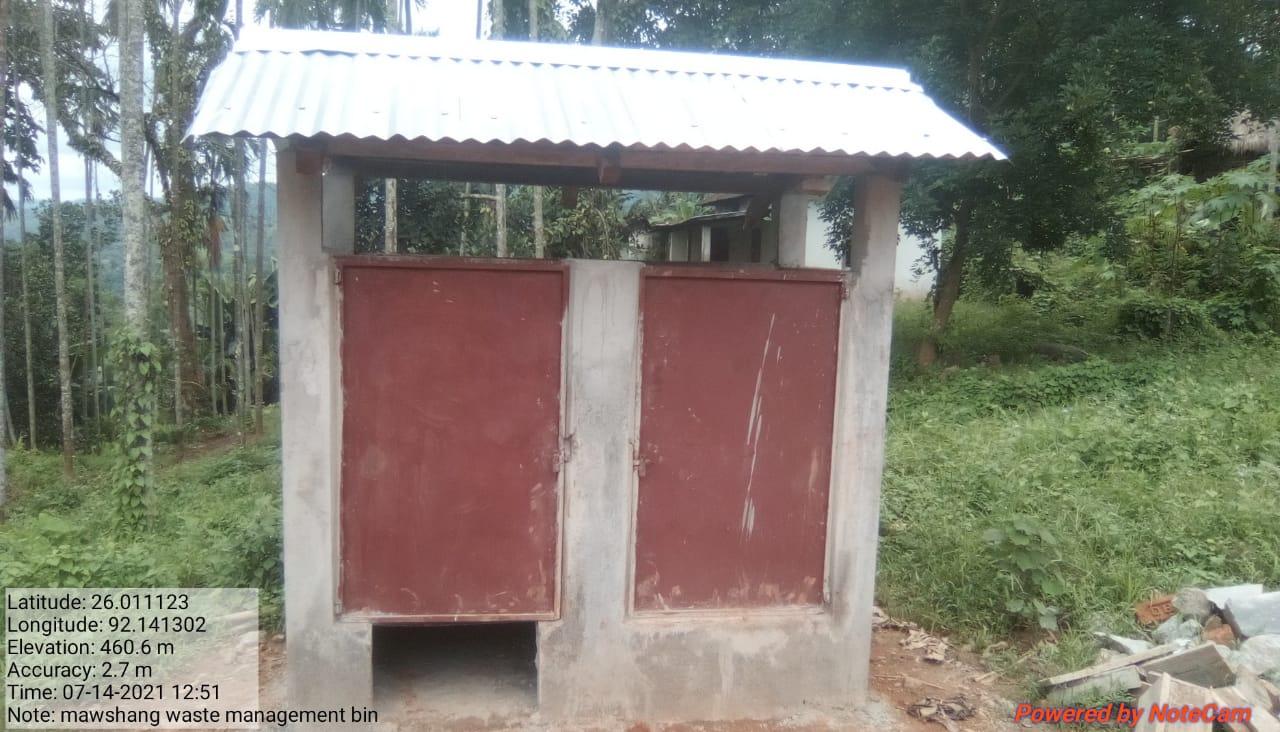
| Waste management Bins | Pdeng Shnong | 72,000.00 | Completed |
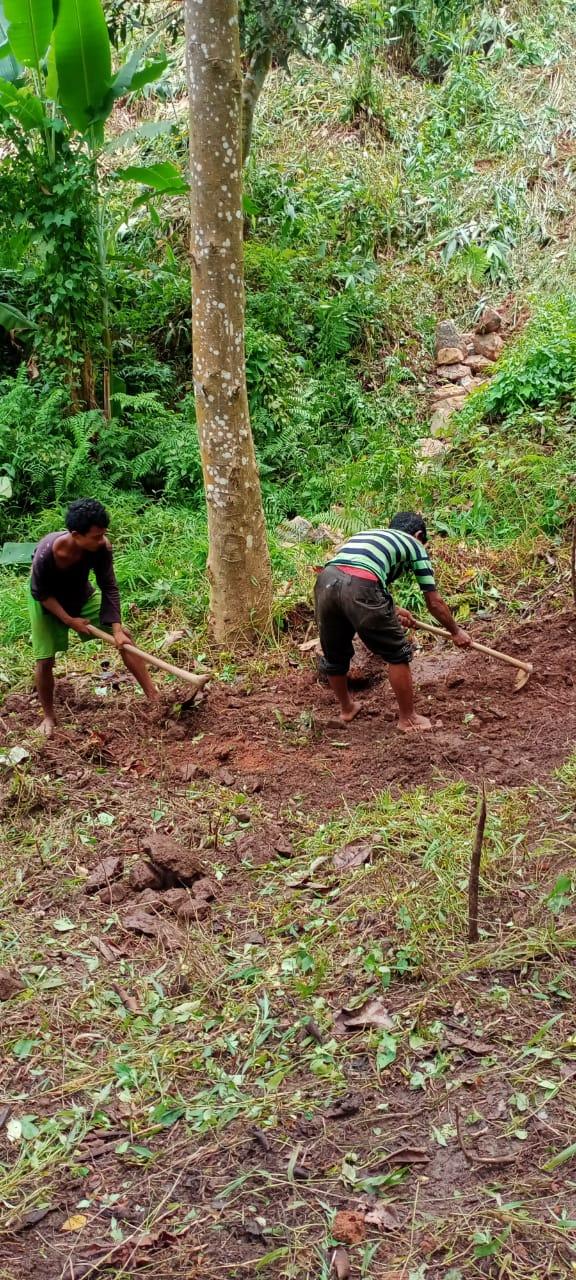
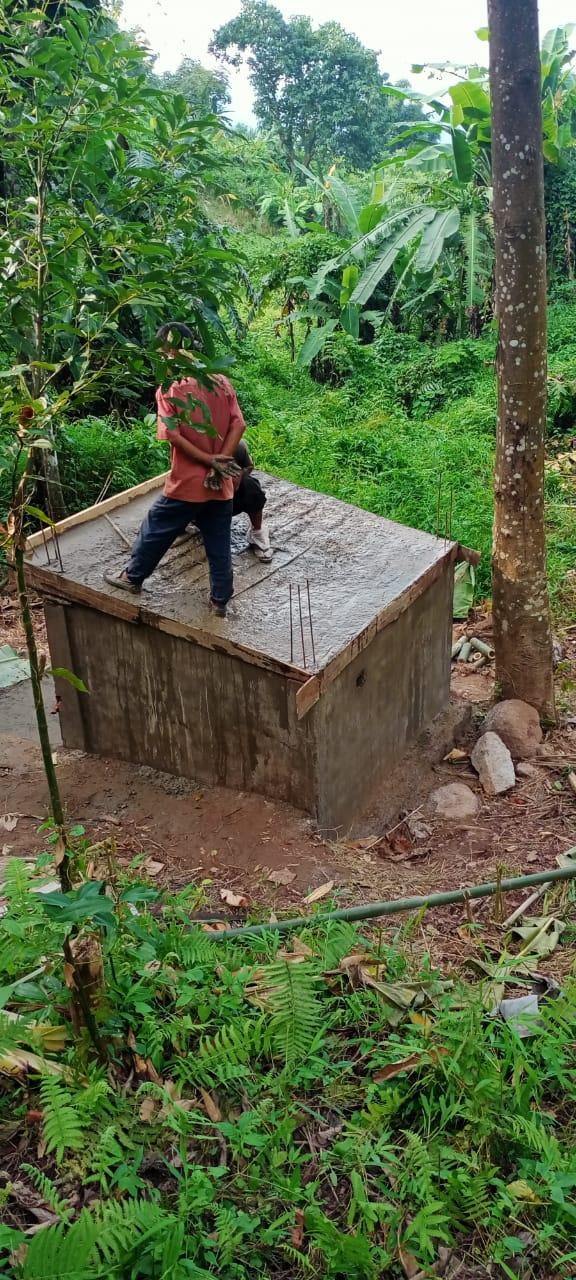
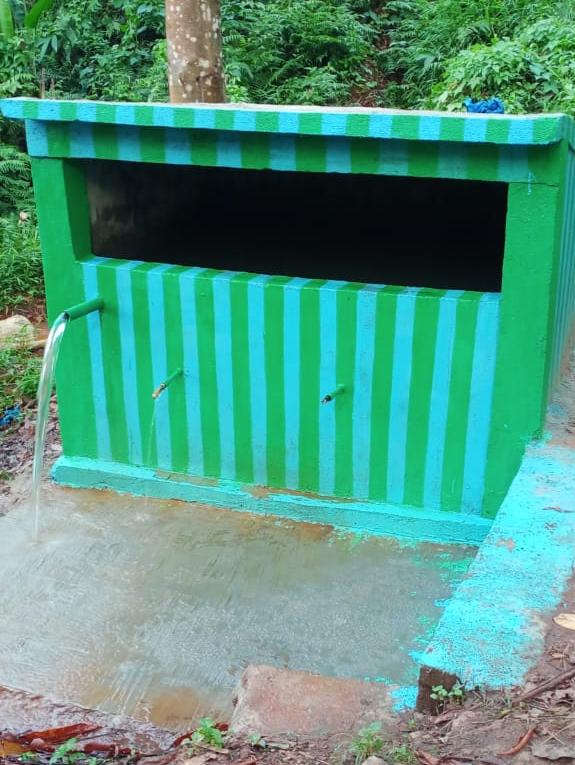
| Intervention | Site | Total amount | Work status |
| Spring Chamber -1 | Um Pynshit | 65,500.00 | Completed |
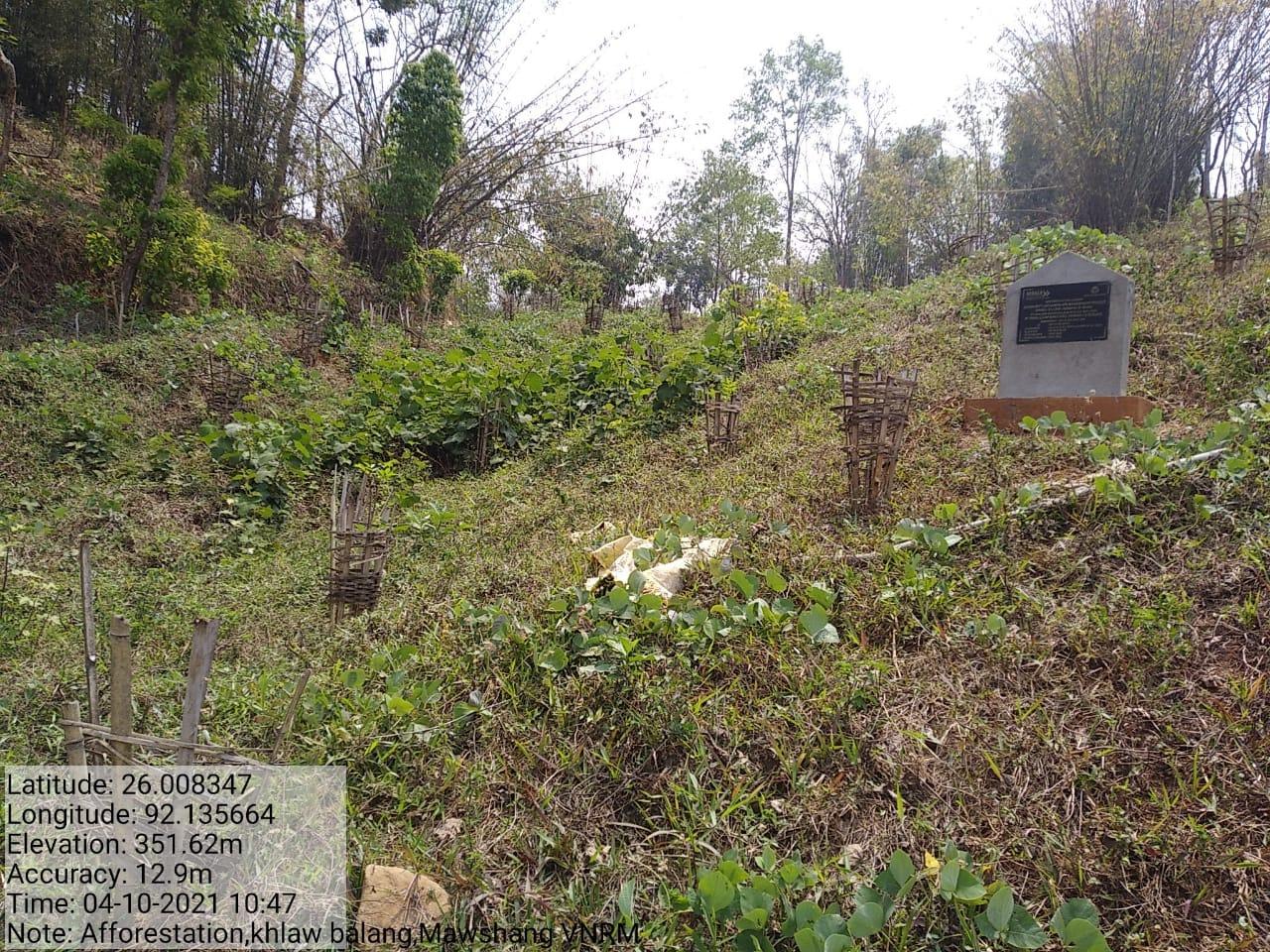
| Name of the Intervention | Location | Total Amount | Work Status |
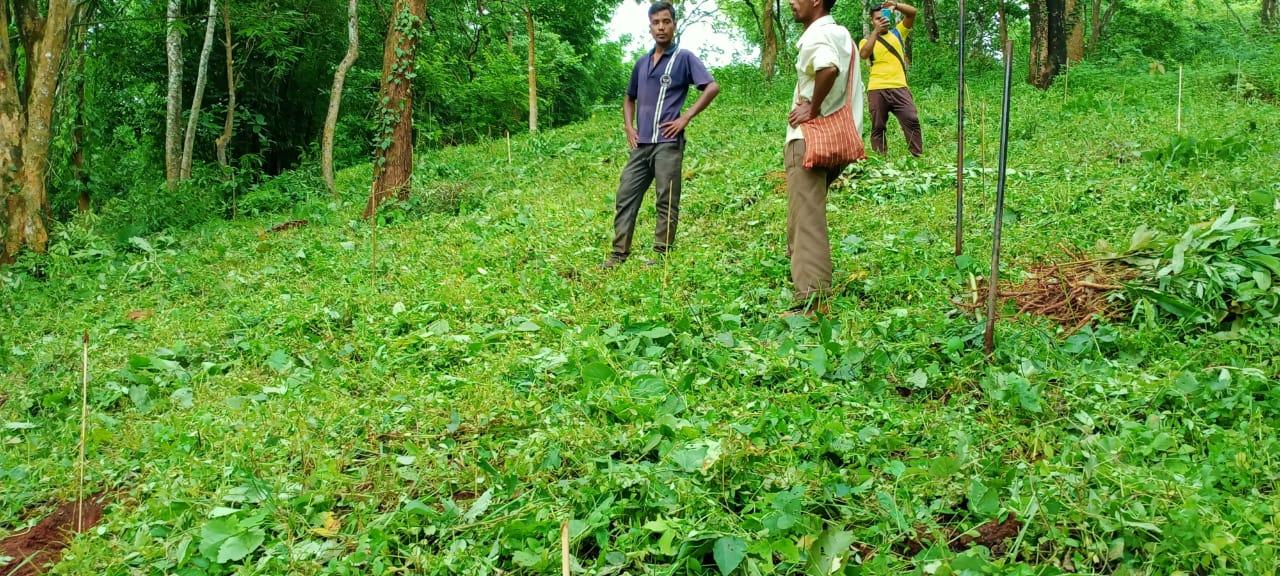
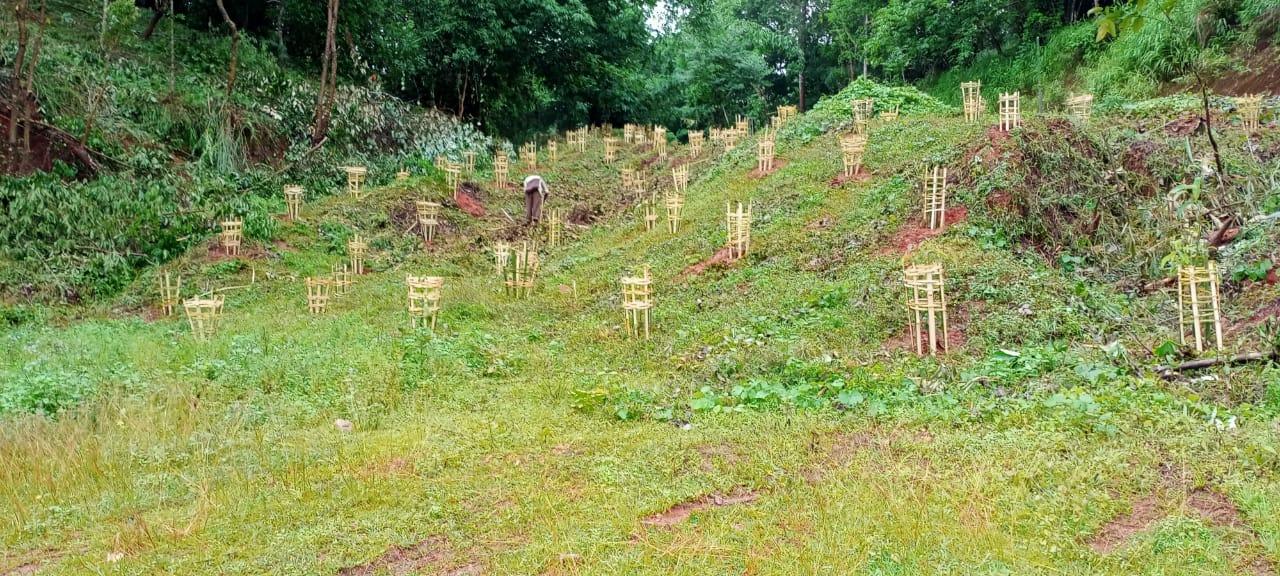
| Afforestation | Khlaw Balang | 1,90,750.00 | Completed |
| Name of the Intervention | Location | Total Amount | Work Status |
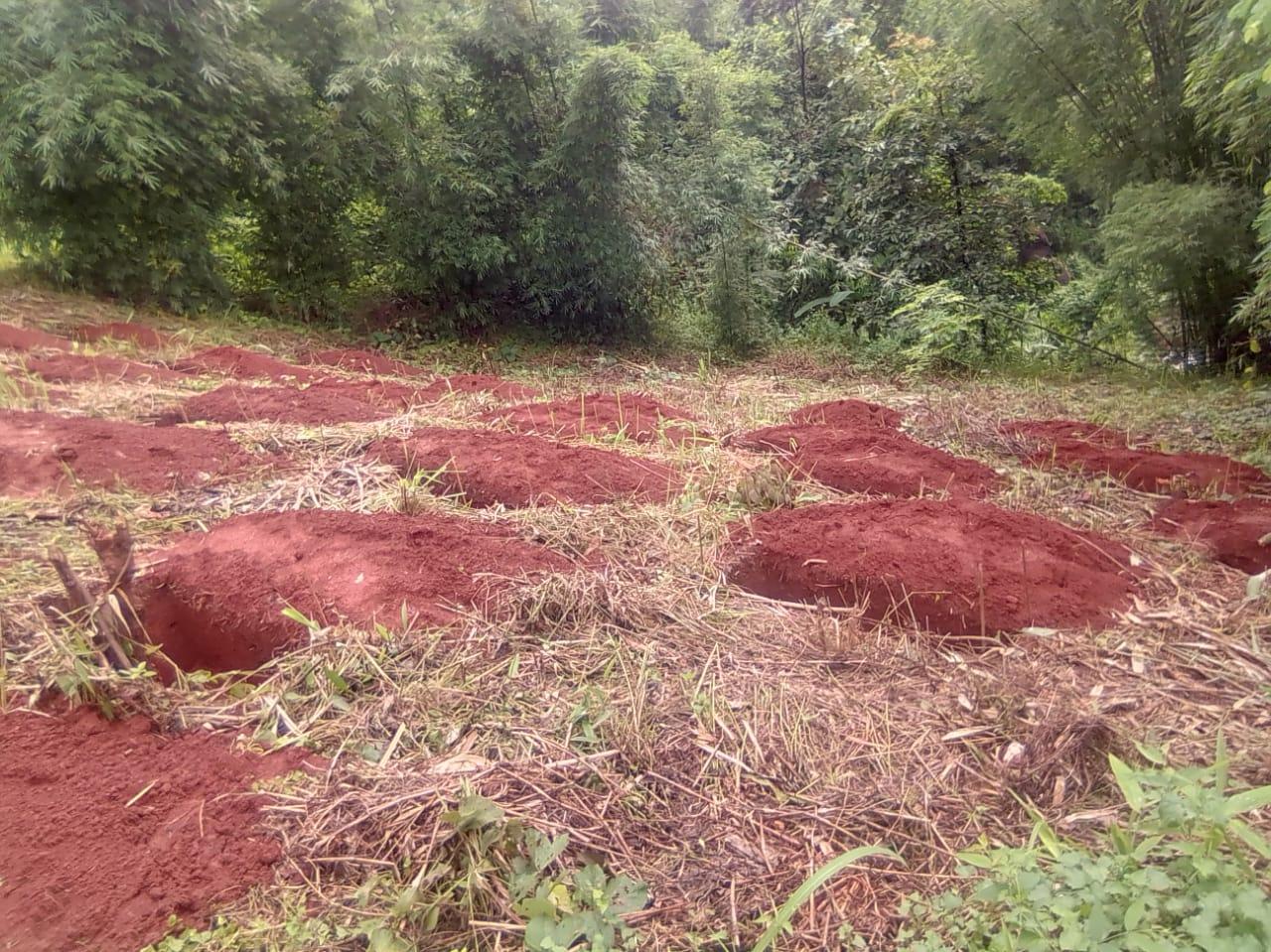
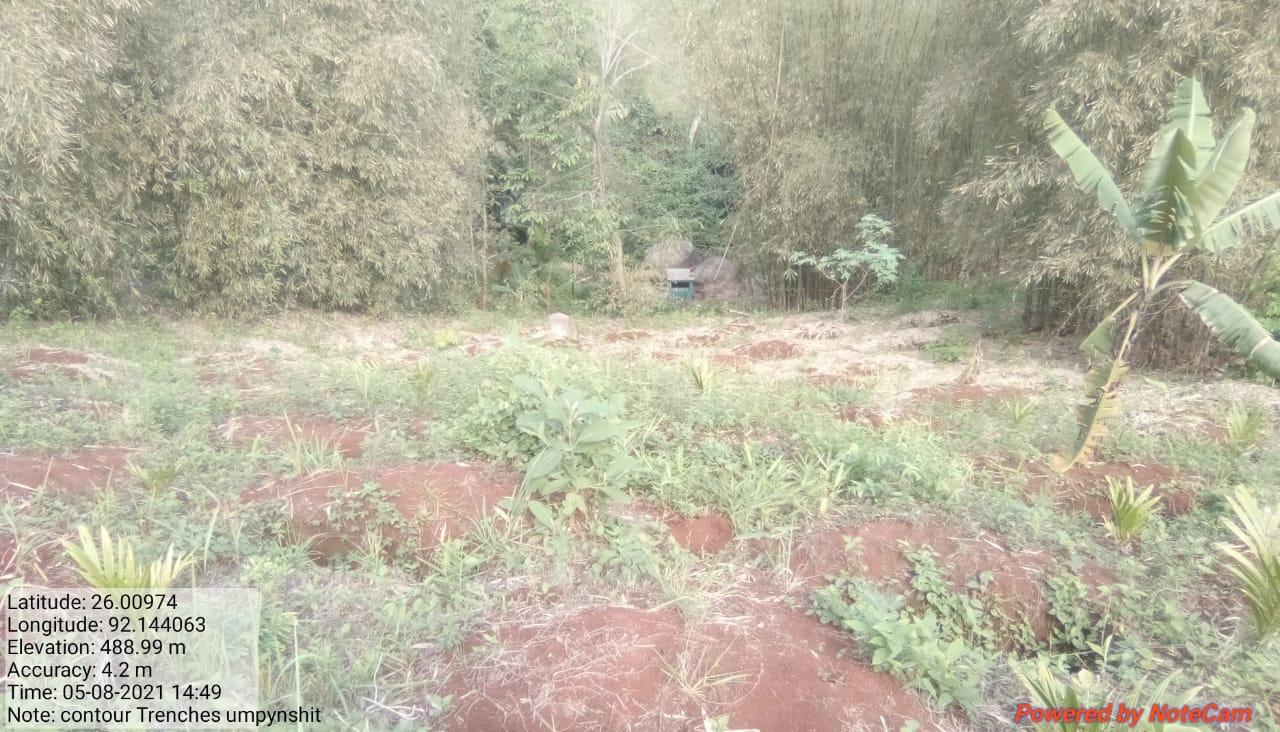
| Contour Trenches- A | Um Pynshit | 11,407.00 | Completed |
| Name of the Intervention | Location | Total Amount | Work Status |
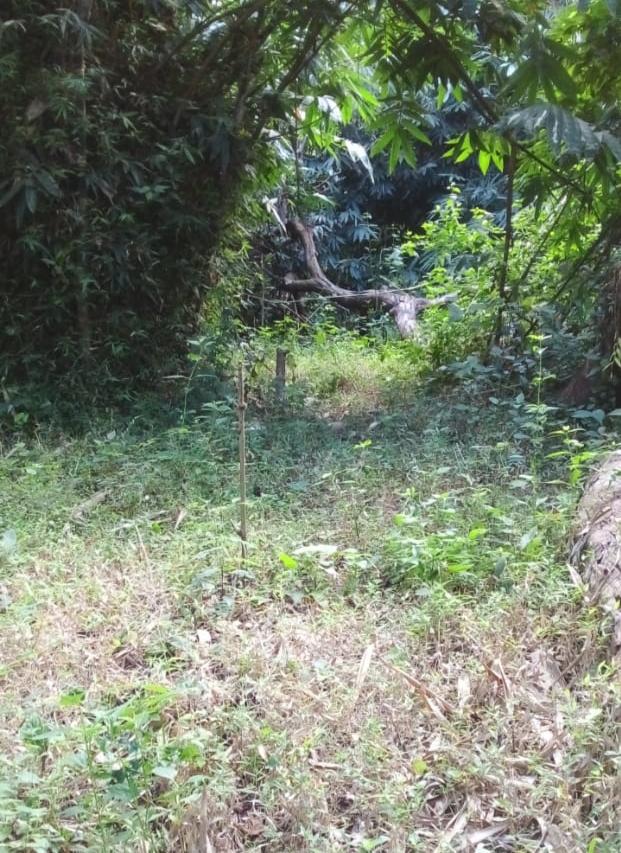
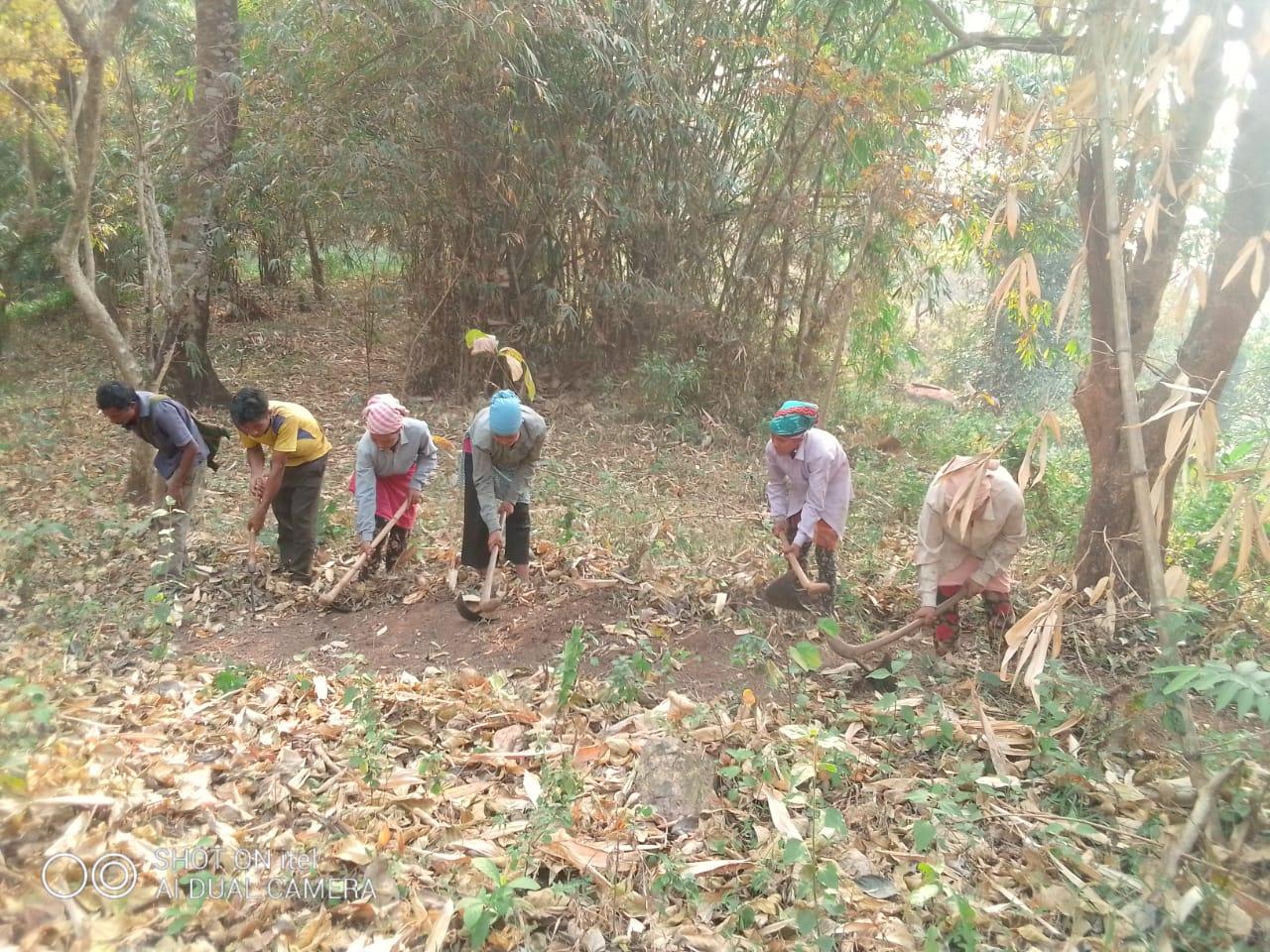
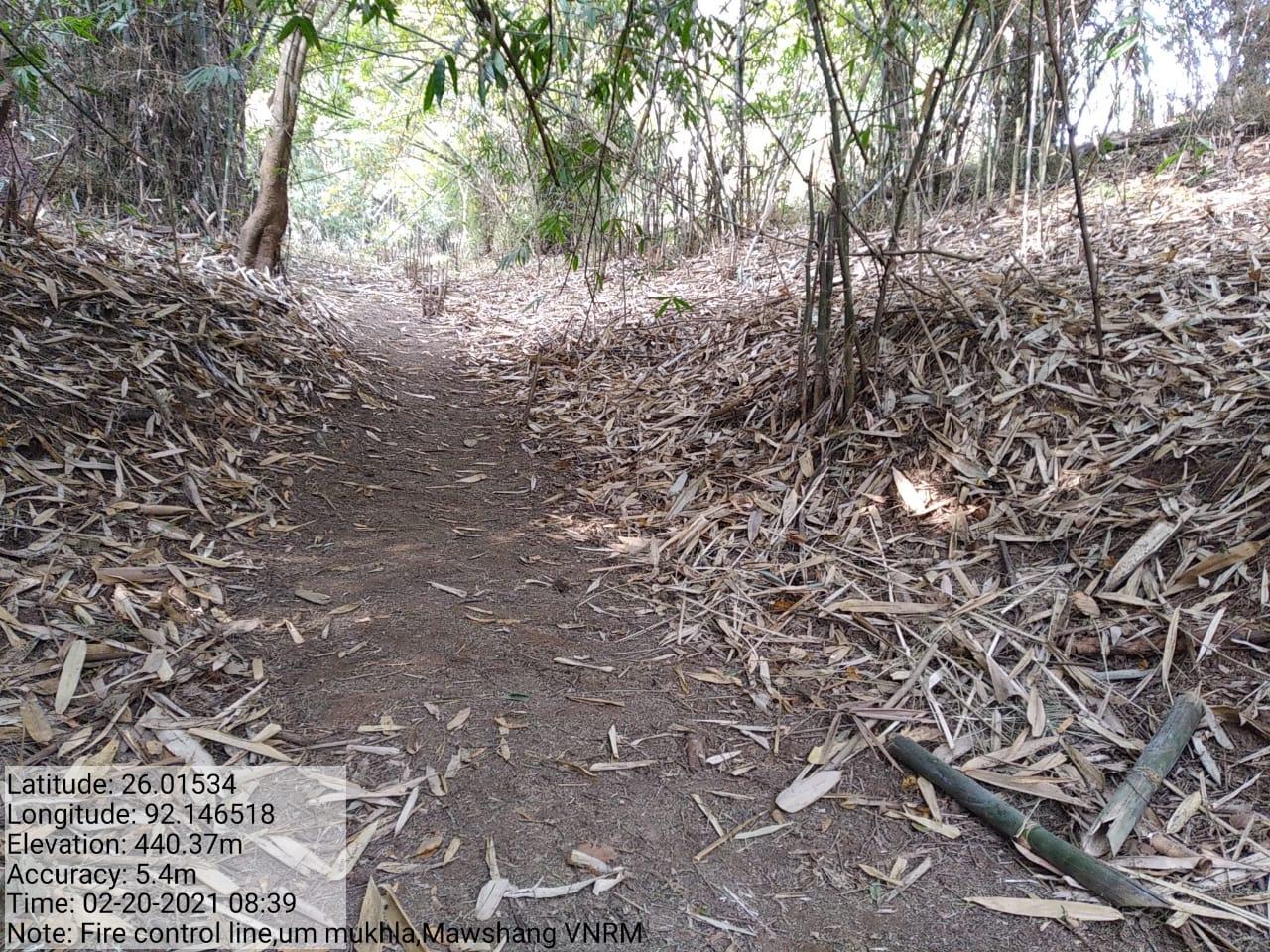
| Fire Control Line | Khlaw Balang, Khlaw Shnong. | 56,562.00 | Completed |
| Name of the Intervention | Location | Total Amount | Work Status |
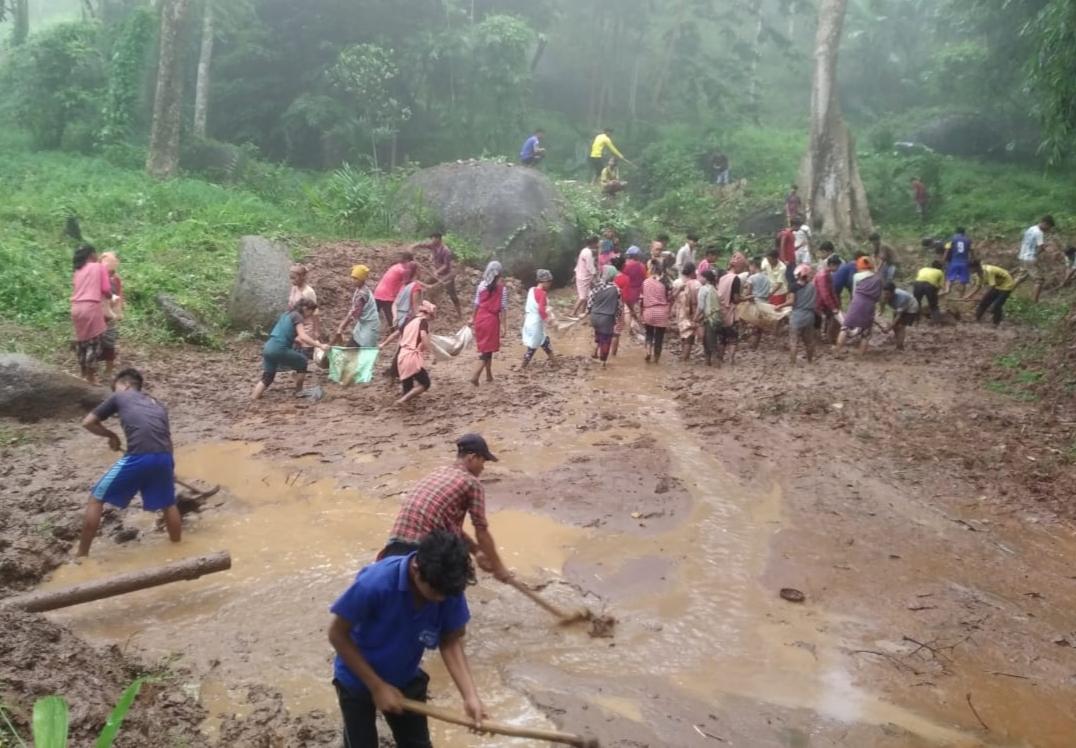
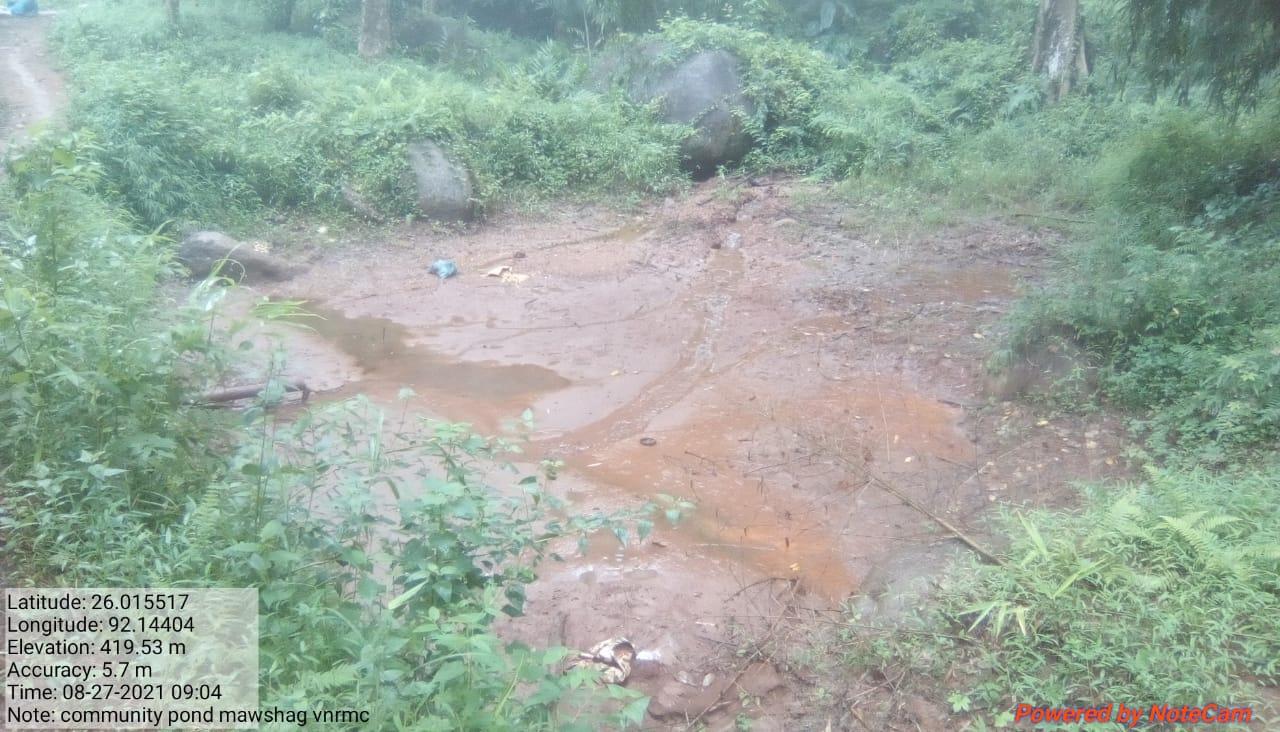
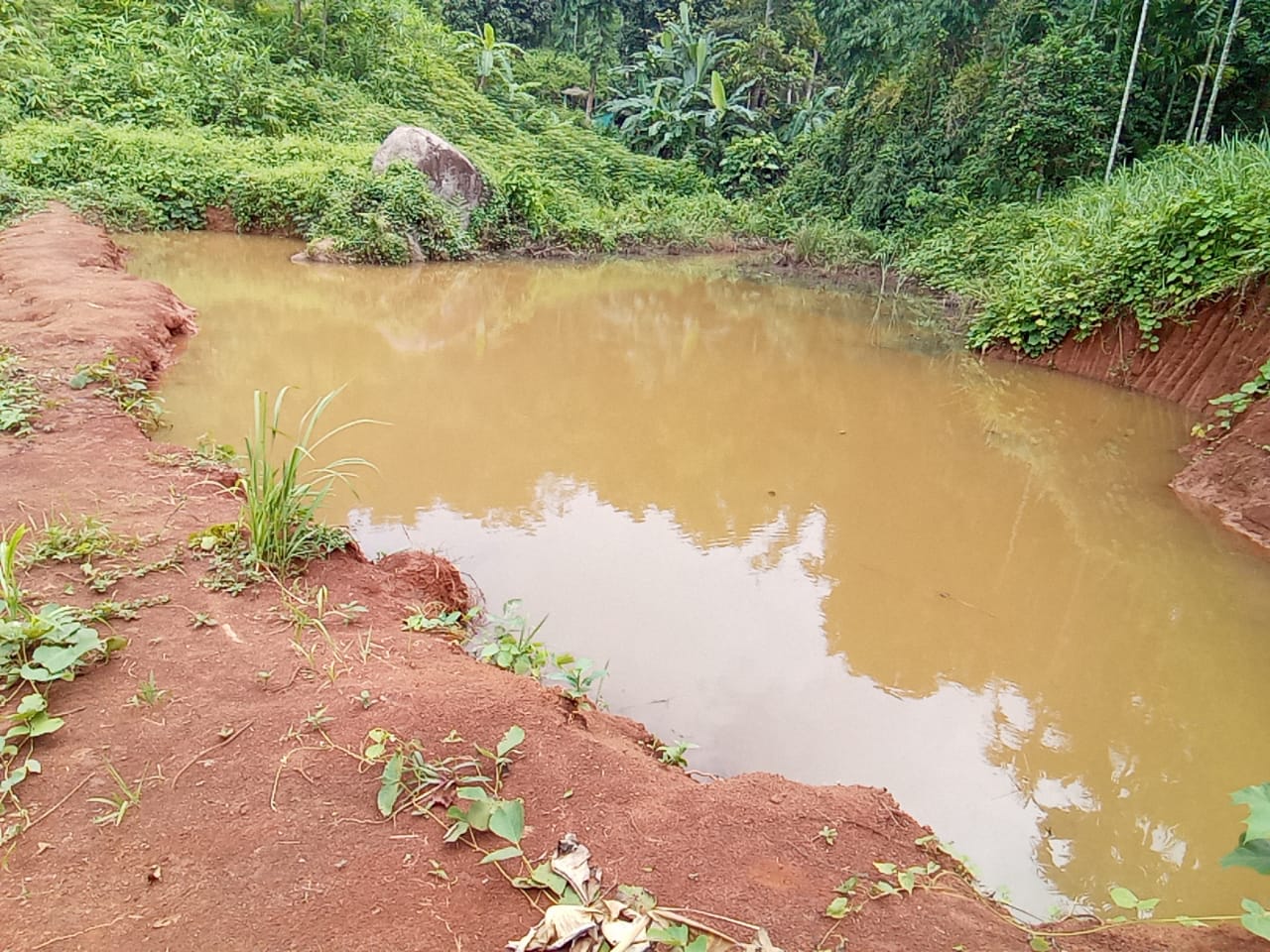
| Community Pond | Wah Umjngai | 3,08,000.00 | Completed |
| Name of the Intervention | Location | Total Amount | Work Status |
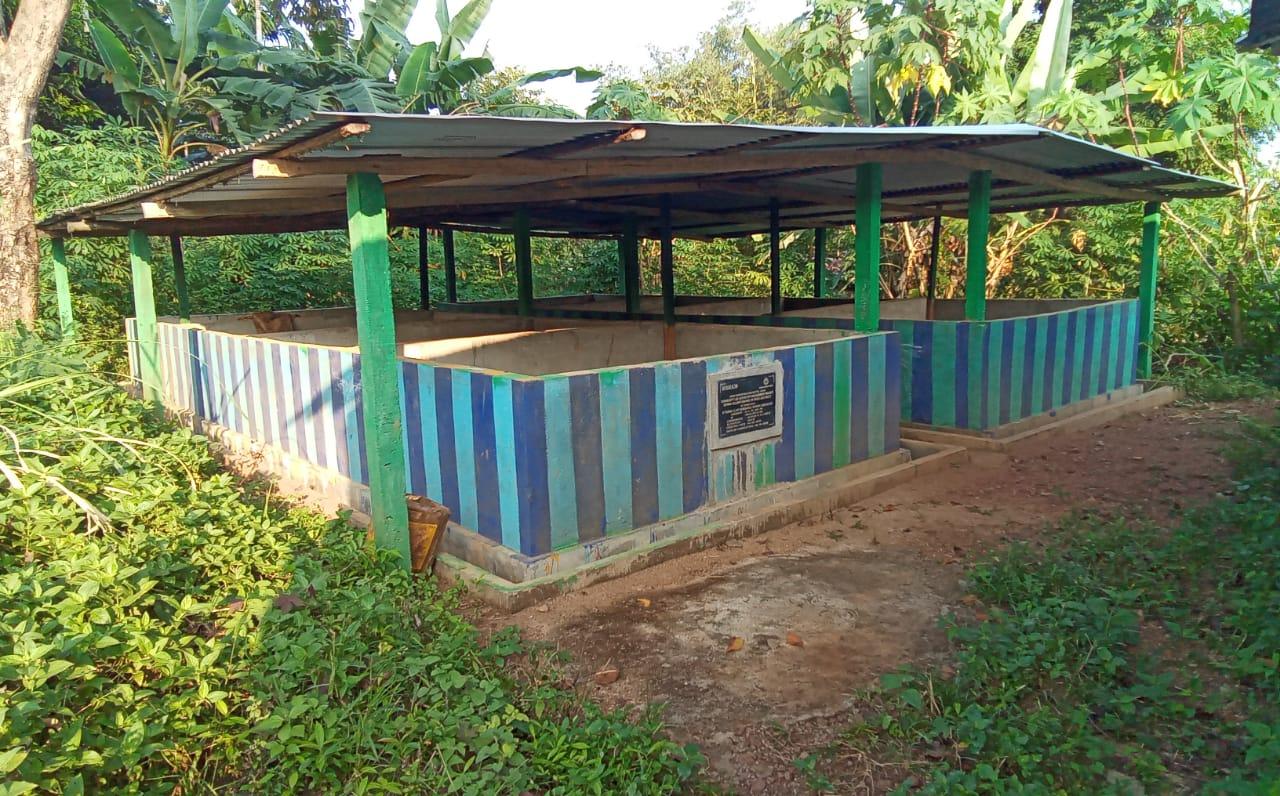
| Vermicompost | Near L.P.S Mawshang | 2,34,200.00 | Completed |
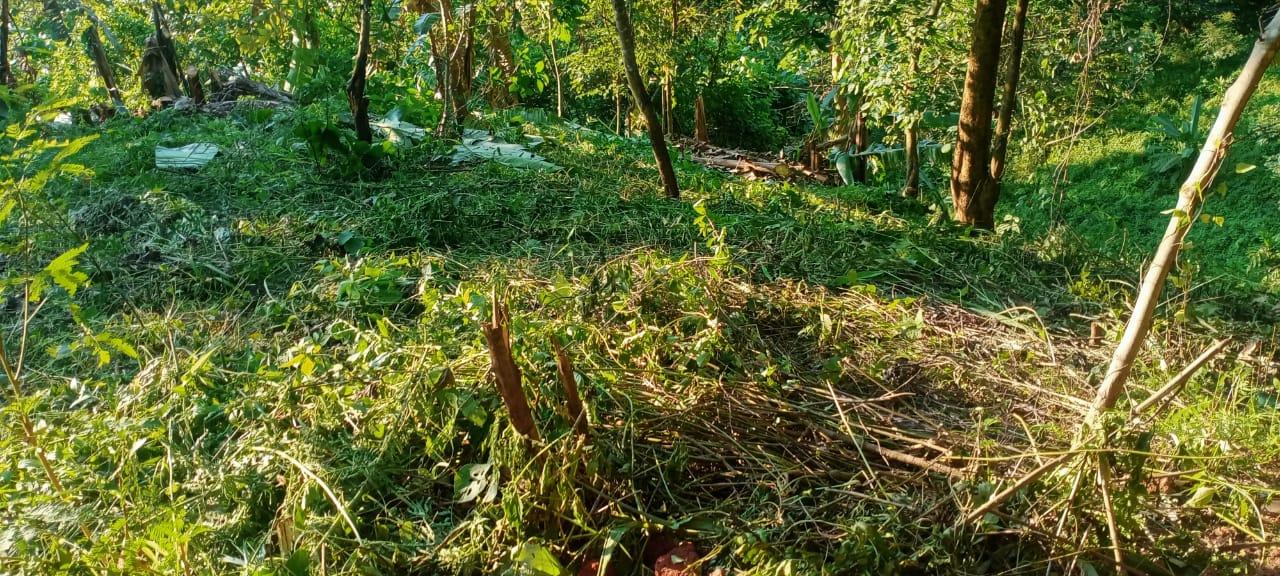
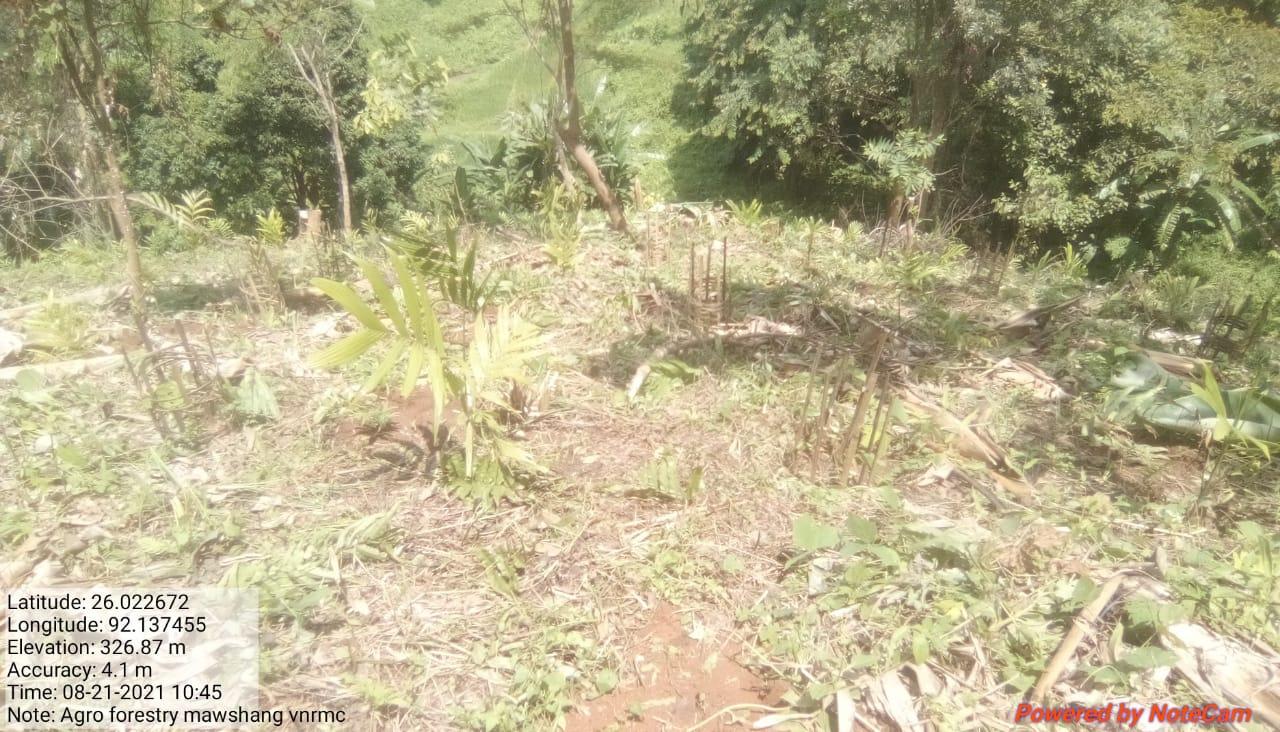
| Name of the Intervention | Location | Total Amount | Work Status |
| Agro- Forestry | Mawwi | 1,67,330.00 | Completed |
| Name of the Intervention | Location | Total Amount | Work Status |
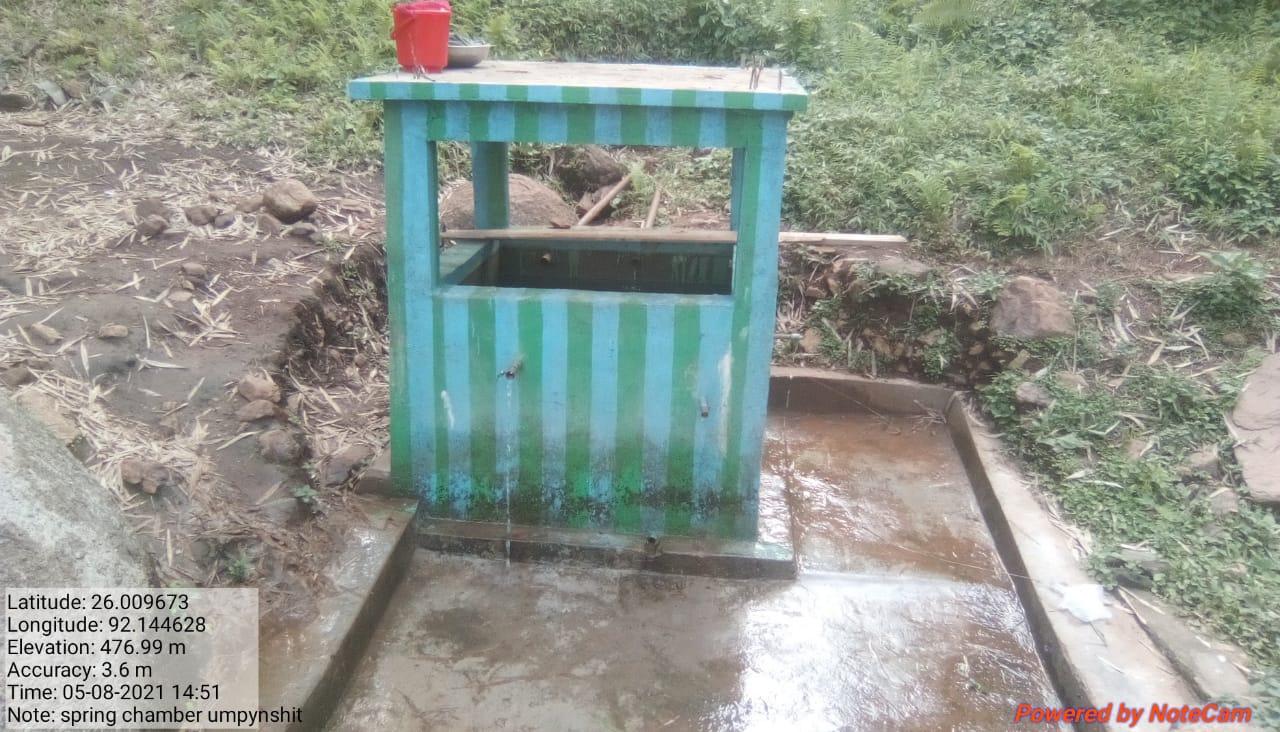
| Spring chamber -2 | Umjngai | 65,500.00 | Completed |
| Name of the Intervention | Location | Total Amount | Work Status |
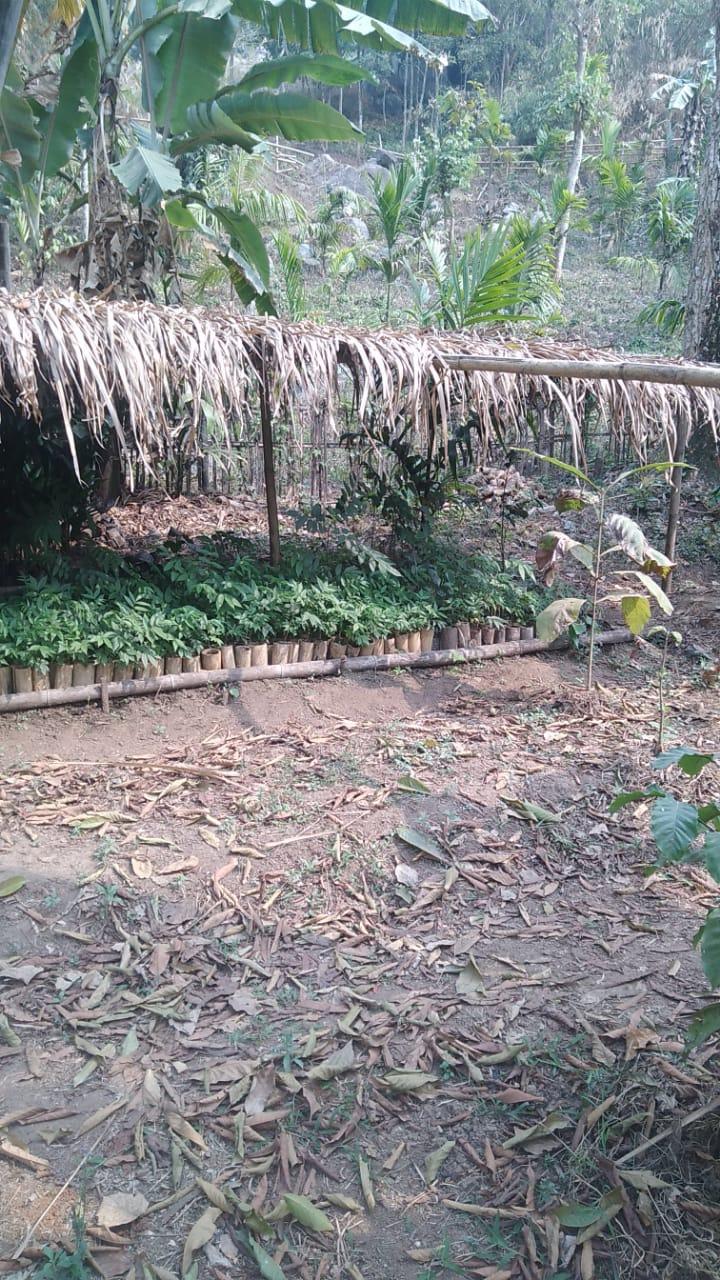
| Nursery | Mawshang | 1,19,300 | Completed |
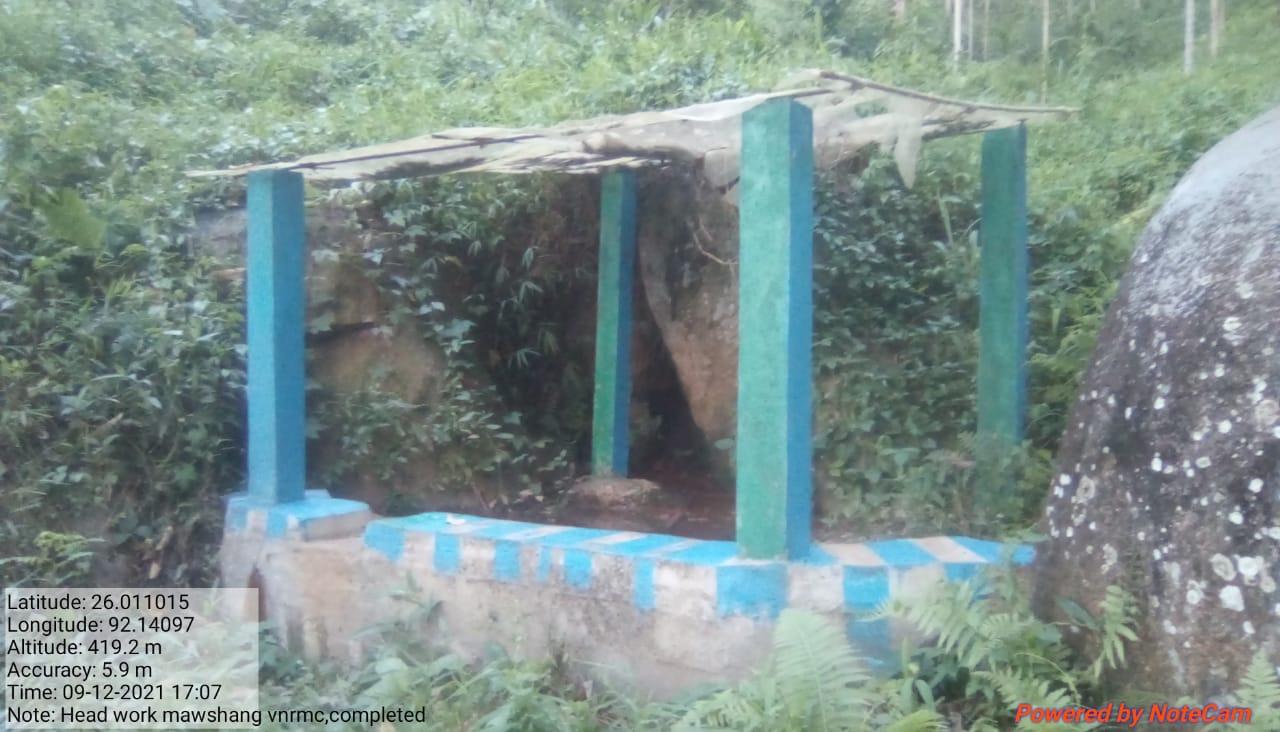
| Name of the Intervention | Location | Total Amount | Work Status |
| Head work | Umjngai | 84,240.00 | Completed |
| Name of the Intervention | Location | Total Amount | Work Status |
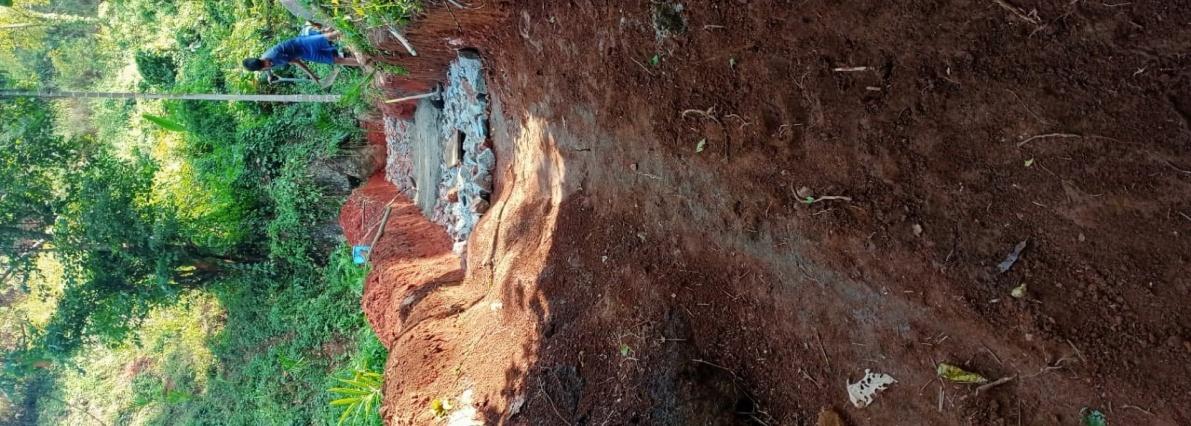
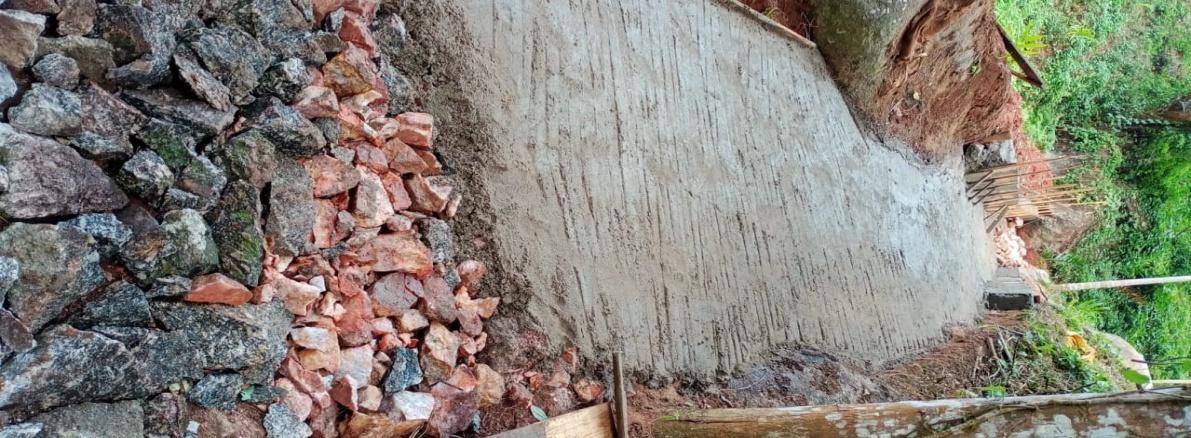
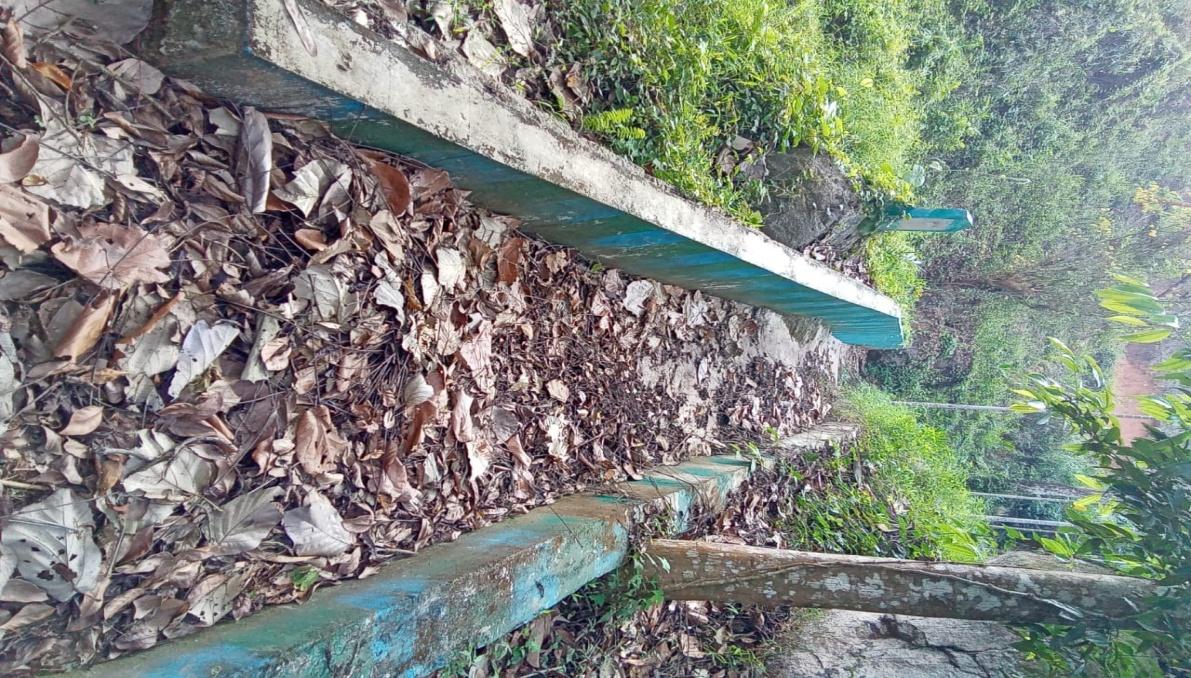
| Side Drainage | Umjngi | 1,88,000.00 | Completed |
| Name of the Intervention | Location | Total Amount | Work Status |
| Contour Trenches -B | Umjangi | 11,407.00 | Completed |
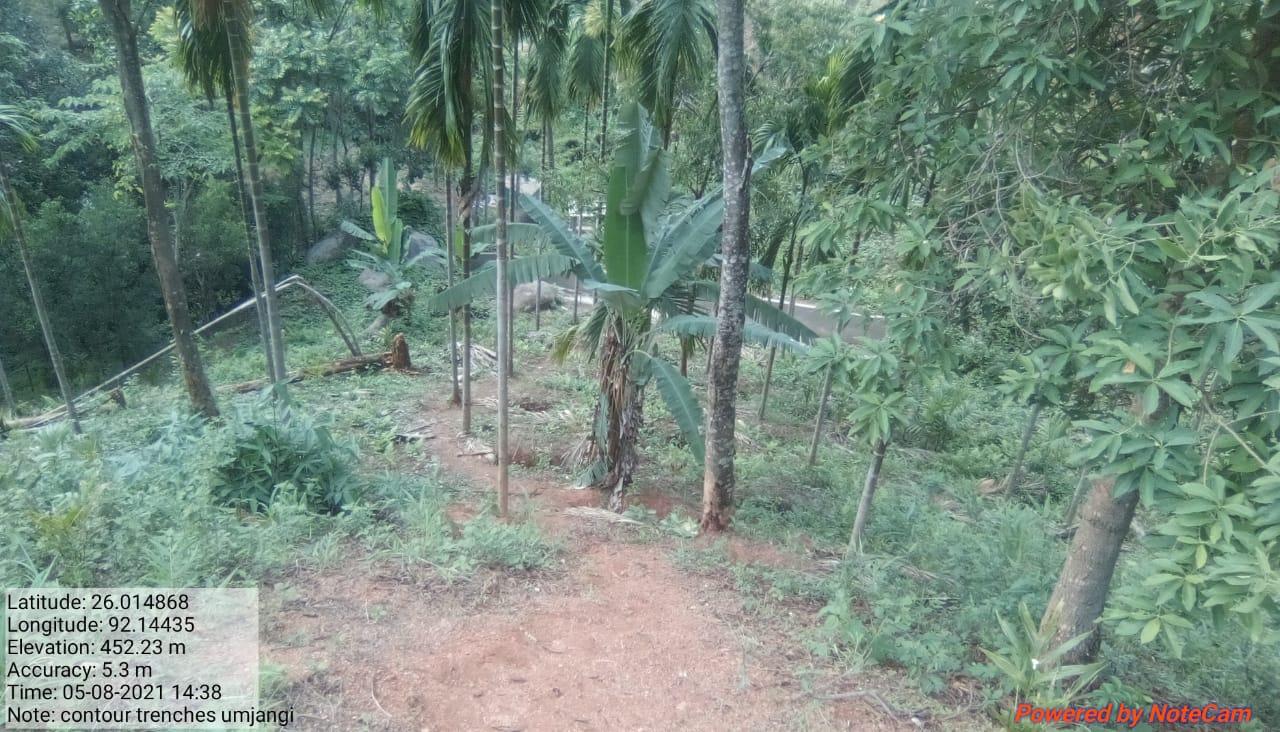
| Name of the Intervention | Location | Total Amount | Work Status |
| Horticulture | Mawring | 1.93,102.00 | Completed |
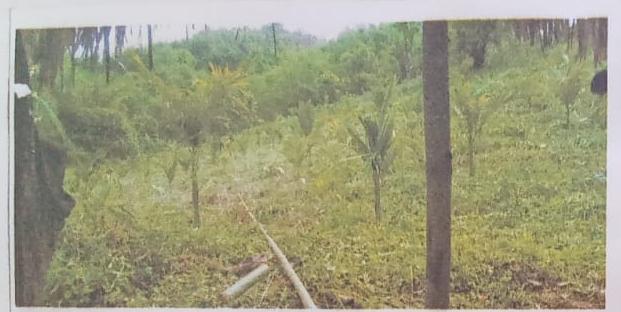
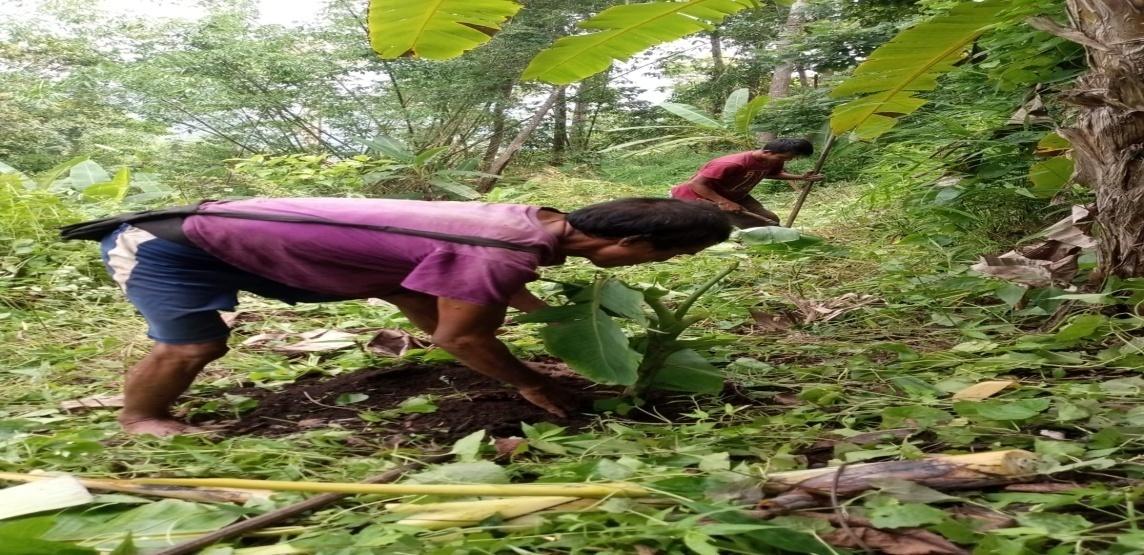
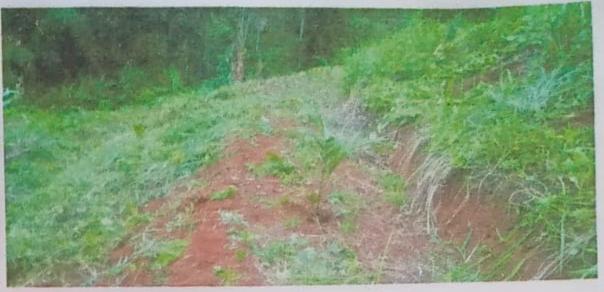
| Name of the Intervention | Location | Total Amount | Work Status |
| Bench Terracing | Mawring | 1,86,482.00 | Completed |
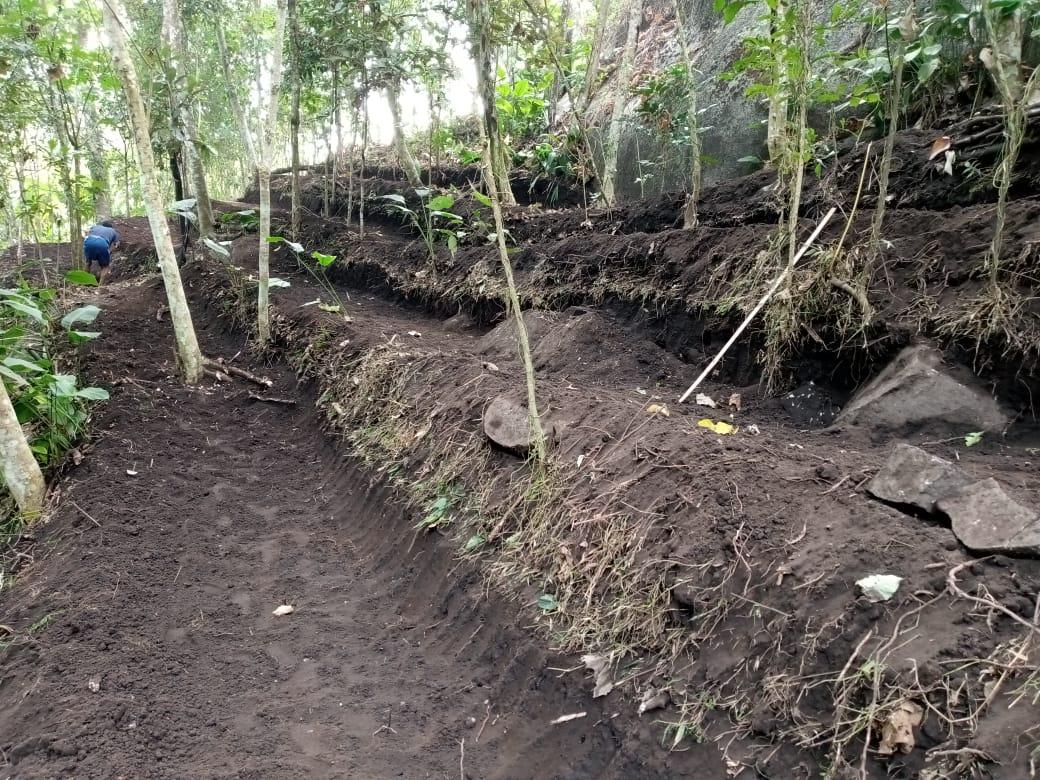
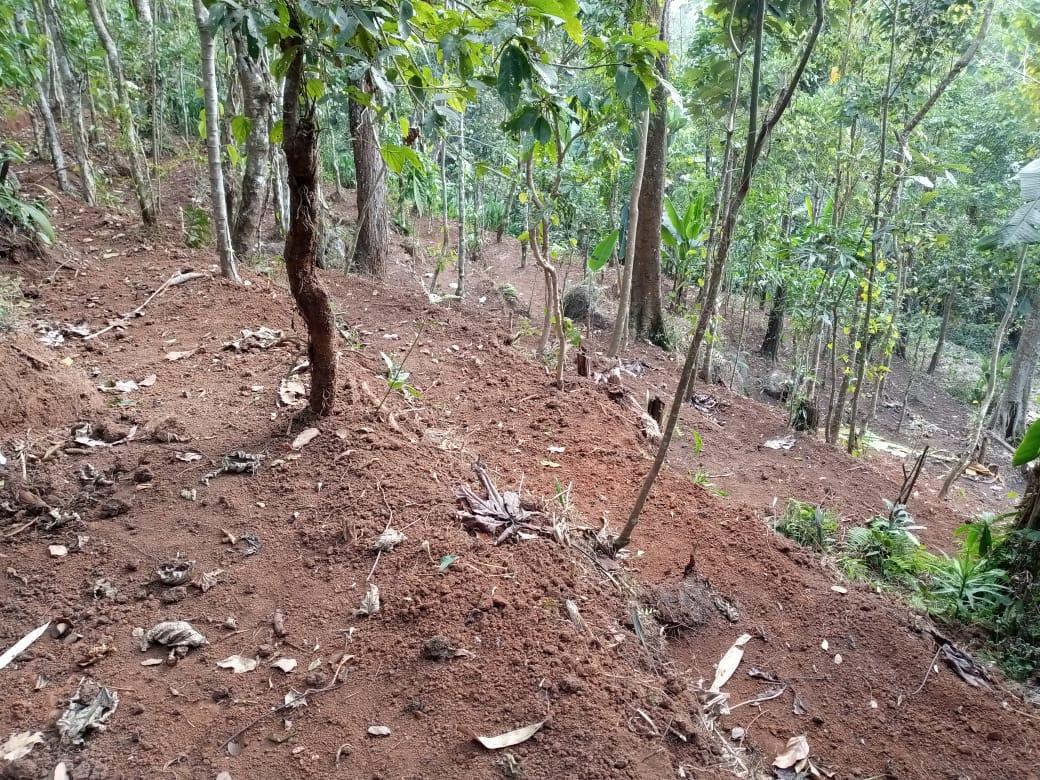
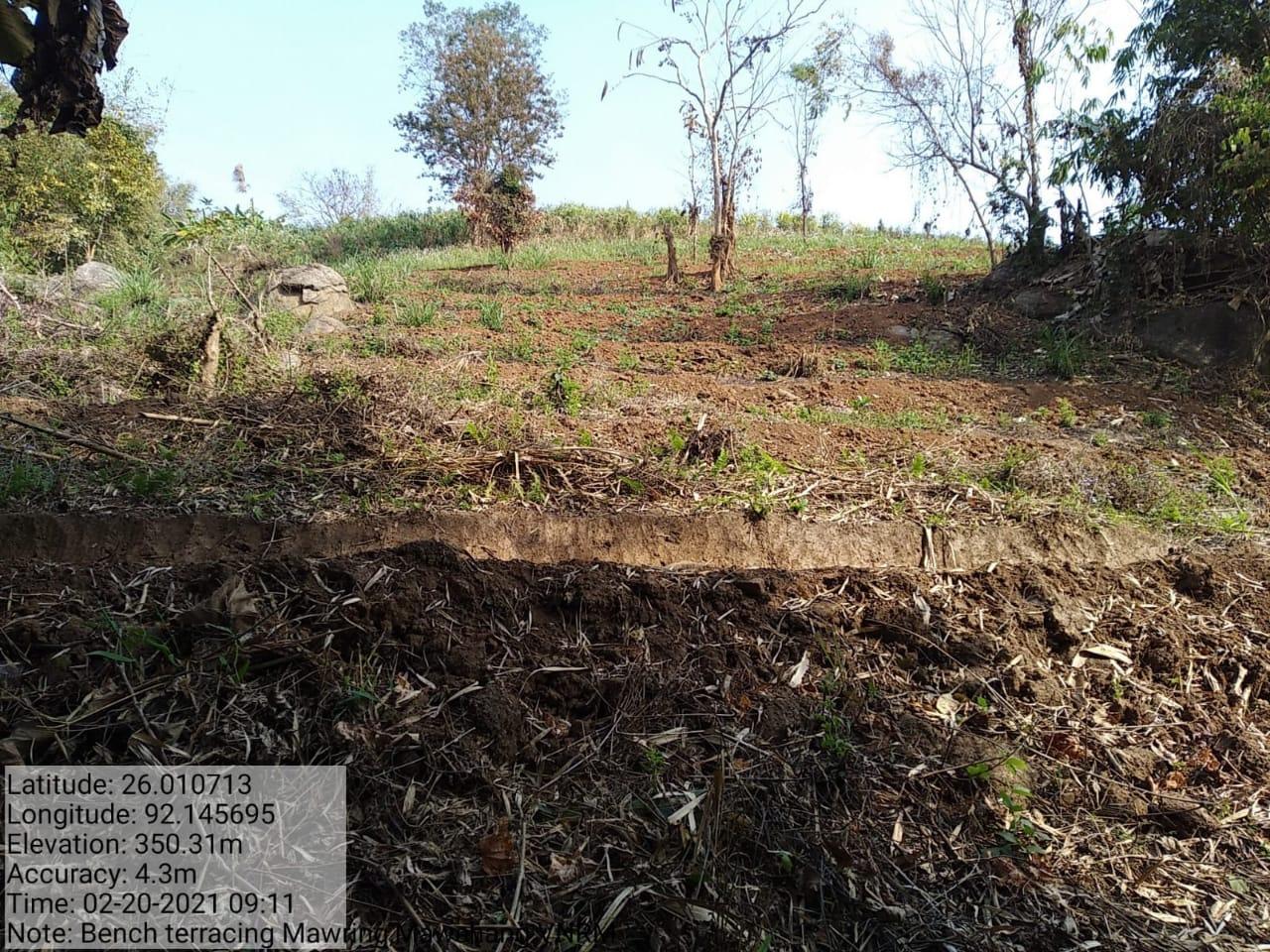
| Name of the Intervention | Location | Total Amount | Work Status |
| Earthen bund cum Bio Fencing | Khlaw Mawkhla | 5,00,000 | Completed |
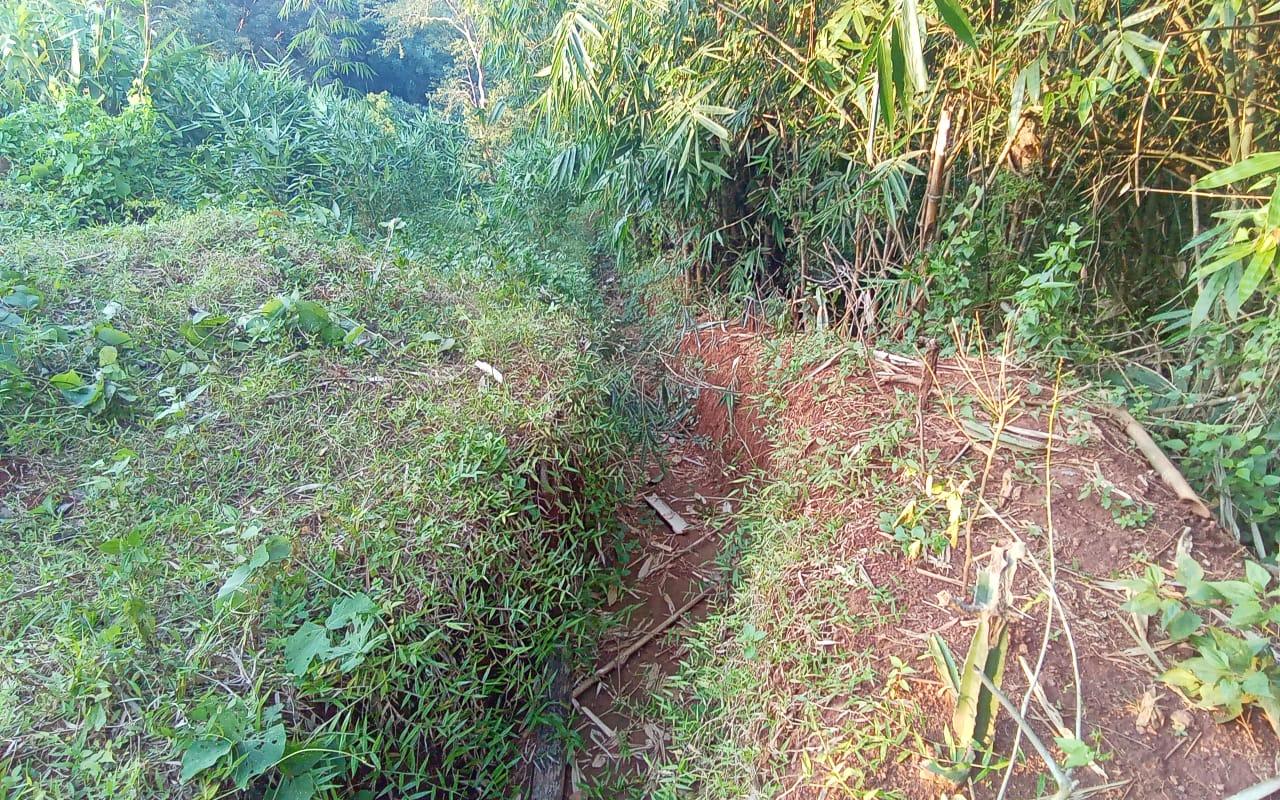
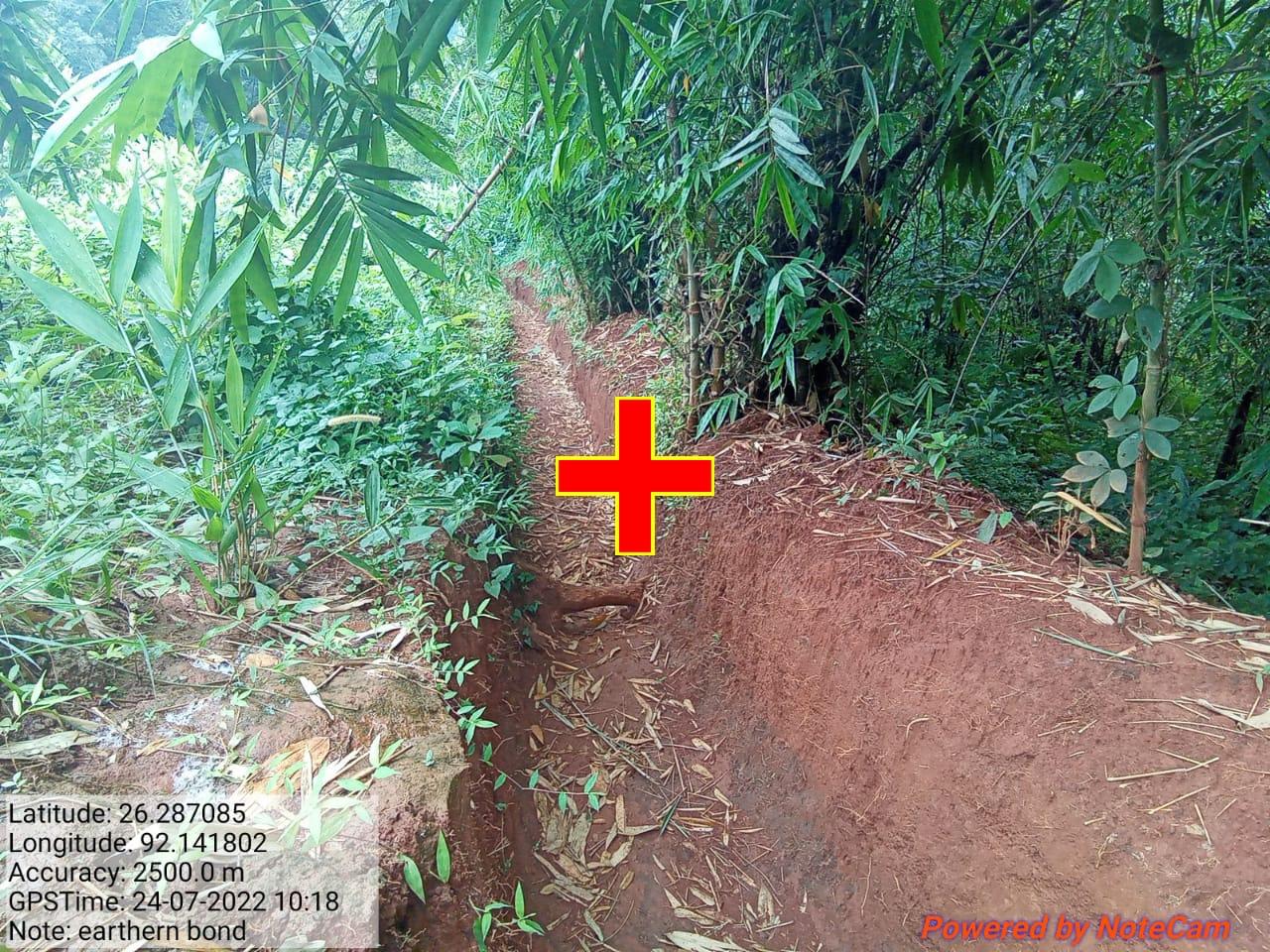
| Intervention | Amount | Site Name | Status |
FMP Activities 1.Fire control line 2.Forest community boundary survey . 3.Enrichment planting in forest blanks (afforestation) 4. In-situ & ex-situ conservation of rare and endangered plants. 5.Assisted natural regeneration in open forest (maintenance at the existing afforestation sites) 6.Nursery for food forestry(sapling for the available nursery) |
14,05 33000 131,584 4000 22,484 11,000 |
Community Land | Completed |
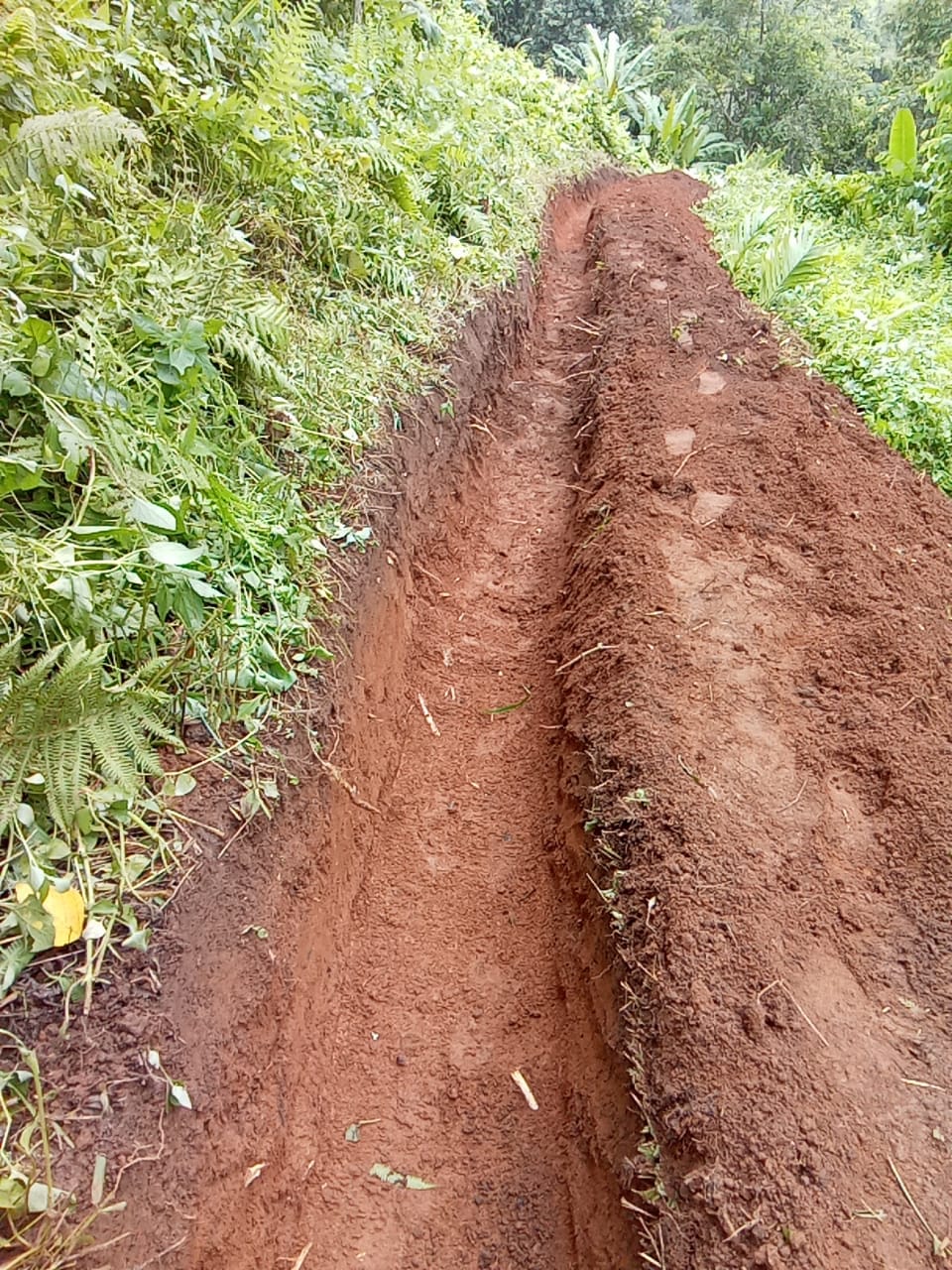
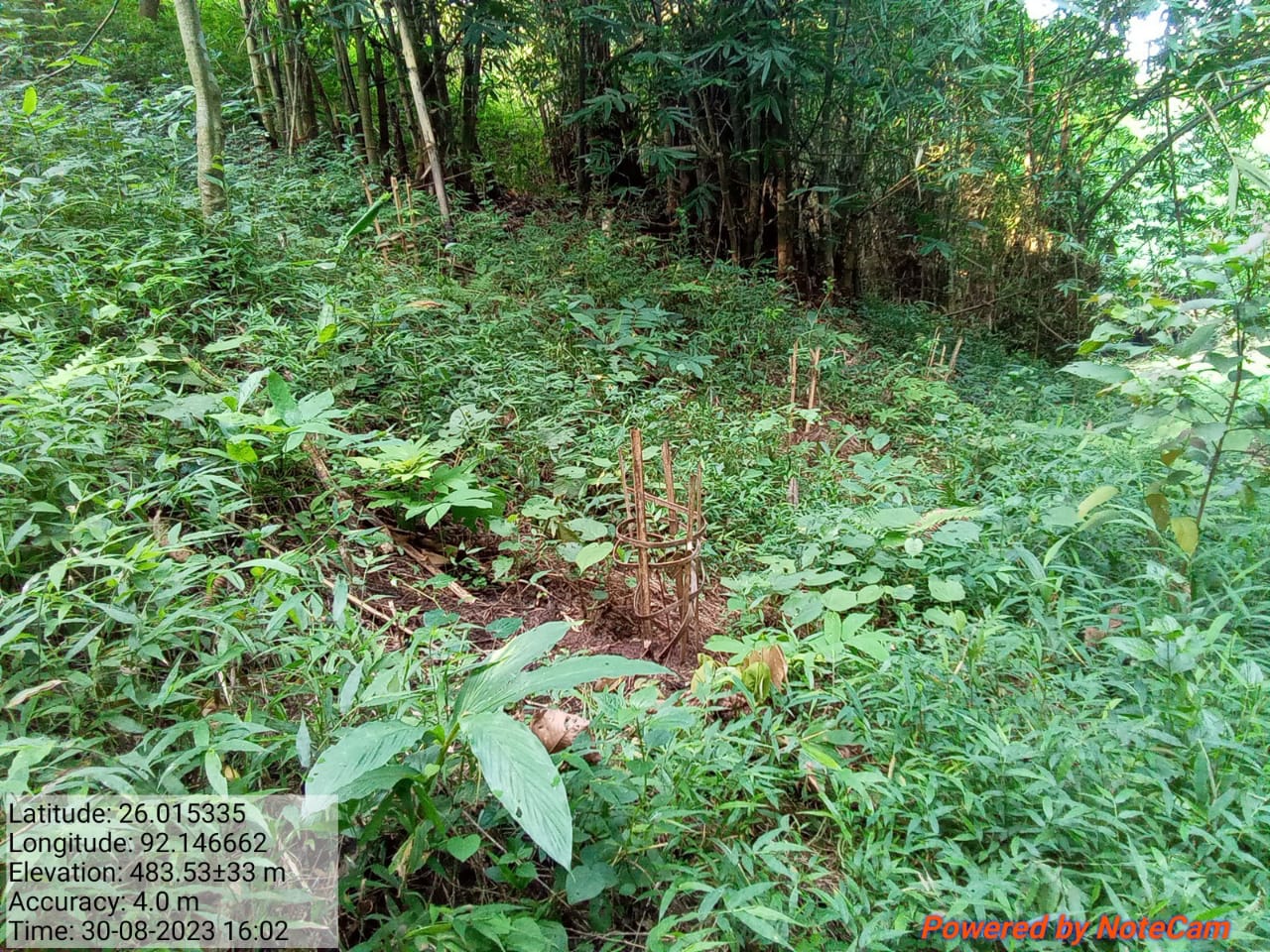
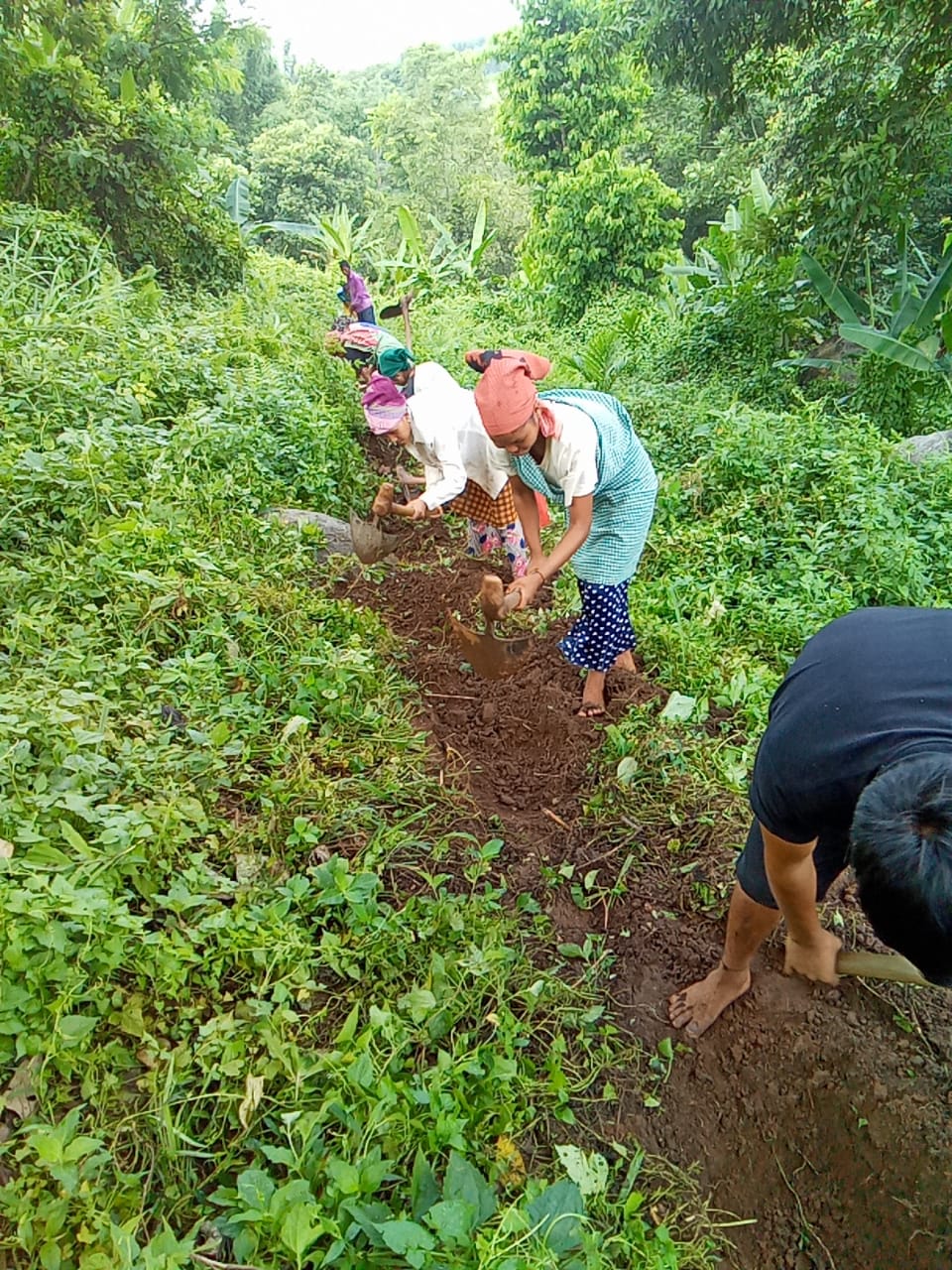
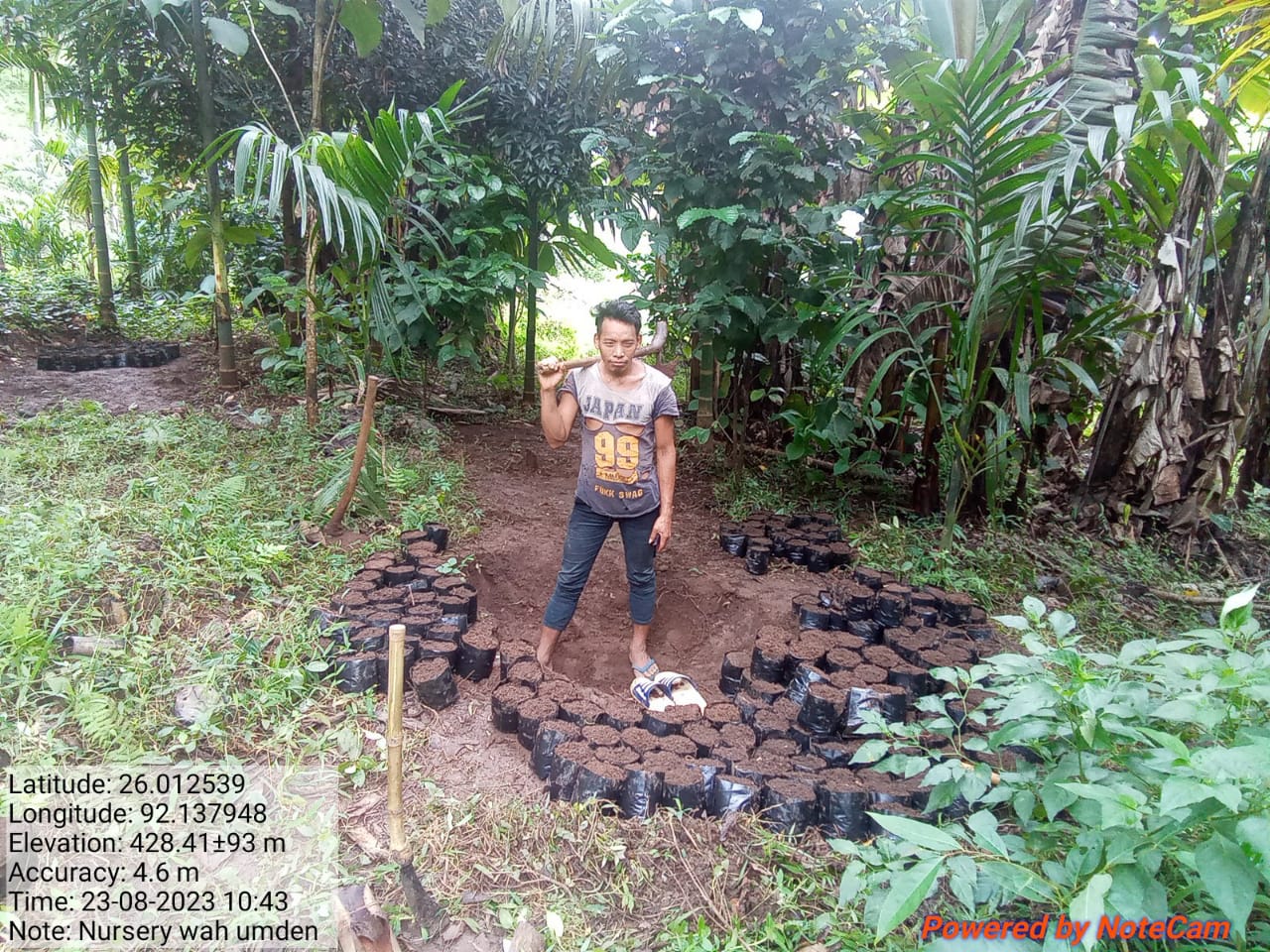
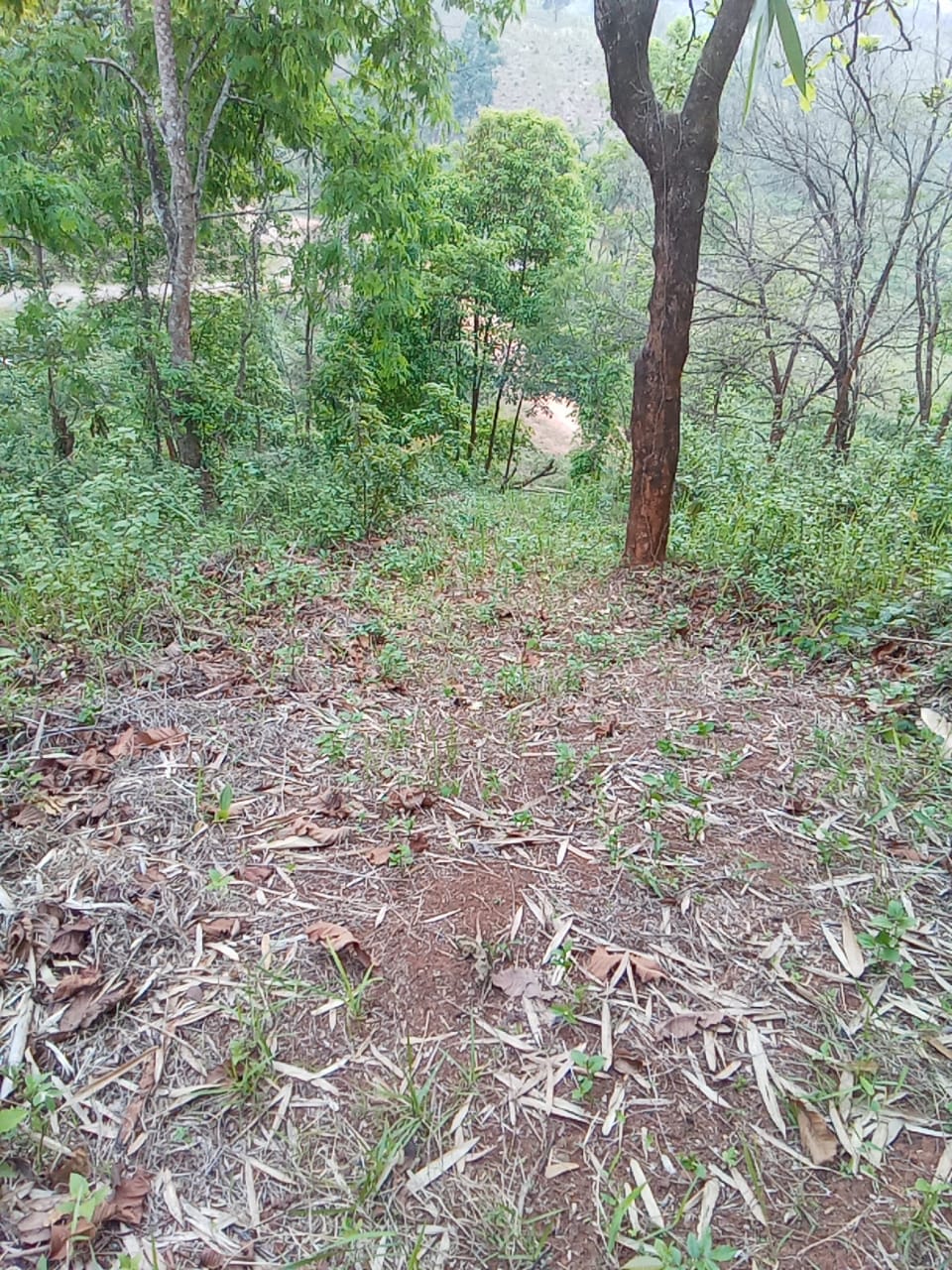
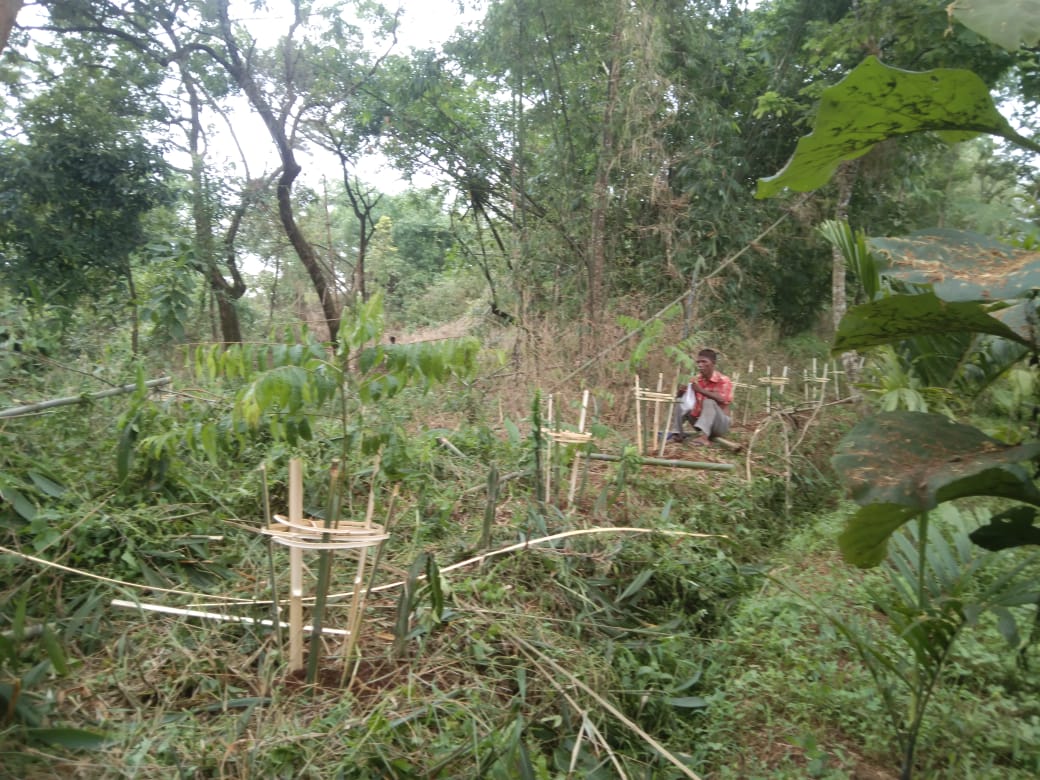
| Intervention | Site Name | Amount | Work Status |
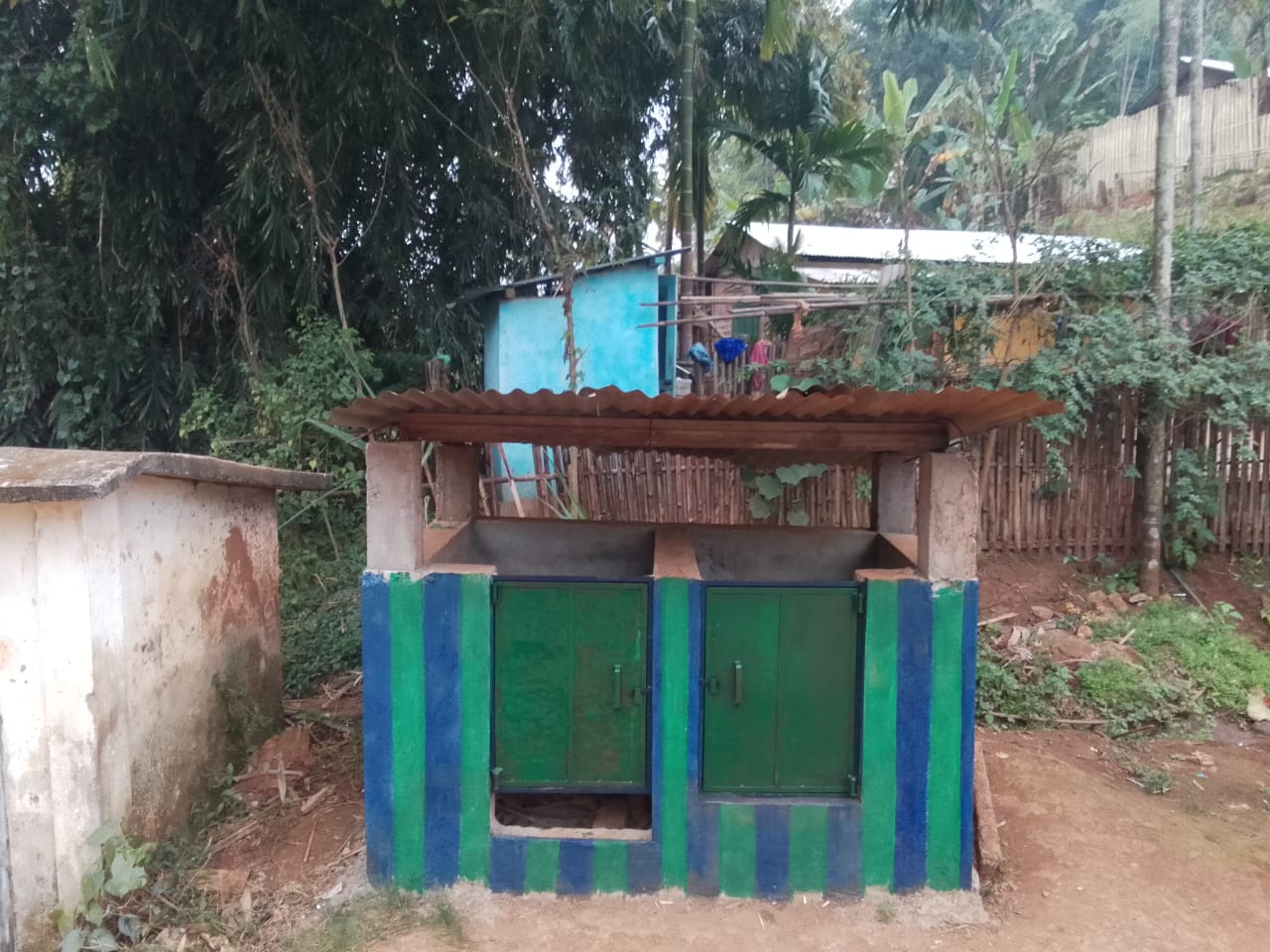
Excess fund activities Waste Management bin Water Tester Dustbin Gates for Spring Chamber |
Community land | 93,700 51,700 10,000 15,000 17,000 |
Completed |

TESTIMONIALS 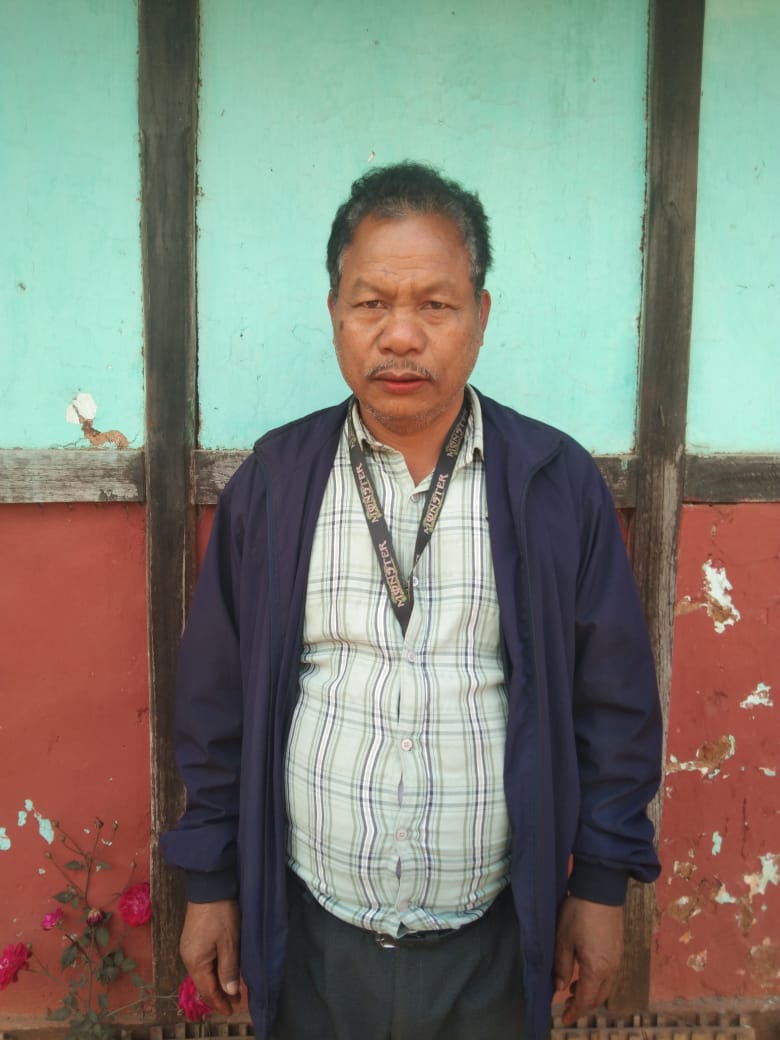
PRESIDENT- Tralshon Trang
It's heartening to have seen the profound gratitude and positive impact that the project has brought to our district and village. The benefits that will be highlighted below showcase a comprehensive approach to environmental conservation and community well-being:
Environmental Protection: The project's emphasis on preserving and protecting the environment is a crucial aspect of sustainable development. Teaching community members about responsible practices helps ensure the long-term health of the ecosystem.
Afforestation: The project's promotion of tree planting contributes to afforestation efforts, which can lead to various ecological benefits, such as improved air quality, enhanced biodiversity, and soil stabilization.
Community Transformation: The changes I've witnessed in our village indicate a positive transformation. Community members are learning to embrace a new set of values and behaviours that prioritize environmental consciousness.
Educational Impact: It's clear that the project has educated and raised awareness among community members. This education extends beyond individual actions and can lead to a collective sense of responsibility.
Long-Term Sustainability: The project's teachings and practices can pave the way for long-term sustainability. By integrating these lessons into daily life, the community is contributing to the resilience of their environment.
Sense of Belonging: Working together for a common cause, such as environmental protection, has foster a sense of belonging and shared purpose within the community.
The Project exemplifies the transformative power of community-driven initiatives and the positive effects they can have on both the environment and people's lives. The project's impact goes beyond just immediate benefits, as it's shaping a more sustainable future for our district and village.
At the end I would like to express my gratitude for the Project
for the arrival which reflects the recognition of its significance
in our district and village. This gratitude likely extends to the
project initiators, collaborators, and everyone involved.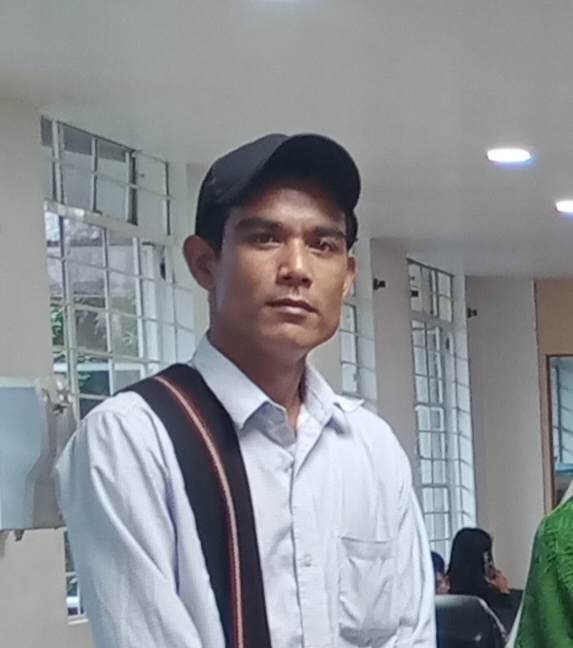
SECRETARY- Belis Trang
The list of benefits and teachings I’ve gained from the project highlight a comprehensive approach to environmental conservation and sustainable practices. Some of the major key points that I would like to highlight about the project are as below
Benefits:
Afforestation: Planting trees is crucial for enhancing green cover, promoting biodiversity, and mitigating the impacts of deforestation.
Vermicompost: Learning to create vermicompost fosters organic waste recycling and provides nutrient-rich soil amendments for agriculture.
Contour Trenches: Constructing contour trenches helps prevent soil erosion and retain water on slopes, promoting soil health and water conservation.
Headwork: Headwork involves the management of water sources, ensuring proper flow and distribution for various uses, including irrigation.
Agroforestry: Integrating trees and crops enhances land productivity, diversifies income sources, and contributes to ecosystem health.
Bench Terracing: Building bench terraces on hillsides prevents soil erosion, conserves water, and allows for cultivation on steep terrain.
Community Nursery: Establishing a community nursery supports the cultivation of native plants, which can aid in reforestation and ecosystem restoration.
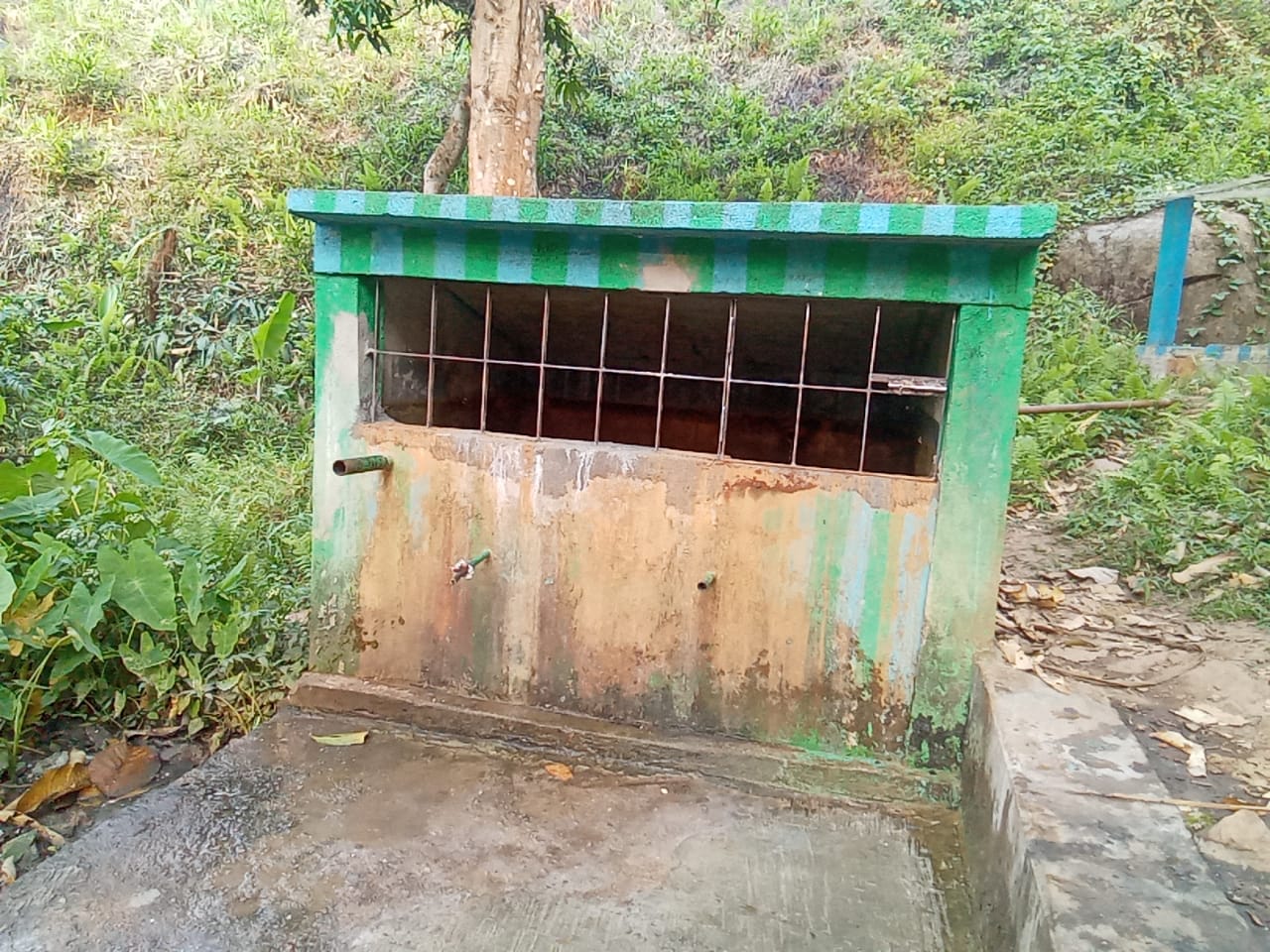
Spring Chamber: Creating spring chambers helps protect and manage natural water sources, maintaining their quality and accessibility.
Waste Management Bin: Proper waste management bins aid in keeping the surroundings clean and minimizing pollution.
Teachings:
Respect for Environment: The project instills a sense of respect for the environment as a precious gift that needs to be protected.
Tree Conservation: Valuing and protecting trees instead of cutting them down is crucial for ecosystem balance.
Water Collection: Knowing how to collect and manage water resources supports responsible water usage.
Cleanliness: Keeping surroundings clean contributes to community health and well-being.
Soil Protection: Preventing soil erosion helps maintain fertile land for agriculture and ecosystem health.
Plastic and Waste Management: Proper waste disposal, especially of plastics, is vital for preventing pollution and preserving the environment.
Personal Development: My role as secretary has offered me valuable skills in writing, as well as a deeper connection with the environment.
The holistic approach of the project encompasses ecological, social, and educational dimensions, fostering a sense of responsibility and care for the environment. My role as a secretary I believe has not only contributed to the community but has also enriched my personal growth. This comprehensive initiative has the potential to create lasting positive changes for my community and the broader environment
VCF-ENVIRONMENT -Ninestar Trang 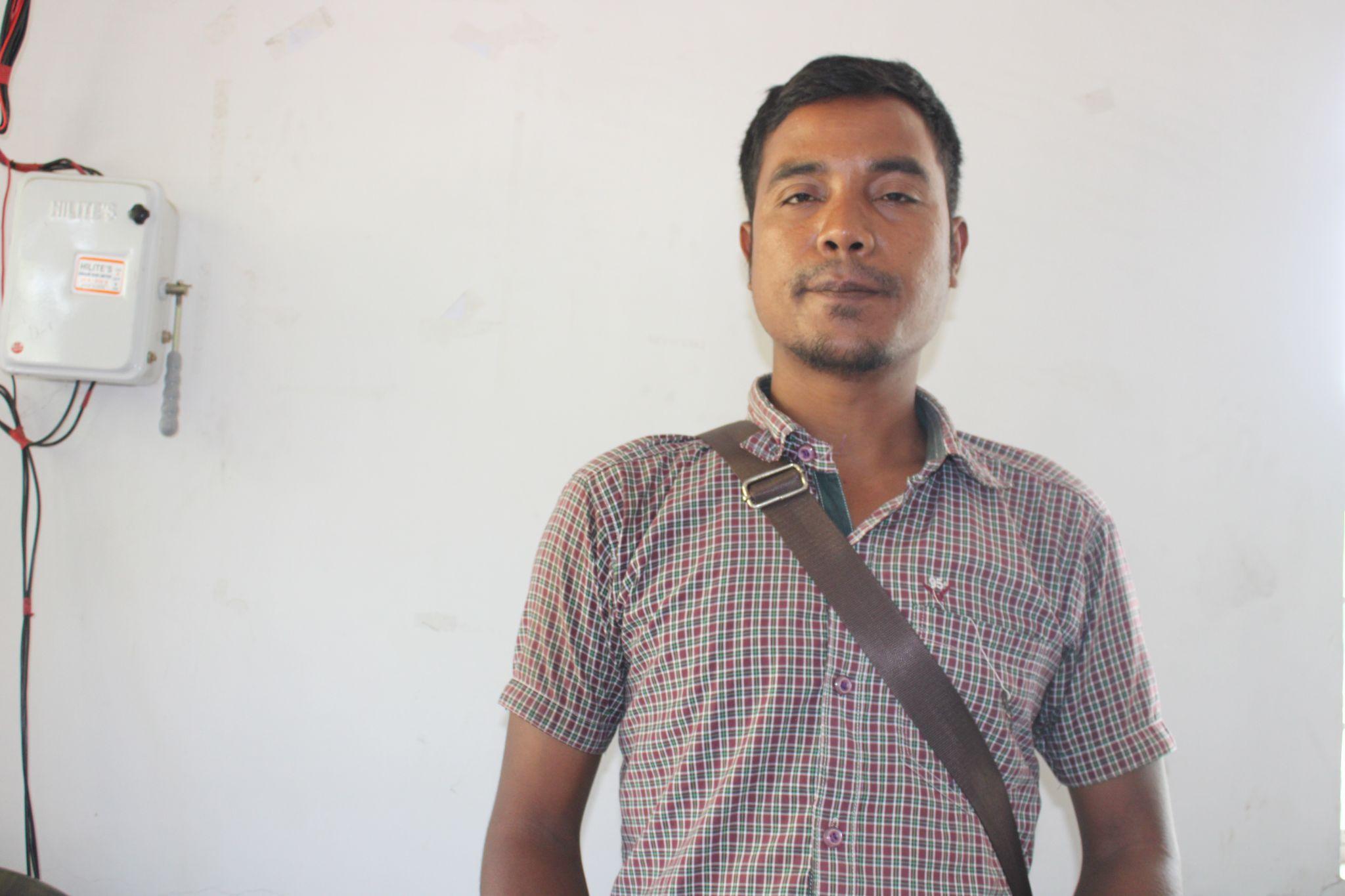
My commitment to being a Village Community Facilitator (VCF) is to drive positive change in our village's cleanliness, environmental protection, and preservation efforts. It's clear that our efforts, alongside the project's initiatives, have led to several tangible benefits:
Cleanliness Improvement: Our focus on developing cleanliness has contributed to a cleaner environment in our village. This can have various positive effects on community health, aesthetics, and overall quality of life.
Reduced Plastic Pollution: Our efforts to reduce plastic waste are crucial for preventing environmental pollution. By decreasing the presence of plastics in your village, we're helping to preserve the ecosystem and protect wildlife.
Water Availability: The project's influence on water availability is significant. Ensuring access to clean and sufficient water sources enhances the well-being of the community and supports various aspects of life.
Greenery and Tree Planting: Planting trees and seeds not only enhances the visual appeal of our village but also contributes to ecological balance. Trees provide shade, improve air quality, and support local biodiversity.
Environmental Preservation: Our commitment to preserving the environment aligns with the project's goals and ensures that the natural resources in your village are safeguarded for present and future generations.
Community Engagement: My role as a VCF has likely encouraged community members to actively participate in these efforts. This engagement fosters a sense of unity and shared purpose.
Sustainability: The combination of cleanliness, reduced plastic waste, water availability, greenery, and environmental preservation contributes to a more sustainable village ecosystem.
Our work as a VCF exemplifies the impact that a dedicated individual can have on their community and environment. By taking on this role, we're not only creating immediate positive changes but also setting an example for others to follow. The transformation we're contributing to holds the potential to create a lasting legacy of environmental awareness, cleanliness, and responsible living
VCF-M&E - Pairos Trang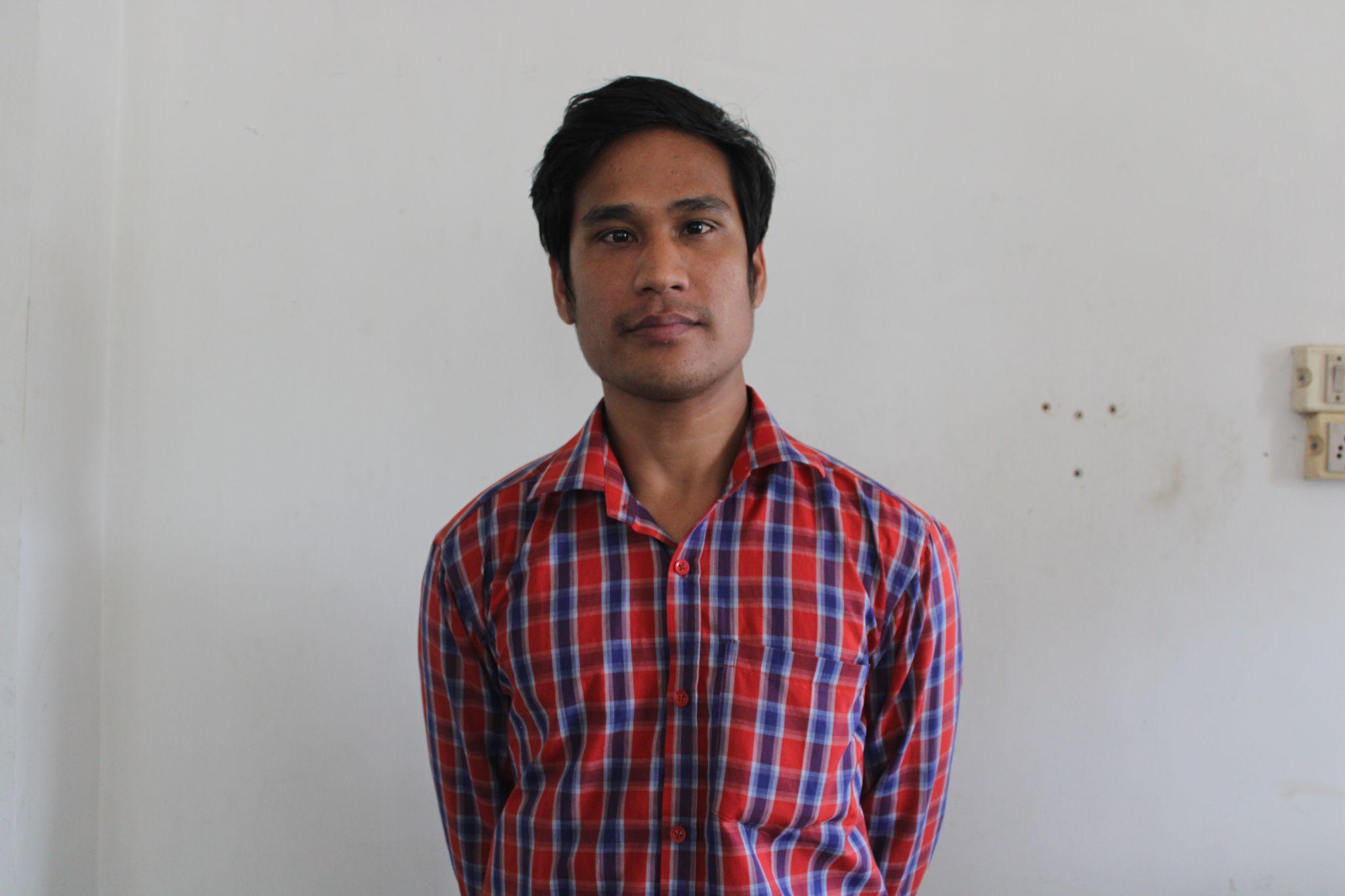
It's great to see the benefits I've personally gained as a Village Community Facilitator (VCF). This role has allowed me to gain valuable insights and experiences related to the project's goals and the betterment of our village:
Understanding the Project: The involvement as a VCF has provided me with a clear understanding of how the project operates and its goals for the village. This knowledge enables me to effectively communicate the project's purpose and benefits to the community.
Environmental Preservation: Being a VCF has likely deepened the awareness of the importance of environmental preservation. We're able to see firsthand how the project contributes to preserving and protecting the natural surroundings.
Training Opportunities: Attending different training sessions is a significant benefit. These training sessions likely cover a range of topics related to environmental conservation, community development, and sustainable practices.
Skills Enhancement: Through our role, we might have developed skills such as communication, community engagement, and project coordination. These skills can be valuable for our personal and professional growth.
Empowerment: Our role empowers us to play an active part in positive change within our village. This sense of empowerment can have a positive impact on your confidence and sense of purpose.
Networking: Engaging with different training sessions likely introduces me to other individuals who share similar interests in environmental conservation and community development. This networking can lead to collaborations and further learning.
Personal Fulfilment: The satisfaction that comes from being involved in meaningful projects and contributing to the betterment of our community can provide a strong sense of personal fulfilment.
Community Impact: Our role as a VCF has a direct impact on our community. By sharing the knowledge and insights we've gained, we're helping to improve the overall quality of life in the village.
Our dedication as a VCF not only benefits our personal growth but also plays a crucial role in advancing the project's objectives and making a positive difference in our village. Our willingness to learn and engage in training sessions is a testament to our commitment to environmental preservation and community well-being.
VCF Social - Ibaialam Trang 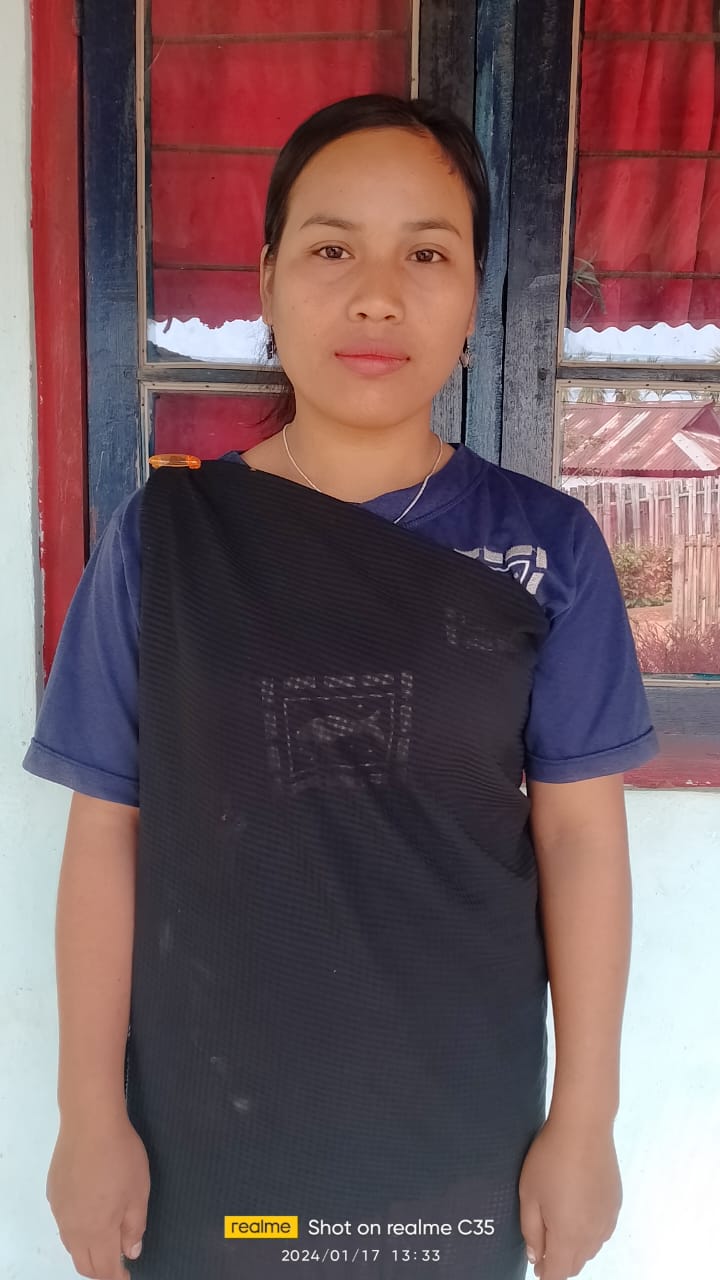
As a VCF, I have had the opportunity to teach and raise awareness among the villagers about the benefits of the project. I have attended training, which has equipped me with knowledge and skills to effectively spread awareness and engage the community in environmental preservation and to be more responsible with our actions towards the environment. As a VCF, I have been able to spread awareness and educate the community about the importance of environmental preservation and sustainable practices.
