VILLAGE REPORT
SOHKHYLLAM VILLAGE
MAWKYRWAT C& RD BLOCK, SOUTH WEST KHASI HILLS DISTRICT
COMMUNITY LED LANDSCAPE MANAGEMENT PROJECT


Community Led Landscape Management Project (CLLMP)
The Government of Meghalaya with the financial help from the World Bank has been implementing the Meghalaya Community Led Landscape Management Project (MCLLMP). The project covers the entire state of Meghalaya and implementation of community led plans have been rolled out in phase manner throughout the state. The Meghalaya Basin Management Agency (MBMA) had facilitated the community-led planning by providing support, technical inputs and funding.
The project had strengthened community-led natural resources management in selected landscapes within the 12 districts of the state. This has been achieved through a variety of planning, capacity building, and on-the-ground interventions to promote the conservation, sustainable use of natural resources, social inclusion and community mobilisation; building traditional knowledge and learning, mapping of natural resources management; strengthening the community institutions and creating linkage with financial institutions and community organizations.
The project interventions include the preparation of community led natural resource management plans. The CLLMP has the following three components:
Strengthening Knowledge and Capacity of Communities for Natural Resources Management
Community-Led Landscape Planning and Implementation
Project Management and Governance
The project objective is “to manage and conserve the natural resources, especially forests, soil and water sources, in a manner that supports the financial and physical well-being of communities in the State”
SCOPE:
The CLLM-Programme focuses on increasing the capacities of communities and traditional institutions (TI) by adopting a landscape approach to manage their natural resources such as soil, springs and other water sources, forests and bio-diversity, etc.
The project has been planned and implemented in about 400 villages across the state.
CLLMP has a strong focus on institution-building at the village-level, by ensuring systematic capacity-building on technical and social skill-sets.
The project has also extended such trainings to communities beyond the targeted villages and support efforts made by them to access funding from various rural and natural resources initiatives and schemes.
The programme has also invested in improving the process and outcome delivery, by developing and adhering to effective systems and procedures, supported by the appropriate technology.
BENEFITS:
Benefits for community (Skills and Capacity relating to technical and managerial areas like NRM and Conflict resolution.
Benefits to traditional institutions (village councils, traditional leaders, community-based organizations, SHGs etc) through Knowledge sharing, promotion of innovative approach, access to technology, technical managerial and financial support.
It has been estimated that the project has impacted around 1 lakh partners (of which 50% are women) who depend on land, forest, agro forestry.
Through the project, 55000 Ha of targeted area has been ensured with availability of water, biological resources and soil productivity, which has in turn benefitted around 400 villages and the outcomes delivery can be summarized as follows.
IMPLEMENTATION AGENCY:
The Project has been executed by the MBMA in collaboration with other partners particularly, SIRD (for training and capacity building), Department of Soil and Water Conservation, Water Resource Department, Forest Department, specifically with respect to technical inputs, safeguards management and Community NRM plan preparation.
PROJECT PERIOD:
2018-2023 (5 years)
CONTENTS PAGE NO
INTRODUCTION.
Brief History about the village _______________________________ 5-6
Social Profile of the village _________________________________ 06
Village Accessibility __________________________________ 06
Literacy Rate ________________________________________ 06
Population __________________________________________ 06-07
Occupation _________________________________________ 07-08
Fuel Type __________________________________________ 08
Card Holding Household ______________________________ 09
Drinking Water ______________________________________ 09
Cultivable Land Area _________________________________ 09
Forest Cover ________________________________________ 09
Forest Species _______________________________________ 09
Water Bodies _______________________________________ 10
Area Affected _______________________________________ 10
CLLMP ACTIVITIES:
GROUND TRUTHING ________________________ 10-11
Sensitization Program _____________________________ 12-13
Signing of EOI, VGA and Green Charter ______________ 13
Formation of The VNRCM _________________________ 13
Village functionaries _________________________ 13-15
Village Community Facilitator ________________ 15-16
Procurement Member ________________________ 16-17
Opening of Bank Account _________________________ 17
Participatory Rural Appraisal Exercise ______________ 18-22
GIS Activities _________________________________ 23-24
The Proposed List of Intervention _________________ 24-25
Project Implementation & Fund status_______________ 26-48
Ground Testimonials _____________________________ 49-
INTRODUCTION
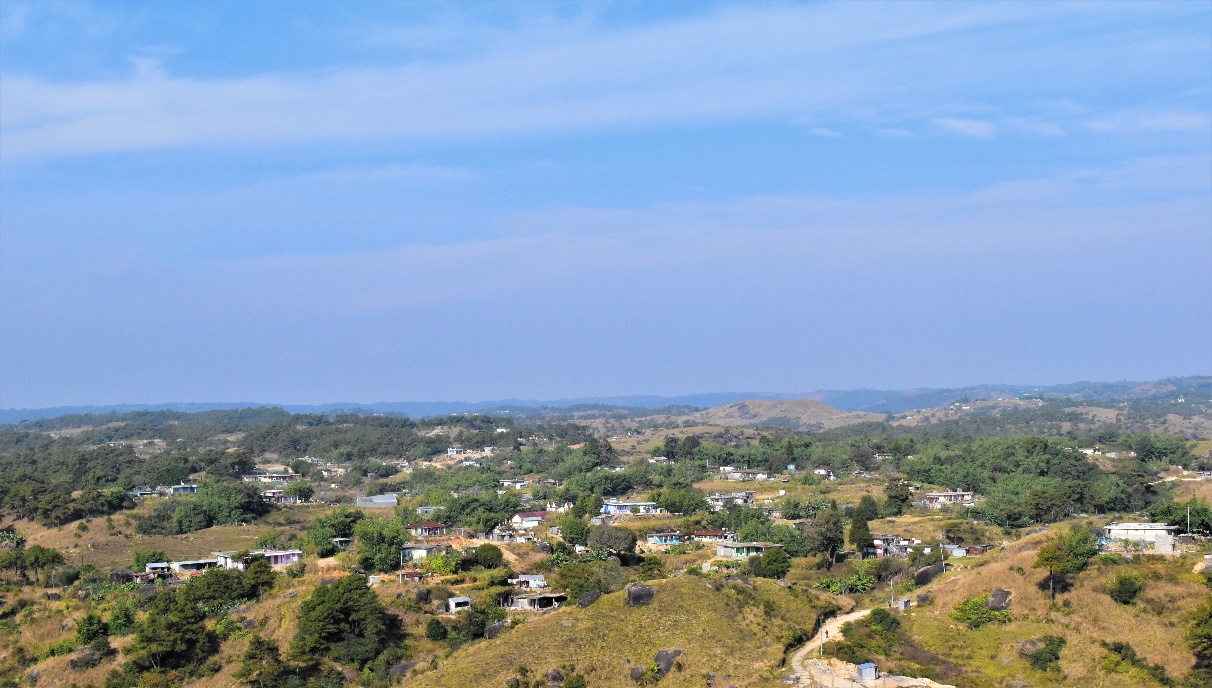
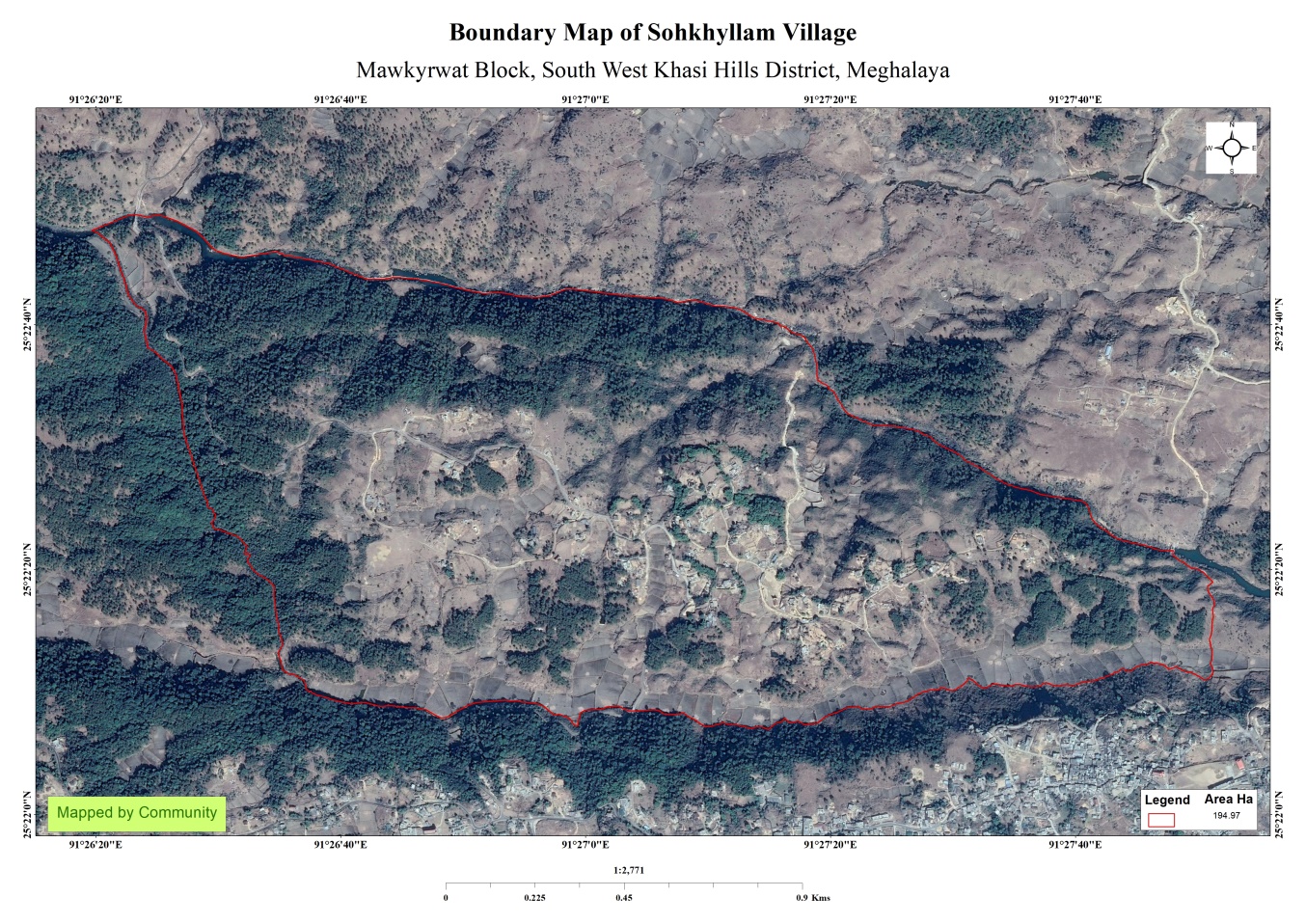
Sohkhyllam village falls under Mawkyrwat C&RD Block of South West Khasi Hills District in the state of Meghalaya in India. The village has a distance of 2 kms from Block Headquarter and 5 kms from Mawkyrwat, the District Headquarter. It falls under Hima Maharam Syiem Ship with a total geographical area of 194.97 ha and a total population of 796 villagers. All the resident of Sohkhyllam village belonged to the Khasi Scheduled Tribe. The average rainfall is 1200mm and the type of soil is Loamy.
BRIEF HISTORY:
Sohkhyllam is one of the oldest villages under Hima Maharam, South West Khasi Hills District. There was a legend about ‘SOHKHYLLAM’. It was told to us by our forefathers that at the time when the first inhabitants arrived at the village for settlement, they found out one peculiar tree called u ‘Diengsohkyllam’ (an Almond Tree). ‘Sohkhyllam’ is a fruit of the tree called dieng Sohkhyllam. It is a kind of fruit with a peculiar taste to one who eats it. Chewing it, at first it will produce a sour and bitter taste but if one -continues to eat and chew for some time it will produce a very fine and sweet taste.
It is supposed that 250 years earlier, the first settler was a woman named, Ka Phet and till this date has a locality named after this woman. But due to unfortunate incidents, she left the place and since then her whereabout was not known. The monoliths that she had constructed in her garden proved that this story is true.
Though the year of establishment could not be assessed clearly but approximately it was established somewhere around the year 1816-20. It was first settled by four households of the Syiemlieh clan from Sakwang village and the Jyrwa clan from Jakrem village. They came as cultivators practising shifting cultivation; but after some years they had settled permanently. Then followed the Lyngkhoi clan from Shngimawlein area due to marriage relationship. The Wanniang clan also came from Mawlangwir village due to the same reason. The other clans that came later for settlement were the Shangdiar from Mawbidong, the Lyngdoh from Mawlangwir and Marshilong, the Thyrniang clans from Rangblang, also came and settled here due to marriage relationship.
SOCIAL PROFILE OF THE VILLAGE:
Sohkhyllam village has a total number of 128 households having a total population of 796 villagers. People in this village mainly depend on agriculture and it allied for their livelihood. There are teachers, businessmen and some others are engaged with government services.
VILLAGE ACCESSIBILITY: In order to reach Sohkhyllam one must travel 3 kms away from district headquarter through Mawkyrwat P.W.D. road via Mawlangwir-Nonglang Road and Sohkhyllam-Wahsiej Road.
LITERACY RATE: As per census 2011, the literacy rate of Sohkhyllam is 85.8%. The Male literacy rate is 86.46% and the female literacy rate is 85.2%. There are 3 numbers of school in Sohkhyllam village, where 2 are Lower Primary School and one is a secondary school.
POPULATION: As on 5th March 2023 Sohkhyllam village has a total population of 796. Out of this 398 are Males and 398 are Female.
| Age groups | Male | Female | Total |
|---|---|---|---|
| 0-4 | 23 | 36 | 59 |
| 5-14 | 104 | 107 | 211 |
| 15-30 | 155 | 143 | 298 |
| 30-60 | 81 | 102 | 183 |
| Above 60 | 16 | 12 | 28 |
OCCUPATION:
Majority of the people of Sohkhyllam village rely mostly on agriculture and out of 128 households within the village 98 households are farmers, 7 households are in Government service, while 9 households are engaged in business and 14 households are teachers.
FUEL TYPE:
| Type of Fuel | No. of Households | Quantity (Kg/HH) | Total |
|---|---|---|---|
| Wood | 98 | 900 kg lyr | 10,58,400 kg |
| Biomas/Light | 2 | 1500 kg lyr | 36,000 kg |
| LPG | 28 | 10,200 kg lyr | 2,85,600 kg |
CARD HOLDING HOUSEHOLDS:
| Particulars | No of Households |
|---|---|
| BPL Cards | 38 |
| APL Cards | 90 |
DRINKING WATER:
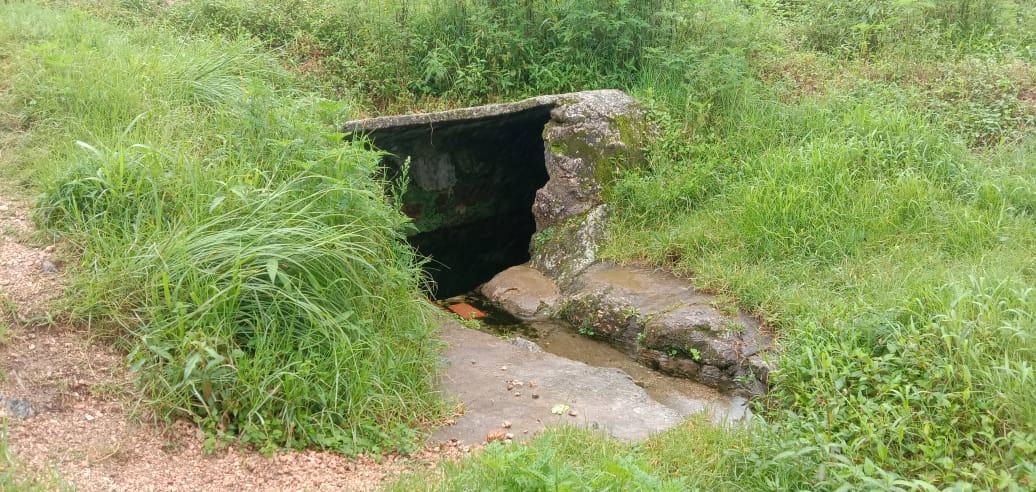
The people of Sohkhyllam village have access drinking water mainly from the springs that are within the village. Government water supply lines are also available in this village. But over the years there has been the scarcity of water supply in the village especially during the month of December to April due to less discharge of water from the spring sources, lack of pipelines and the increase of human population and their daily requirements. There are 4 springs within the village which are perennial that people use for drinking viz. Nongtepdieng, Rngeimawsaw, Dommawphet and Wahlonghung.
CULTIVABLE LAND AREA:
The area of cultivable land under agri-horticultural area in Sohkhyllam is 29.47 ha. The type of soil is loamy. People practise shifting cultivation in their own private lands. The main crops of Sohkhyllam village are paddy, maize, potato, sweet potato and cash crop is squash, Coriander, Cabbage, Mustard oil, Carrot, Cauliflower, radish. They also use to plant fruits like peach, plum etc.
FOREST COVER
The total forest cover under Sohkhyllam village is 76.78 ha. Most of the forest cover are on private land and the quality of the forest is moderate. People uses the forest products mainly for fuelwood, timber as medicines, aromatic plants and for other purposes. There is one Community Forest called Mawbyrsin and some of the forest that falls on the private land within the village are Rohmisaw, Kynroh, Rangkshu, Thepdiiang, Nongtwah, Lawriat, Photstew, Sohpian, Pynden Photbah and Domkhlaw.
FOREST SPECIES:
Some of the indigenous tree species found in this village are Diengkseh, Diengsning, Diengraikup, Diengshit, Dieng-ngan, Diengpei, Diengsohma, Dienglingim, Diengsyiang, Dienglaniar, Diengsohkhawshi, Diengkain, Diengsohphiekhlaw, Diengshangsyiar, Diengpuinwait, Diengsohot, Diengturilang, Diengjariat, Diengsong, Diengsohkynbaitblang, Diengsohpian. There are some plant species used by the people of the community for medicinal purposes like Diengsohlang,Jatira, Jale,Sohkrot,Sohiong,Diengsohphie and Jamyrdoh. The forest is home to many vulnerable faunas like wild birds, clouded leopard, foxes and rabbits.
WATER BODIES:
Total area of water bodies in Sohkhyllam is 2.66ha. There are about 4 springs within the village which have been mentioned above which people use mainly for drinking purpose. Some of the lakes within the village are Karabyrthad, Mawlangdep and Setkhla and some the streams within the village are Photsaitsnier and Rohmisaw which are all perennial and are mainly use for washing, irrigation and fisheries. Only one river within the geographical area of Sohkhyllam i.e. Wahsala/Photsala
AREA AFFECTED:
Approximately about 26.16ha of forest land have been degraded over the years due to soil erosion, forest fires, excessive felling of trees which have led to the loss of productivity of the land and the loss of the saplings and other natural resources About 7.42ha of cultivable land have been affected by the excessive use of fertilizers and 5.7ha of land have been degraded over the years owing to human settlement and culturable wastelands.
CLLMP ACTIVITIES
GROUND TRUTHING:
The CLLMP officials had a meeting with village Headman of Sohkhyllam village, Mr.Prosperly Wanniang and Mr.Resparland Lyngdoh the village Secretary and the other village representatives for field assessment and sensitize them based on the objective of the project. After the field assessment Miss.Lakyntiew Dkhar (FE) provided the DPMU CLLMP with all the important information regarding the current scenario on natural Resource Management and Landscape of the village for further requirement of the project regarding the project objective.
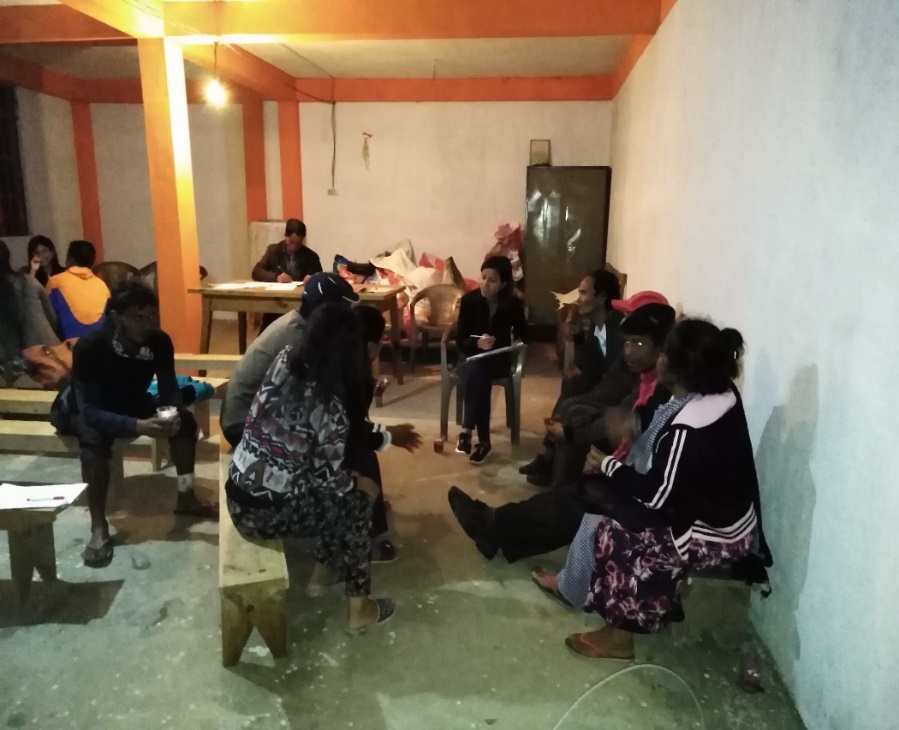
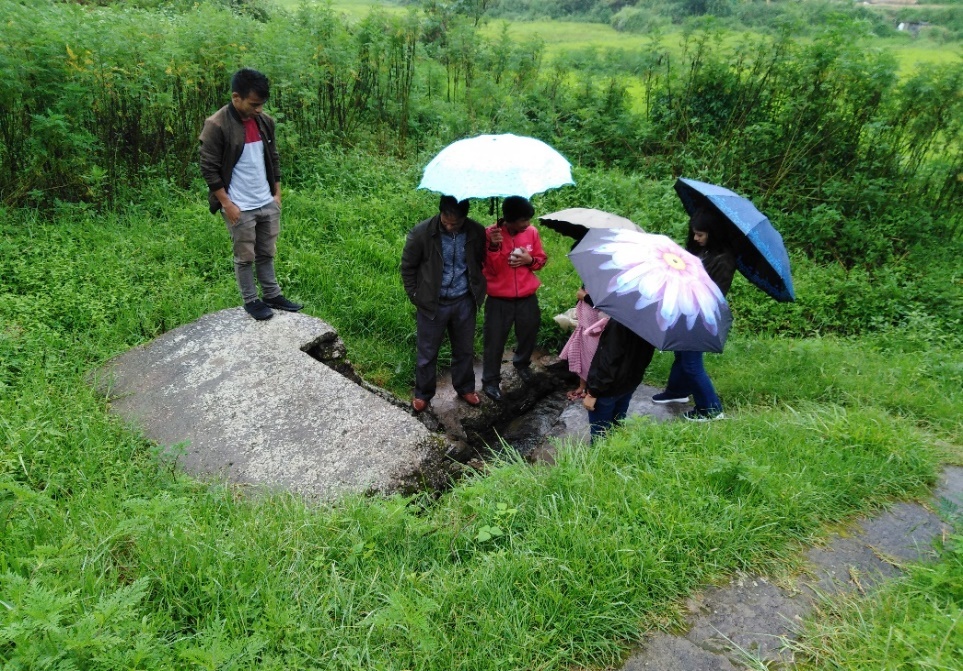
Figure: Ground Truthing in Sohkhyllam village
CASE FINDING:
• Most of the household falls under the BPL category.
• They have an actively performing VEC in the village.
• There are nine Communities that look after water and sanitation of the village.
• There are Nine Self Help Group for livelihood activities.
• The land within the village falls under the Hima Maharam Syiemship.
• The source of water supply in the village is from two sources: private and public.
• There are a few patches of degraded land that has been left unused.
SENSITIZATION PROGRAMME:
The District Project Manager Mr. J. Wanniang along with the staff held a village Level Sensitization Programme on the Community Led Landscape Management Project (CLLMP) on the 8th July, 2019. The villagers actively participated in the program, voicing out their concerns and questions regarding the project making it a huge success.
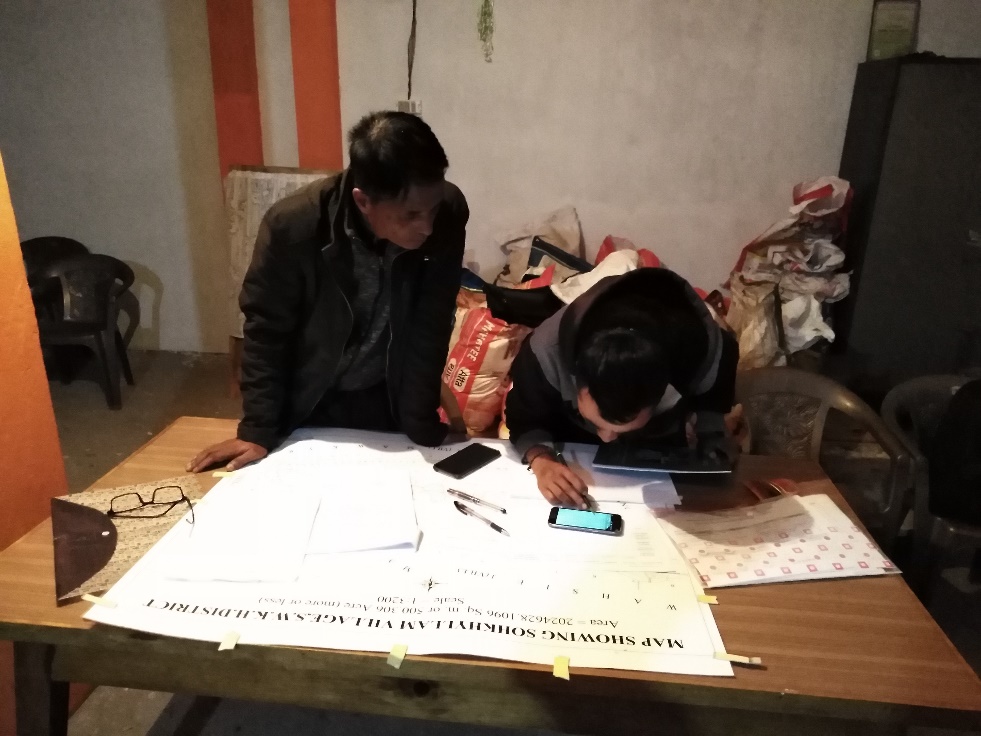
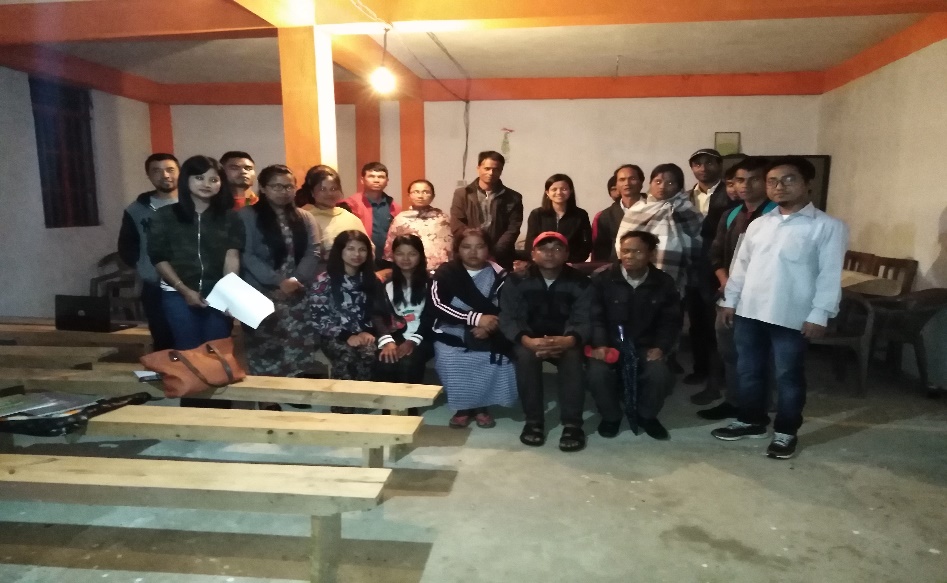
Figure: Ground Truthing in Sohkhyllam Village
HIGHLIGHTS OF THE MEETING:
• Awareness about the Community Led Landscape Management Project (CLLMP).
• Laying the importance on the involvement of the community in making the CNRM plan and its success.
• An interactive session was held to answer doubts of the villagers regarding the project.
SIGNING OF EOI, VGA AND GREEN CHARTER:
On 08th July, 2019 Sohkhyllam village signed the EOI (Expression of Interest), VGA (Village Grant Agreement) and the Green Charter after there was a uniform agreement by the people of the entire Community that the Community Led Landscape Management Project (CLLMP) be implemented at Sohkhyllam village.
FORMATION OF THE VNRMC:
The formation of the Village Natural Resources Management Committee was done in a public meeting on the 18th July, 2019 in the presence of the entire village and the CLLMP Staff. The people of the community chose the President, The Secretary, the Purchase Committee members and the other Executive members to formed the Sohkhyllam VNRMC. There are 9 Executive members, 3 Village community Facilitator and 3 Purchase Committee members.
List below are the members of the VNRMC
| Sl No | Name in Full | Gender M/F | Age (in Yrs) | Education | Designation | Occupation | Community | Contact No and email address |
|---|---|---|---|---|---|---|---|---|
| 1 | Prosperly Wanniang | Male | 53 | BA | President | Teacher | Khasi | 8787621018 |
| 2 | Merihun Lyngkhoi | Female | 28 | BA | Secretary | Teacher | Khasi | 7005973621 |
| 3 | Pynskhembor Jyrwa | Male | 26 | BA | Finance Secretary | VRP | Khasi | 8787637378 |
| 4 | Rev.L.EJyrwa | Male | 33 | BA,BD | Member | Pastor | Khasi | 8837409484 |
| 5 | Bushningwell L.Sangriang | Male | 41 | BA | Member | Teacher | Khasi | 8837480998 |
| 6 | Justwellin Marwein | Male | 43 | XII | Member | Bussiness | Khasi | 9366095997 |
| 7 | Shidalin Marngar | Female | 42 | BA | Member | Teacher | Khasi | 9366516570 |
| 8 | HelbisJyrwa | Female | 36 | X | Member | ASHA | Khasi | 9615444628 |
| 9 | Debora Jyrwa | Female | 28 | XII | Member | Farmer | Khasi | 8415076995 |
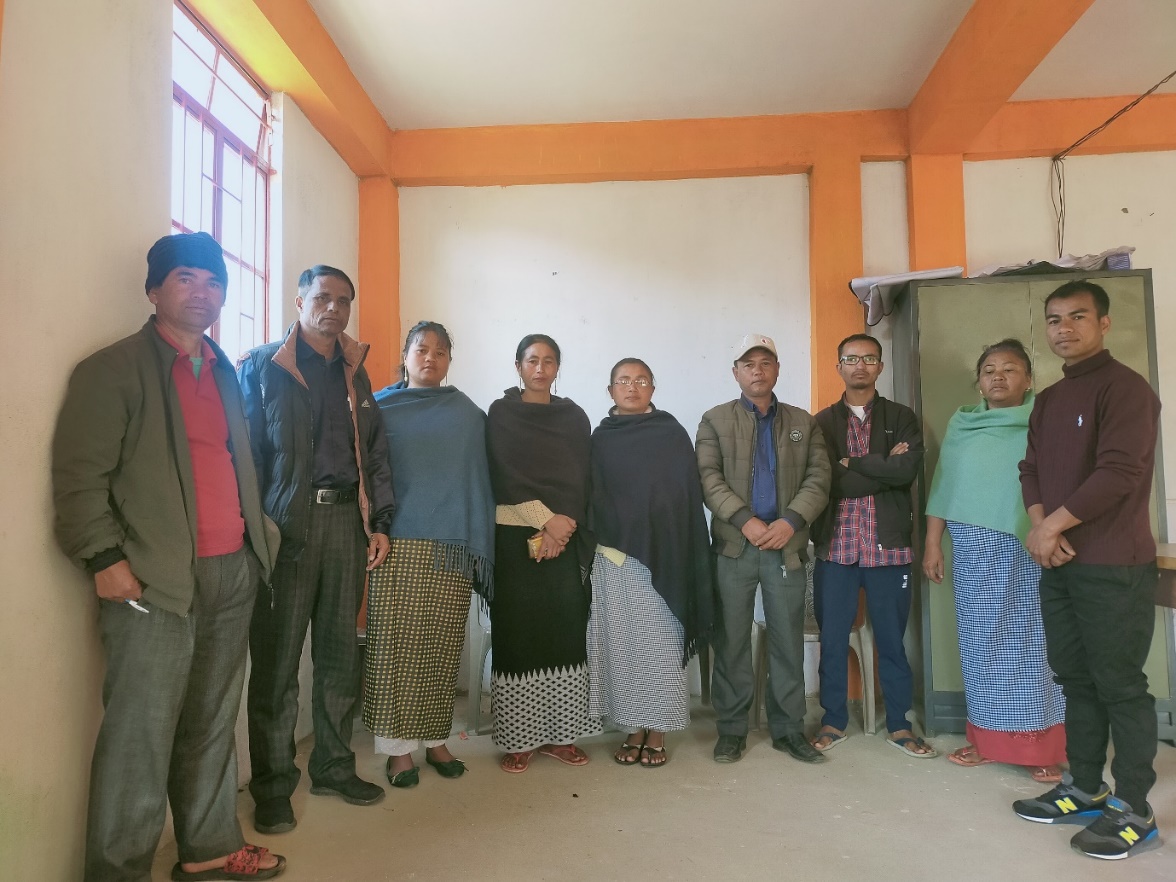
Fig. Members of the VNRMC
| Sl No | Name in Full | Gender M/F | Age | Education | Designation | Occupation | Community | Contact No and email address |
|---|---|---|---|---|---|---|---|---|
| 1 | P. Wanniang | Male | 53 | BA | Myntri | Teacher | Khasi | 8787621018 |
| 2 | Resparland Lyngdoh | Male | 45 | XII Science | Secretary | Govt Servant |
Khasi |
8787723741 |
| 3 | K Wanniang | Male | 45 | BA | Member | Teacher | Khasi | 8837085556 |
| 4 | B.Sangriang | Male | 45 | BA | Member | Teacher | Khasi | 8787480998 |
| 5 | E. Jyrwa | Male | 35 | BA BD | Asst Secretary | Pastor | Khasi | 8837409484 |
| 6 | Lurshai Jyrwa | Male | 38 | XII Sc | Member | Govt Servant | Khasi | 9366150003 |
| 7 | Darity Lyngdoh | Female | 36 | BA | Secretary Women Wing | Teacher | Khasi | NA |
| 8 | Josterland Jyrwa | Male | 25 | BA | G.Secretary Seng Samla Shnong | Teacher | Khasi | NA |
| 9 | Wireless Nongsiej | Male | 48 | C | Finance Secretary | Self Employed | Khasi | NA |
| 10 | Pynskhembor Jyrwa | Male | 25 | BA | Sec. VWSC | Self Employed | Khasi | 8787637378 |
| 11 | Helbis Jyrwa | Female | 36 | X | Sec. VHSNC | Asha | Khasi | NA |
| 12 | Donborlang Jyrwa | Male | 29 | XII | Sec. VLCC | Self Employed | Khasi | NA |
| 13 | Bushingwell L. Sanriang | Male | 45 | BA | Sec. Village Energy Committee | Govt. Servant | Khasi | NA |
| 14 | Darity Lyngdoh | Female | 34 | BA | Sec. Women’s Wing | Teacher | Khasi | NA |
| 15 | Elderpaulson Lyngdoh | Male | 30 | BCA | Sec. Sport Club | Govt. Servant | Khasi | NA |
| 16 | Pynshngainborlang Lyngdoh | Male | 28 | BCOM | Sec. VDP | Govt. Servant | Khasi | NA |
| 17 | Khainstar Wanniang | Male | 45 | BA | Sec. Trust Committee | Teacher | Khasi | NA |
| VILLAGE COMMUNITY FACILATATORS (VCF) | ||||||
|---|---|---|---|---|---|---|
| Sl.No | Name | Age | Gender | Qualification | Contact No | Role |
| 1 | Baniengskhem Jyrwa | 23 | Male | BBA | 8414023320 | ME & PM |
| 2 | Happiness Jyrwa | 27 | Female | BA | 9378179910 | Social & KM |
| 3 | Ibankerlin Lyngdoh | 26 | Female | BA | 6033002667 | Evt & GIS |
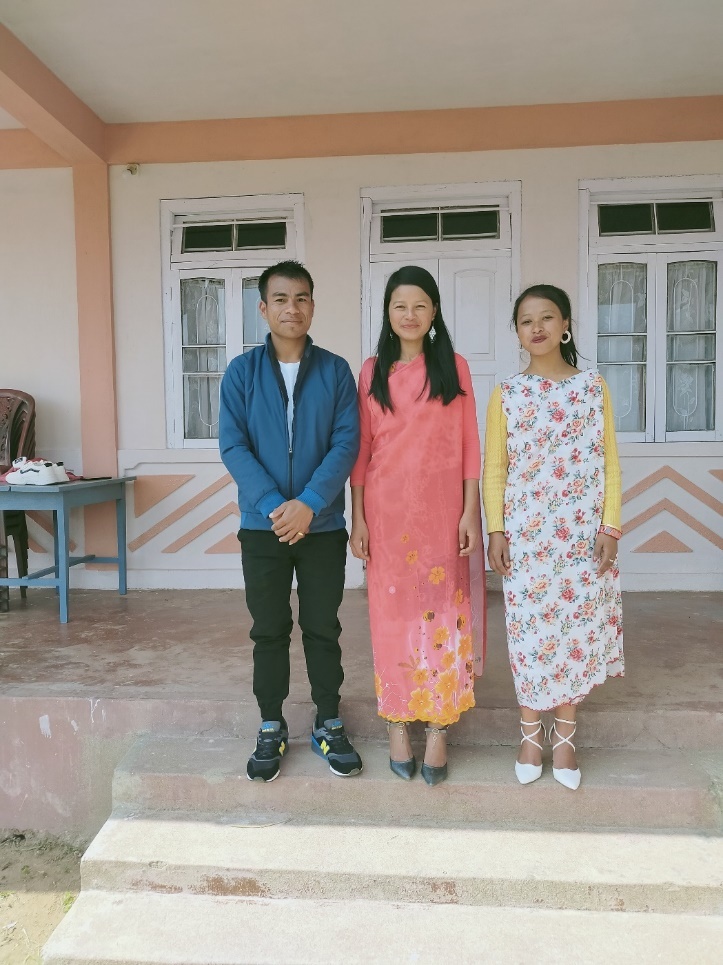
Fig. Village Community Facilitators
| PROCUREMENT MEMBERS | |||||
|---|---|---|---|---|---|
| SL.NO | NAME | AGE | GENDER | QUALIFICATION | CONTACT NO |
| 1 | Sendratiful Jyrwa | 45 | Female | IX | 9862623031 |
| 2 | Pynshaiborlang Syiemlieh | 33 | Male | BA | 9366342549 |
| 3 | Khainningstar Wanniang | 45 | Male | BA | 8837085556 |
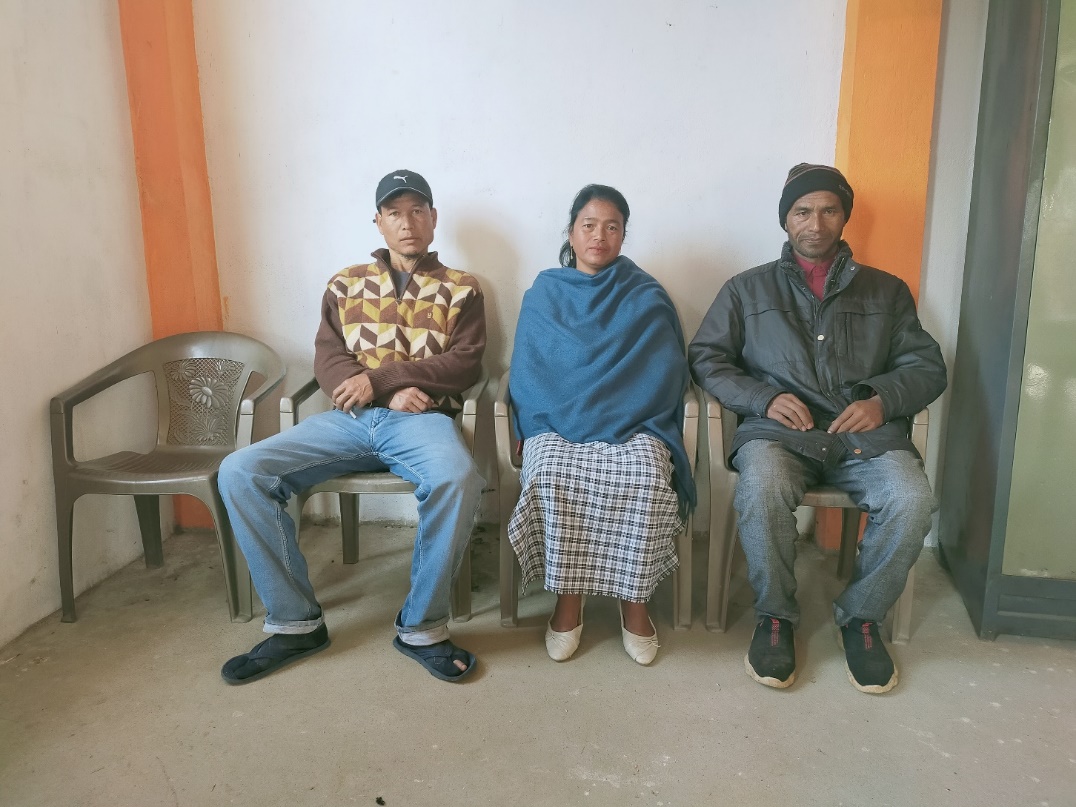
Fig. Purchase member
OPENING OF BANK ACCOUNT:
The opening of the bank account was done after the signing of the EOI (Expression of Interest), the VGA (Village Grant Agreement) and the signing of the Green Charter. The Accountant of CLLMP South West Khasi Hills trained the Purchasing and Procurement Committee of Sohkhyllam village on matters relating to Accounts and Book Keeping.
1. Principles of Community Procurement.
2. Benefits of Community Procurement.
3. Important aspects undertaken by Community Procurement.
4. Procurement Process/Steps.
5. Function of Purchase Committee.
6. Important Procurement records to be maintained.
7. Financial limits and methods.
8. Maintaining of Books of Accounts to the Book Keeper.
PARTICIPATORY RURAL APPRAISAL EXERCISE:
The PRA exercise aims to incorporate the knowledge and opinions of the community in the planning and management of development projects and programmes.
The PRA exercise took place on the 8th July, 2019 and the villagers took part in this exercise and also contributed their time and knowledge to this project.
The District Project Manager gave the introduction and spoke about the different activities that the participants had to take part in the programme.
The Program Associate, Environment Management, spoke about the different CNRM plans and the different types of intervention. A group of participants interacted and helped in the collection of data based on the environmental template. With the help of this group, different sites of interventions were identified, analysed and evaluated in order to prioritized the areas that needed the natural resources management.
The Assistant Manager, Social Management, gathered the remaining group of participants to gather the baseline data bases on the social template.
The main objectives of PRA exercise are:
• To identify the natural, human and economic resources of the village.
• To identify the village problems and prioritized them with the help of the community members.
• To prepare the community natural resources management plan of the village.
FINDINGS BASED ON THE INFORMATION GATHERED FROM THE PARTICIPANTS DURING THE PRA/CNRMP EXERCISE:
• The main agro-horticultural produce is paddy, maize, potato, sweet, potato, peach, and plum.
• Most of the household depend on firewood as a source of fuel.
• Drinking water is limited over a period of 3-4 months during the winter season.
• There are two types of forest ownership: Community and Private.
• The springs which are present in the village needs rejuvenation.
• Training on Land productivity, spring shed management and Community nursery is necessary for the village community.
• There are no disputes/constraints encountered within the village community or with any neighbouring villages.
PRIORITIES INTERVENTION REQUIRED BASED ON THE PRA EXERCISE:
• Rejuvenation of the springs within the community through activities such as afforestation, treatment of catchment areas and contour trenches.
• Afforestation, Bio-fencing and fire line control in the community forest.
• Community Nursery for endemic trees.
• Water storage tanks for collecting rain water.
• Check dams for erosion control.
• Afforestation and Roadside plantation.
• Culturable wastelands to be brought under horticulture.
BASELINE DATA SURVEY TO FILL THE ENVIRONMENT AND SOCIAL TEMPLATE:
During the PRA Exercise the External Expert of Social & Environment Management held a group discussion with the different groups to gather basic village information, demographic information, major crops and enterprises taken in the village, trends of production and productivity of major crops in the village and demographic distribution of village population. Information related to land use category such as forest, cultivable land, water bodies, etc. and the problems and challenges related to NRM were discussed.
FOCUSED GROUP DISCUSSION ON PROBLEM ANALYSIS:
Do people have sufficient access to supply of fodder, fuel wood, leaf litter?
Yes, people in the village are sufficient access to supply of fodder, fuel wood, leaf litter.
Has access to timber improved or reduced over the years? How is access for household use and commercial use managed?
Access to Timber has reduced over the years. People have to purchase or buy from the industry when they needed.
Are the water bodies facing any threats?
Some of the water bodies within the village have faced minor threats.
Do all people in the village have access to drinking water? What are the challenges?
Yes, there is sufficient drinking water in the village except during the winter season due to less discharge of water from the spring source.
Are there degraded areas in the village (open/ degraded forests, mining affected, high soil erosion etc.)?
None.
What has caused this degradation? Are there practices causing threats to availability and access to natural resources?
None.
What have been the changes in agricultural practices?
Previously their method of farming is Shifting Cultivation, but over the years with much awareness people have now direct to more conservation practises in order to recover the forest.
Are there any challenges in farming?
None.
How would you consider the health situation in your village?
There is a nearest health CHC health care facility which is 3kilo meter away from Sohkhyllam village.
How is the situation of cleanliness, sanitation, access to toilets and waste management?
Sufficient toilets are available in every household. The presence of VWSC in the village has also improved sanitation and cleanliness. And Waste Management people are aware of how to properly disposed of waste.
Who are the most vulnerable in the village? What can be done to improve their lives?
BPL Families. Inclusion of BPL family members during project implementation.
What are the livelihood aspirations of the youth? Are there any avenues available?
None, except daily wages labourers
Do any committees/ institutions/ rules exist to manage and monitor natural resources in the village?
The VNRMC under the CLLMP is the main committee that is now in place to manage the natural resources in the village.
What are some of the major issues of conflict in the village?
Nothing related to NRM.
Have any of the above issues been discussed in village meetings?
Yes, from time to time the village have discussed in the meeting related of the above issues.
How do people resolve disagreements and conflicts?
All disagreements and conflicts are addressed by the traditional institution of village called the Village Durbar.
VILLAGE BOUNDARY MAPPING AND RECOURSE MAPPING:
The village resource map is prepared by the people of the community. In this resource map, the local people prepare it by drawing it on chart paper. Recourses such as roads, water, forest, Agriculture, Afforestation, boundary, spring chamber, Nursery etc. were mapped.
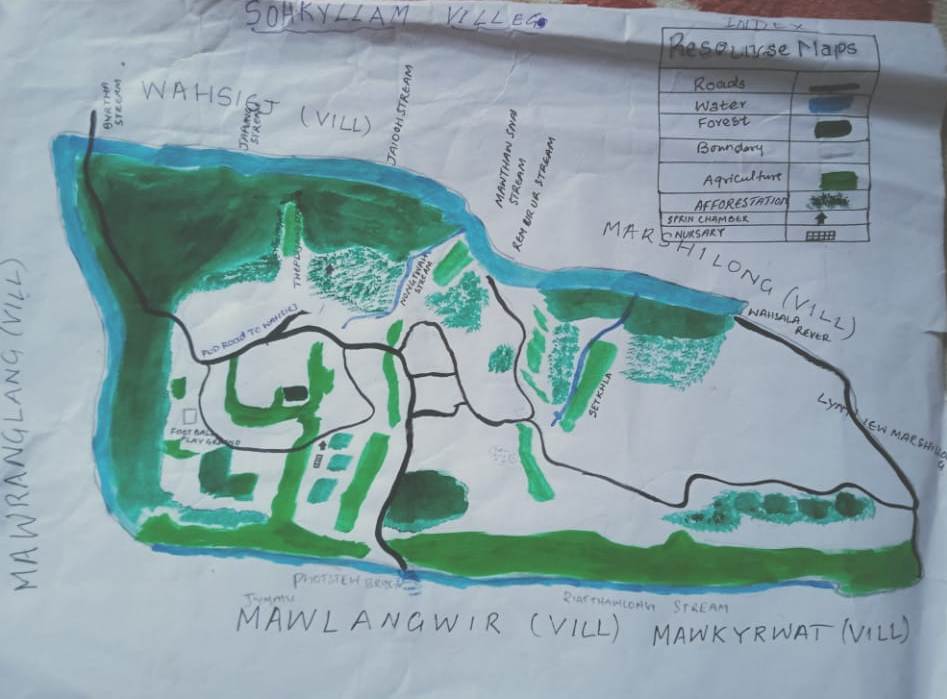
Figure: Village Resource Map of Sohkhyllam village
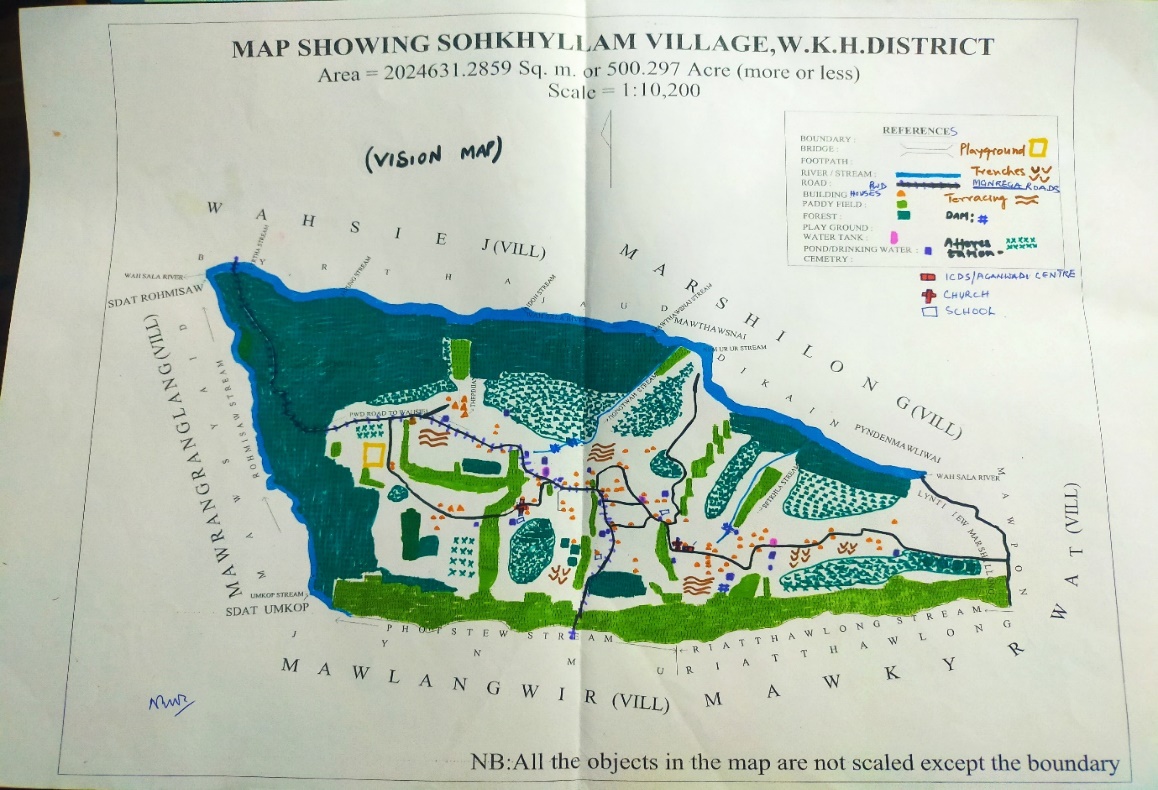
Figure: Vision Map of Sohkhyllam village
GIS ACTIVITIES:
| Sl. No. | Parameters | Village Information |
|---|---|---|
| 1 | GPS Coordinates: | |
| i | Latitude | 25.371345 |
| ii | Longitude | 91.448514 |
| iii | Elevation Reading (MSL) | 1532 m |
| 2 | Village Geographical Area (Ha) | 194.97 ha |
| i | Total Forest Area (including community, Clan, Pvt Forest) | 76.78 ha |
| ii | Total Area of Water Bodies | 2.66 ha |
| iii | Total Area under Agri-Horticulture | 29.47 ha |
| iv | Total Degraded land area (Ha) | 26.16 ha |
| 3 | Average Annual Rainfall (mm) | 1200 mm |
| 4 | Soil Type | Loamy soil |
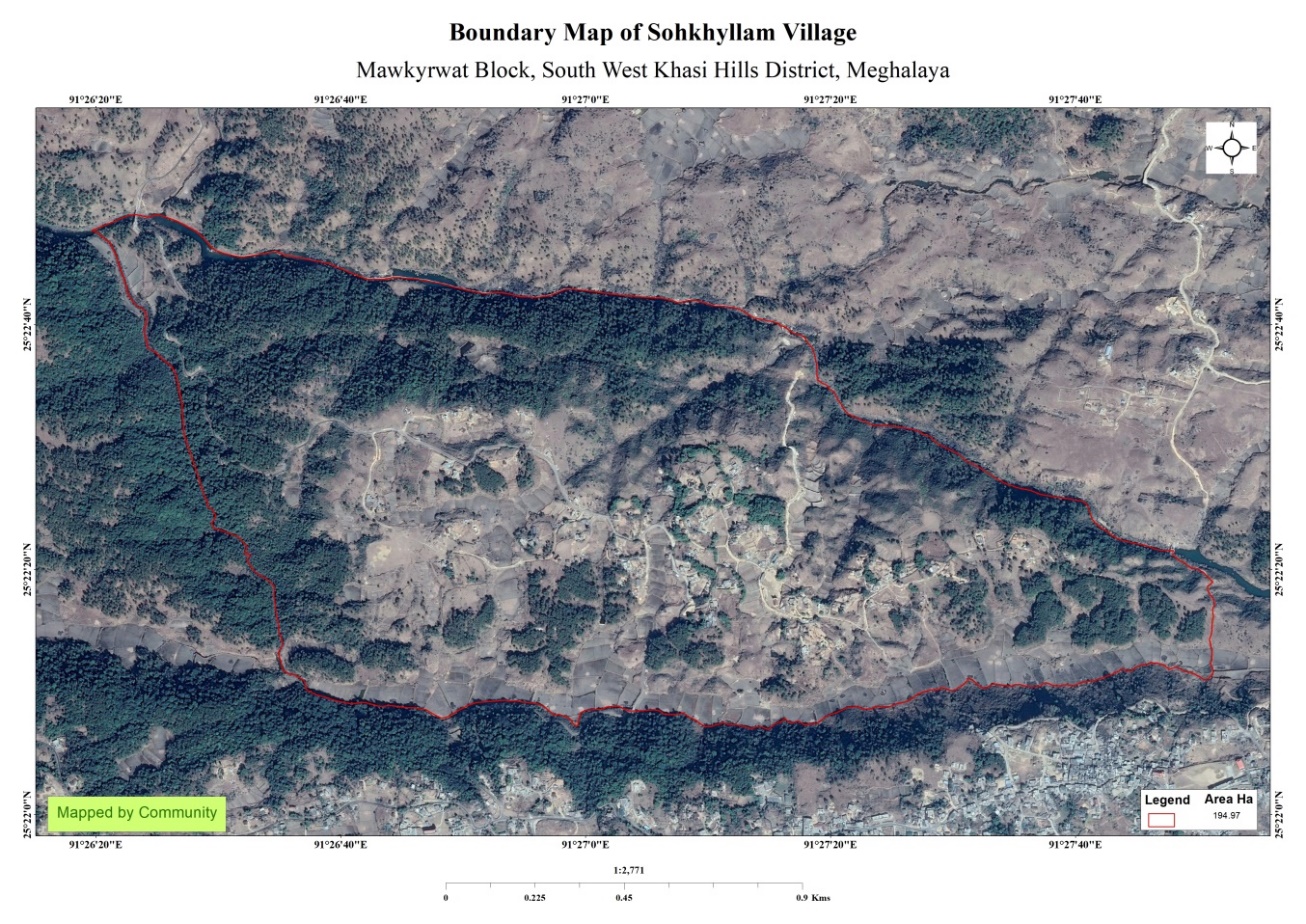
Figure: Sohkhyllam village Boundary Map
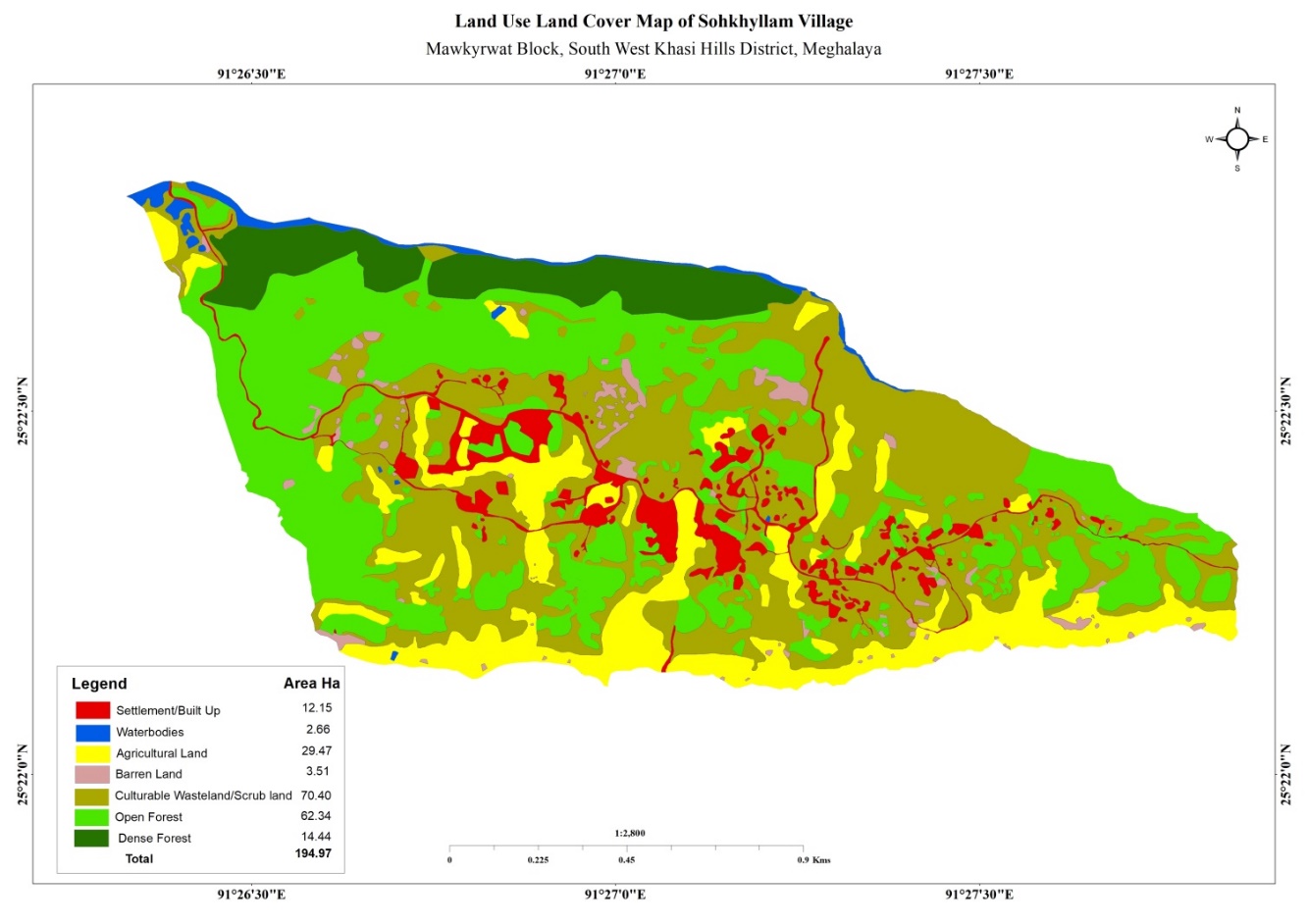
Figure: Land Use Covers of Sohkhyllam village.
THE PROPOSED LIST OF INTERVENTIONS:
|
Name of Proposed Interventions | Site |
|
Nos of HHs expected to Benefit | Priority (High/ Medium/ Low) |
|---|---|---|---|---|---|
|
|||||
| 1. | Spring Chamber and staggered trenches | Dommawphet |
|
|
|
| 2. | Spring Chamber and staggered trenches | Rngeimawsaw |
|
|
HIGH |
| 3. | Community Nursery | Sohkhyllam |
|
|
HIGH |
| 4. | SC & TCA | Dong Nongtepding |
|
|
HIGH |
| 5. | Check Dam | Dommawphet |
|
|
HIGH |
| 6. | Water Conservation Dam | Setkhla |
|
|
HIGH |
| 7. | SC & TCA | Wahlonghung |
|
|
HIGH |
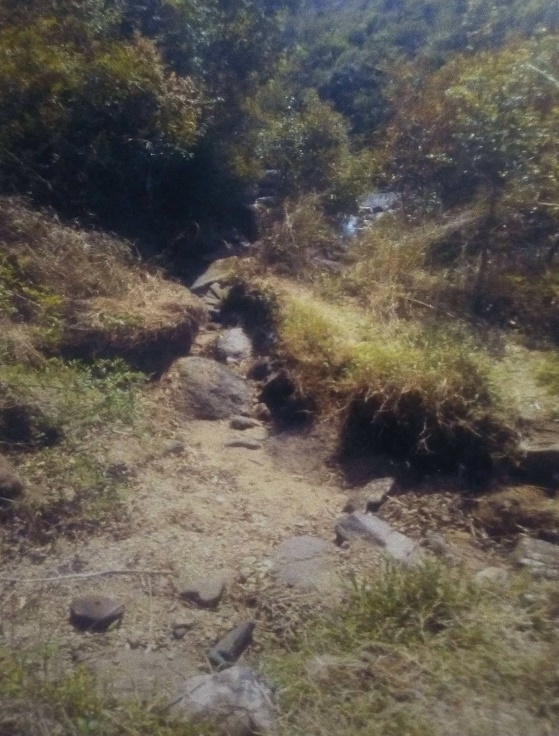
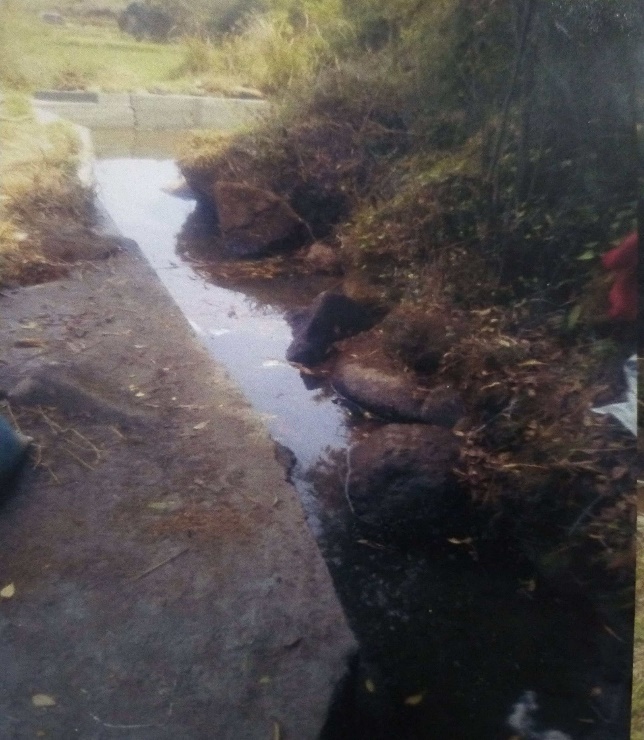
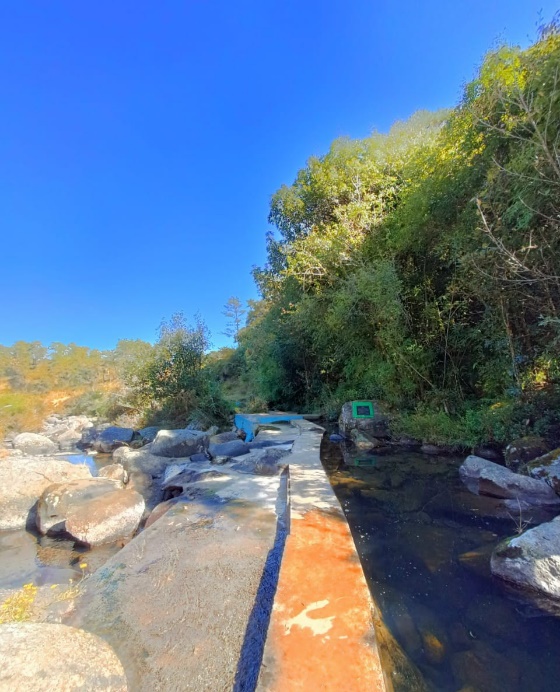
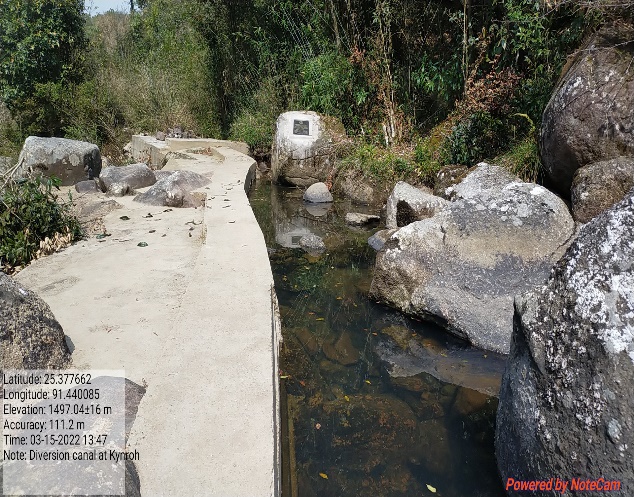
| 8. | Diversion canal to paddy field | Kynroh |
|
|
HIGH |
| 9. | Afforestation | Dommawphet |
|
|
HIGH |
| 10. | Afforestation | Set Khla |
|
|
HIGH |
| 11. | Contour Trenches | Set Khla |
|
|
HIGH |
| 12. | Contour Trenches | Wah Longhung |
|
|
HIGH |
| 13 | Bench Terracing | Mawbyrsien |
|
|
|
| 14 | Spring Chamber | MAwkynytang |
|
|
|
| 15 | Spring Chamber | Per ktieh |
|
|
|
| 16 | Afforestation | Mawsalimon |
|
|
|
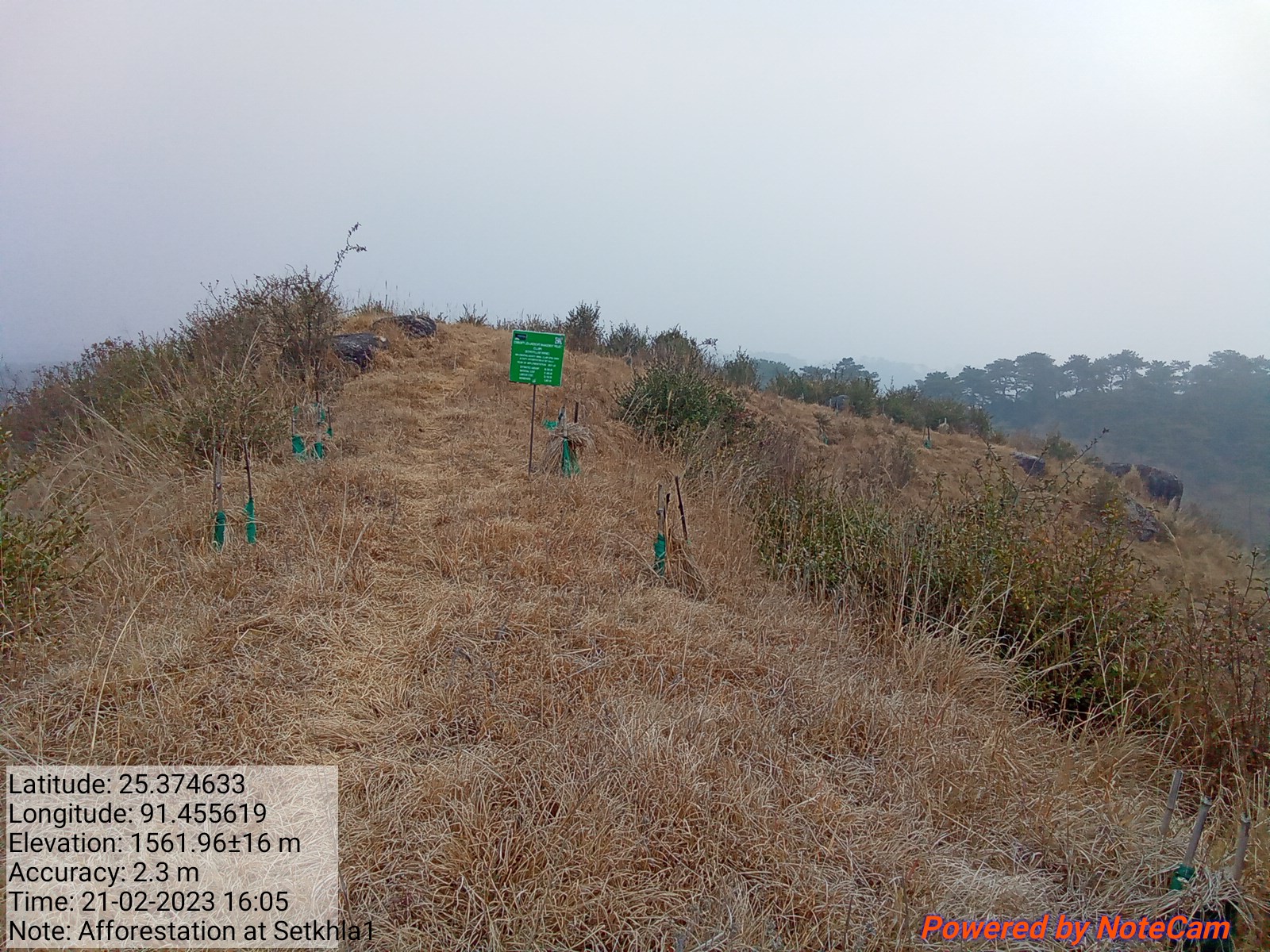
| 17 | Afforestation | Setkhla 1 |
|
|
|
| 18 | Afforestation | Dommawphet |
|
|
|
| 19 | Agro-Horticulture | MAwbyrsien |
|
|
|
| 20 | Banana Plantation along the Bank of the River | Photsala |
|
|
|
| 21 | Planatation of Ornamental Trees Beautification Plant holder/Potter and site clearance | Kseh Mawlangwir |
|
|
|
| 22 | Roadside Plantation | Sohkhyllam |
|
|
PROJECT IMPLEMENTATION:
| 1 | Type of Intervention | Site Name | GPS Co-ordinates | Amount Sanctioned | Work Status | |
|---|---|---|---|---|---|---|
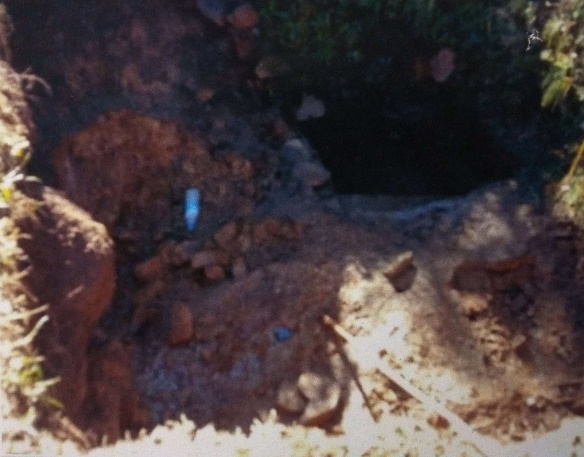
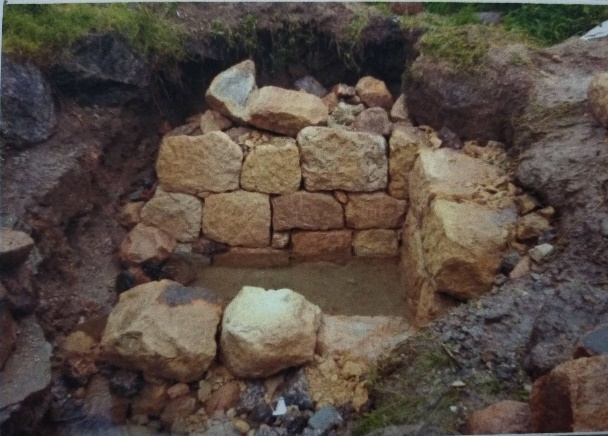
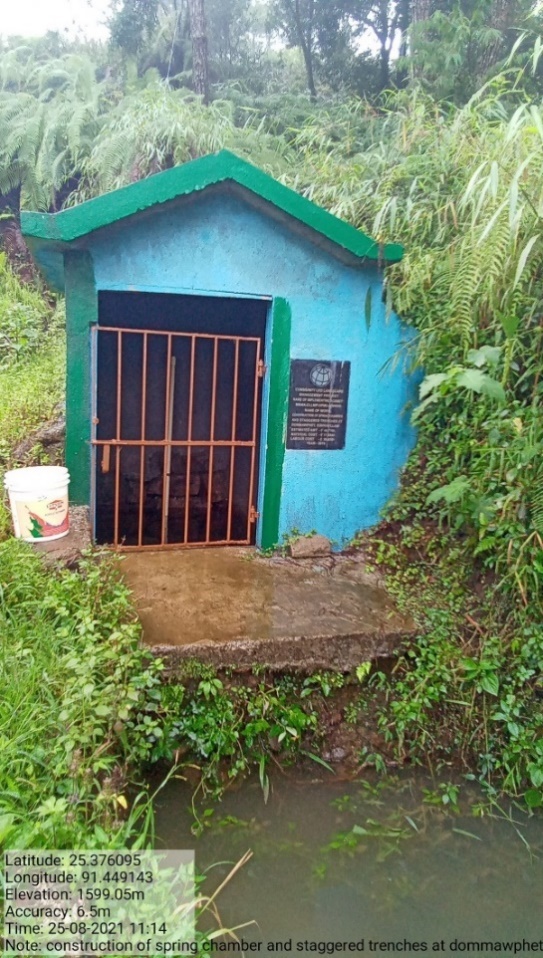
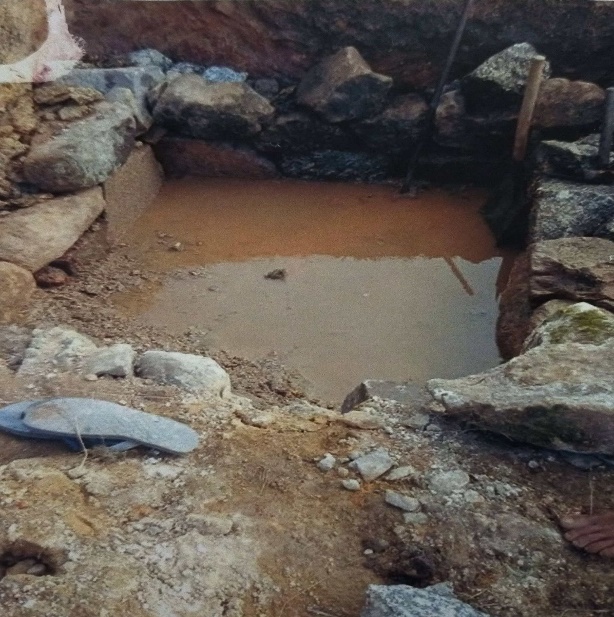
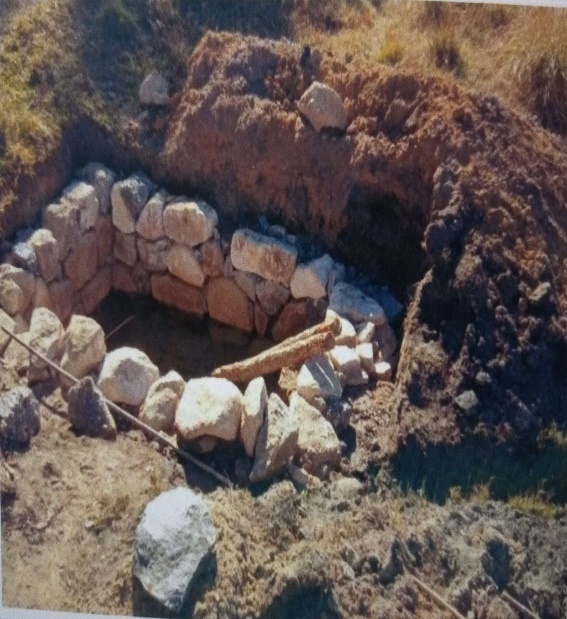
| Spring Chamber and staggered trenches | Dommawphet | 25.376143 | 91.448924 | Rs.44,710 | Completed | |
Fig: Spring Chamber at Dommawphet.
| 2 | Type of Intervention | Site Name | GPS Co-ordinates | Amount Sanctioned | Work Status | |
|---|---|---|---|---|---|---|
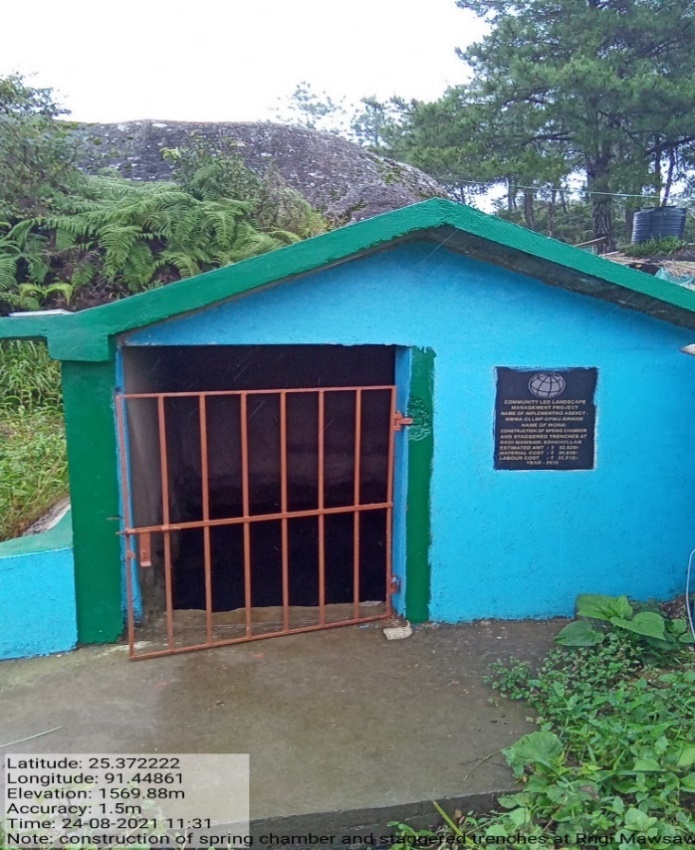
| Spring Chamber and staggered trenches | Rngeimawsaw | 25.372232 | 91.44861 | Rs.52,052 | Completed | |
Fig: Spring Chamber at Rngeimawsaw.
| 3 | Type of Intervention | Site Name | GPS Co-ordinates | Amount Sanctioned | Work Status | |
|---|---|---|---|---|---|---|
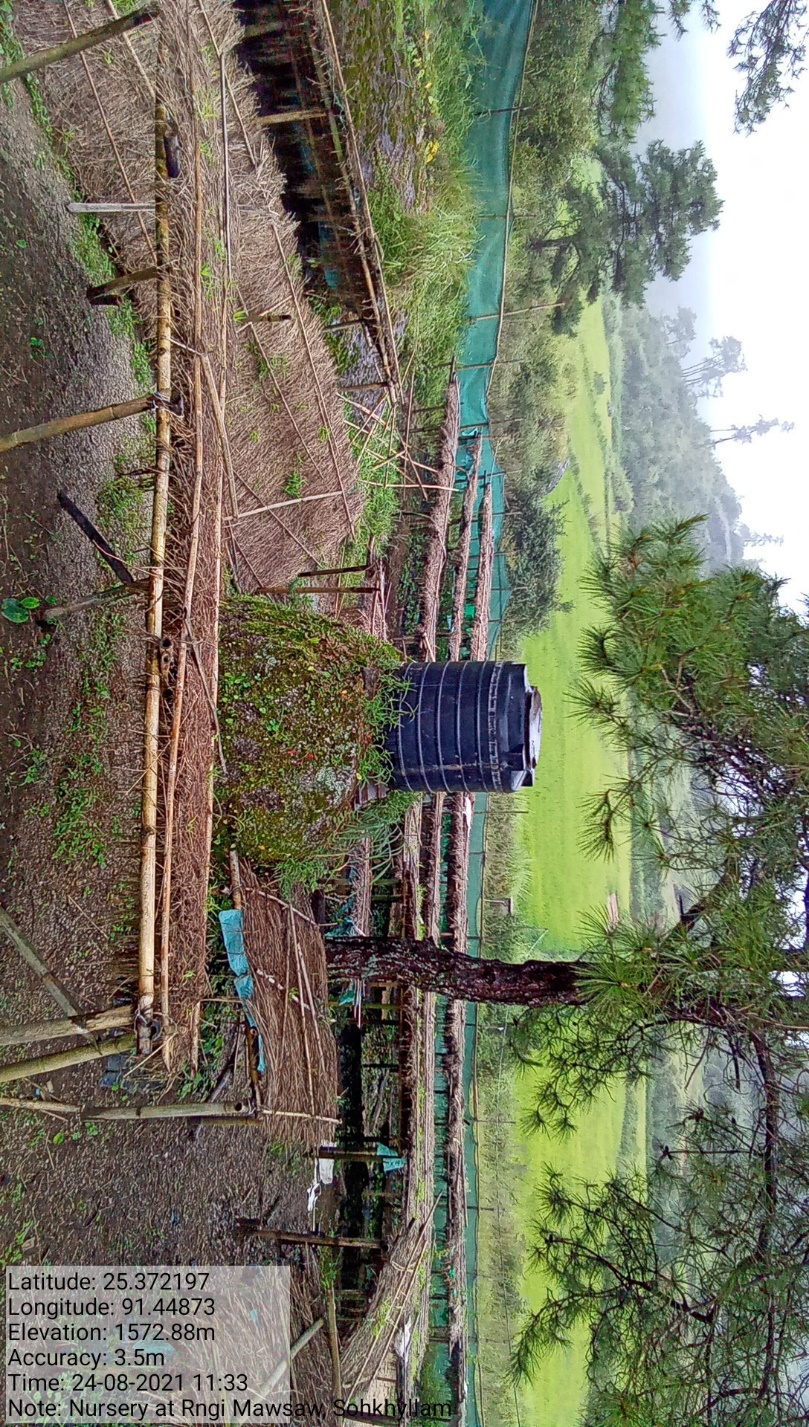
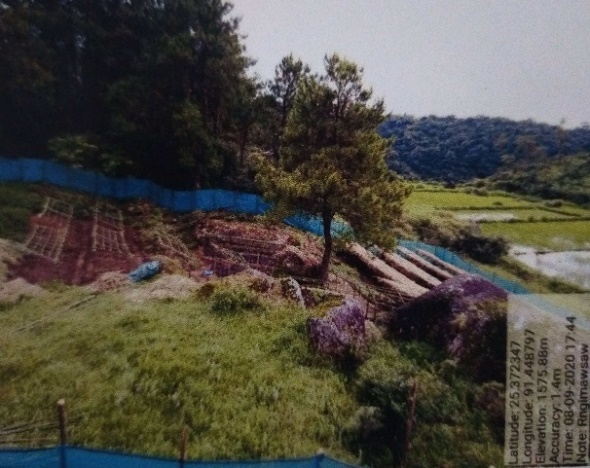
| Nursery at Sohkhyllam | Rngeimawsaw | 25.372197 | 91.441873 | Rs.2,97,280 | Completed | |
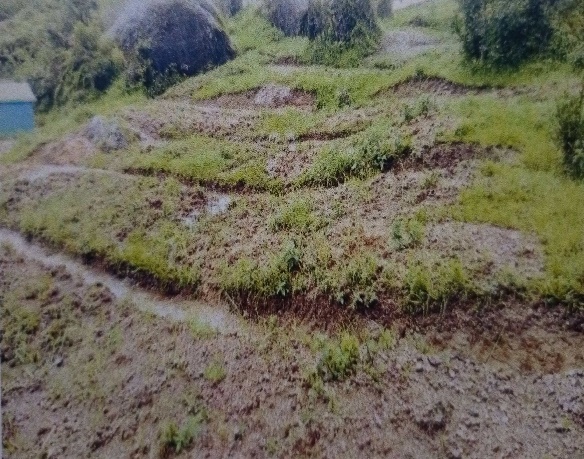
Before During
After
Fig: Nursery at Rngeimawsaw.
| 4 | Type of Intervention | Site Name | GPS Co-ordinates | Amount Sanctioned | Work Status | |
|---|---|---|---|---|---|---|
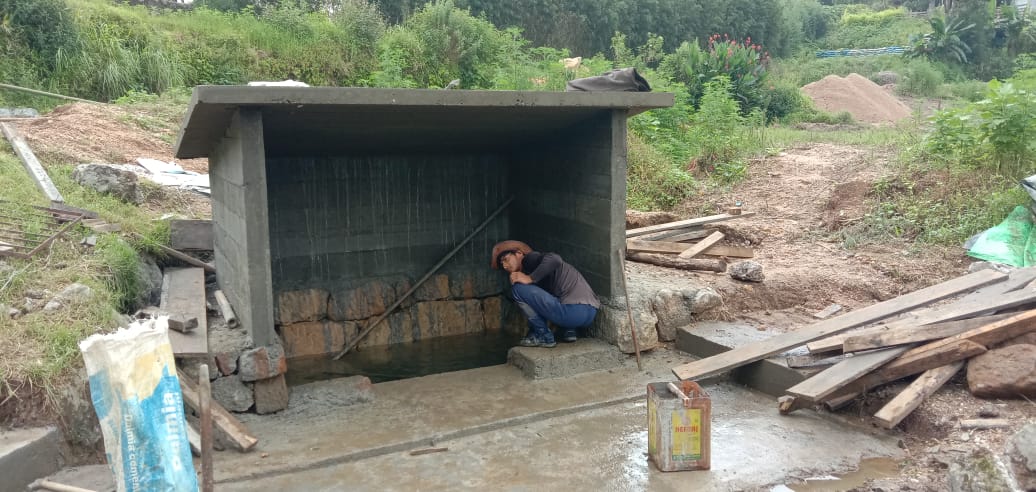
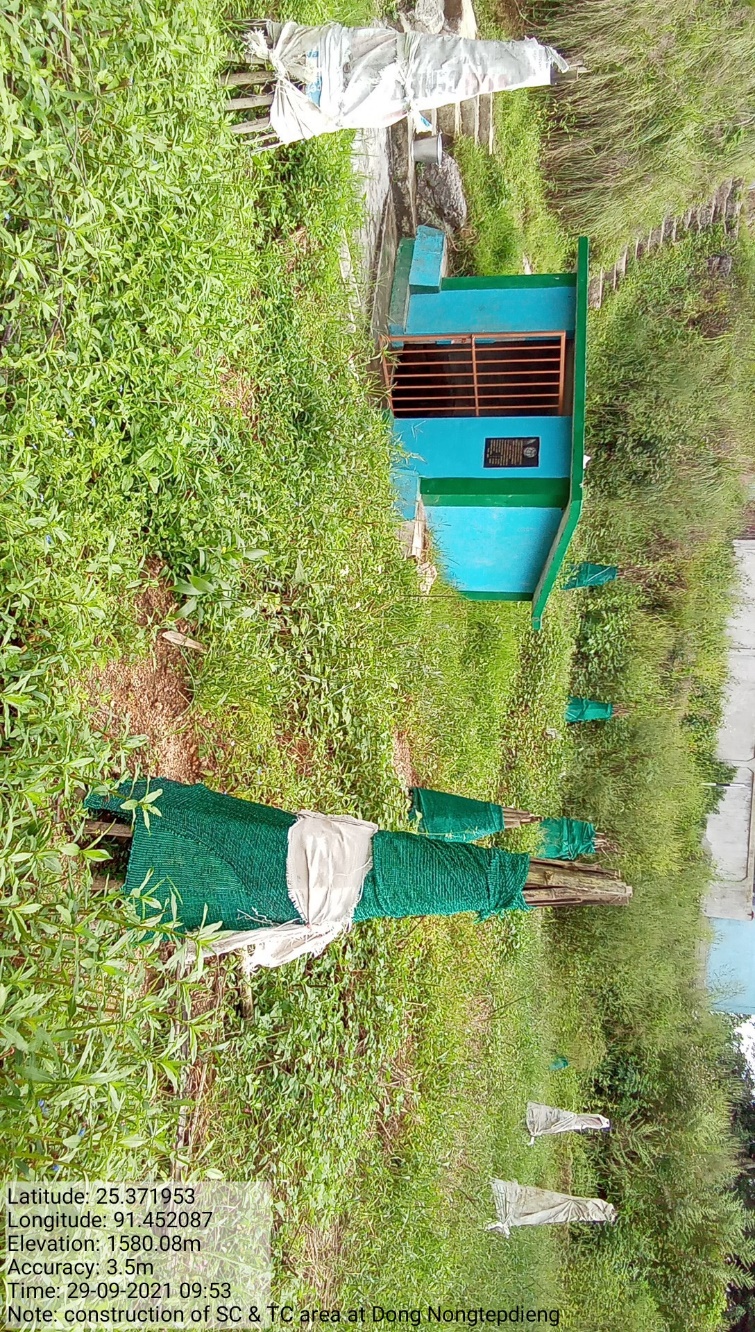
| Spring chamber & Treatment of catchment area | Dong Nongtepdieng | 25.371953 | 91.452087 | Rs.70,440 | Completed | |
Before During
After
Fig: Spring chamber & Treatment of catchment area at Dong Nongtepdieng.
| 5 | Type of Intervention | Site Name | GPS Co-ordinates | Amount Sanctioned | Work Status | |
|---|---|---|---|---|---|---|
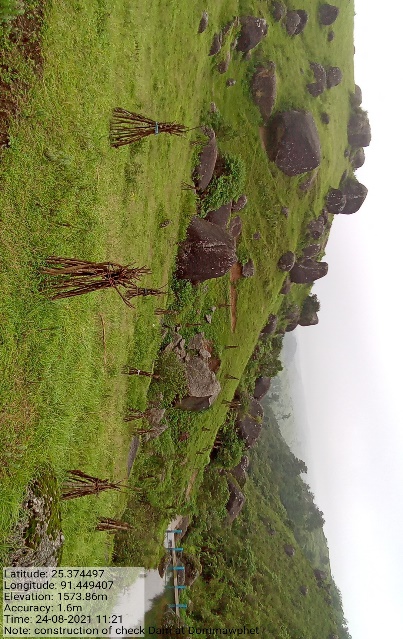
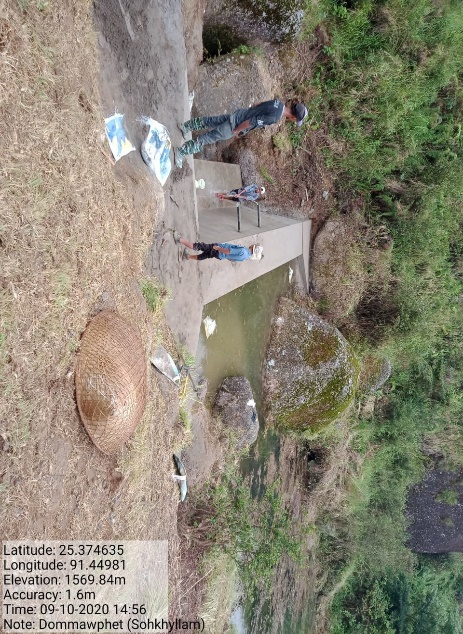
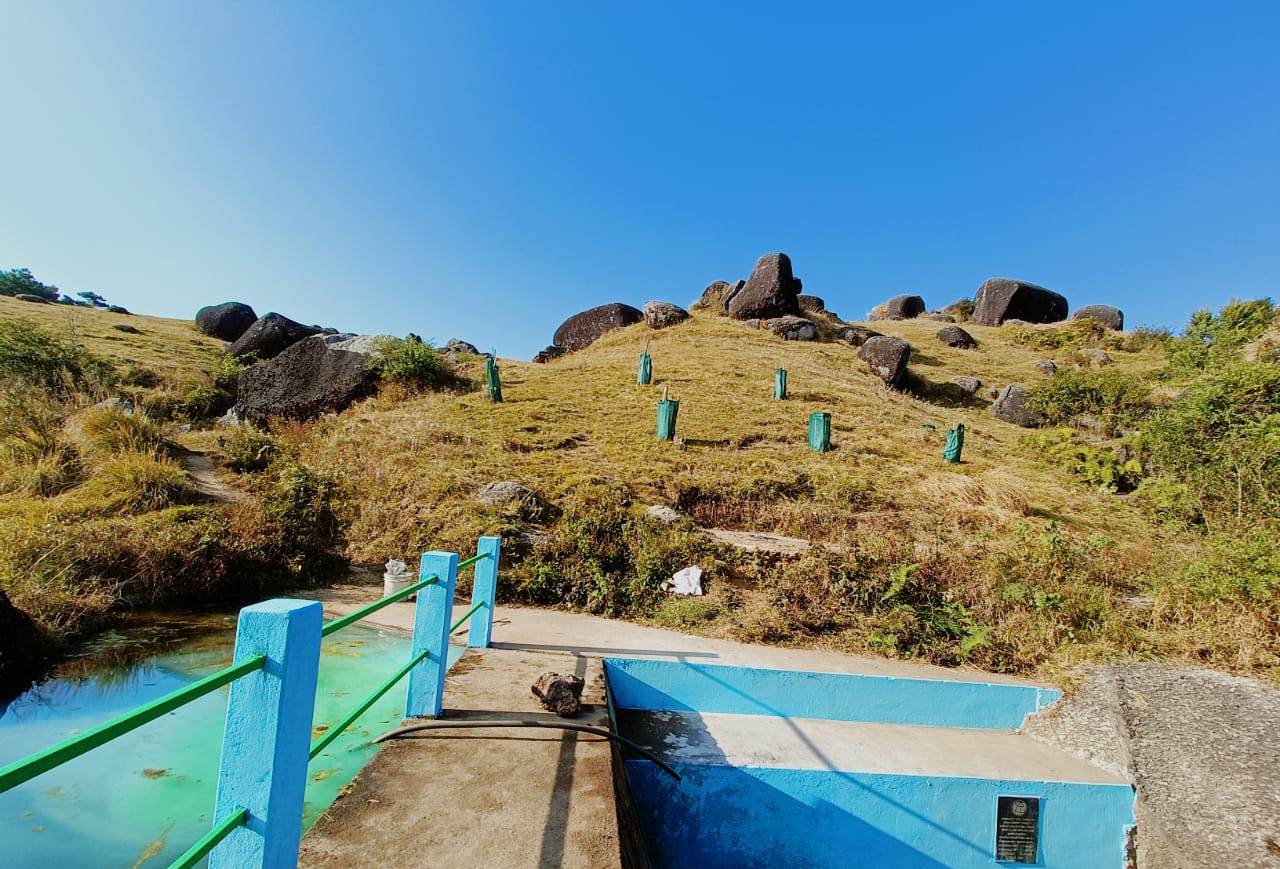
| Check Dam | Dommawphet | 25.374662 | 91.44995 | Rs.4,88,300 | Completed | |
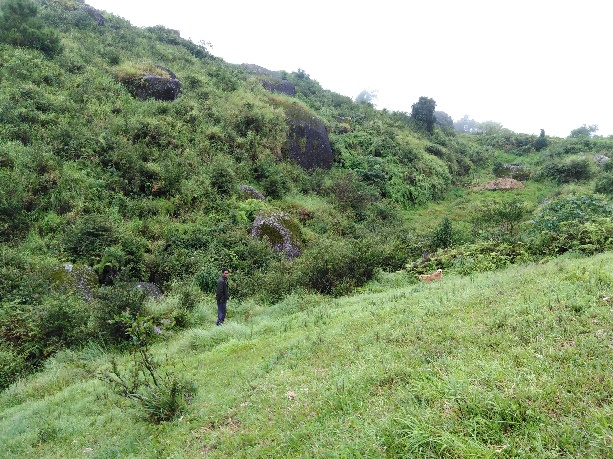
 Before
During
Before
During
After
Fig: Check Dam at Dommawphet.
| 6 | Type of Intervention | Site Name | GPS Co-ordinates | Amount Sanctioned | Work Status | |
|---|---|---|---|---|---|---|
| Water conservation Dam | Setkhla | 25.373188 | 91.456012 | Rs.2,82,400 | Completed | |
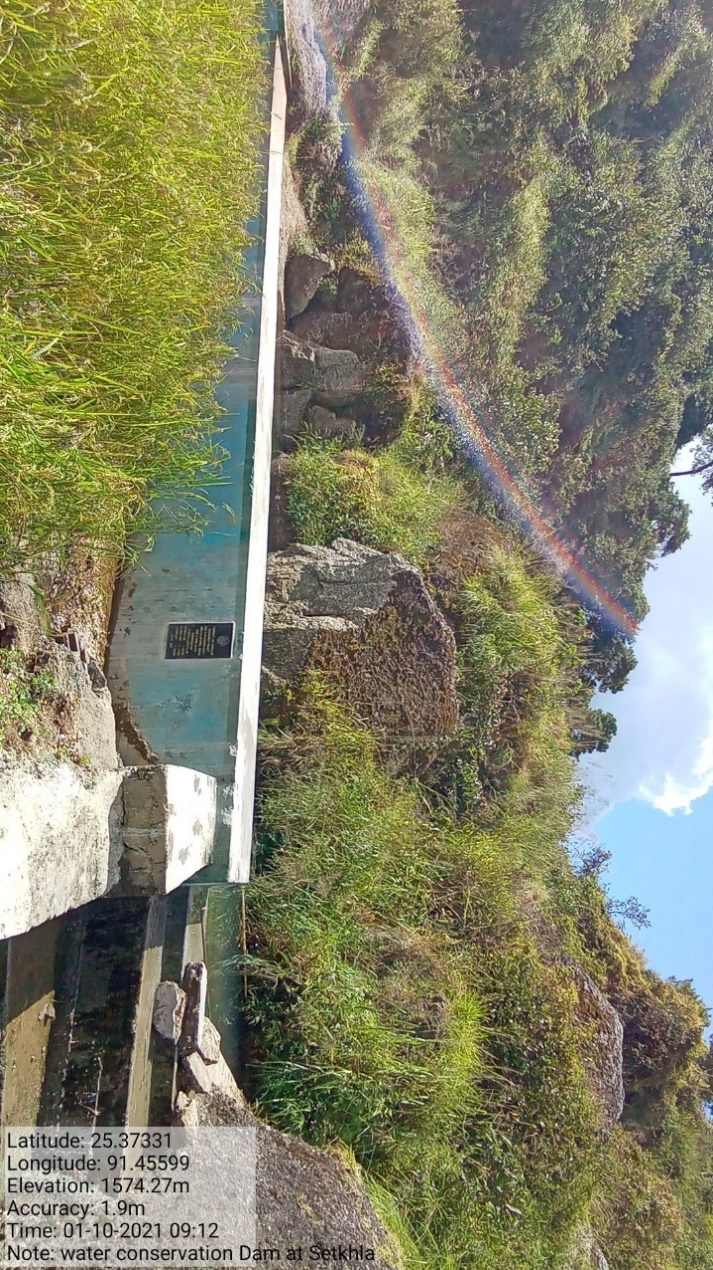
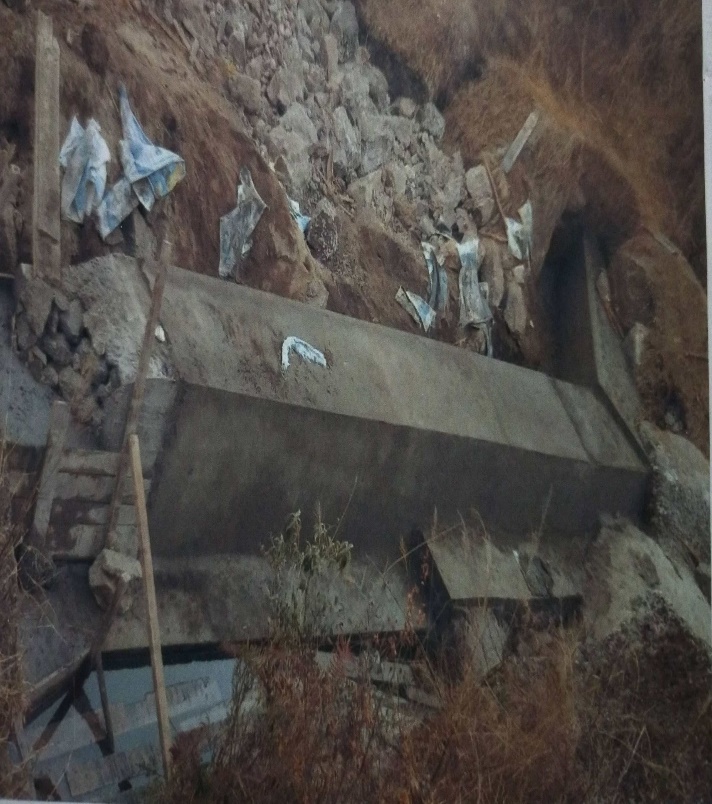
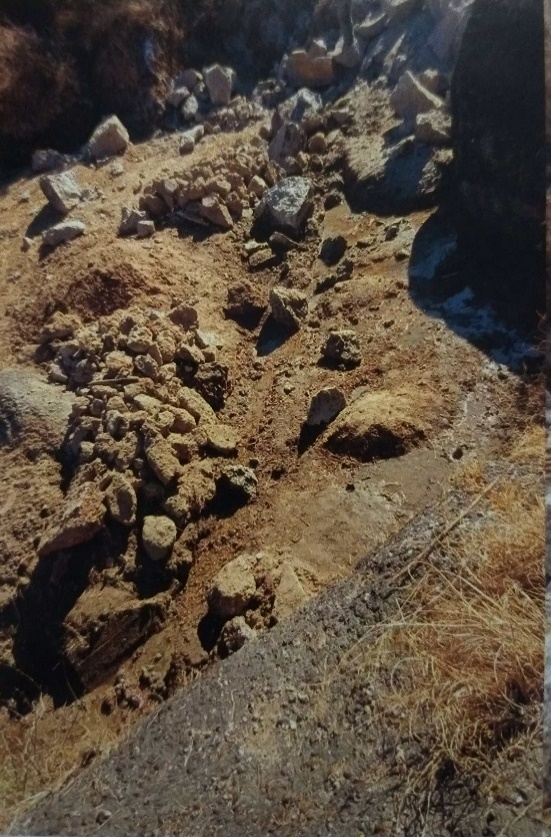 Fig: Water
conservation Dam at Setkhla.
Fig: Water
conservation Dam at Setkhla.
| 7 | Type of Intervention | Site Name | GPS Co-ordinates | Amount Sanctioned | Work Status | |
|---|---|---|---|---|---|---|
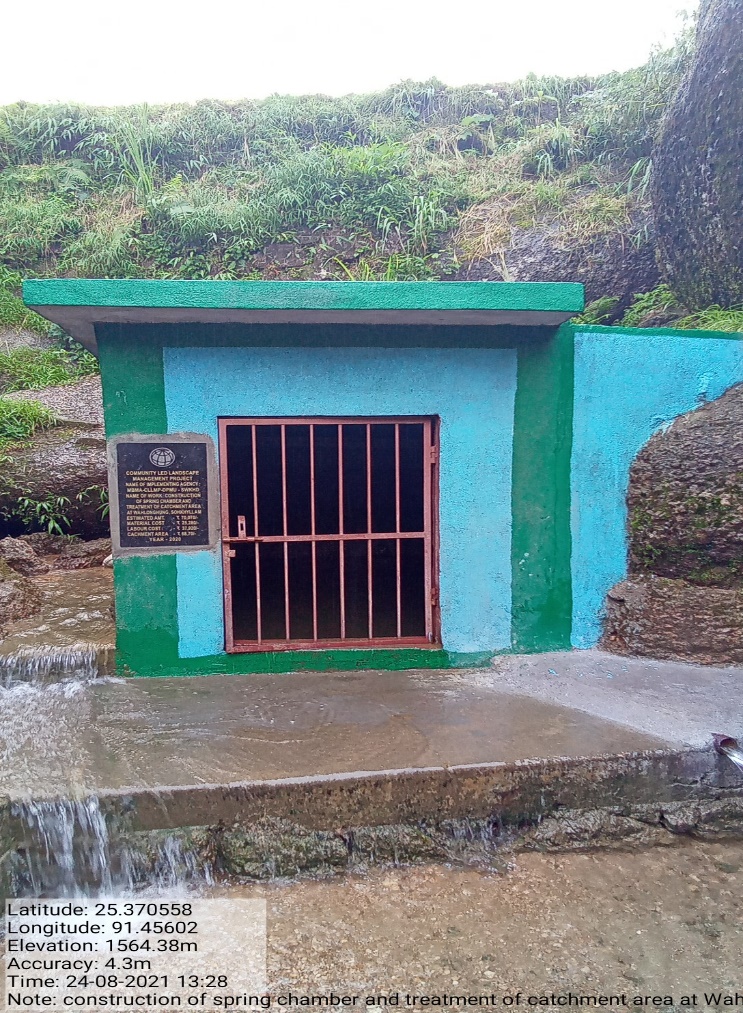
| Spring chamber and treatment of catchment area. | Wahlonghung | 25.370558 | 91.456602 | Rs.70,070 | Completed | |
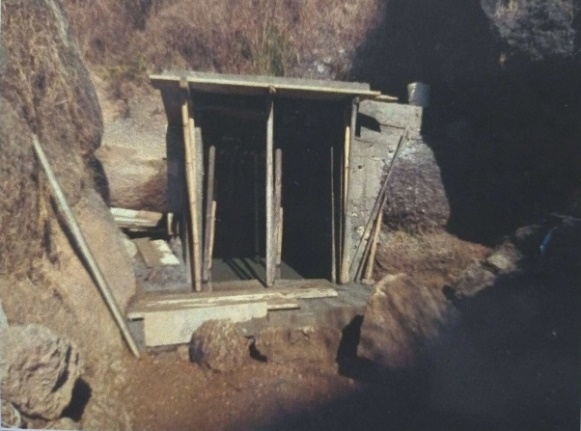
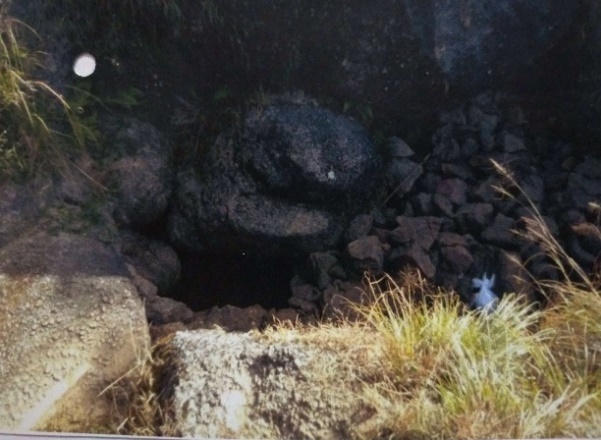
Before During
After
Fig: Spring Chamber and treatment of catchment area at Wahlonghung.
| 8 | Type of Intervention | Site Name | GPS Co-ordinates | Amount Sanctioned | Work Status | |
|---|---|---|---|---|---|---|
| Diversion canal to paddy field | Kynroh | 25.377698 | 91.440094 | Rs.2,41,000 | Completed | |
Before During
After
Fig: Diversion canal to paddy field at Kynroh.
| 9 | Type of Intervention | Site Name | GPS Co-ordinates | Amount Sanctioned | Work Status | |
|---|---|---|---|---|---|---|
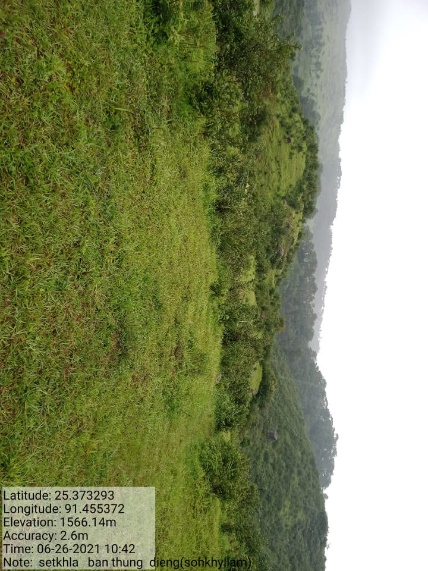
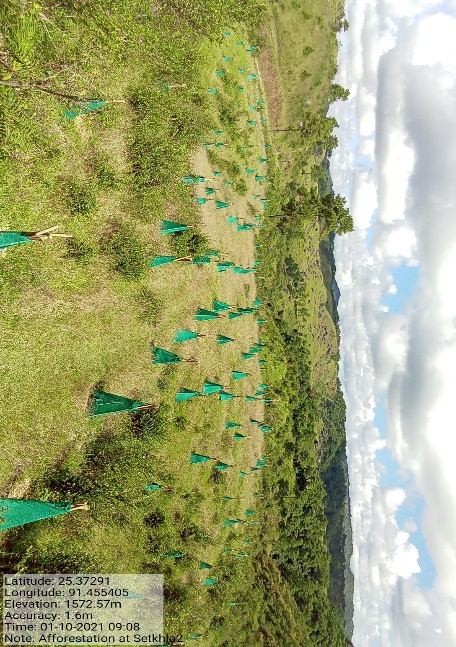
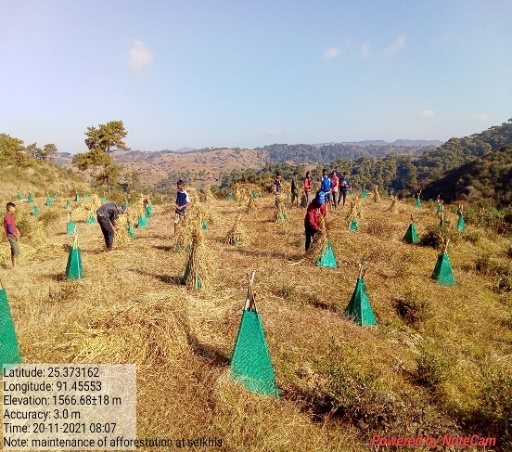
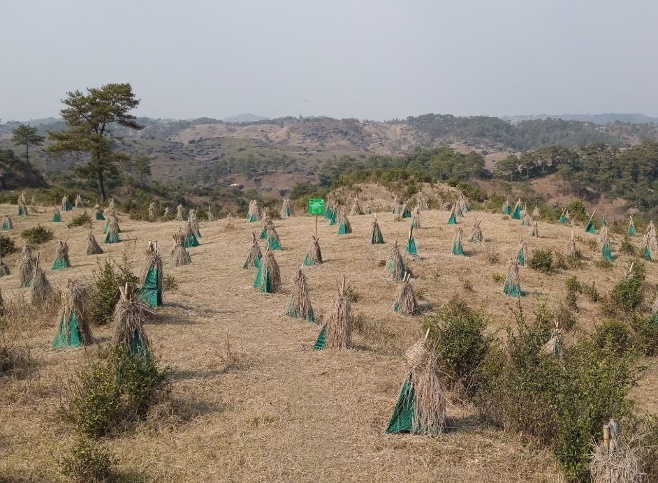
| Afforestation | Setkhla | 25.373293 | 91.45372 | Rs.1,89,300 | Completed | |
Before During
After
Fig: Afforestation at Setkhla.
| 10 | Type of Intervention | Site Name | GPS Co-ordinates | Amount Sanctioned | Work Status | |
|---|---|---|---|---|---|---|
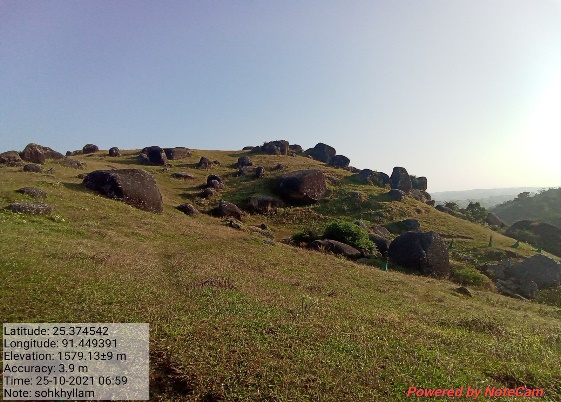
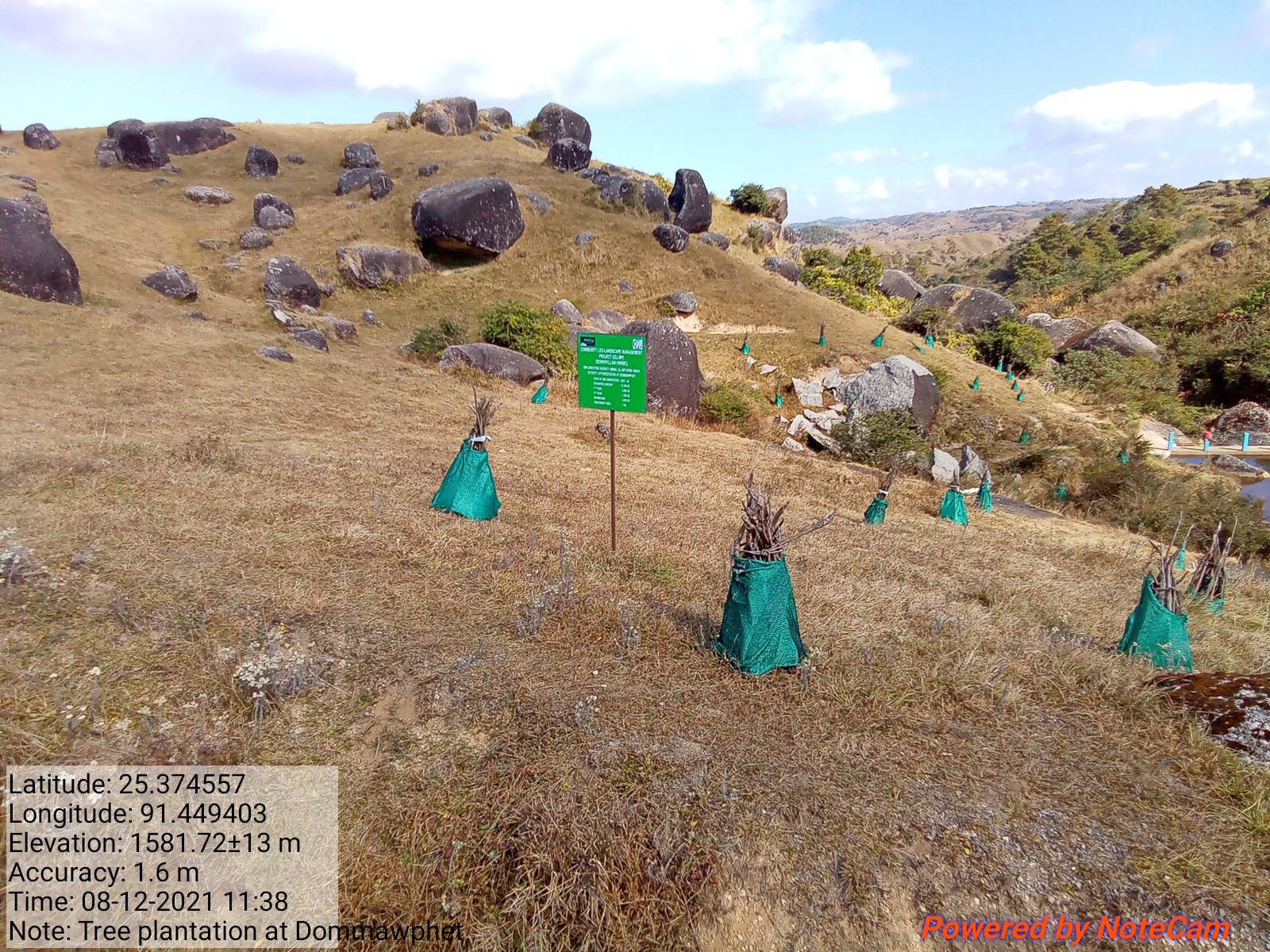
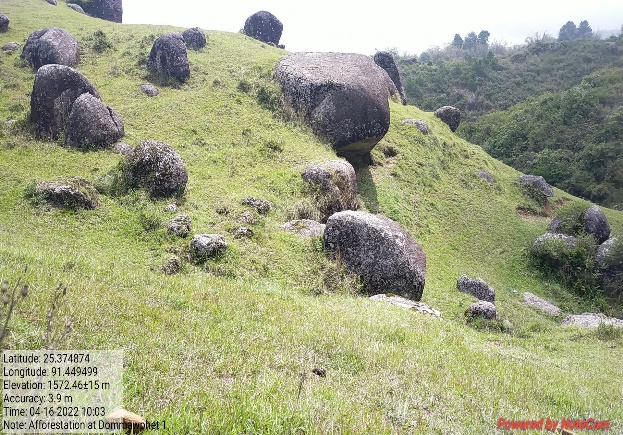
| Afforestation | Dommawphet | 25.374566 | 91.449415 | Rs.13,350 | Completed | |
Before During
After
Fig:Afforestation at Dommawphet.
| 11 | Type of Intervention | Site Name | GPS Co-ordinates | Amount Sanctioned | Work Status | |
|---|---|---|---|---|---|---|
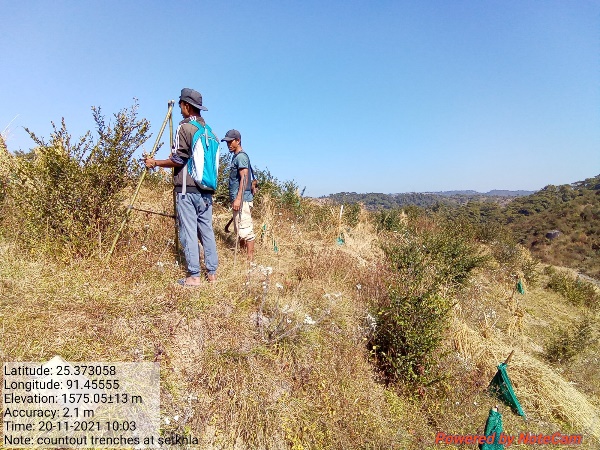
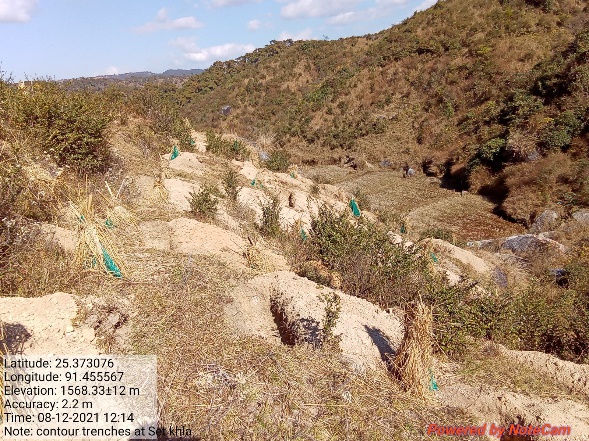
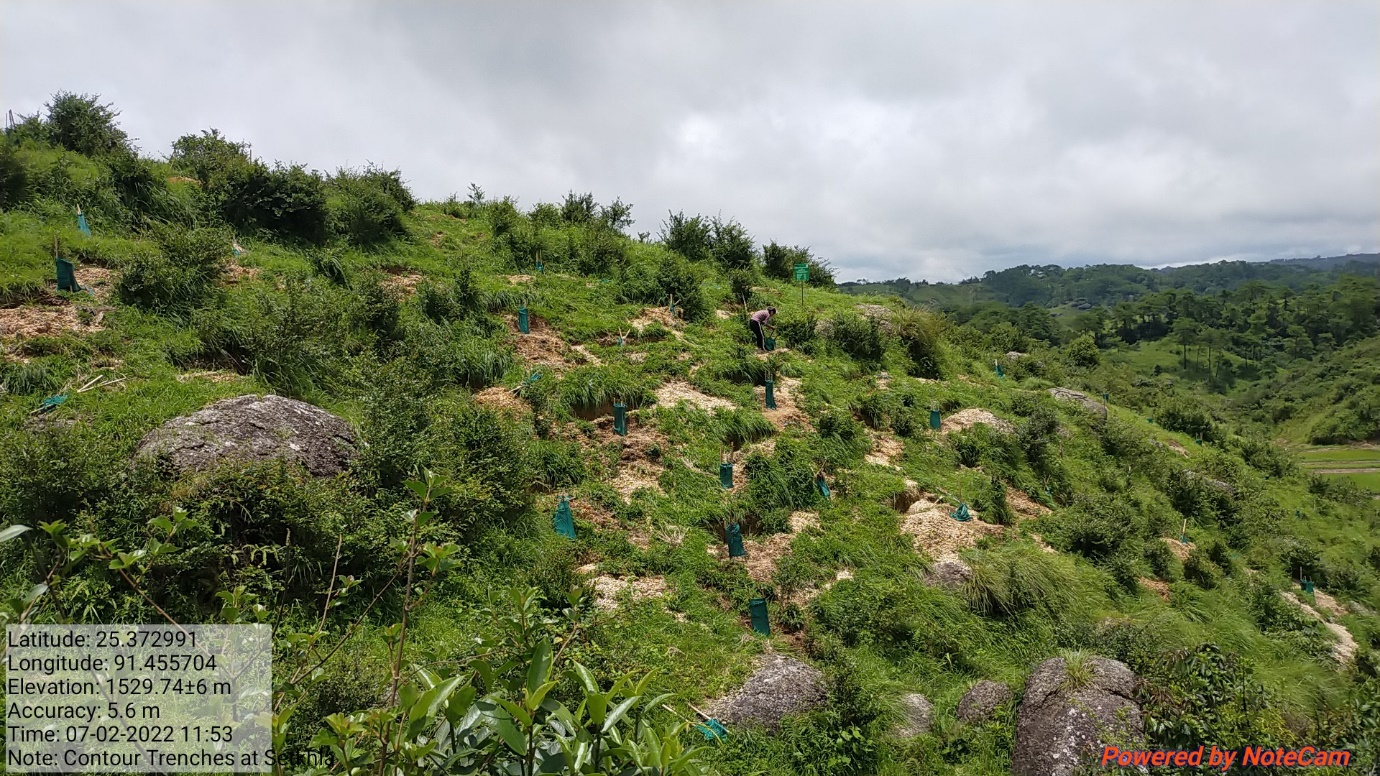
| Contour Trenches | Setkhla | 25.373076 | 91.455567 | Rs.32,390 | Completed | |
Before During
After
Fig: Contour trenches at Setkhla.
| 12 | Type of Intervention | Site Name | GPS Co-ordinates | Amount Sanctioned | Work Status | |
|---|---|---|---|---|---|---|
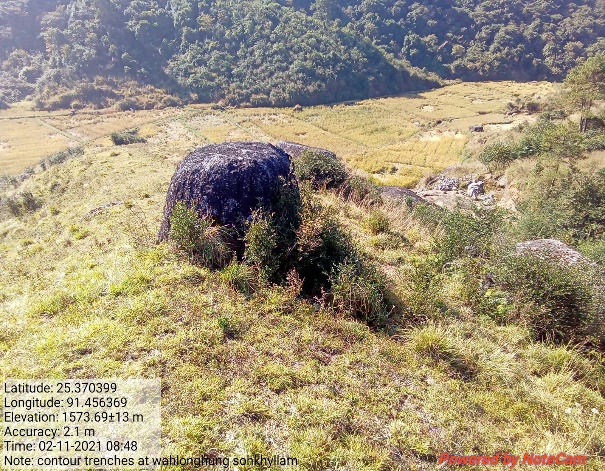
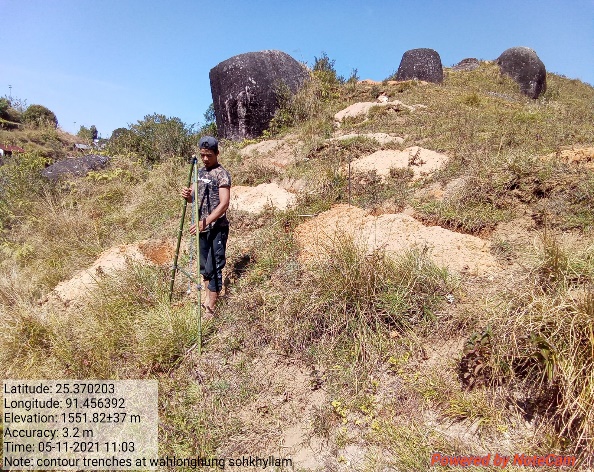
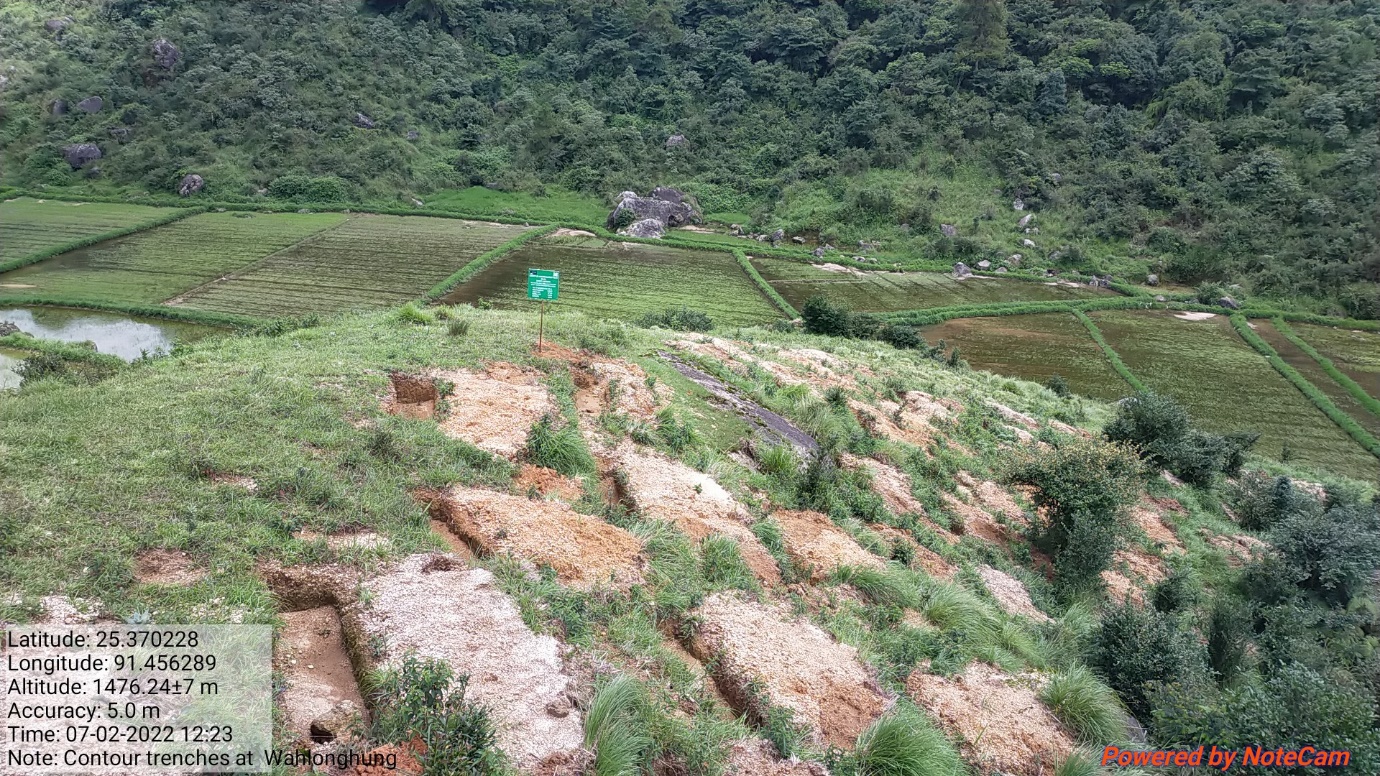
| Contour trenches | Wahlonghung | 25.370211 | 91.456363 | Rs.24,630 | Completed | |
Before During
After
Fig: Contour trenches at Wahlonghung.
| 13 | Type of Intervention | Site Name | GPS Co-ordinates | Amount Sanctioned | Work Status | |
|---|---|---|---|---|---|---|
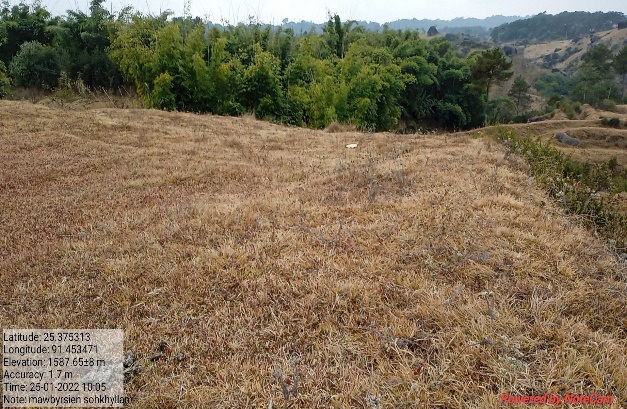
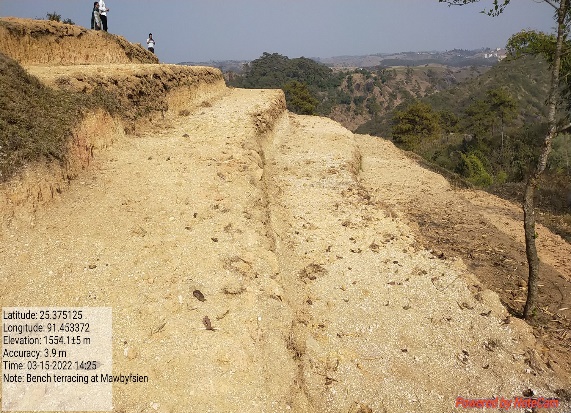
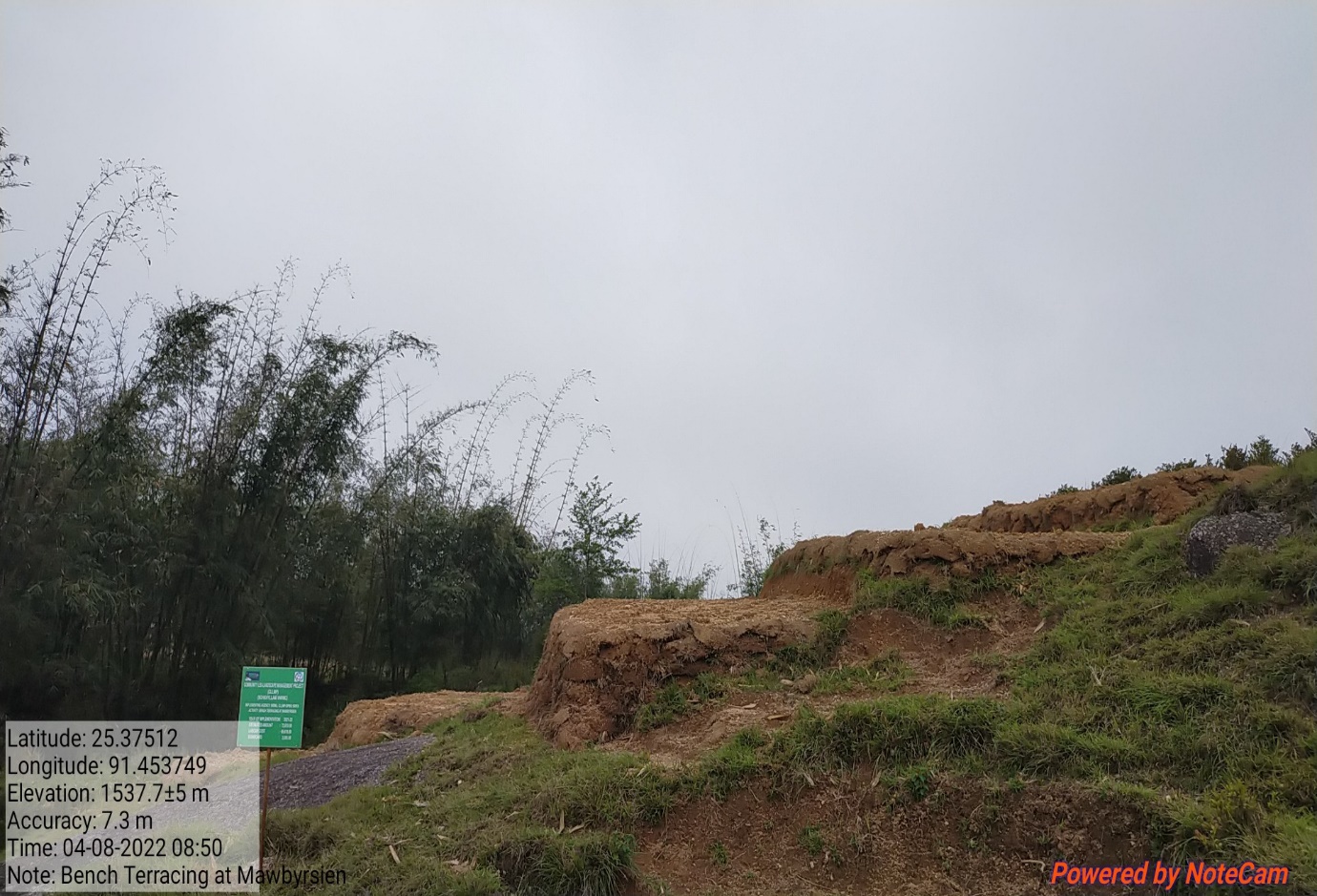
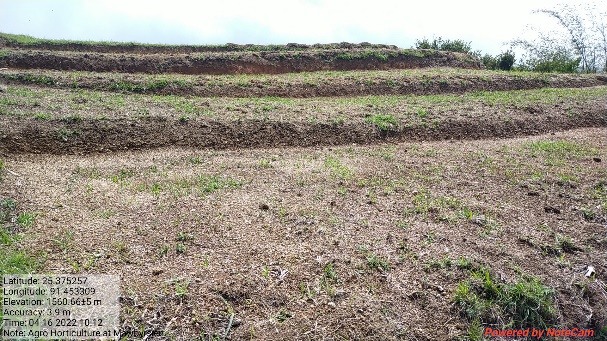
| Bench Terracing | Mawbyrsien | 25.375125 | 91.453372 | Rs.72,610 | Completed | |
Before During
After
Fig: Bench terracing at Mawbyrsien.
| 14 | Type of Intervention | Site Name | GPS Co-ordinates | Amount Sanctioned | Work Status | |
|---|---|---|---|---|---|---|
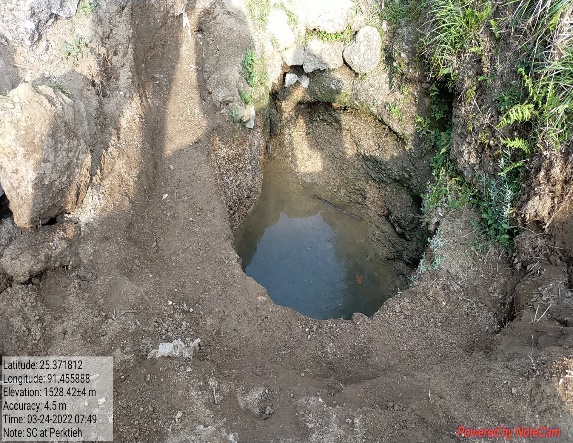
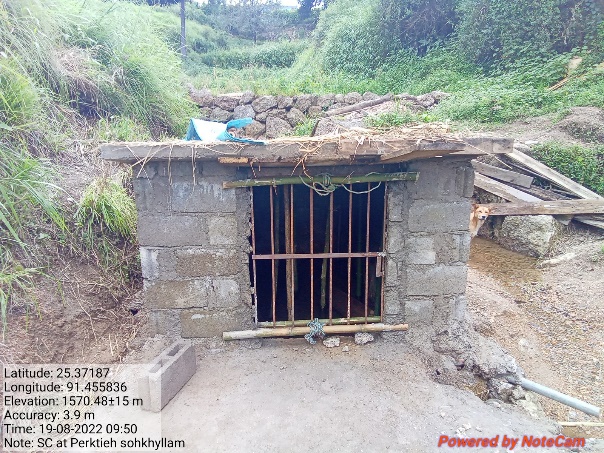
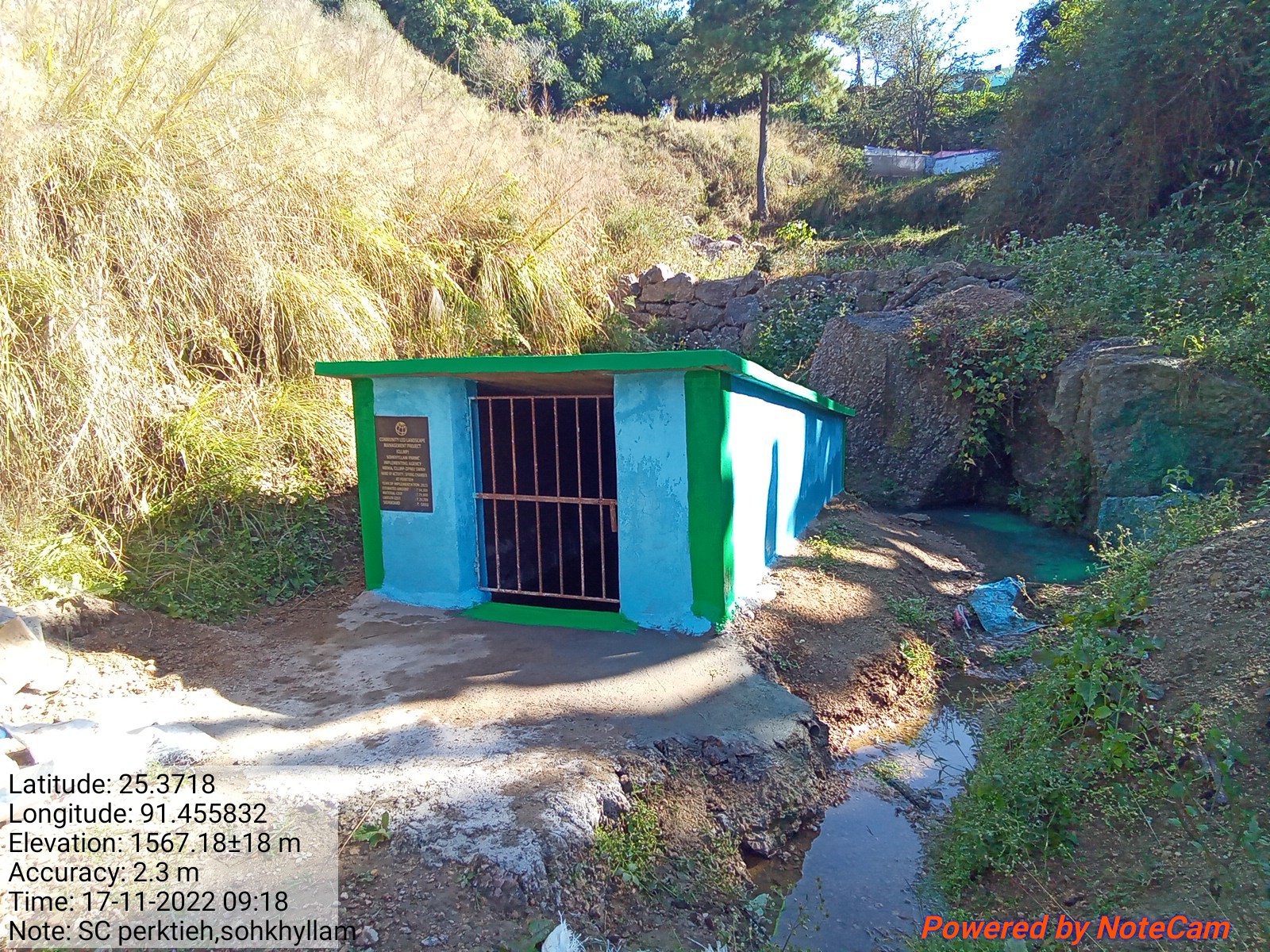
| Spring Chamber | Perktieh | 25.371812 | 91.455888 | Rs.54,500 | Completed | |
Before During
After
Fig: Spring Chamber at Perktieh.
| 15 | Type of Intervention | Site Name | GPS Co-ordinates | Amount Sanctioned | Work Status | |
|---|---|---|---|---|---|---|
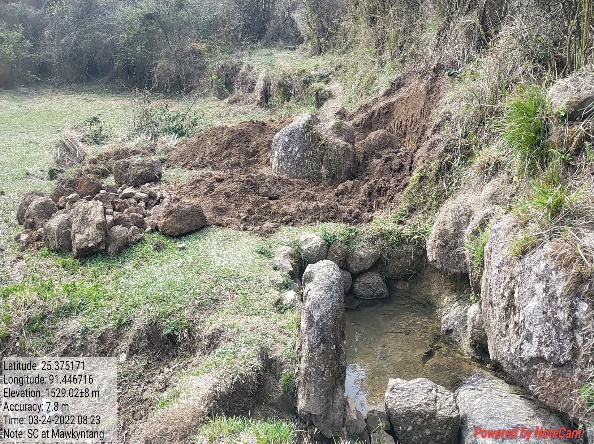
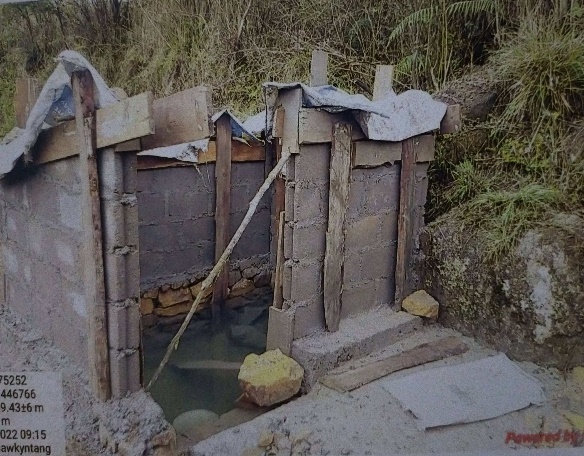
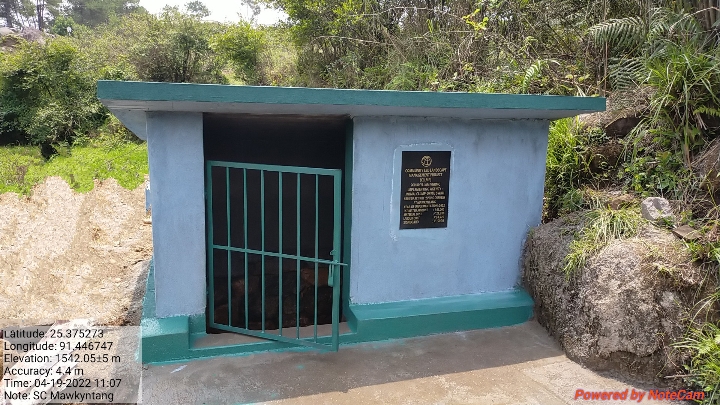
| Spring chamber | Mawkyntang | 25.375252 | 91.446766 | Rs.63,200 | Completed | |
Before During
After
Fig: Spring Chamber at Mawkyntang.
| 16 | Type of Intervention | Site Name | GPS Co-ordinates | Amount Sanctioned | Work Status | |
|---|---|---|---|---|---|---|
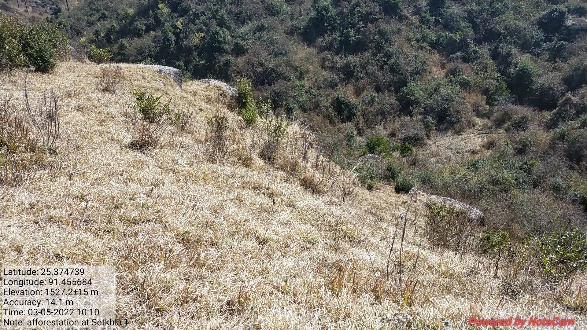
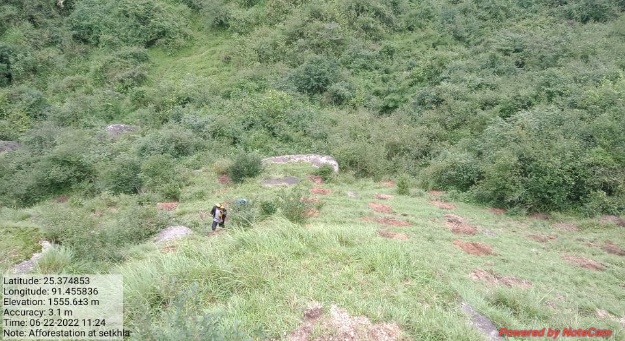
| Afforestation at Setkhla-1 | Setkhla | 25.37481 | 91.45586 | Rs.56,500 | Completed | |
Before During
After
Fig: Afforestation at Setkhla 1.
| 17 | Type of Intervention | Site Name | GPS Co-ordinates | Amount Sanctioned | Work Status | |
|---|---|---|---|---|---|---|
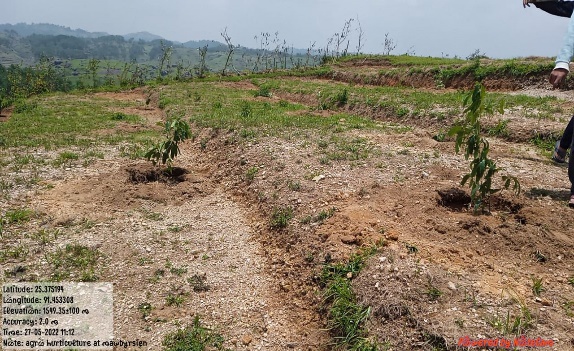
| Agro Horticulture | Mawbyrsien | 25.375043 | 91.453372 | Rs.24,300 | Completed | |
Before During
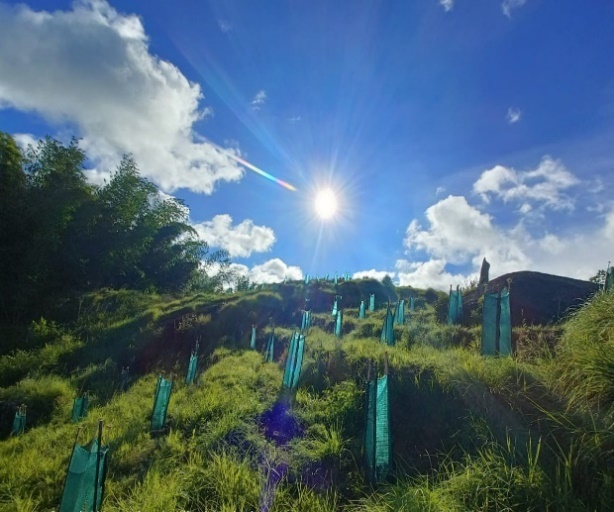
After
Fig: Agro Horticulture at Mawbyrsien.
| 18 | Type of Intervention | Site Name | GPS Co-ordinates | Amount Sanctioned | Work Status | |
|---|---|---|---|---|---|---|
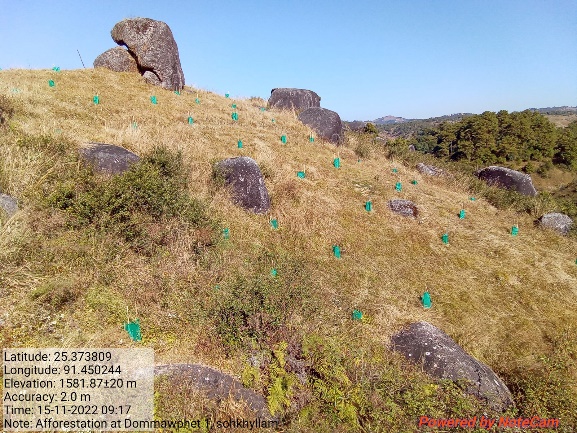
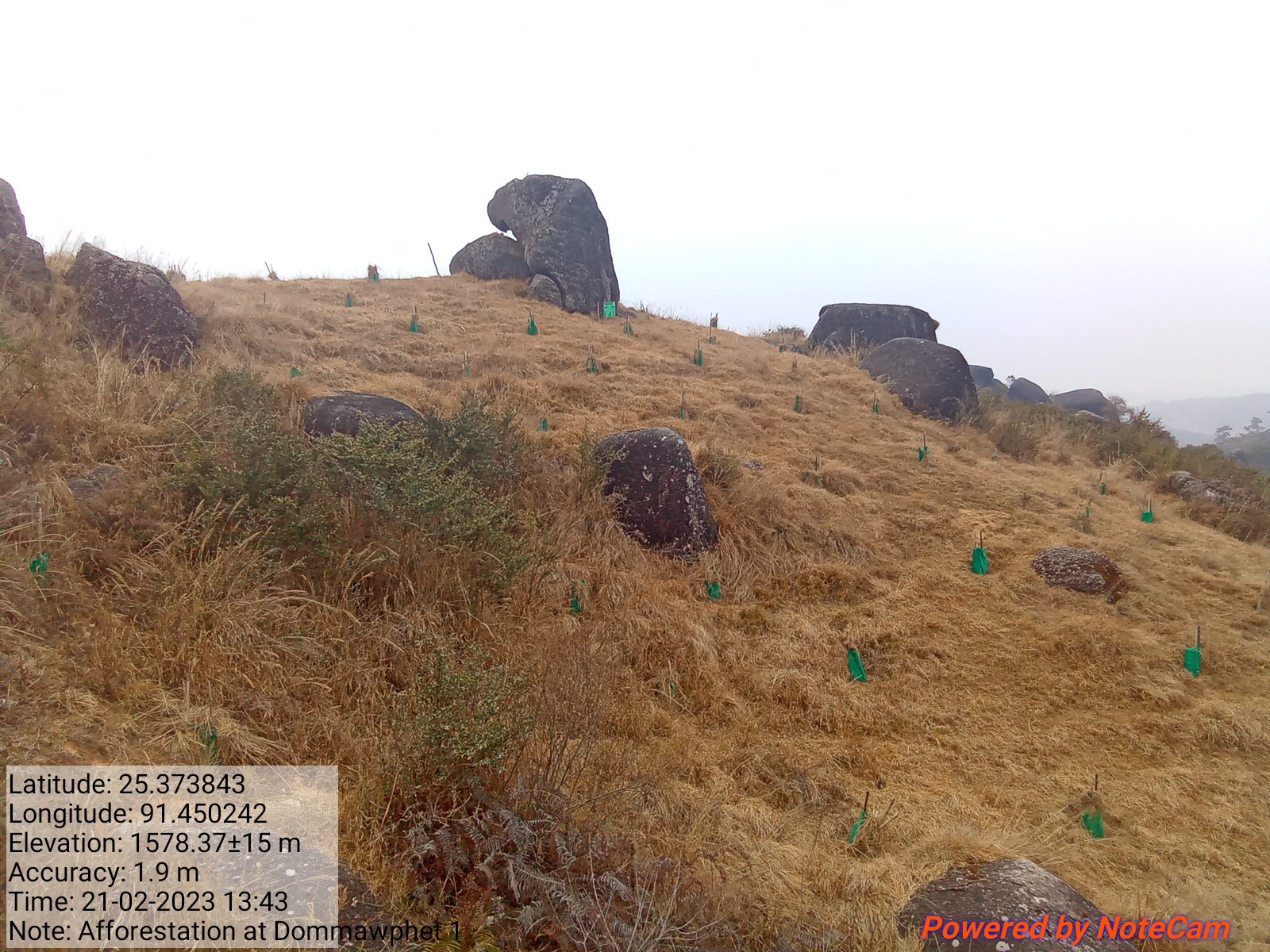
| Afforestation at Dommawphet-1 | Dommawphet | 25.374613 | 91.449413 | Rs.57,000 | Completed | |
After
Fig: Afforestation at Dommawphet-1.
| 19 | Type of Intervention | Site Name | GPS Co-ordinates | Amount Sanctioned | Work Status | |
|---|---|---|---|---|---|---|
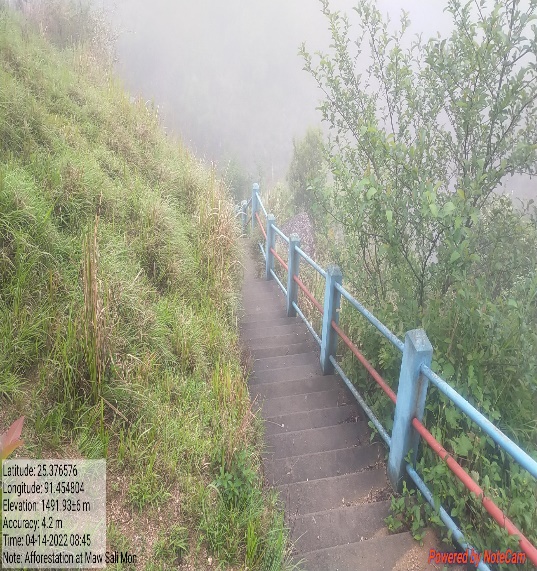
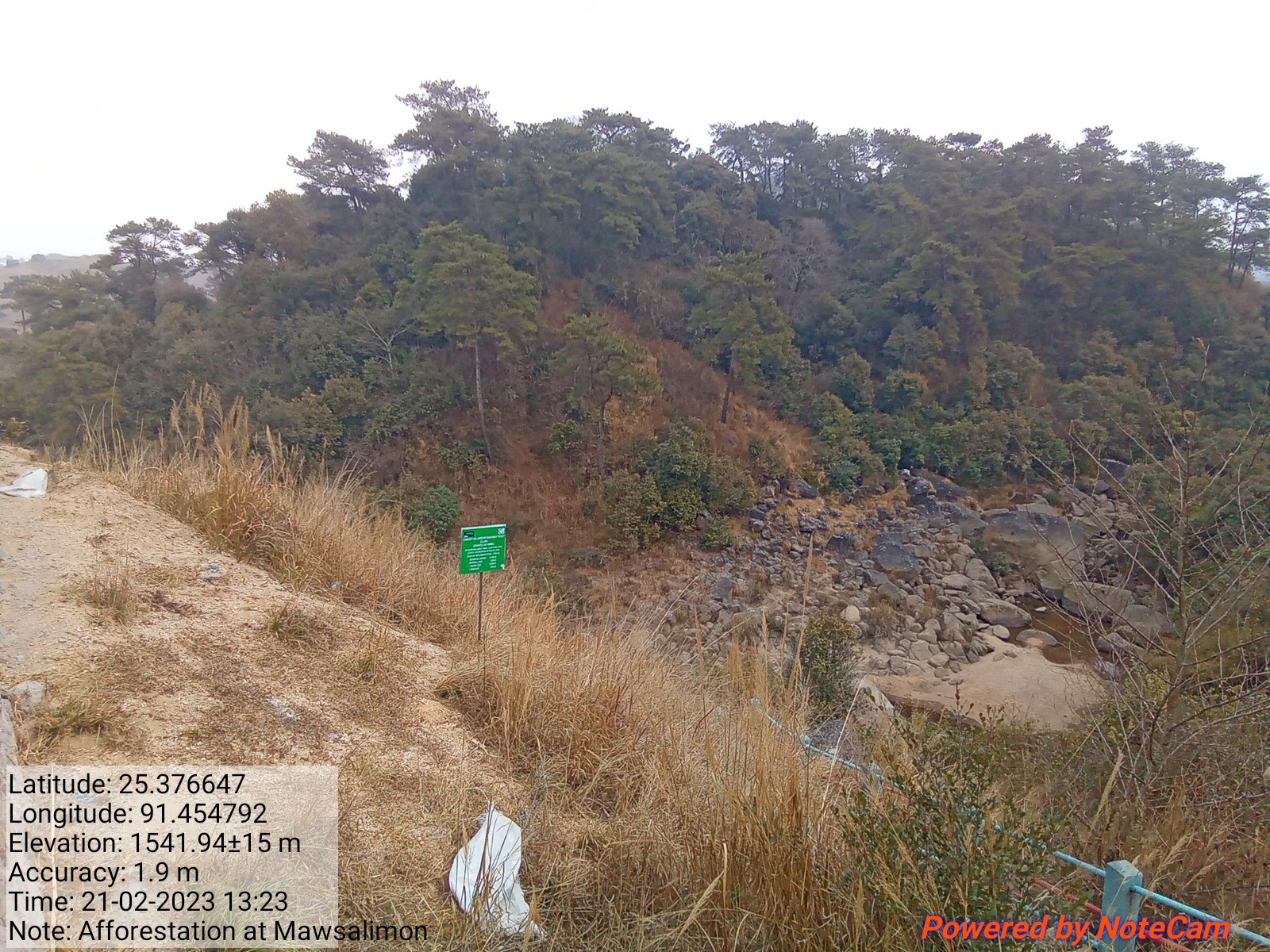
| Afforestation | Mawsalimon | 25.376583 | 91.454787 | Rs.21,000 | Completed | |
After
Fig: Afforestation at Mawsalimon.
| 20 | Type of Intervention | Site Name | GPS Co-ordinates | Amount Sanctioned | Work Status | |
|---|---|---|---|---|---|---|
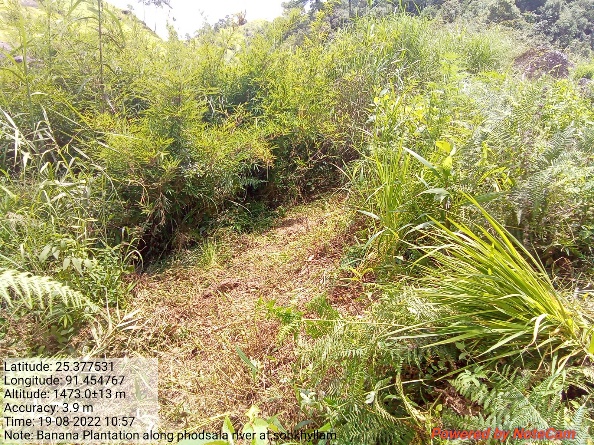
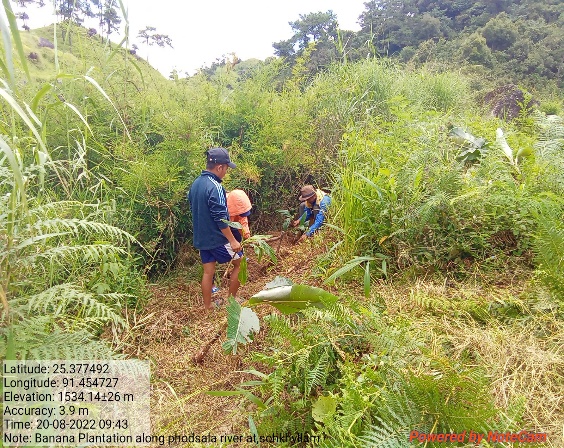
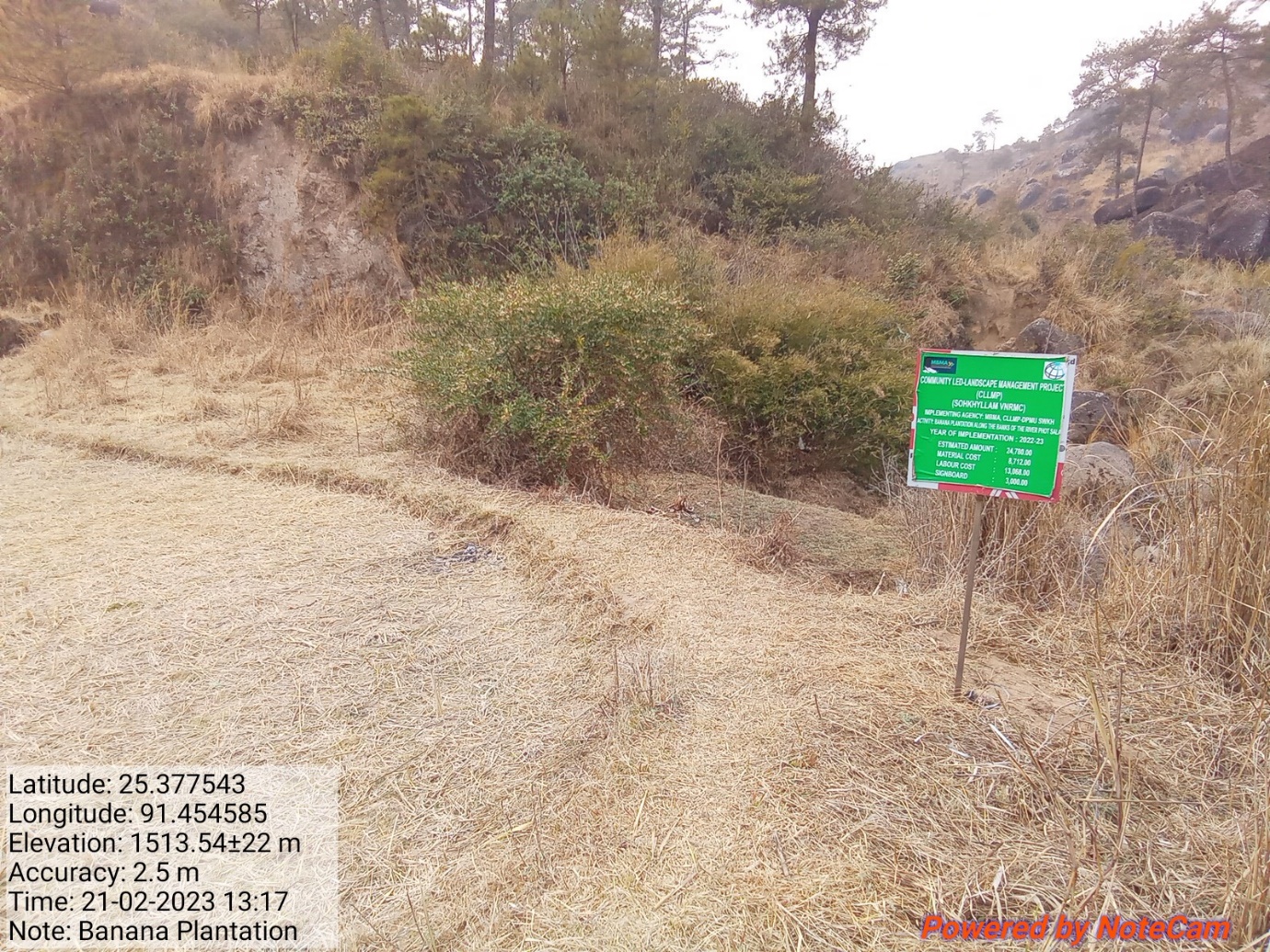
| Banana Plantation along the banks of the river. | Photsala | 25.377531 | 91.454767 | Rs.24,780 | Completed | |
Fig: Banana Plantation along the banks of the river.
| 21 | Type of Intervention | Site Name | GPS Co-ordinates | Amount Sanctioned | Work Status | |
|---|---|---|---|---|---|---|
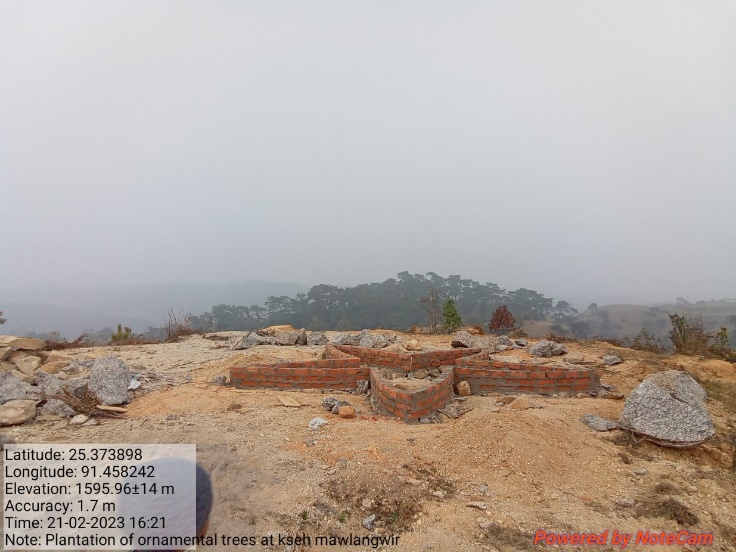
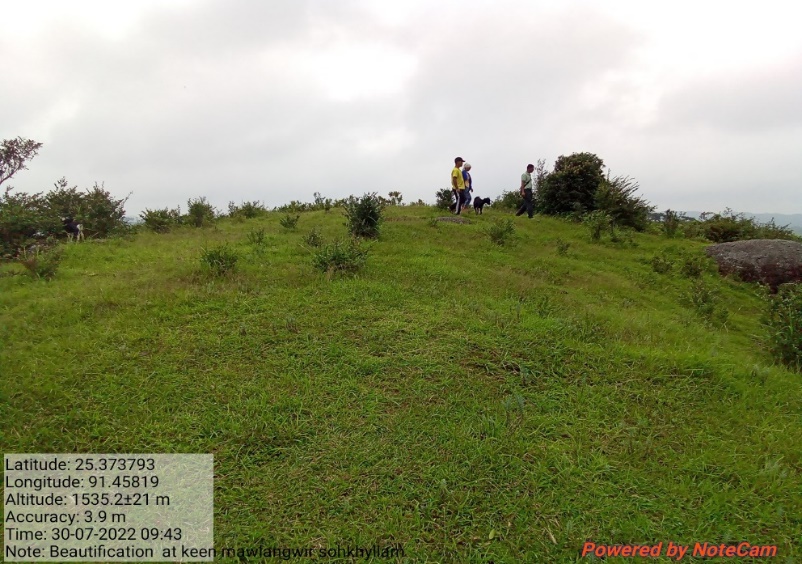
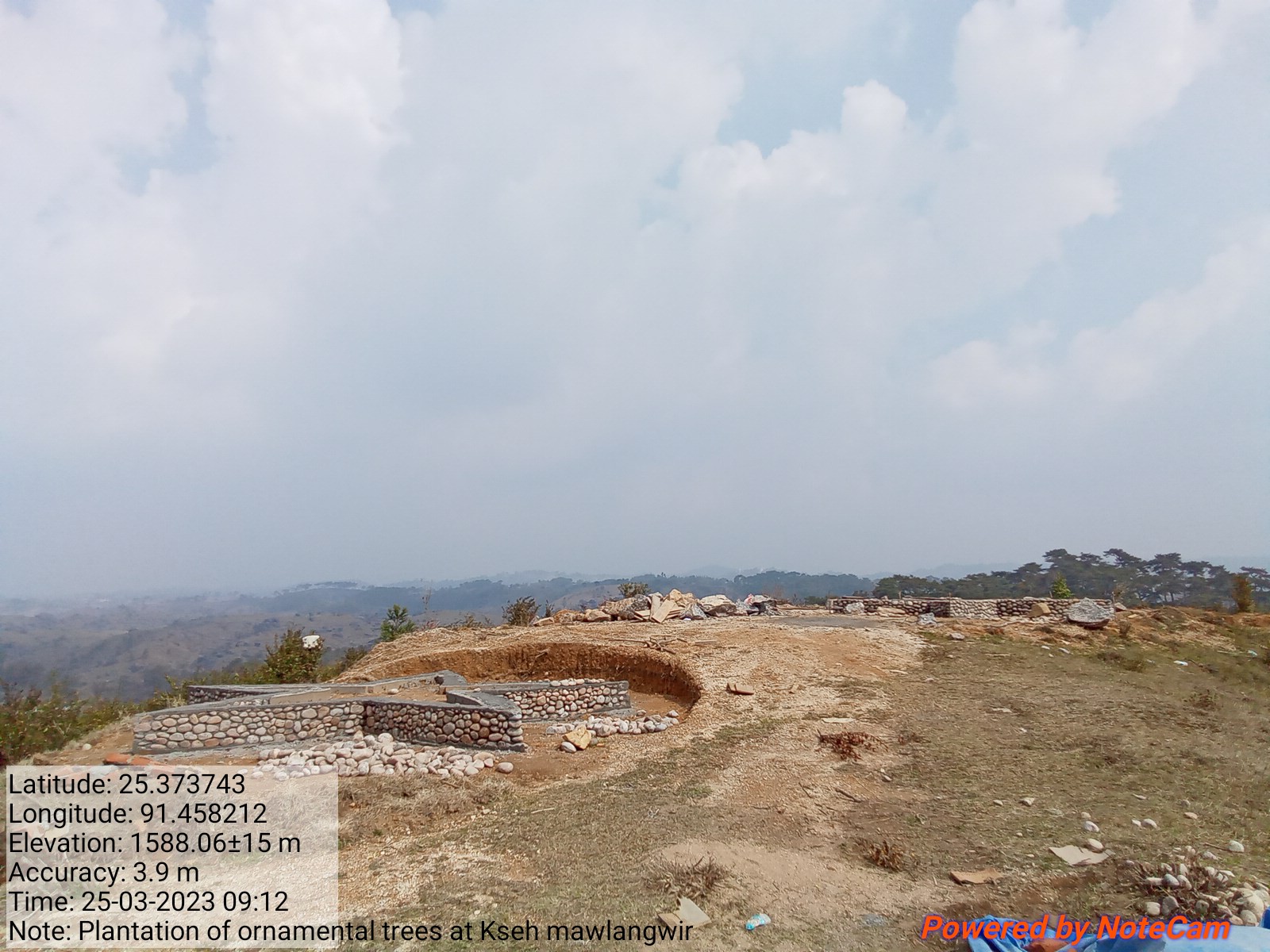
| Plantation of ornamental trees, beautification, plant holder/Potter and site clearance. | Kseh Mawlangwir | 25.373793 | 91.45819 | Rs.4,47,710 | Ongoing | |
Fig: Plantation of ornamental trees, beautification, plant holder/Potter and site clearance.
| 22 | Type of Intervention | Site Name | GPS Co-ordinates | Amount Sanctioned | Work Status | |
|---|---|---|---|---|---|---|
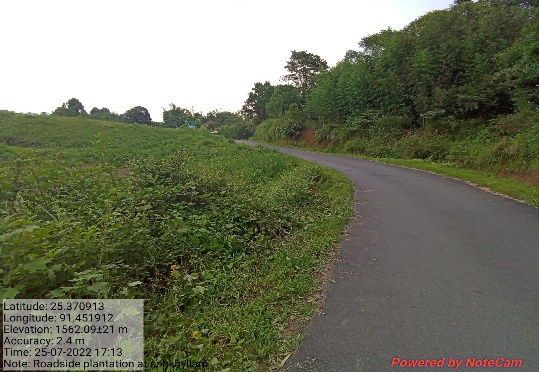
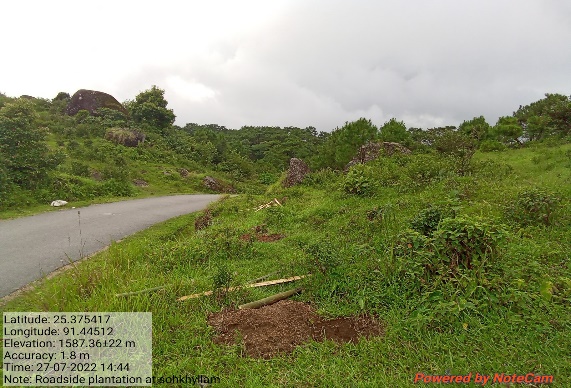
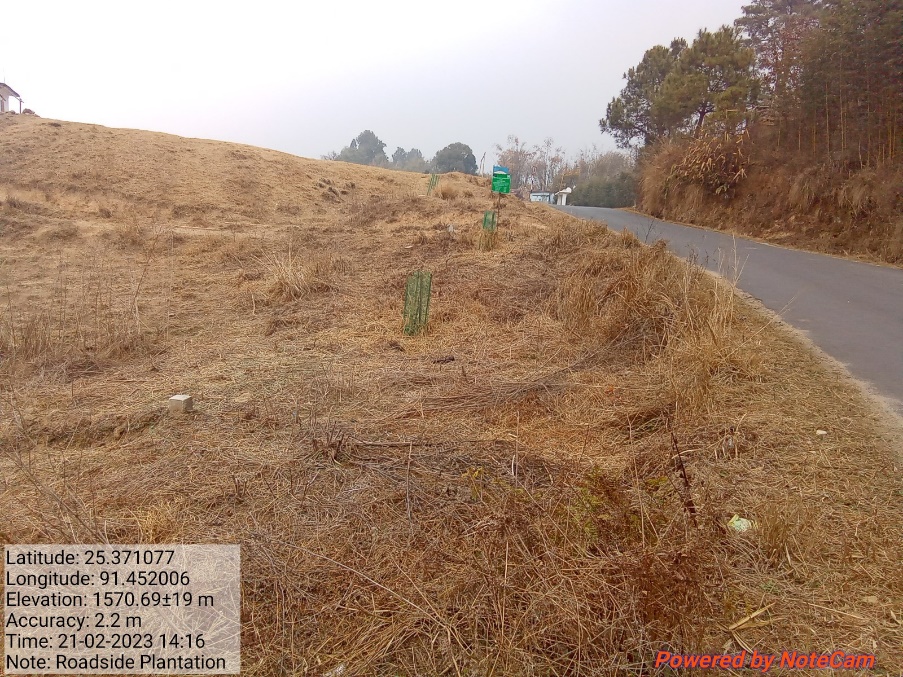
| Roadside Plantation | Sohkhyllam | 25.370913 | 91.451912 | Rs.27,510 | Completed | |
During
Before
After
Fig: Roadside plantation at Sohkhyllam.
| 23 | Type of Intervention | Site Name | GPS Co-ordinates | Amount Sanctioned | Work Status | |
|---|---|---|---|---|---|---|
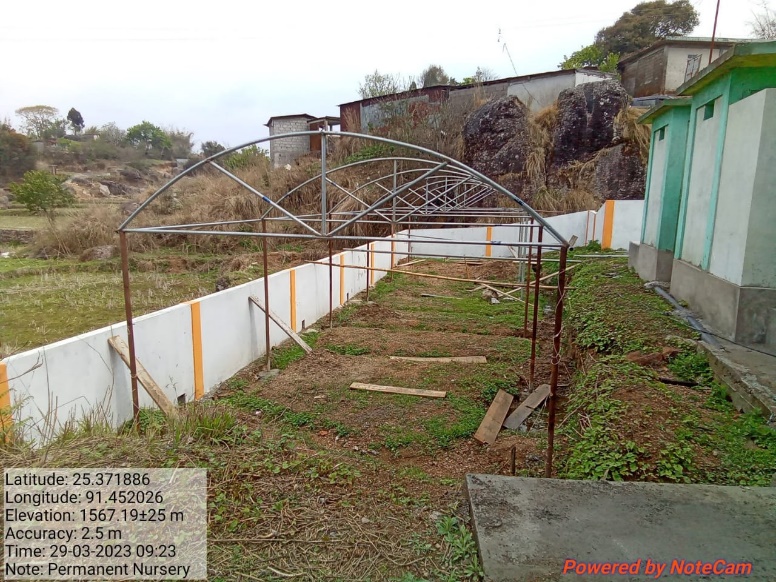
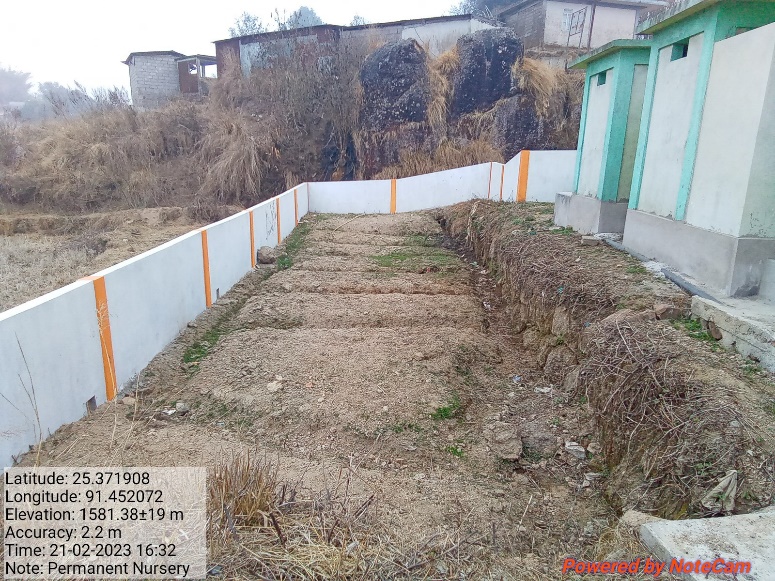
| Permanent Nursery | Dong Nongtepdieng | 25.371908 | 91.452072 | Rs.1,75,200 | Ongoing | |
Fig: Permanent Nursery at Dong Nongtepdieng.
7.FUND STATUS:
Fund Released to VNRMC (Project Implementation)- Rs.26,55,000 Total No. of Work Order Issued- 22 |
|||||
| Activity Name | Amount Sanction | Amount Spent | Work Order Issued Date | Start Date | End Date |
| Spring Chamber and staggered trenches at Dommawphet | Rs.44,710 | Rs. .44,710 | 25th Sept 2019 | 10th Oct 2019 | 18th Feb 2020 |
| Spring Chamber and staggered trenches at Rngeimawsaw | Rs.52,020 | Rs. 52,020 | 25th Sept 2019 | 1st Oct 2019 | 18th Feb 2020 |
| Community Nursery | Rs.2,97,280 | Rs. 2,97,280 | 2nd Mar 2020 | 10th Mar 2020 | 19th Nov 2022 |
| SC & TCA at Dong Nongtepding | Rs.70,440 | Rs. 70,440 | 14th July 2020 | 15th July 2020 | 21st May 2022 |
| Check Dam at Dommawphet | Rs.4,88,300 | Rs. 4,88,300 | 14th July 2020 | 15th July 2020 | 3rd Sept 2020 |
| Water Conservation Dam at Setkhla | Rs.2,82,400 | Rs. 2,82,400 | 24th Nov 2020 | 1st Dec 2020 | 6th Apr 2022 |
| SC & TCA at Wahlonghung | Rs.70,070 | Rs. 70,070 | 24th Nov 2020 | 1st Dec 2020 | 16th Apr 2022 |
| Diversion canal to paddy field at Kynroh | Rs.2,41,000 | Rs. 2,41,000 | 2nd Mar 2021 | 13th Mar 2021 | 19th Feb 2022 |
| Afforestation at Dommawphet | Rs.13,350 | Rs. 13,350 | 12th July 2021 | 15th Jul 2021 | 4th Jun 2022 |
| Afforestation at Set Khla | Rs.1,89,300 | Rs. 1,89,300 | 12th July 2021 | 15th Jul 2021 | 23rd Nov 2022 |
| Contour Trenches at Set Khla | Rs.32,390 | Rs. 32,390 | 12th July 2021 | 8th Nov 2021 | 11th Feb 2022 |
| Contour Trenches at Wah Longhung | Rs.24,630 | Rs. 24,630 | 12th July 2021 | 2nd Nov 2021 | 20th Jan 2022 |
| Bench Terracing at Mawbyrsien | Rs.72,610 | Rs. 72,610 | 14th Dec 2021 | 3rd Jan 2022 | 7th Feb 2022 |
| Spring Chamber at Mawkyntang | Rs.63,200 | Rs. 63,200 | 18th Jan 2022 | 15th Mar 2022 | 18th Apr 2022 |
| Spring Chamber at Perktieh | Rs.54,500 | Rs. 54,500 | 18th Jan 2022 | 24th Mar 2022 | 30th Jul 2022 |
| Afforestation at Maw Sali Mon | Rs.21,000 | Rs. 21,000 | 28th Mar 2022 | 6th Jun 2022 | 18th Jun 2022 |
| Afforestation at Set Khla 1 | Rs.56,500 | Rs. 56,500 | 28th Mar 2022 | 18th Jun 2022 | 22th Nov 2022 |
| Afforestation at Dom Mawphet 1 | Rs.57,000 | Rs. 57,000 | 28th Mar 2022 | 20th May 2022 | 24th Nov 2022 |
| Agro Horticulture at Mawbyrsein | Rs.24,300 | Rs. 24,300 | 28th Mar 2022 | 23rd May 2022 | 10th Nov 2022 |
Banana Plantation along the banks of the River Phot Sala Plantation of ornamental trees, beautification, plant holder/potter and site clearance at Kseh Mawlangwir |
Rs.24,780 | Rs. 24,780 | 6th May 2022 | 25th July 2022 | 20th Aug 2022 |
| Roadside Plantation at Sohkhyllam | Rs.4,47,710 | Rs. 4,47,710 | 16th June 2022 | 8th Aug 2022 | 27th Mar 2023 |
| Permanent Nursery | Rs.27,510 | Rs. 27,510 | 16th June 2022 | 4th July 2022 | 28th July 2022 |
GROUND TESTIMONIALS:
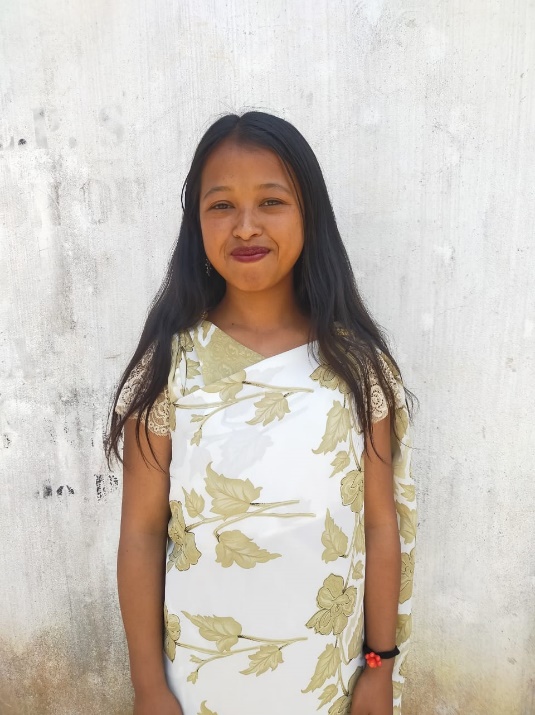
Ibankerlin Lyngdoh
VCF Environment
I am thankful to this project because I have learned to use the GPS device when I am in the field and to operate the water tester to know the water quality, water discharged, pH of the water, etc as I have been trained. Other trainings such as Forest Management Plan, Environmental Safeguard, trainings on how and when to plant the tree saplings and maintaining of the community nursery was also taught by our Environment Manager. I have also had an opportunity to go for exposure visits to Maharashtra and Mawkyrdep Ri Bhoi District which I personally love the experience that I see for myself how other district and state approach the management of Natural resources.
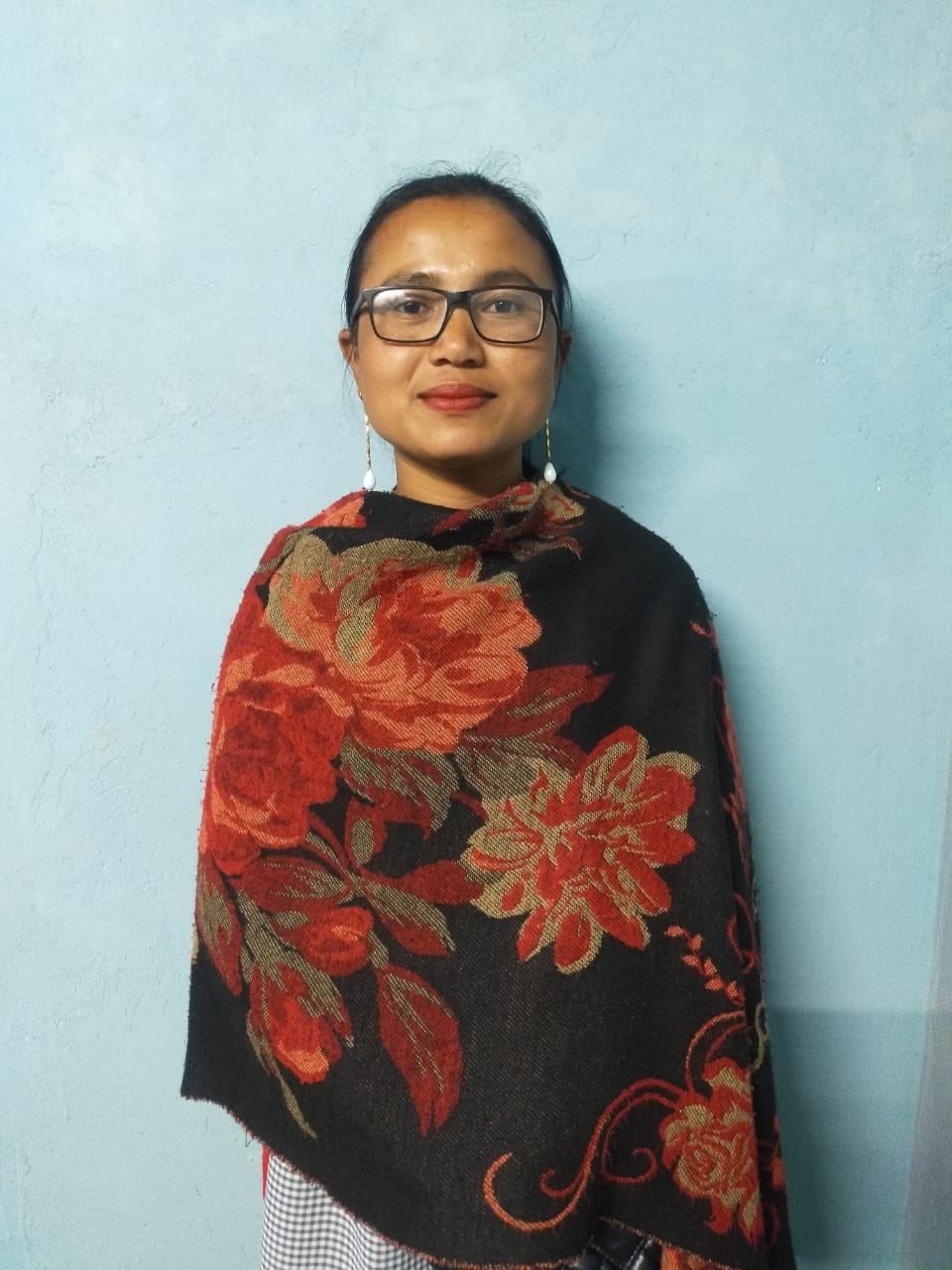
Merihun Lyngkhoi
Secretary Sohkhyllam
As a Secretary of Sohkhyllam VNRMC I would like to express my
gratitude to the office DPMU CLLMP SWKHD for the inclusion of our
village in the Project. Personally, I am privileged to have had the
chance to take the position as a secretary and this has open up many
doors for me to attend and learn many trainings organised by the
office. I have learned to keep records and report in the minute
book, records of the intervention work done in the VNRMC and I have
also been trained on the importance of conserving the surrounding
nature around us. Through this Project, I have been to Nongsder
village in the year 2019 as part of the knowledge sharing and
exposure visit.
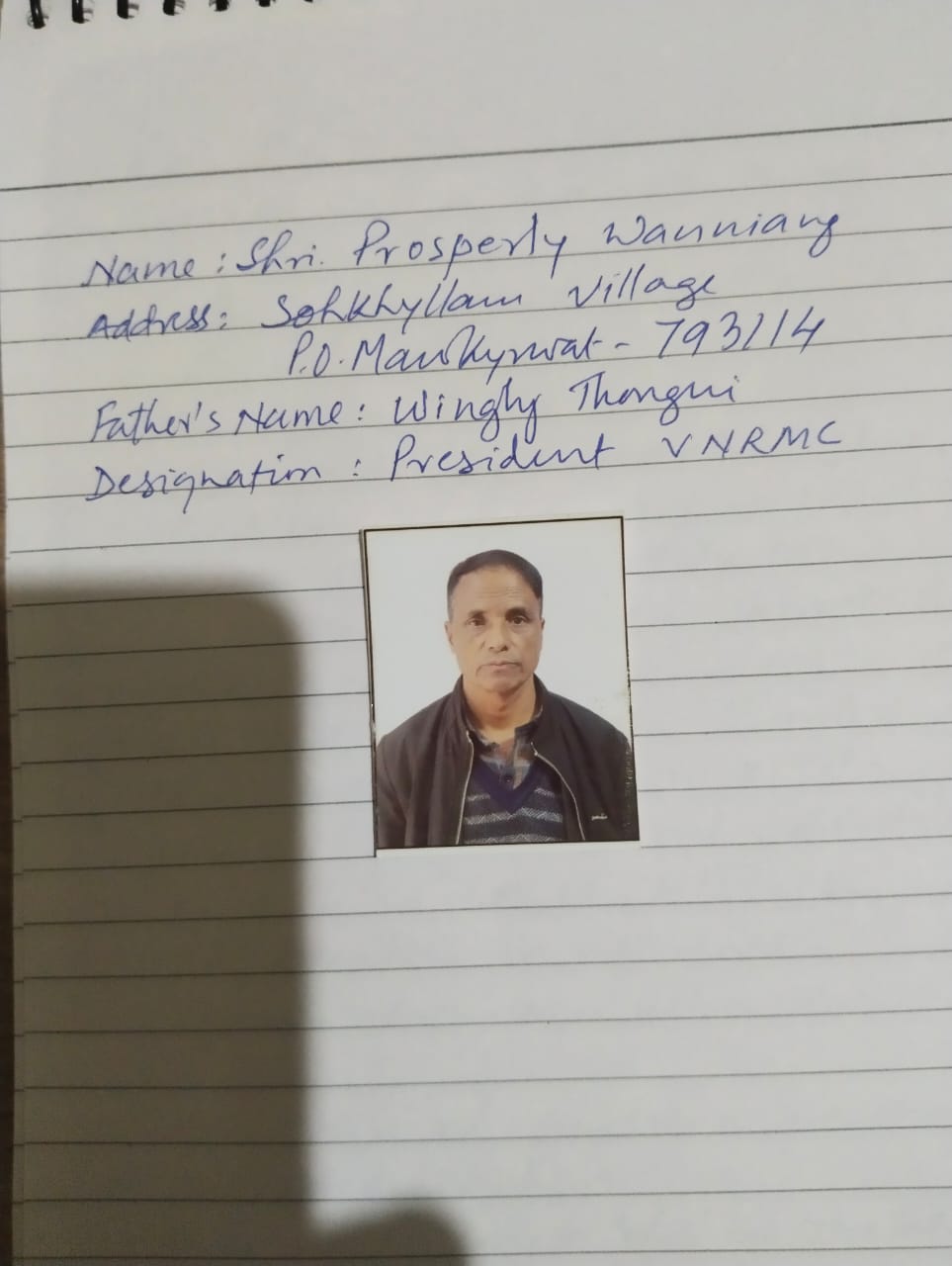
Mr.Prosperly Wanniang
President VNRMC.
I, the president of VNRMC, Sohkhyllam, am very pleased to share few words of comment and testimonial about the implementation of the Community-Led Landscape Management Project (CLLMP) in our village by the Basin Development Unit, South West Khasi Hills District during 2019 – 2023. I am positive to say that all works funded under the project are beneficial and sustainable because all works have been done as per plans and estimates.
As per my observation, the implementation of this project is quite different from other projects that ever implemented before. It is really well organised and well planned. Because before the introduction of the project, awareness programmes have been conducted first in order to make the villagers aware about the project implementation. Besides, trainings have been conducted by the office from time to time to the members which made them understand how to manage the project systematically. That is why the project has come out successfully. Out of all works done, ponds, check dams and tree plantation are worth mentioning.
Moreover, on involving with the project implementation, I myself have learned a lot of things. I found that even a single amount is not left out but it is utilised accountably. All receipts and expenditures are kept in proper records. So, it is fair in the eye of the Committee as well as the public. Also, the constitution of a purchase committee under the project has been helpful to the members of the committee as almost every work has been done through RFQ (Request for Quotation). Such practice has made the public known about the works before their implementation. It also invited the attention of the interested groups and individuals to offer supply as invited in the RFQ.
As an overview of the project implemented so far in our village, the CLLMP is really fair and square. I can comment that although the project will discontinue one day, but all works that have been done will remain. Hence, I expect and hope that such projects will again be implemented in our area.
With best regard,
P.Wanniang
President
VNRMC Sohkhyllam.
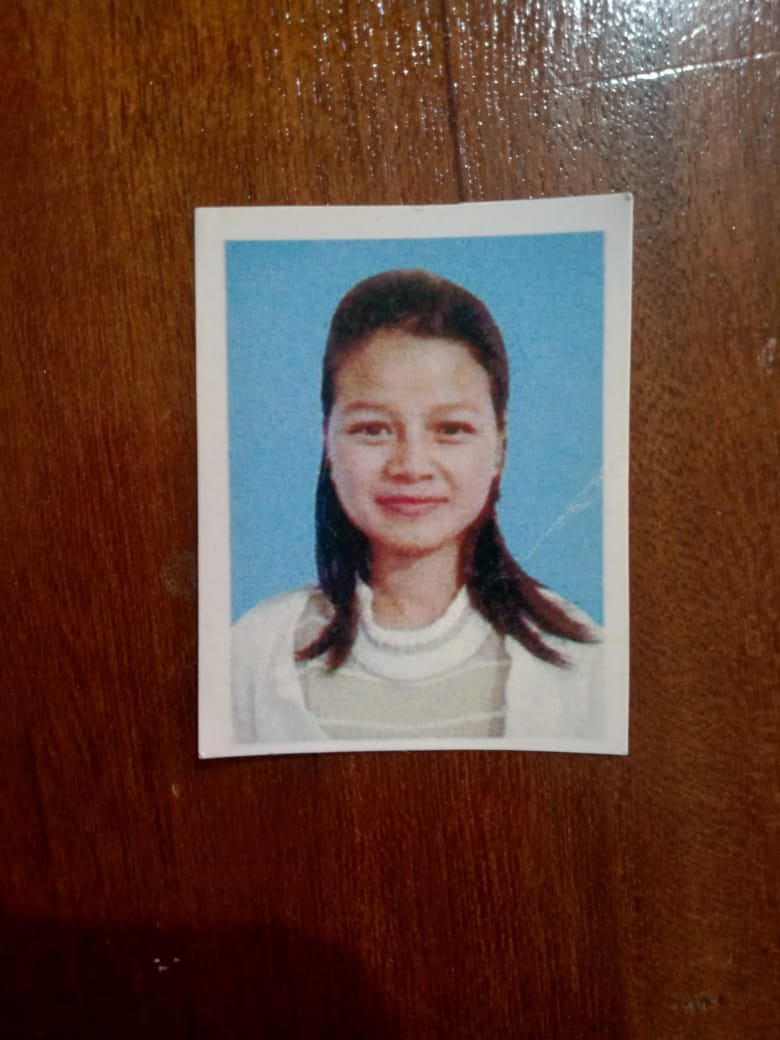
Happyness Jyrwa
VCF Social
The coming of CLLMP in our village had brought much changes in the last few years. People have begun to be more aware of the need to care for our surroundings. This project has also brought the villagers to unite and work together to implement the scheme. My family and the people in my locality are blessed by the spring chamber that was constructed by this project. I am grateful that I get to work as a VCF and this have brought much exposure and experiences to me personally.
******************************************************************