Report on:
UMSARANG Village under Bhoirymbong C&RD Block
District: RiBhoi
19TH JAN, 2024
COMMUNITY LED LANDSCAPE MANAGEMENT PROJECT
The Government of Meghalaya with financial help from the World Bank is implementing the Meghalaya Community Led Landscape Management Project (MCLLMP). The project will cover the entire state of Meghalaya and implementation of community led plans will be rolled out in phase manner throughout the state. The Meghalaya Basin Management Agency (MBMA) will facilitate community-led planning by providing support, technical inputs and funding.
The project is intended to strengthen community-led natural resources management in selected landscapes within the 11 districts of the state. This would be achieved through a variety of planning, capacity building, and on-the-ground interventions to promote the conservation, sustainable use of natural resources, social inclusion and community mobilisation; building traditional knowledge and learning, mapping of natural resources management; strengthening the community institutions and creating linkage with financial institutions and community organizations.
The project interventions include preparation of community led natural resource management plans. The CLLMP has the following three components:
Strengthening Knowledge and Capacity of Communities for Natural Resources Management
Community-Led Landscape Planning and Implementation
Project Management and Governance
The project objective is “to manage and conserve the natural resources, especially forests, soil and water sources, in a manner that supports the financial and physical well-being of communities in the State”
The CLLM-Programme focuses on increasing the capacities of communities and traditional institutions (TI) by adopting a landscape approach to manage their natural resources such as soil, springs and other water sources, forests and bio-diversity, etc.
The project will be planned and implemented in about 400 villages across the state.
CLLMP has a strong focus on institution-building at the village-level, by ensuring systematic capacity-building on technical and social skill-sets.
The project will also extend such training to communities beyond the targeted villages and support efforts made by them to access funding from various rural and natural resources initiatives and schemes.
The programme will also invest in improving the process and outcome delivery, by developing and adhering to effective systems and procedures, supported by the appropriate technology.
Benefits for community (Skills and Capacity relating to technical and managerial areas like NRM and Conflict resolution
Benefits to traditional institutions (village councils, traditional leaders, community-based organizations, SHGs etc) through Knowledge sharing, promotion of innovative approach, access to technology, technical managerial and financial support.
It is estimated that the project will impact around 1 lakh partners (of which 50% are women) who depend on land, forest, agro forestry.
Through the project, 55000 Ha of targeted area will be ensured with availability of water, biological resources and soil productivity, which will in turn benefit around 400 villages and the outcomes delivery can be summarized as follows.
The Project is executed by the MBMA in collaboration with other partners particularly, SIRD (for training and capacity building), Department of Soil and Water Conservation, Water Resource Department, Forest Department, specifically with respect to technical inputs, safeguards management and Community NRM plan preparation
2018-2023 (5 year)
Introduction
Umsarang village is located in Bhoirymbong C&RD block, Ri- Bhoi district, Meghalaya, India. It is situated 4Km away from sub-district Headquarter Bhoirymbong and 54Km away from district headquarter Nongpoh. Umsarang has a total number of 67 households and has a population of 349 people.
Umsarang village is a very old village which is under the rule and jurisdiction of the HimaMylliem. The village was founded back in 1943 by the people who came from Mawlai-Mawkynroh and Mawlai-Mawtawar who came to practice farming in this area. The first settlers in this village were Klik.k.Dympep, Phone Nongkynrih, JecentaNongkynrih, Skir Kharumnuid, RodialaSynjri and the village was first looked after by Lumshyiapvillage. As the village started growing and prospering, Lumshyiap village stopped looking after Umsarang and it was then led by Shri. Phone Nongkynrih as the headman in the year 1964 who then passed on the mantle of headman to Shri. Skir Kharumnuid in 1974. After Shri. Skir Kharumnuid the mantle of Headman was passed on in the year 1980 to Shri. PhlostinKharbuli who was the son of Shri. Phone Nongkynrih.
It was in this year that the Headman got the consent of the 10 households residing in the village and it was recognized and census of the village started and it also got a polling station at Lumshyiap village. At the beginning of his tenure he did a lot of work to further the growth of the village and to receive the recognition from the Hima Mylliem as a village under its jurisdiction. It was on 31st January 1984 that the HimaMylliem recognized the village under its jurisdiction and laid out the borders and territory of the village after which the village had been governed properly in peace and prosperity.
After 1984 till 2000 there has been many more headmen and leaders of the village, following is the list of the headmen of Umsarang since 1999-till date:
Khilon Nongkynrih- 1999-2003
Graceland Thangkhiew- 2003-2005
Ioanis- 2005-2009
BeringtonNongspung- 2009-2015
MebetNongrum- 2016-Till date.
Umsarang village is still a village surrounded by forests and the forest is conserved by the villagers in the hope that the future generations will also follow in the steps of their ancestors.
Social Profile
The total number of households in Umsarang Village is 67 and has a population of 349 people. Agriculture and its allied activities are highly in vogue, where some few others are also enrolled in government and some few inhabitants are engaged in local businesses.
Village Accessibility: In order to reach Umsarang village, one must venture through Shillong-Jowai by-pass road, lying 37Km away from Shillong. Upon Reaching the Village name by Nongtraw one must turn right for about 1Km in order to reach Umsarang Village.
Literacy: As per the 2011 census, the village literacy rate has touched to the tune of 85%. In Umsarang Male literacy stands at 84% while Female literacy rate is 87%. There is only one school (Primary School) in the Village.
Presently the village is run, managed and guided by its active Durbar as the highest authority in the village which is alternatively comprised of the Seng Kynthei, (Women Wing) Seng Samla (Youth Wing) and Village Defence Party (VDP) all collectively aiming for the overall good and growth of the village. Other committees such as (1)Village Employment Council (VEC), (2) Village Water and Sanitation Committee are constantly active and vigil as well, working in due co-operation between themselves for a brighter tomorrow for the village.
Population 
As per Census 2011, Umsarang population is 267. In 2020 the population of Umsarang has been increased to 349 Out of this, 166 are males while the females count is 183. This village has 47 children in the age group of 0-4 years. Among them 25 are boys and 22 are girls.
| Age Group | Male | Female | Total |
| 0-4 | 25 | 22 | 47 |
| 5-14 | 44 | 52 | 96 |
| 15-30 | 42 | 52 | 94 |
| 30-60 | 45 | 46 | 91 |
| Above 60 | 10 | 11 | 21 |
BPL/APL Household:
| Particulars | No. of HH |
|---|---|
| BPL HH | 42 |
| APL HH | 25 |
Card Holding Household:
| Particulars | No. of HH |
|---|---|
| Total HH | 67 |
| Ration Card HH | 67 |
| PHH Card | 41 |
| AAY | 1 |
| Health Card HH |
Fuel Type:
| Fuel Type | Total HH |
|---|---|
| Charcoal | 0 |
| Biomass | 0 |
| Wood | 67 |
| LPG | 1 |
| Electric Heater | 0 |
| Kerosene | 0 |
OCCUPATION: The people of the village rely on agriculture and forest products for their livelihood. The main occupation of the villagers is farming followed by self employed, Govt. servant, Mason/Carpenter and carpenter.
Drinking Water: Insufficient availability of
drinking water in the village especially in some part of the village
which is located in hilly areas, due to lack of water supply from
the spring sources and also there are no pipeline systems connecting
from water source to houses.
Jhum cultivation: mainly take up traditional approaches of cultivation like Jhum or the shifting cultivation
WATER BODIES 
Springs- 7
Streams- 2
River- 2
LAND
Forest- 94.4 Ha
Cultivable Land- 31.74 Ha
CLLMP ACTIVITIES
Ground Truthing Dated: 11th of July 2020
The CLLMP team met with Mr. Mebet Nongrum, the headman of Umsarang Village on the 11th of July 2020, who was able to provide the team with the required details for site verification.
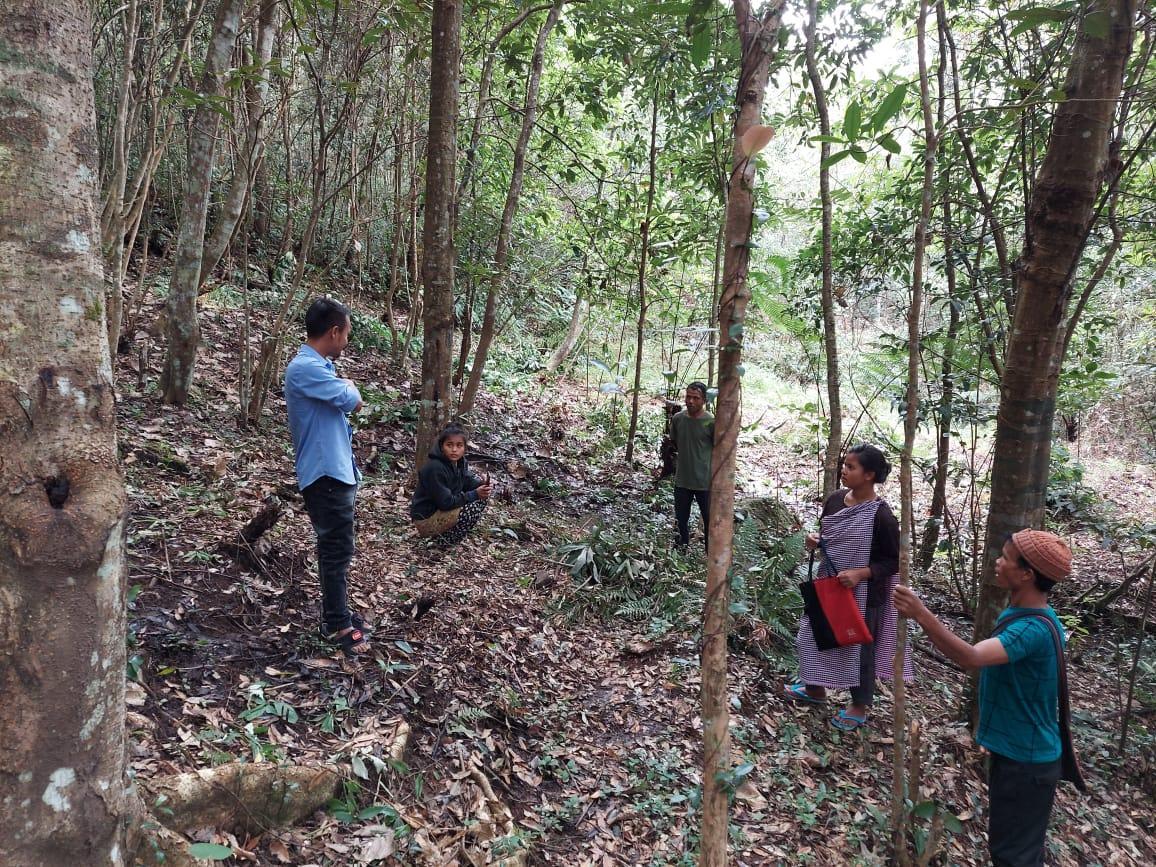
Figure: Ground-truthing at Umsarang Village.
Case Findings & Selection parameters: -
1. There are 67 Households out of which 42 Households fall under the BPL category.
2. VEC actively performing.
3. Availability of community forest of about 151.64 Ha
4. Forest is prone to fire especially in winter season leading to the lost of many plant sampling
5. Scope for Water Sources to be developed
6. Need for Community Nursery and Vermi-Compost
The Village has been selected under the Community Led Landscape Management Project.
2. Sensitization Programme Dated: 11.07.2020
The District Project Manager and the Assistant Managers held a village Level sensitization Programme on the Community Led Landscape Management project on the 11th of July 2020.The community members actively participated in the program, voicing out their concerns and questions regarding the project making it a huge success. A total of 25 community members attended the program out of which 10 are female.
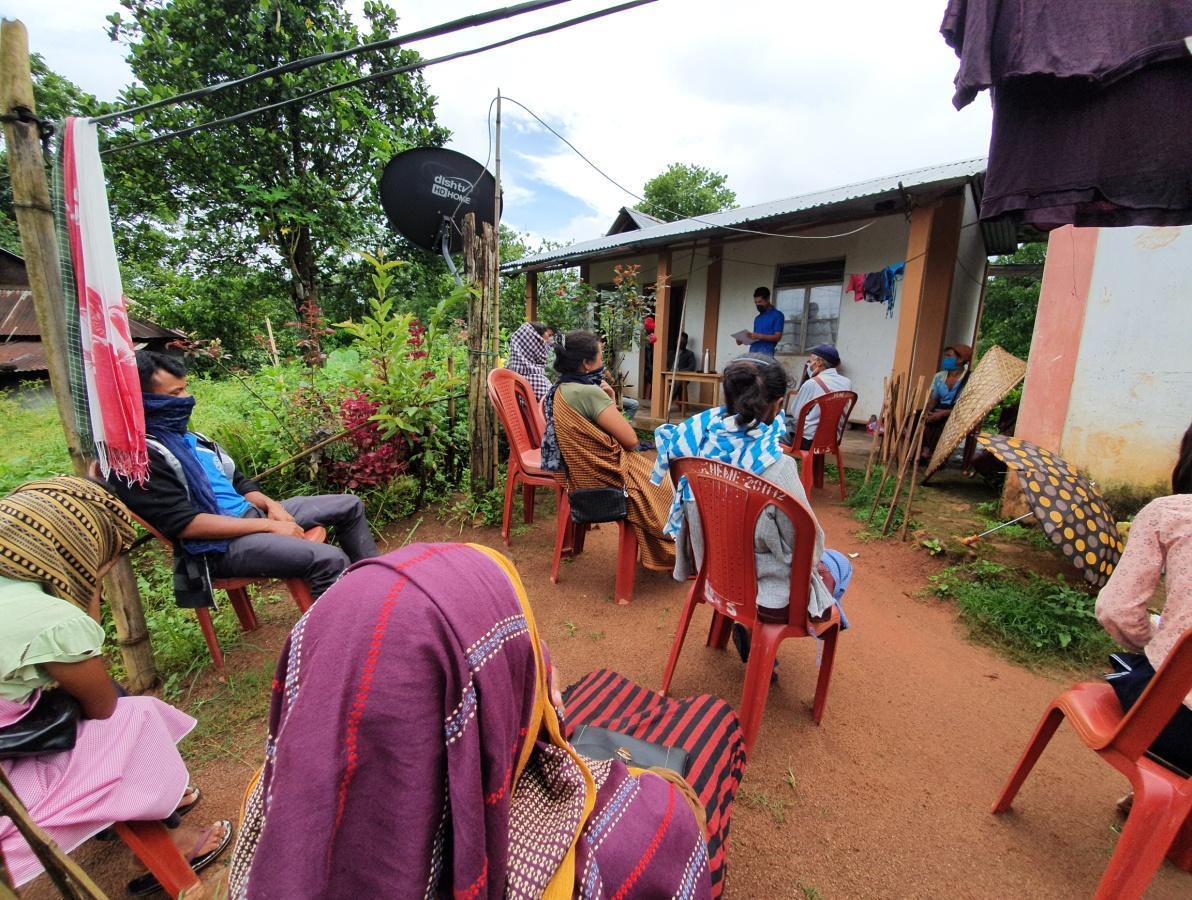
Figure: PRA exercise at Umsarang Village
The CLLMP officials gave a brief introduction on Meghalaya Basin Management Agency (MBMA) and explained about the various programmes and projects that MBMA is working on, they then gave a detailed introduction on the Community led Landscape Management Project (CLLMP) and the different aspects and procedures that the villagers and the CLLMP team should carry out during the course of the project and the importance of the involvement of the community for the CLLM-Project to be a success. They gave due importance to the environmental aspects of the project and enlightened them on the various benefits that the villagers could obtain from the project.
2.2 Signing of Documents:
After the interactive session, the village signed the EOI, VGA and Green charter followed by the selection of candidates for the Village Natural Resource Management Committee. The Village Executive Committee (VEC) and the entire community carried out the procedure and elected the members of the VNRMC on the same day.
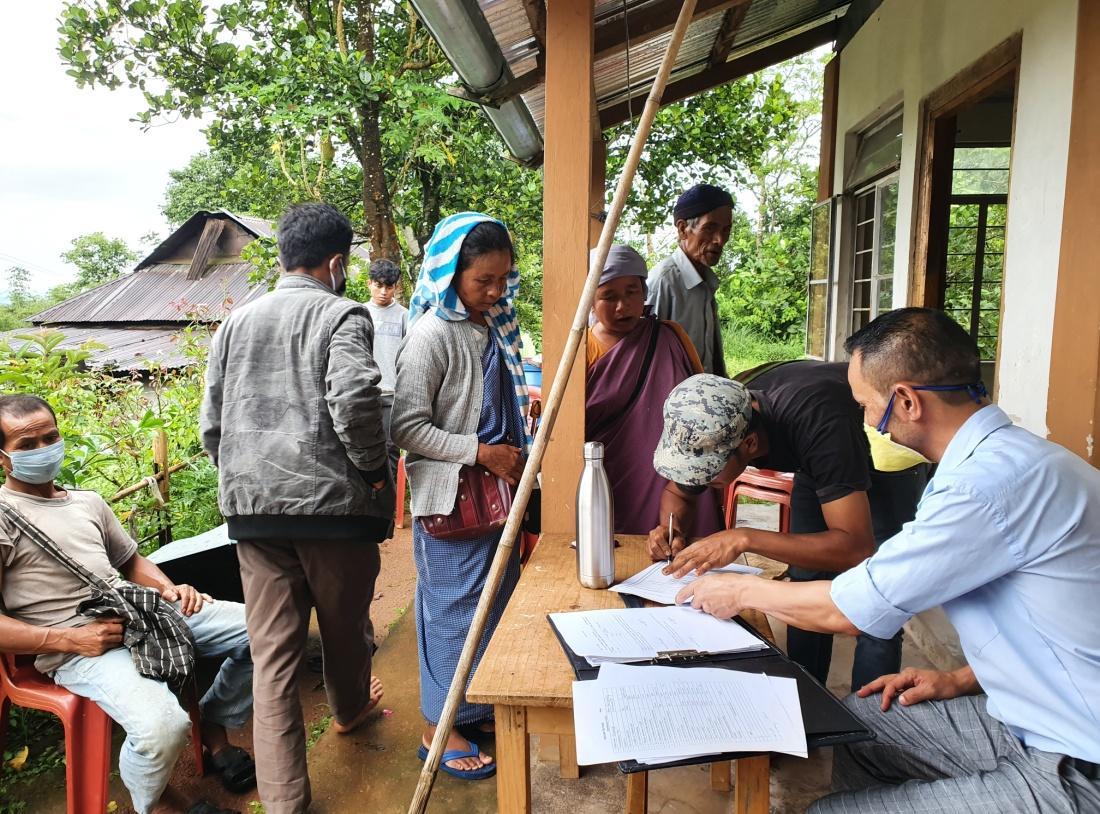
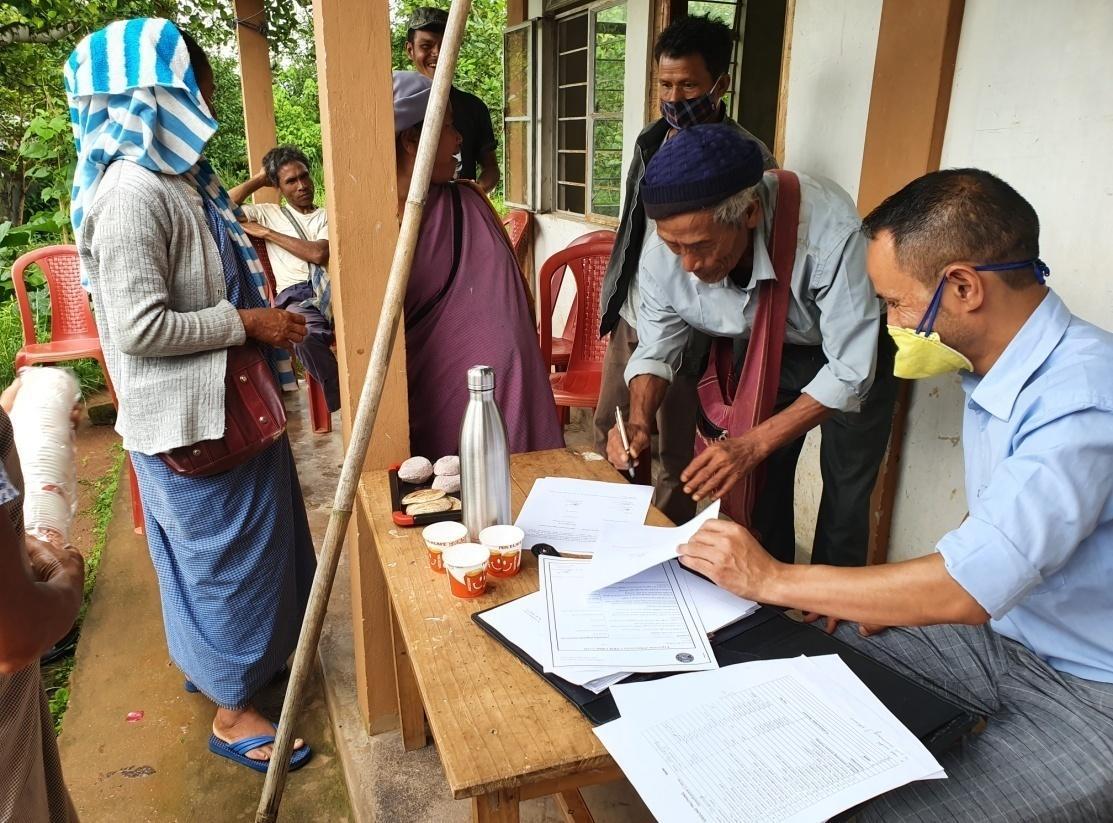
Figure: Signing of EOI and VGA
2.3 Formation of the VNRMC
The Formation of the Village Natural Resource Management Committee was done in a public meeting in the presence of the entire village and the CLLMP staffs. The community itself chose the President, the Secretary and the other executive members of the Committee.
Listed below are the members of the VNRMC:
|
|||||||||
|
Name in Full | Designation | Gender M/F | Age (Yrs) | Education | Occupation | Community | Religion and Denomination | Contact No and email address |
|
Mebet Nongrum | President | M | 41 | X | Farmer | Khasi | Christian | 8131941343 |
|
Shailinda Syiem | Secretary | F | 35 | Xll | Teacher | Khasi | Christian | 8974214847 |
|
AibanpynsukNongrum | Bookkeeper | M | 24 | XII | Student | Khasi | Christian | 8132846555 |
|
Victor Jyrwa | Member | M | 43 | X | Driver | Khasi | Christian | 8575411743 |
|
Banker Nongkynrih | Member | M | 30 | XII | Mason | Khasi | Christian | 9383144763 |
|
Kernus Synrem |
Member | M | 44 | I | Farmer | Khasi | Christian | 7628070119 |
|
Edalin KhyriemMujat |
Member | F | 43 | III | Farmer | Khasi | Christian | 8413931057 |
|
Telbon Jyrwa |
Member | F | 46 | X | Farmer | Khasi | Christian | 8974800320 |
|
Sylviania Kharbuli |
Member | F | 22 | BA | Student | Khasi | Christian | 6909510013 |
| Village Community Facilitators | ||||||
| Sl.No. | Name | Gender | Age | Education | Contact Number | Role |
| 1 | Banjop Jyrwa | Male | 21 | XI | 9383304507 | Environmental Management & GIS |
| 2 | Andywelbon Jyrwa |
Male | 19 | BA | 9612460913 | Project Management M&E |
| 3 | Sendana Kharbihkhiew |
Female | 20 | 8 | 6009427472 | Social Management & KM |
| List of Procurement members | |||||
| Sl. No | Name | Gender | Age | Education | Contact Number |
| 1 | Wanrius Synrem | Male | 46 | I | 8415923355 |
| 2 | Mitilda KhyriemMujat | Famale | 40 | IX | 7628068179 |
| 3 | Ridaplin KhyriemMujat | Male | 39 | VIII | 8731044536 |
Figure: The VNRMC EC Members 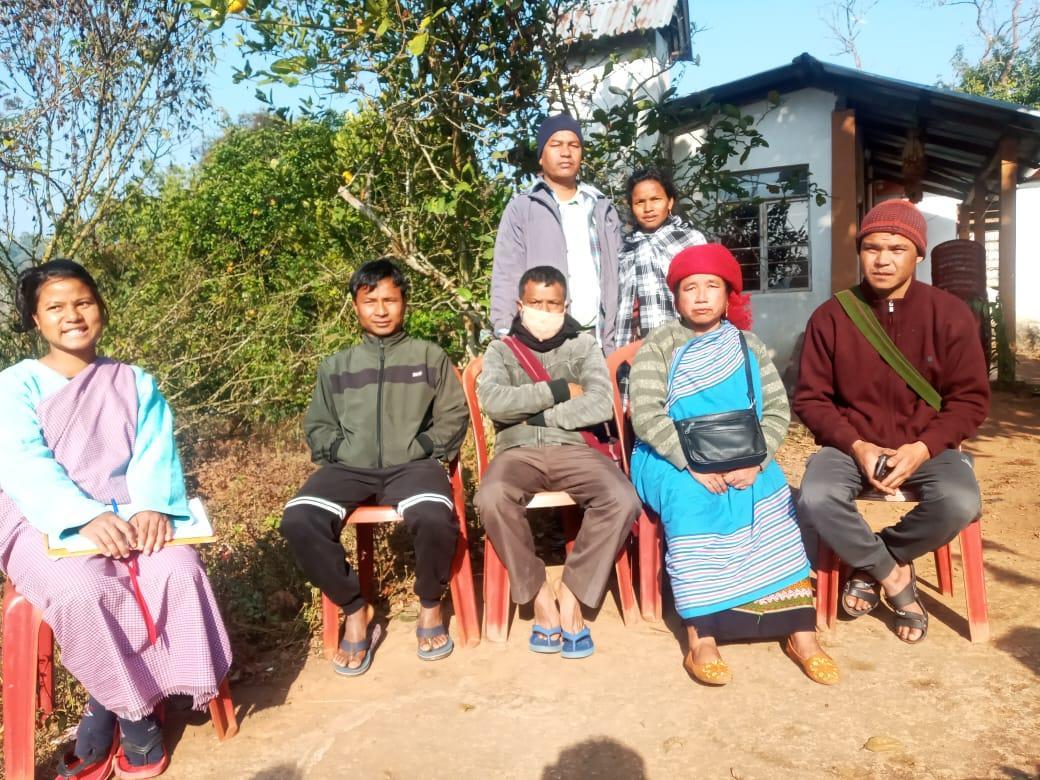
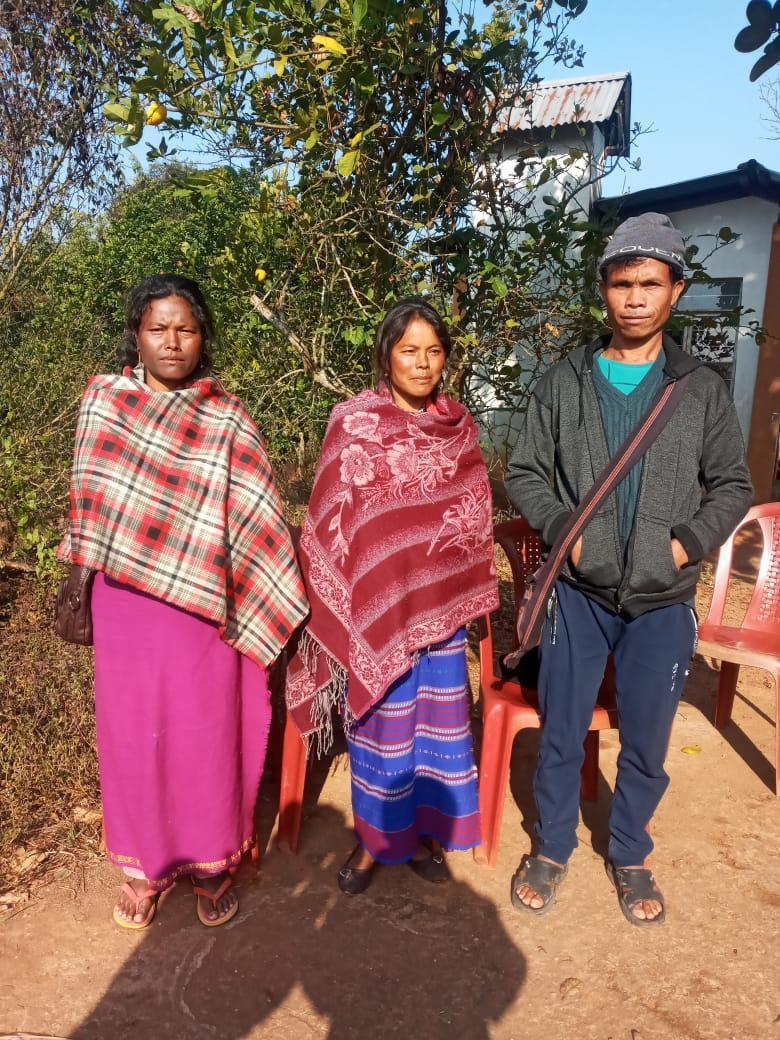
Figure: The Procurement Committee of Umsarang VNRMC
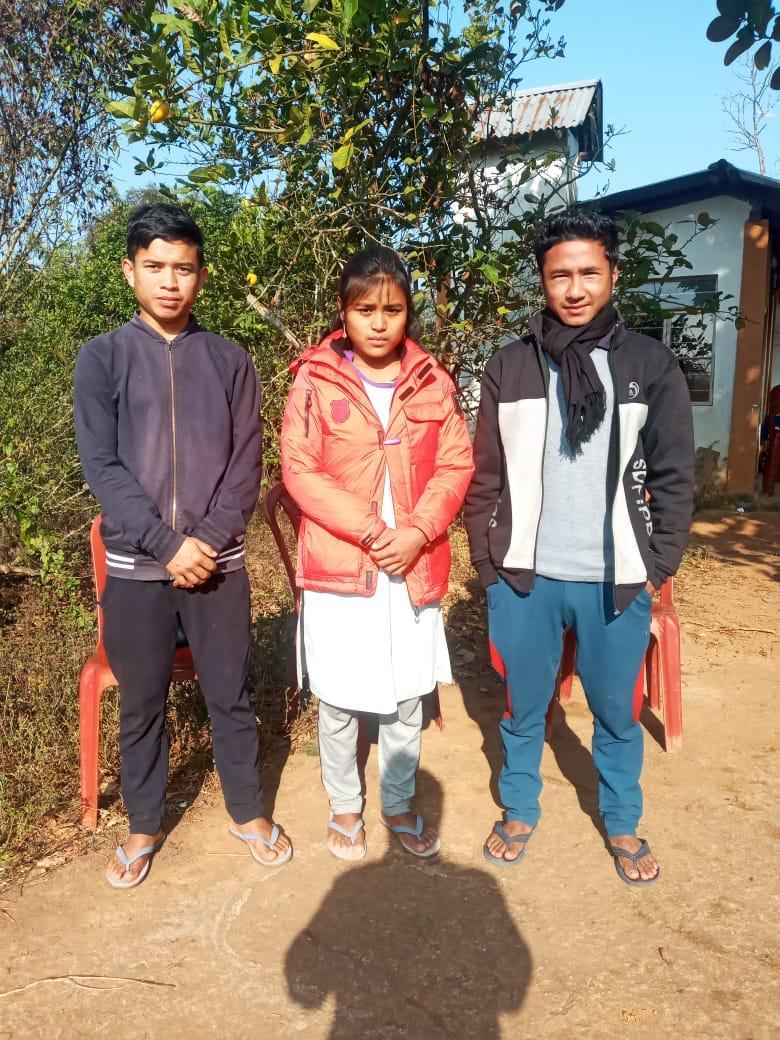
Figure: The Village Community facilitators (VCF)
3. Opening of Bank Account.
The opening of the bank account was initiated after the village signed the EOI (Expression of Interest), the VGA (Village Grant Agreement) and the Green Charter. Umsarang village opened their VNRMC account on the 21st July 2020
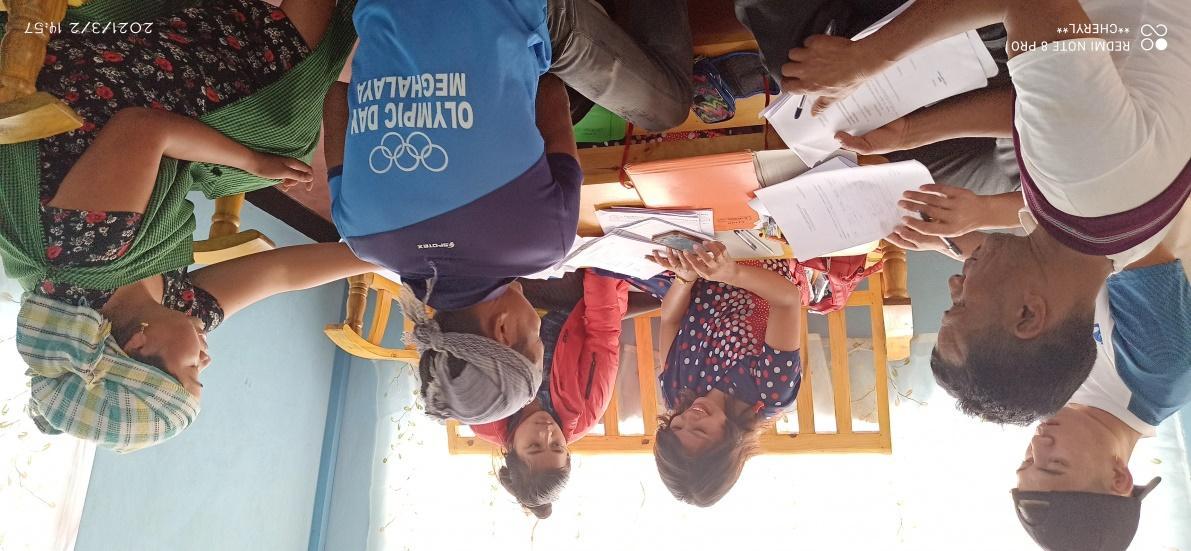
The E.E Account of CLLMP Team RiBhoi District trained the Purchasing and Procurement Committee of Umsarang Village on the 2nd November 2020
Topics Covered:
Principles of Community Procurement
Benefits of Community Procurement
Important aspects undertaken by Community Procurement.
Procurement Process/Steps
Function of Purchase Committee
Important Procurement records to be maintained
Financial limits and methods
4. Participatory Rural Appraisal Exercise 11th August 2020
PRA exercise at Umsarang Village took place on the 11th of August 2020. There were a total of 15 villagers taking part in this exercise who contributed their time and knowledge to this project.
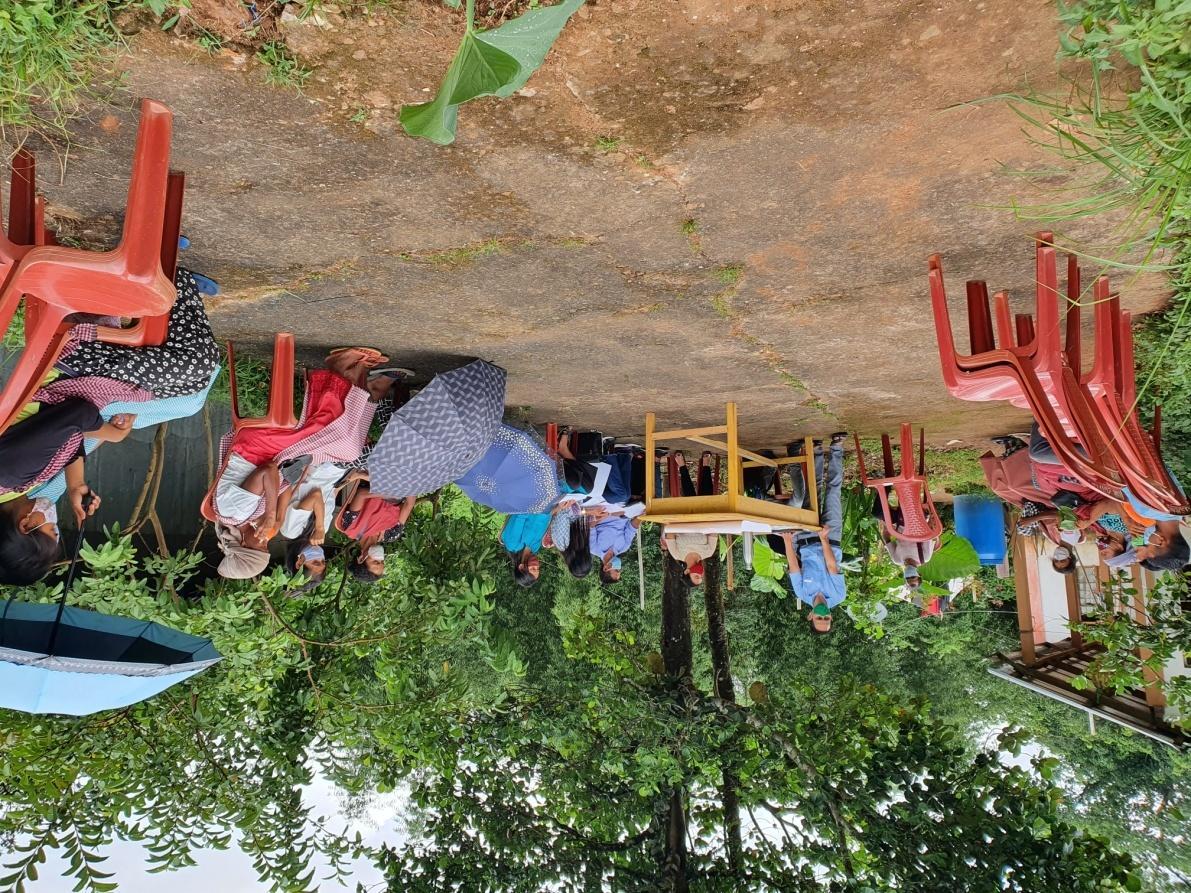
The initial stage of Participatory Rural Appraisal (PRA) exercise at Umsarang Village, commenced with a meeting cum orientation program on CLLMP. While conducting the meeting, the community members were made aware of the various PRA exercises to be conducted for the development of the Community Natural Resource Management Plan (CNRMP) of the village, the community members’ contribution in the exercise and the objectives to be achieved. The key informants (the VNRMC and the VCFs) helped facilitate maximum participation. The dates and time for conducting the various Participatory Rural Appraisal (PRA) exercises were fixed in consultation with the community members and all were requested to participate in the exercise. The schedule and time was announced at the end of the meeting.
The District Project Manager (DPM) of the Community Led Landscape Management Project, Ri-Bhoi District, discussed the different types of plans that can be adopted by the village and stressed on the need for more holistic and sustainable plans which will benefit the community as a whole.
Participants on the 11.08.2020:
CLLMP officials: Shri JyswillNongpiur(Manager of Environment Management), Smt. PersaraThangkhiew (Manager of Social Management), Shri V. Buhphang (DPM) and the DPMU CLLMP Team
Community members: Shri. MebertNongrum (Chairman), BalindaJyrwa (Secreatry) Shri. AibanpynsukNongrum(Book-Keeper) Shri. Victor Jyrwa, Shri. Banker Nongkynrih, Shri. KernusSynrem, Smt. EdalinKhryiemMujat, Smt. TelbonJyrwa, Smt. SylvianaKharbuli (VNRMC Members), Shri. BanjopJyrwa, Shri. AndywelbonJyrwa, Smt. SendanaKharbihkhiew (VCF) and other community members
Commencement of PRA.
Introduction: Participatory Rural Appraisal (PRA) is the process of involving local people in the analysis and interpretation of their own situation of a given rural area. The local people i.e. the participants take a leadership role in collecting, analyzing, interpreting and presenting information and in this process impart knowledge and development insight to the specialists and extension agents
For management of natural resources, participatory Rural Appraisal is conducted to establish rapport with the village community as well as to identify and define problems for prioritization in the village itself. It is a way of learning from and with community members to investigate their need assessment, analyze and evaluate constraints and opportunities and find out priorities in the area of agriculture, small scale rural enterprises and any other social and economic development programs addressed to village development. Based on the principle of listening and learning,
Objectives of PRA exercise at Umsarang Village:
The Participatory Rural Appraisal (PRA) exercise at Umsarang was conducted with following objectives:
To identify the natural, human and economic resources of a village.
To identify the village problems and prioritize them with the help of the community members.
To prepare the Community natural Resource Management Plan of the village.
Activity 1: Village Boundary Mapping:
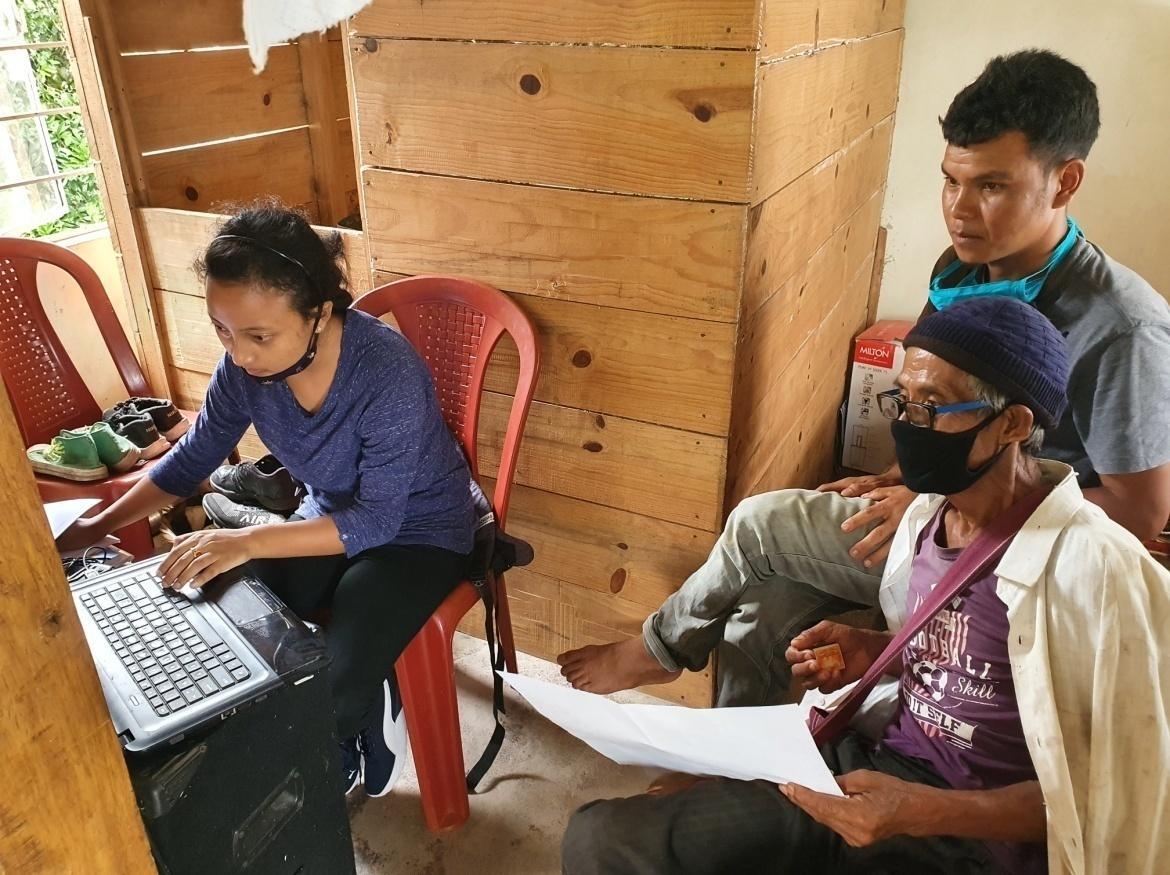
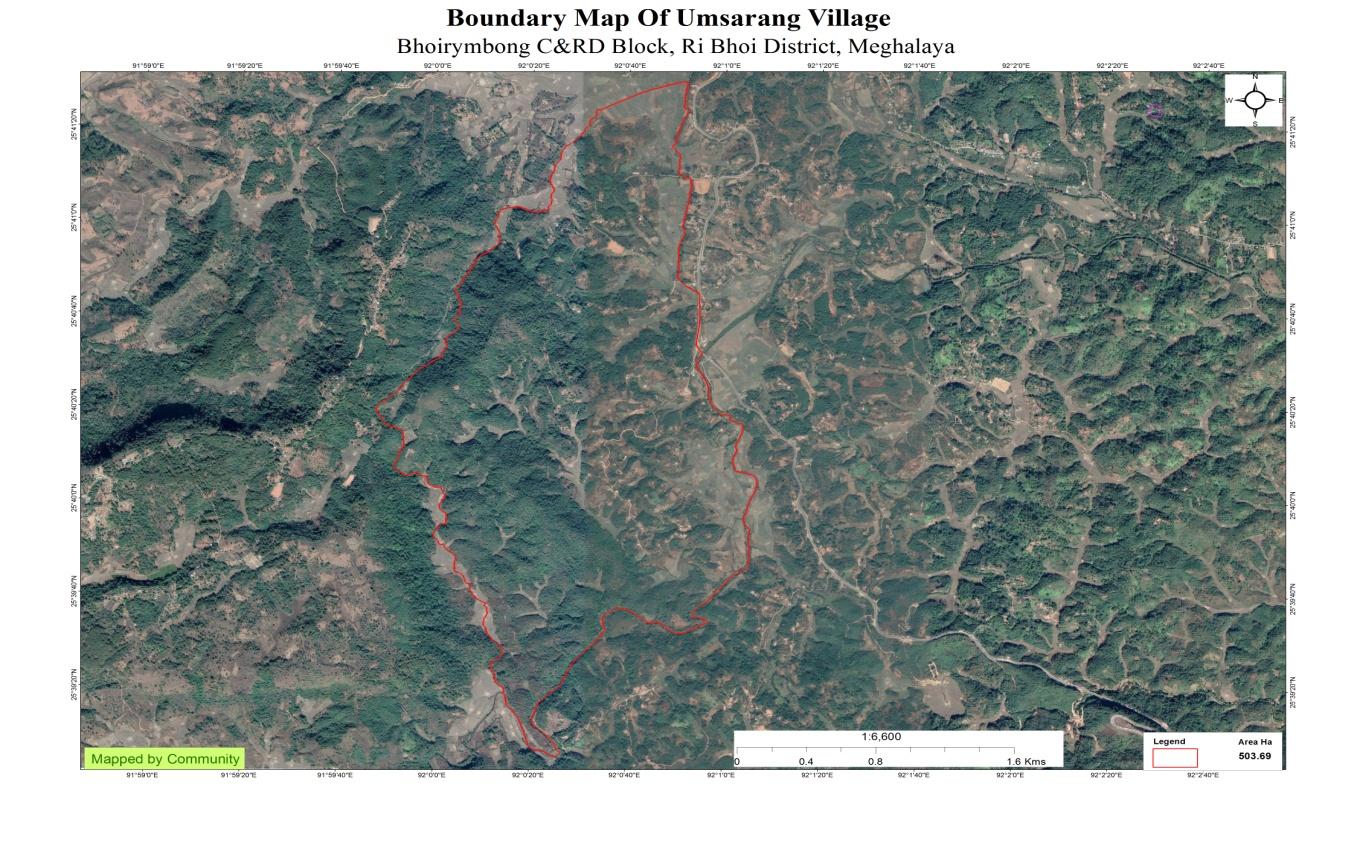
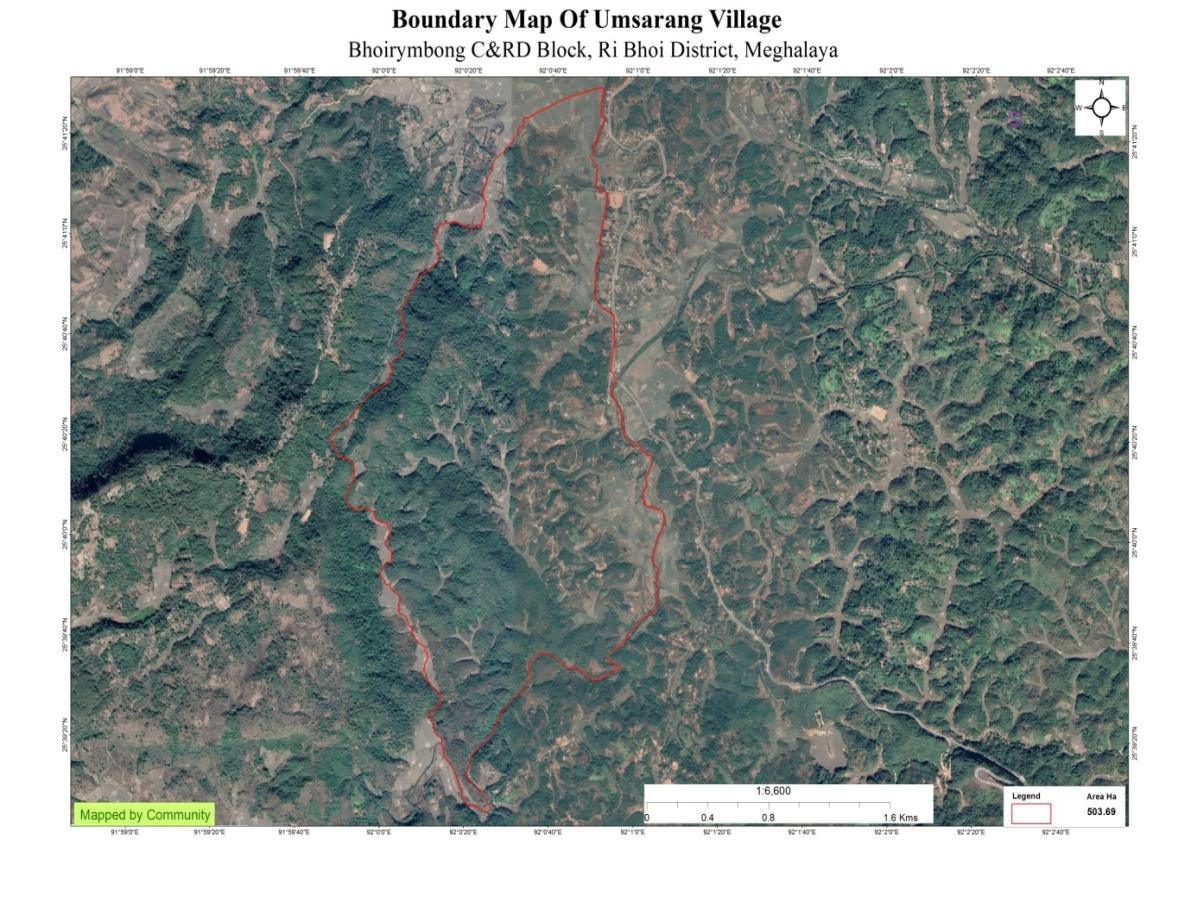
The GIS personnel along with Mr. MebertNongrum, the headman of Umsarang Village outlined the boundary of Umsarang Village on the 11th of August 2020.
Activity 2: Drawing the Resource Map
The second step is to involve the local community in preparation of a village resource map as perceived by the community members to solicit their participation. Infrastructure, services and other village resources such as agricultural lands, wells, wastelands, cattle population etc. were mapped. Local people prepared the Resource Map by drawing it on a chart paper without much interference from outsiders.
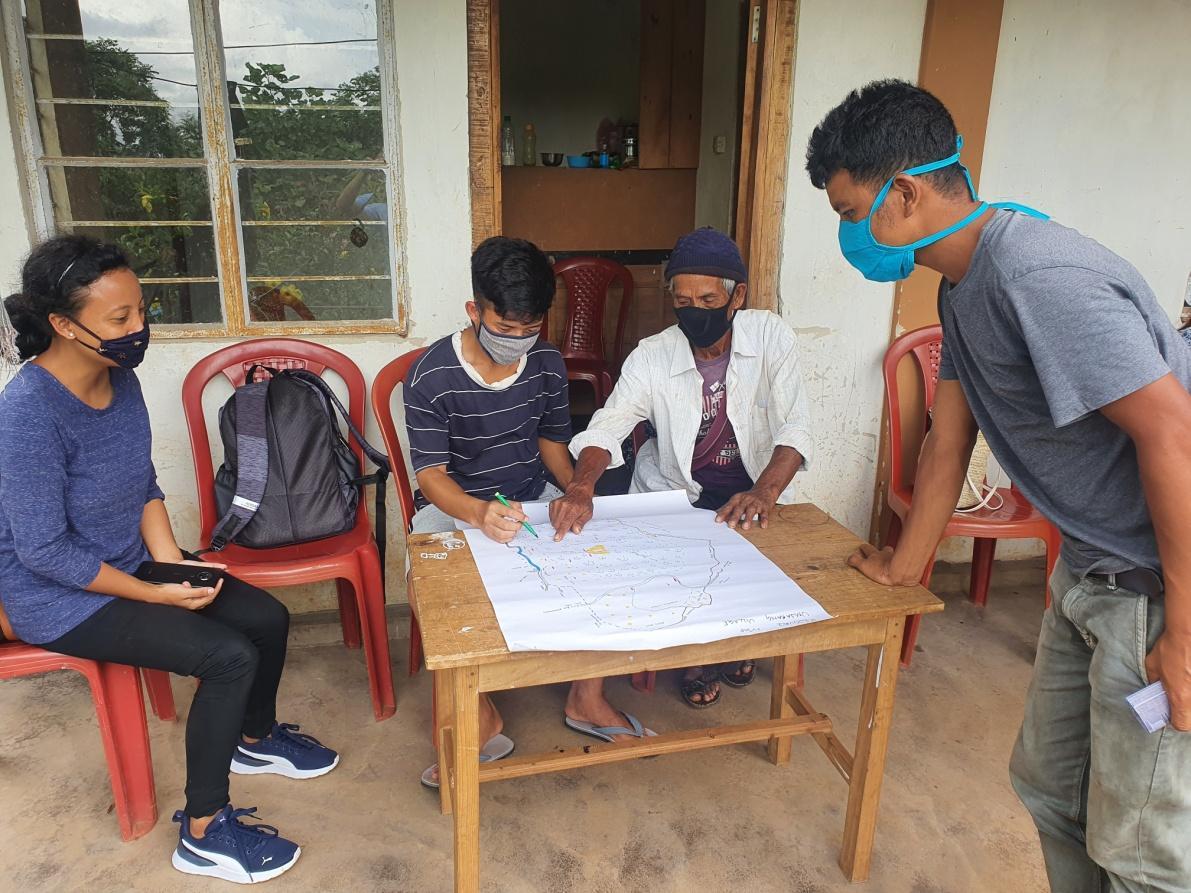
Figure: Resource Map drawn by the community members.
This activity achieved the following purposes:
Rapport building and winning the confidence of the villagers.
Analyzed the spatial information, particularly studied problems and opportunities of villagers.
Got an impression about the village setting, physical layout, location of various houses and institutions.
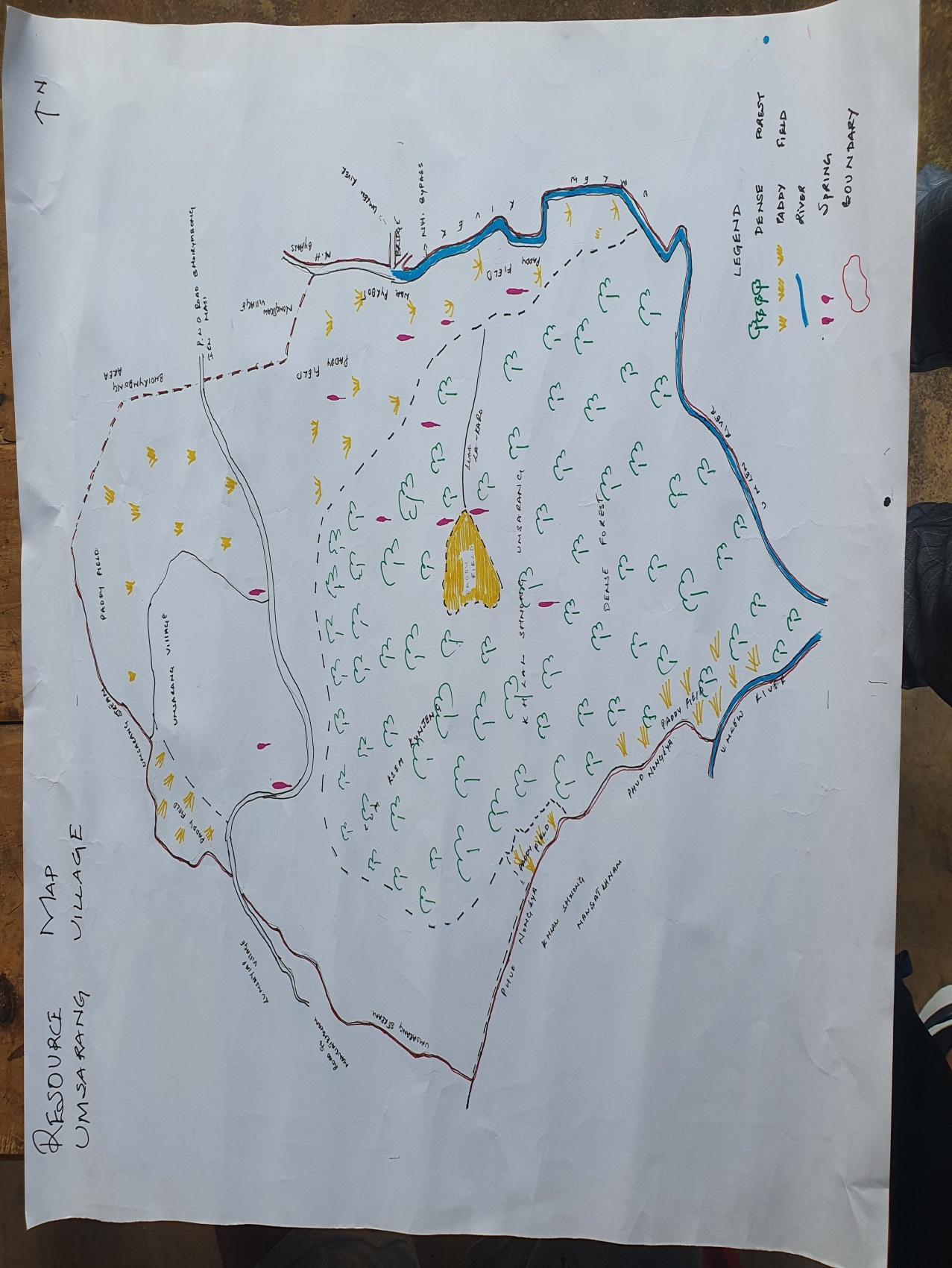
Findings Based on the Resource Map of Umsarang Village:
Main agriculture produce is Paddy
There are 3 types of Forest ownership: Community, Private and Clan Owned.
2 community forest
1 private forest
1 clan forest
thirteen (13) springs are present in the village
one main rivers flows to the south-eastern and southwest boundary of the village
Connectivity : PWD road connectivity
Habitation is confined to one place
Activity 3: Baseline Data Survey to fill the Environment and Social Template
Date: 11.08.2020
During the PRA exercise, the EE of Social and Environment Management and the community members were divided into groups to fill the Social and Environmental Templates. Discussions and consultations with social groups existing in the village were held to gather basic village information regarding households, demographic information, major crops and enterprises taken in the village, trends of production and productivity of major crops in the village and demographic distribution of village population.
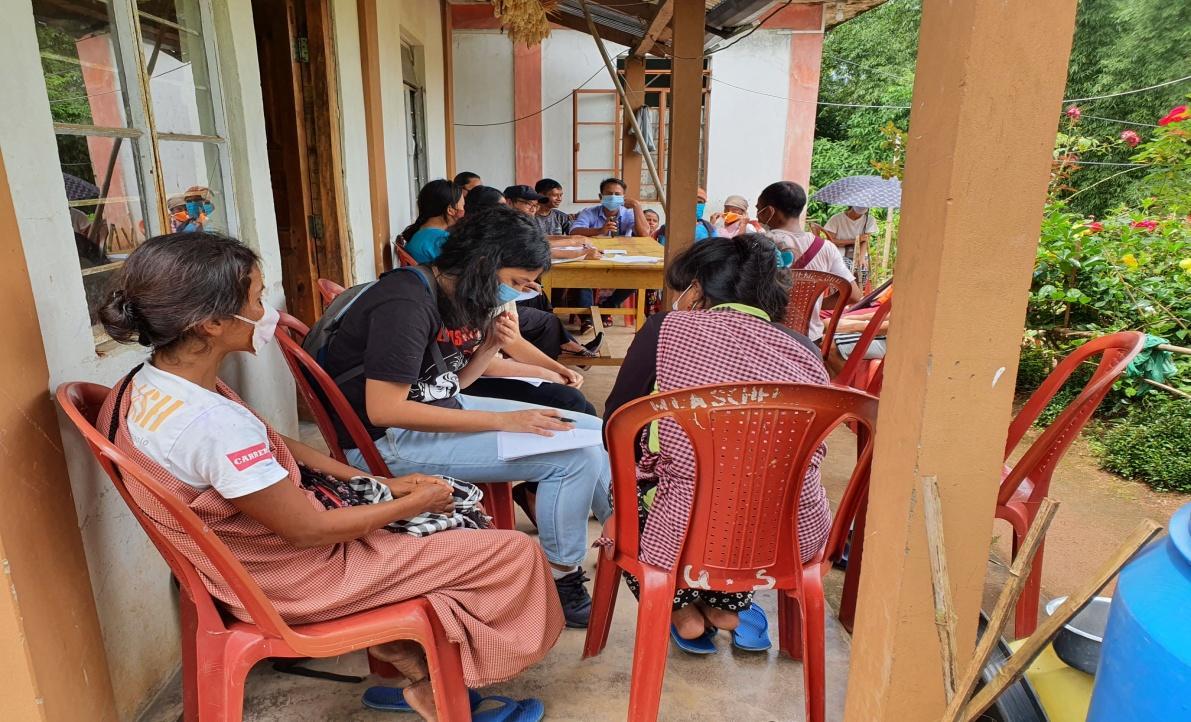
Discussion and consultations withEnvironment groups are related to land use categories such as forest, cultivable land, water bodies, tree species available in their village. Problems related to NRM were discussed. Insufficient availability of drinking water due to lack of water supply from the spring sources is one of the main problems emphasised by the community and also Soil fertility deteriorating is one of the issues addressed by the community. The importance of organic manure and proper waste disposal were addressed by the CLLMP team. Discussion and consultations by the EE on formations of plans were also done.
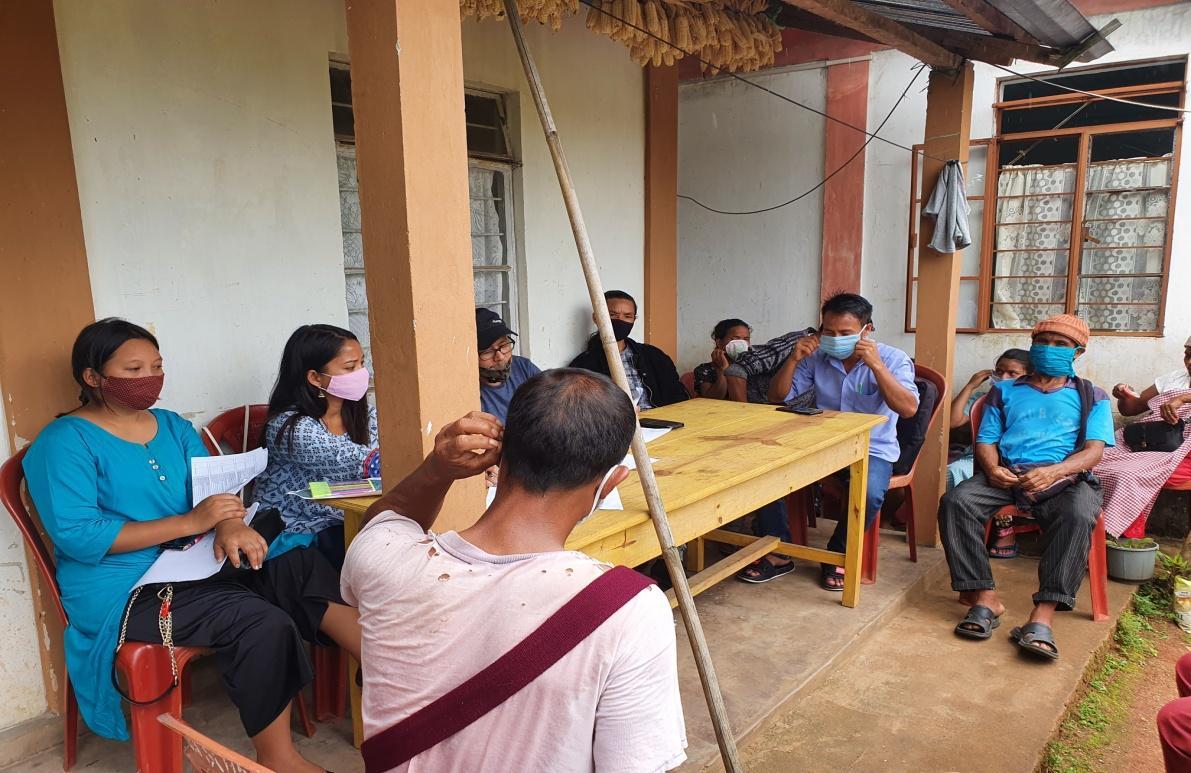
Continuation of PRA Date: 09.09.20
Activity 5: PROBLEM ANALYSIS
Do people have sufficient access to supply of fodder, fuel wood, leaf litter?
Yes. People in the village get fuel wood from community Forest and from their own private lands/forest.
Has access to timber improved or reduced over the years? How is access for household use and commercial use managed?
Access to Timber has reduced over the years. They have to purchase from outside when needed.
Are the water bodies facing any threats?
No. Spring sources are not facing a major threat but the volumes of water are low in the winter season.
Do all people in the village have access to drinking water? What are the challenges?
No, Insufficient availability of drinking water due to lack of water supply from the spring sources.
The Village is divided into three hamlets, Pynthorsohma, Donglum and Pdengshnong. With Pdengshnong having a comparatively better access to water as compared to Pynthorsohma and Donglum where they are finding difficulty in access to drinking water as these two hamlets are located in hilly areas.
No pipeline system connecting from water source to houses.
Are there degraded areas in the village (open/ degraded forests, mining affected, high soil erosion etc.)?
Minor degradation in cultivated land due to Jhum Cultivation
What has caused this degradation? Are there practices causing threats to availability and access to natural resources?
Fertility of the soil declines over the year.
Yes, due to Jhum Cultivation
What have been the changes in agricultural practices?
Using of power tiller
They are also using Chemical Fertilizer, pesticide, weedicide etc.
Are there any challenges in farming?
The main challenge in farming has been the loss of soil fertility. Moreover the use of chemical Fertilizers has further damaged the soil.
How would you consider the health situation in your village?
The nearest CHC is at 4Km away.
Looking back a decade ago, there was a drastic change when it came to the health situation in a village, during the past; diseases such as Malaria and Diarrhoea, Cholera and tuberculosis are common. However, at present situations have improved wherein the previous diseases are less prevalent, besides mild fever or cold.
How is the situation of cleanliness, sanitation, access to toilets and waste management?
When it comes to cleanliness, villagers took all the ways and means to keep the village clean. Eg: women community organise cleaning drives once in three months.
Grateful to the government. Support like Swachh Bharat Mission (SBM) every household has been able to procure faeces facilities. Hence, to conclude things have changed from the past when it comes to cleanliness and waste management.
Who are the most vulnerable in the village? What can be done to improve their lives?
BPL Families. Inclusion of BPL family members during project implementation
What are the livelihood aspirations of the youth? Are there any avenues available?
None, except daily wages
Do any committees/ institutions/ rules exist to manage and monitor natural resources in the village?
Apart from VNRMC under the CLLMP there is no other committee who is looking for Natural Resources Management.
What are some of the major issues of conflict in the village?
Social dispute.
Have any of the above issues been discussed in village meetings?
Yes the village Dorbar have discussed the issues and are doing their best to address these problems.
How do people resolve disagreements and conflicts?
Any issues or conflicts in the village are addressed by the traditional institution of the village, called the Village Dorbar.
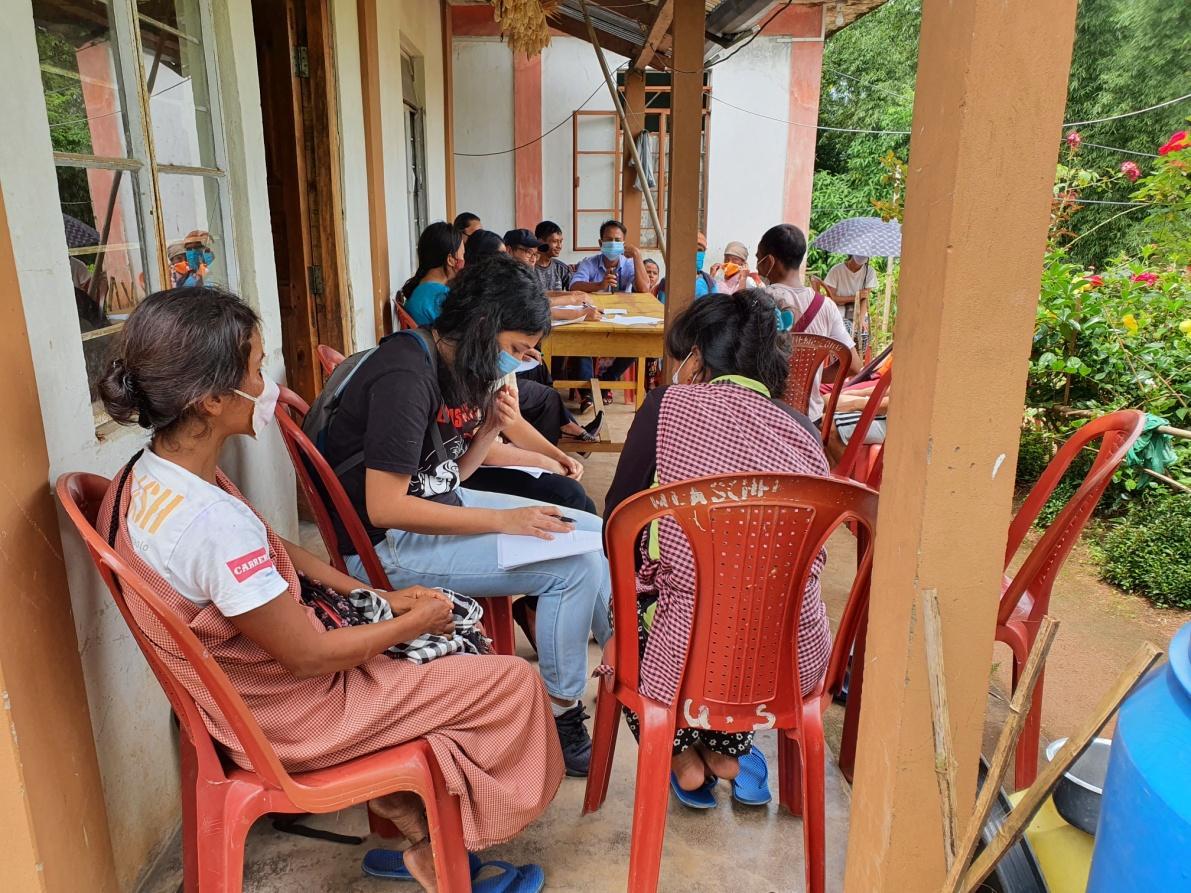
Figure: Group Discussions on Conflicts and Challenges
Continuation of PRA Date: 09.09.20
Activity 6: Seasonality Calendar
The CLLMP team also mapped the seasonal calendar of Umsarang Village to help identify heavy workload periods, periods of relative ease, credit crunch, diseases, food security, wage availability etc. This will prove helpful in project planning and project timeline framing.
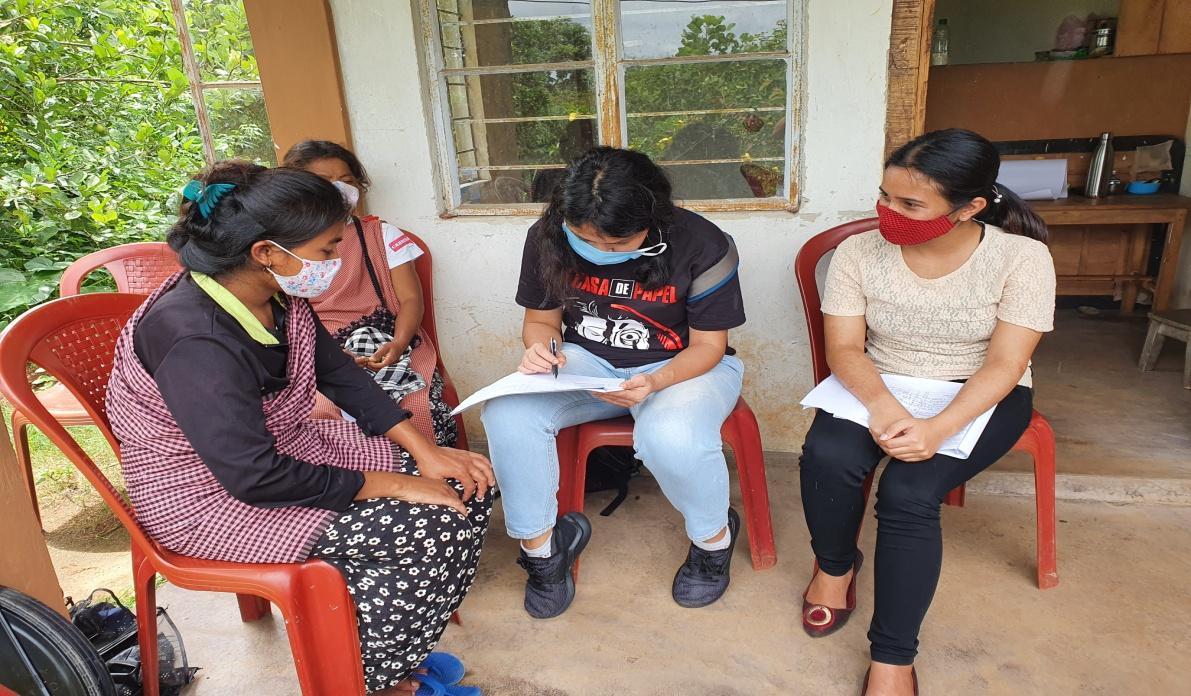
Figure: Preparation of Seasonality Calendar
Participants:
Smt. Matilda KhyriemMujat – Community ASHA
Smt. Sendana Kharbihkhiew- Village Community Facilitator
Smt. Ridaplin Khyriem Mujat - Community Member
Smt. Balinda Jyrwa – VNRMC Member
Smt. Saidista Lyngdoh Kynshi - Community Member
| SEASONAL CALENDAR | |||||||||||||
|---|---|---|---|---|---|---|---|---|---|---|---|---|---|
| Sl No. | CRITERIA | JAN | FEB | MAR | APRL | MAY | JUNE | JULY | AUG | SEP | OCT | NOV | DEC |
| 1 | Water Scarcity | ❷ | ❶ | ❶ | ❸ | ||||||||
| 2 | Prone to sickness | ❸ | ❸ | ❶ | ❷ | ||||||||
| 3 | Out flux | ❶ | ❶ | ||||||||||
| 4 | Rain Fall | ❸ | ❶ | ❶ | ❷ | ❷ | ❷ | ||||||
| 5 | Free – Less work | ❸ | ❶ | ❷ | |||||||||
| 6 | Paddy Cultivation | ❸ | ❶ | ❷ | |||||||||
| 7 | Paddy harvesting | ❸ | ❶ | ❷ | |||||||||
| 8 | Ginger cultivation | ❸ | ❷ | ❶ | |||||||||
| 9 | Ginger harvesting | ❷ | ❸ | ❶ | |||||||||
| 10 | Tree Plantation | ❷ | ❶ | ❸ | |||||||||
| 11 | Vegetable (crop cultivation) | ❶ | ❷ | ❷ | ❸ | ||||||||
| 12 | Vegetable (crop harvesting) | ❶ | ❷ | ❸ | |||||||||
| 13 | Festive Season | ❶ | ❷ | ||||||||||
| 14 | Forest fire | ❷ | ❶ | ||||||||||
| 15 | Collection of Fuel wood | ❸ | ❷ | ❶ | |||||||||
| MAXIMUM | 1 |
| MODERATE | 2 |
| LESS | 3 |
LIST OF CNRMP PROPOSED BY THE VNRMC 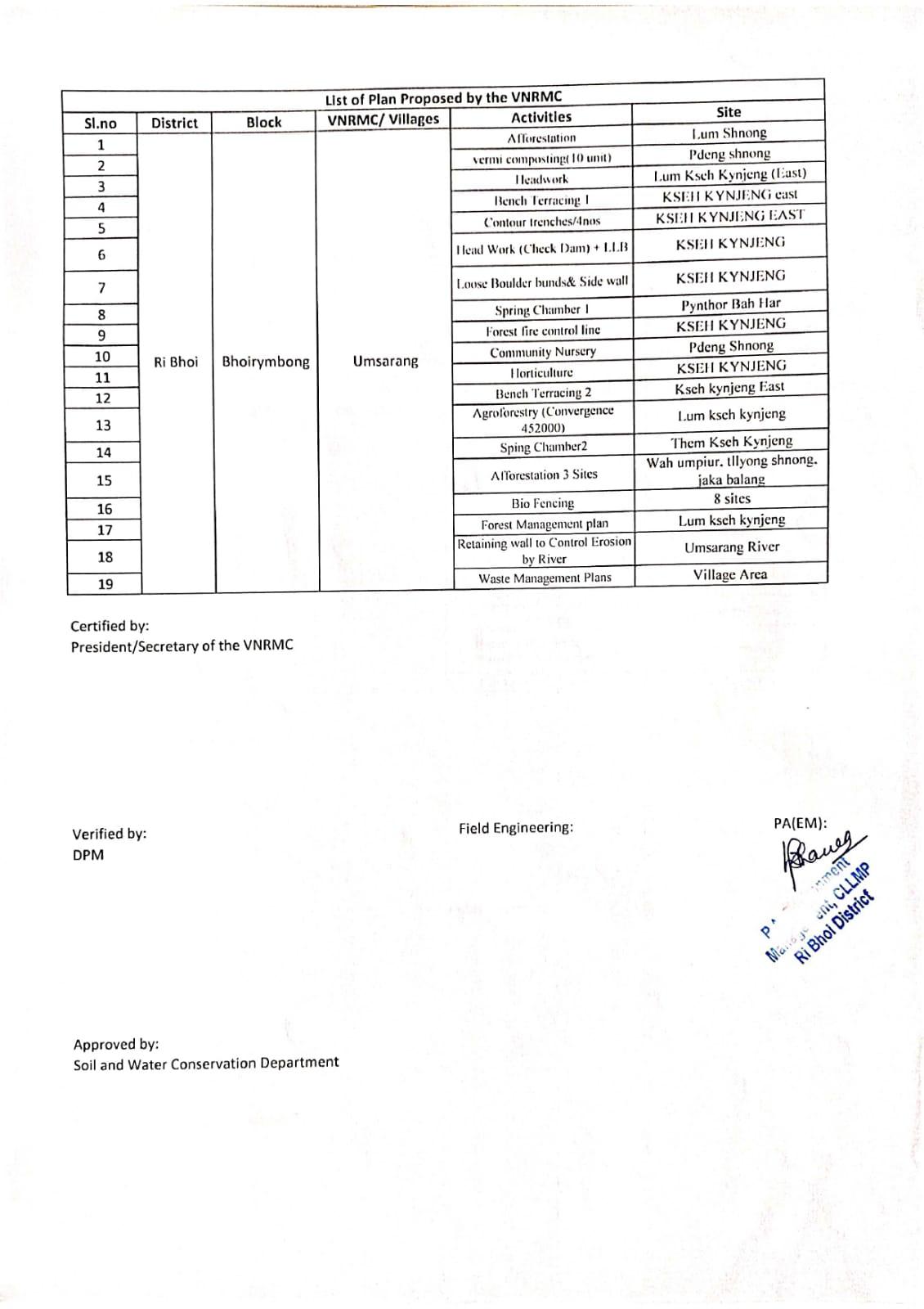
FINAL CNRMP
|
Name of Proposed Interventions | Site |
|
Nos. of HHs expected to Benefit | ||
|
|
|
||||
| 1. | NURSERY | LUMSHNONG |
|
|
|
|
| 2. | AFFORESTATION | LUMSHNONG |
|
|
|
|
| 3. |
|
PDENGSHNONG |
|
|
|
|
| 4. |
|
LUM KSEH KYNJENG |
|
|
|
|
| 5 |
|
LUM KSEH KYNJENG |
|
|
|
|
| 6 |
|
LUM KSEH KYNJENG |
|
|
|
|
| 7 |
|
LUMKSEH KYNJENG |
|
|
|
|
| 8 |
|
1.LUM KSEH KYNJENG (EAST) 2. LUM KSEH KYNJENG (WEST) |
|
|
|
|
| 9 |
|
UMDYMPEP THEM KSEH KYNJENG PYNTHOR BAHAR AITI JYRWA W. SHANPRO PAR SHYIAP DELEN MARBOH SIED SOHTUN |
|
|
|
|
| 10 |
|
LUM KSEH KYNJENG |
|
|
|
|
| 11. |
|
UMDYMPEP THEM KSEH KYNJENG PYNTHOR BAHAR AITI JYRWA W. SHANPRO PAR SHYIAP DELEN MARBOH SIED SOHTUN |
|
|
|
|
| 12 |
|
LUMKSEH KYNJENG |
|
|
|
|
| 13 |
|
LUMKSEH KYNJENG | COMMUNITY |
|
|
|
| 14 |
|
UMSARANG RIVER | PRIVATE |
|
|
|
| 15 |
|
THEM KSEH KYNJENG | COMMUNITY |
|
|
|
| 16 |
|
LUM KSEH KYNJENG (EAST) | COMMUNITY |
|
||
| 17 |
|
LUMKSEH KYNJENG | COMMUNITY |
|
||
| 18 |
|
LUM KSEH KYNJENG (EAST) | COMMUNITY |
|
||
| 19 |
|
LUMKSEH KYNJENG | COMMUNITY |
|
||
GIS Activities – UMSARANG
| Sl.No | Parameters | Village Information |
| 1. | GPS Coordinates | |
| i | Latitude | 25.682024°N |
| ii | Longitude | 92.009942° |
| iii | Elevation Reading (MSL) | 898 M |
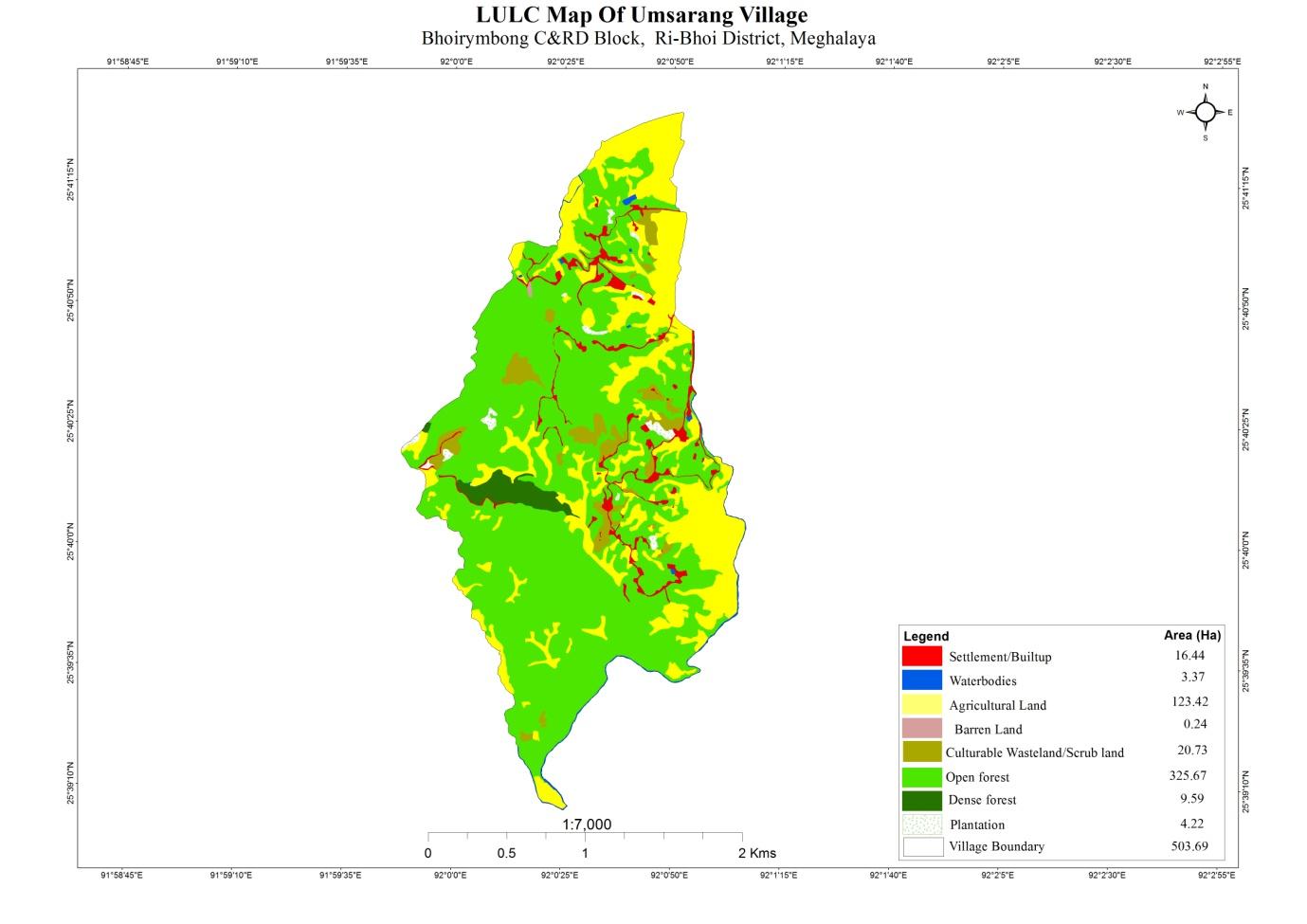
| 2. | Village Geographical Area(Ha) | 503.69 Ha |
| i | Total Forest Area ( including community, Clan, Pvt Forest) | 335.26 Ha |
| ii | Total Area of Water Bodies | 3.37 Ha |
| iii | Total Area under Agri- Horticulture | 123.42 Ha |
| iv | Total Degraded land area (Ha) | 20.73 Ha |
| 3 | Average Annual Rainfall | 1000-1200 |
| 4 | Soil Type | Loamy soil |
| INTERVENTION | SITE NAME | AMOUNT | WORK STATUS |
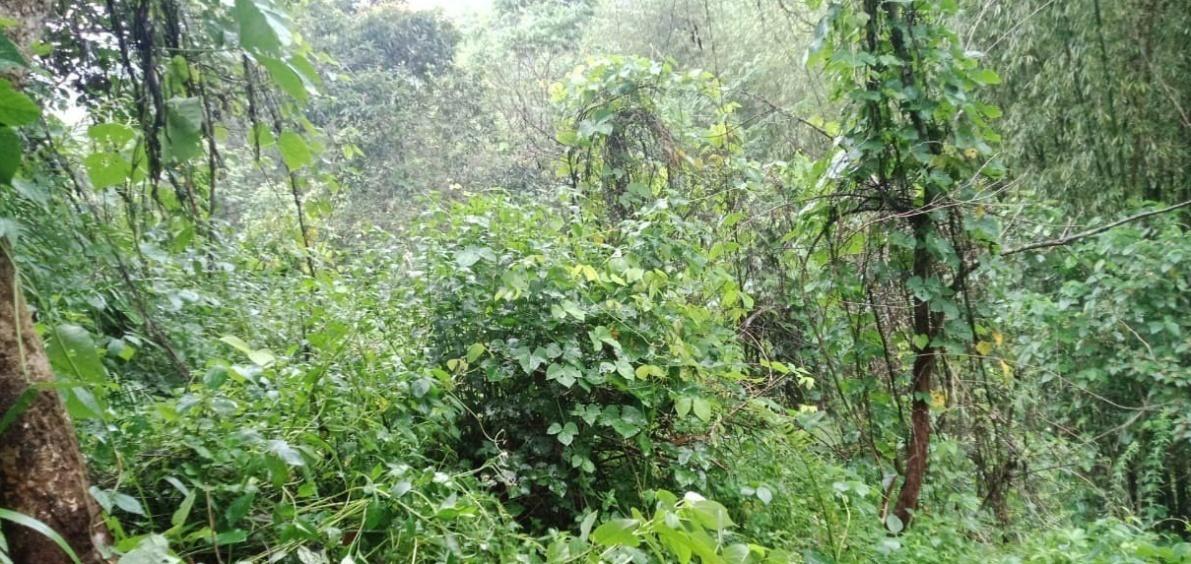
| Afforestation | Lum Shnong | 50,810 | Completed |
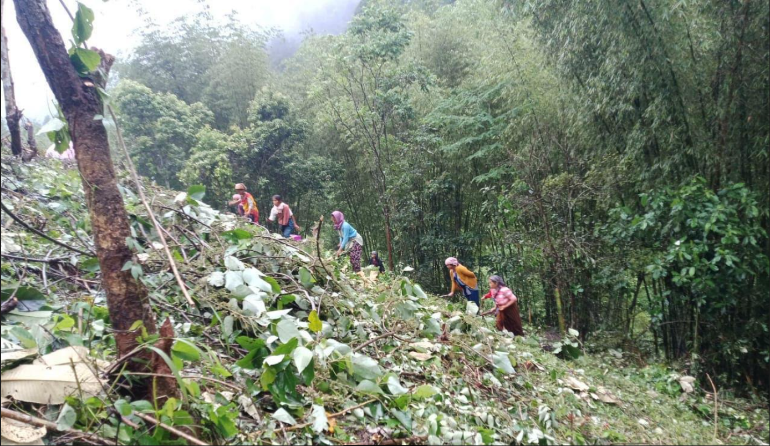
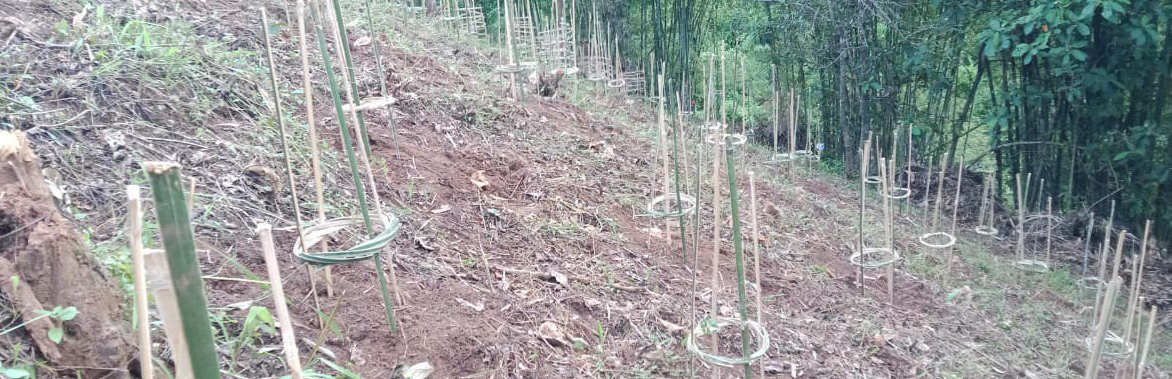
| INTERVENTION | SITE NAME | AMOUNT | WORK STATUS |
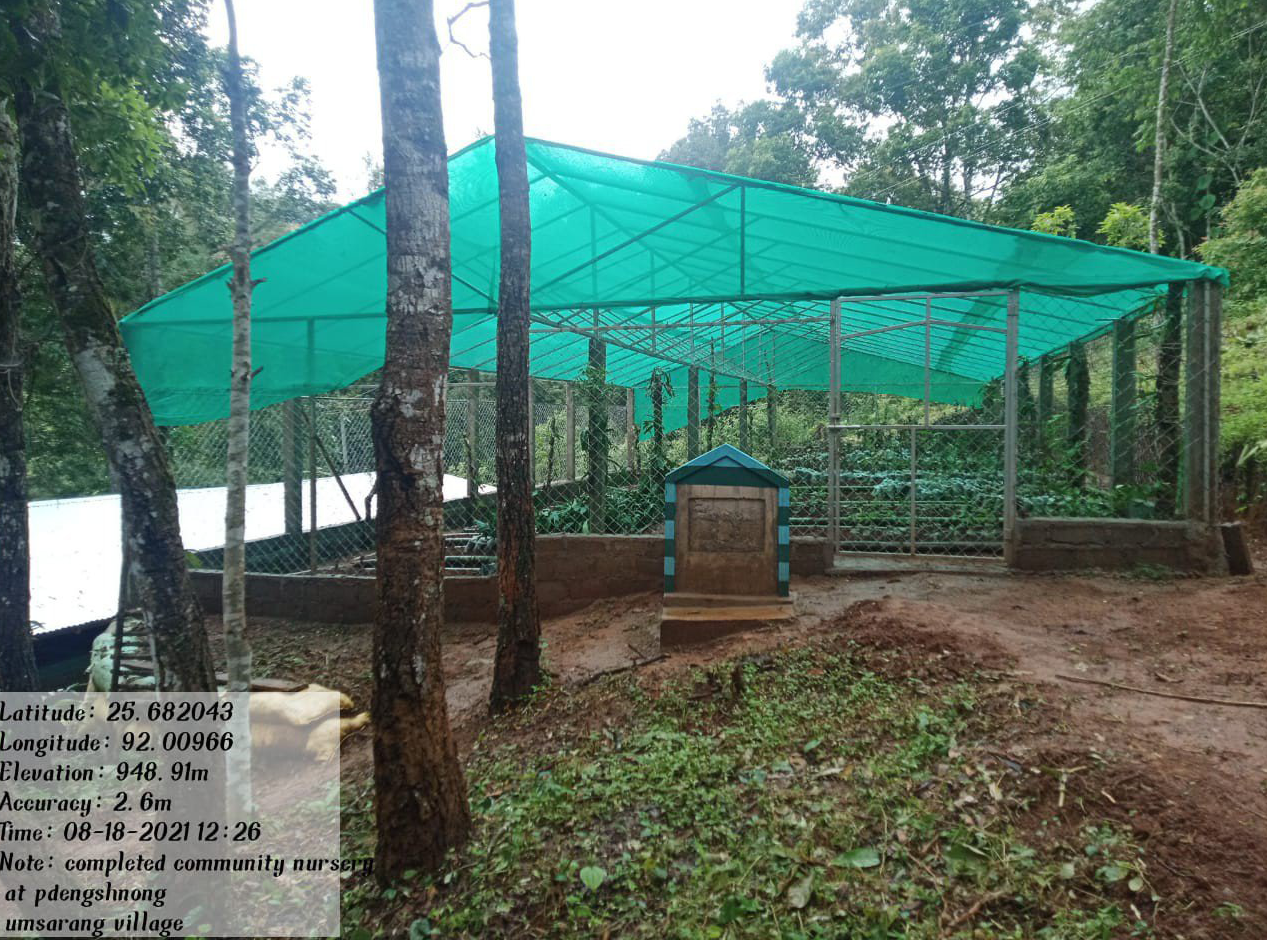
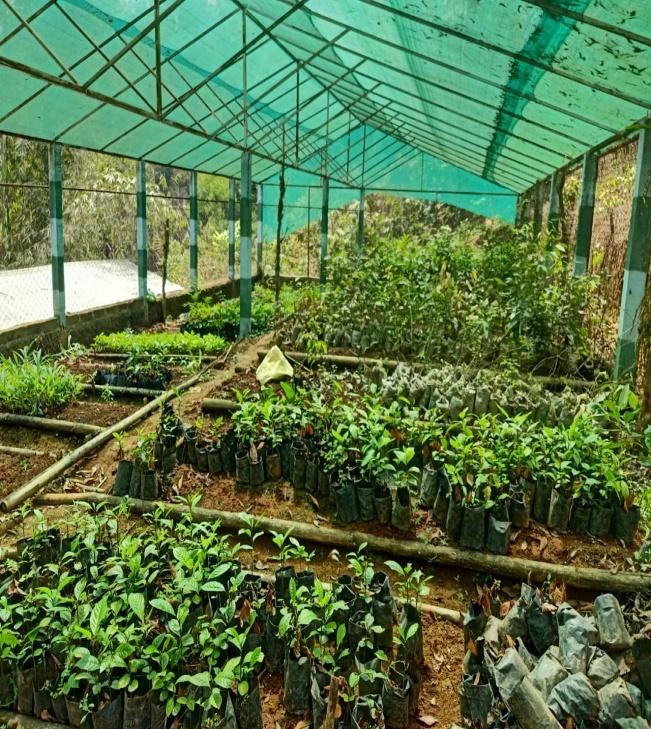
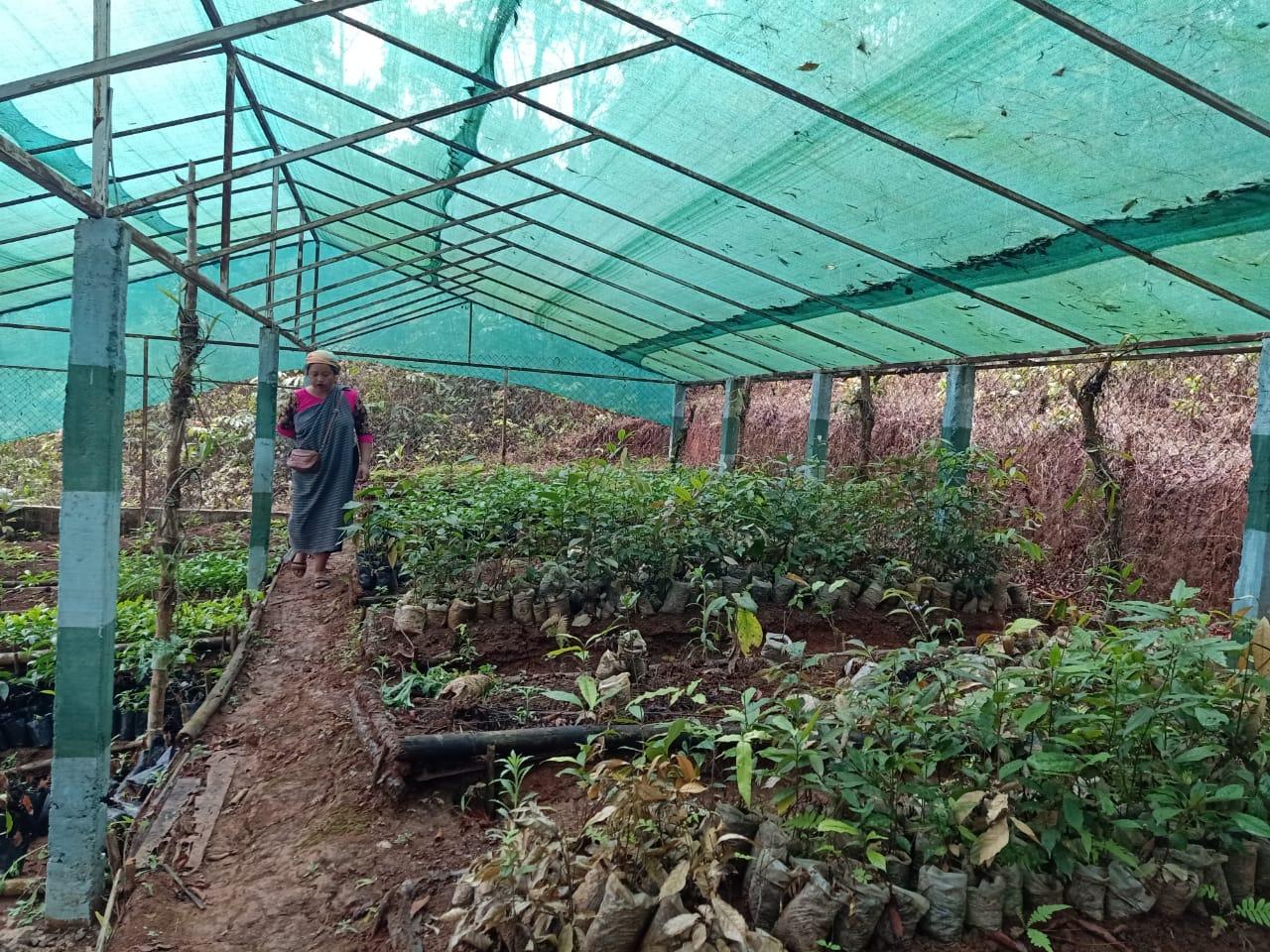
| Community Nursery | Pdengshnong | 2,95,000 | Completed |
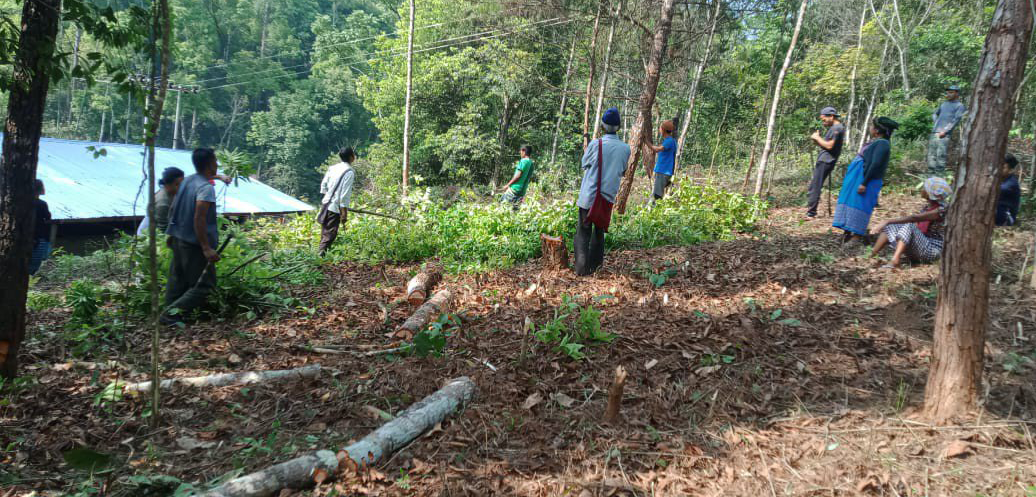
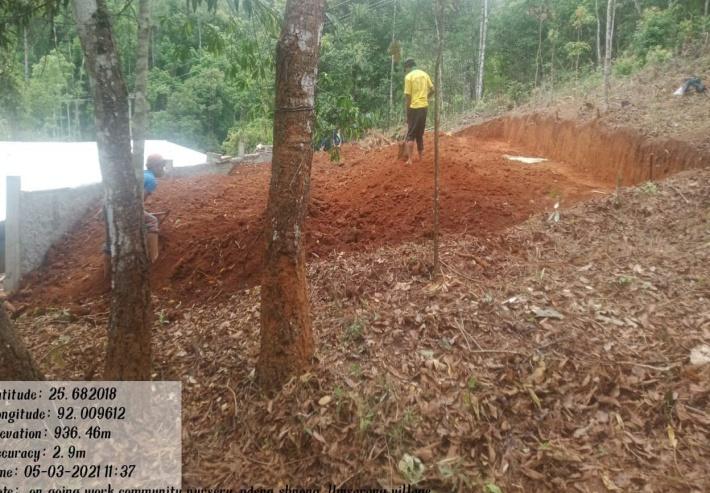
| INTEINTERVEIINTERVENTION | SITE NAME | AMOUNT | WORK STATUS |
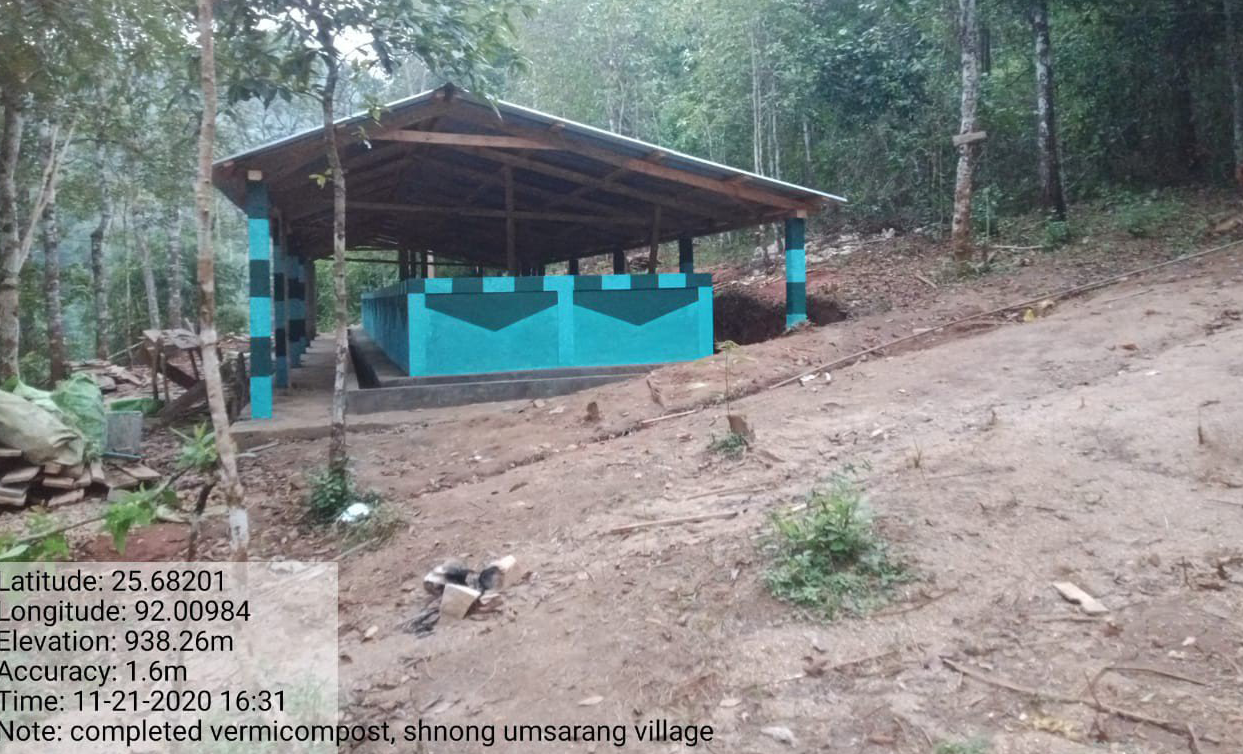
| Vermicompost | Pdengshnong | 3,32,460 | Completed |
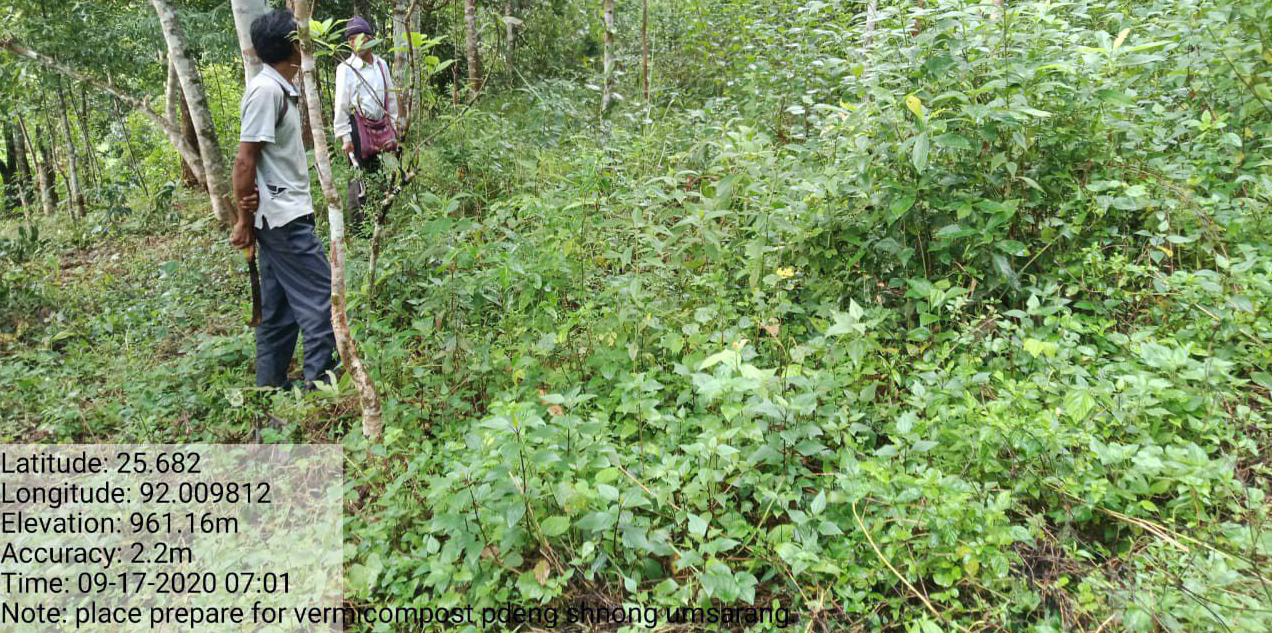
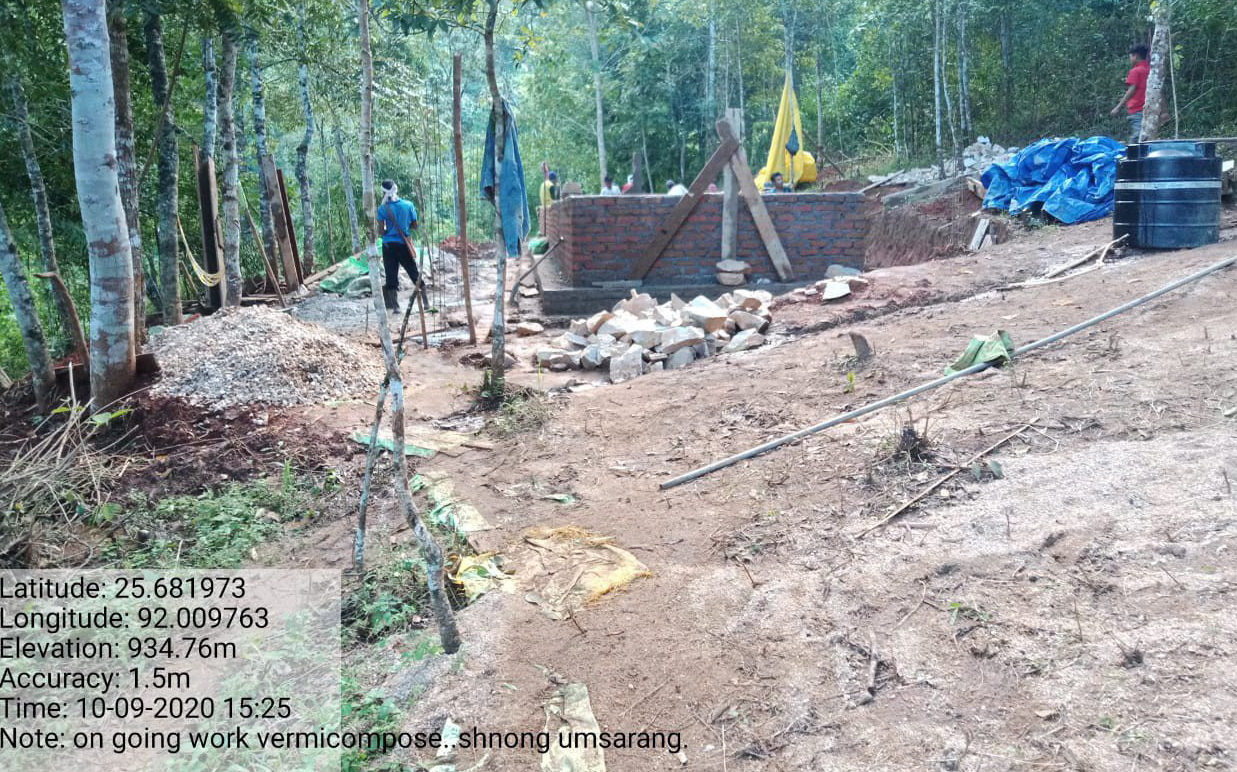
| INTERVENTION | SITE NAME | AMOUNT | WORK STATUS |
| Fire Control Line | Lum Kseh Kynjeng | 64,500 | Completed |
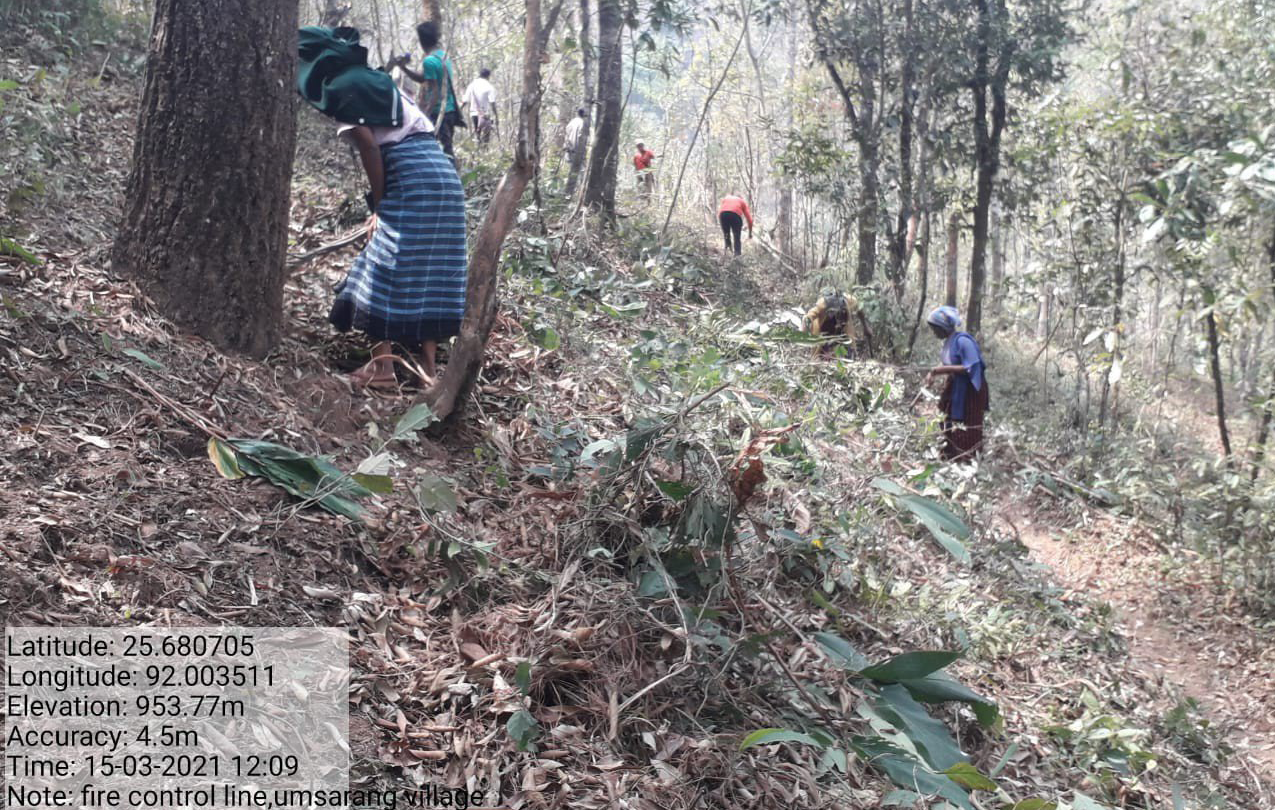
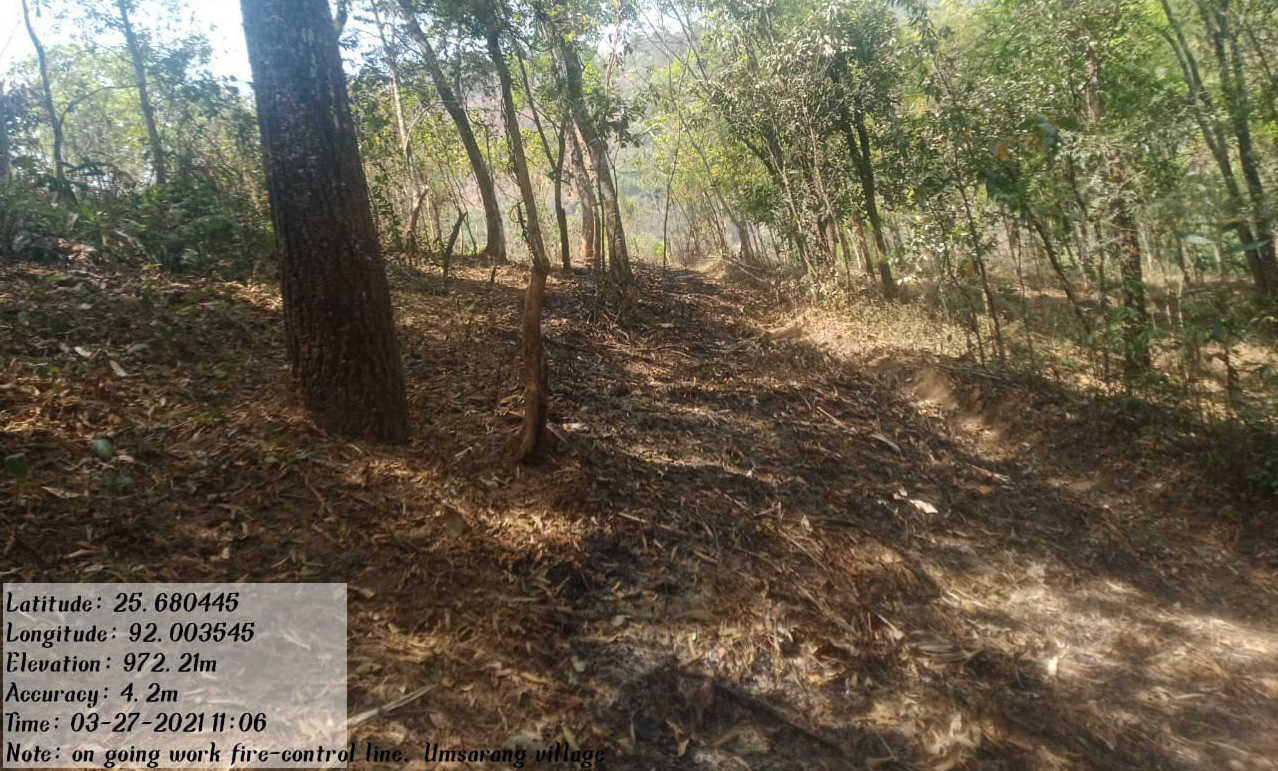
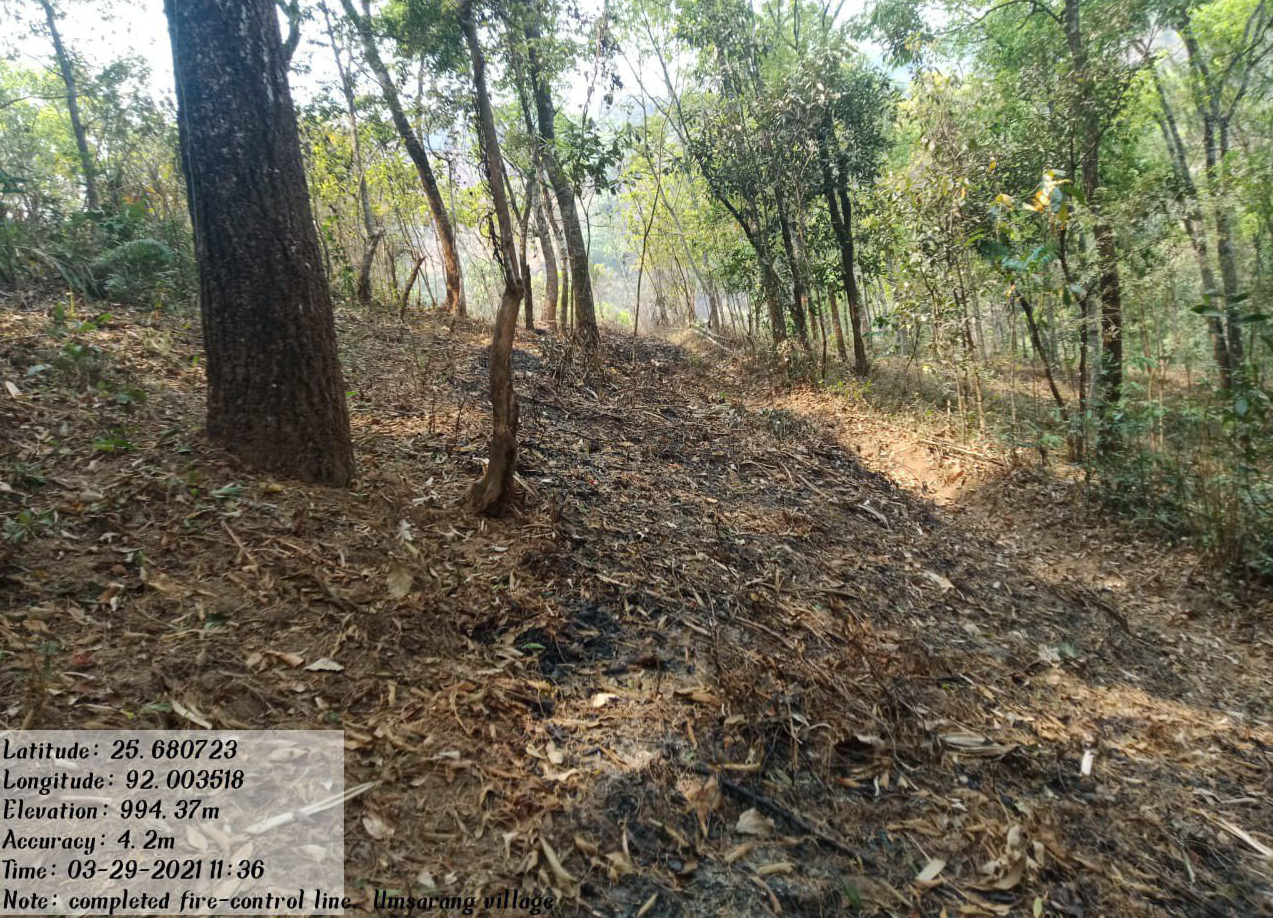
| INTERVENTION | SITE NAME | AMOUNT | WORK STATUS |
| Bench Terracing 1 | Lum Kseh Kynjeng, East | 3,26,230 | Completed |
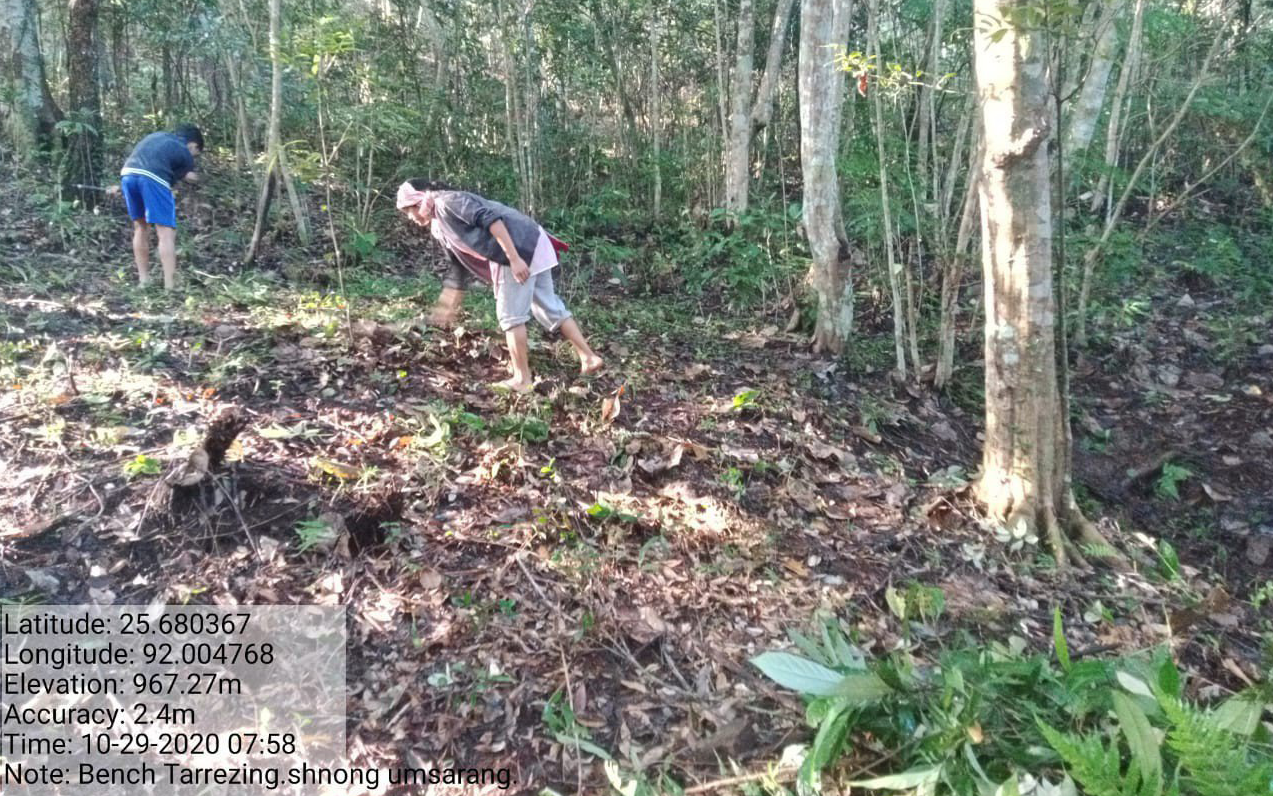
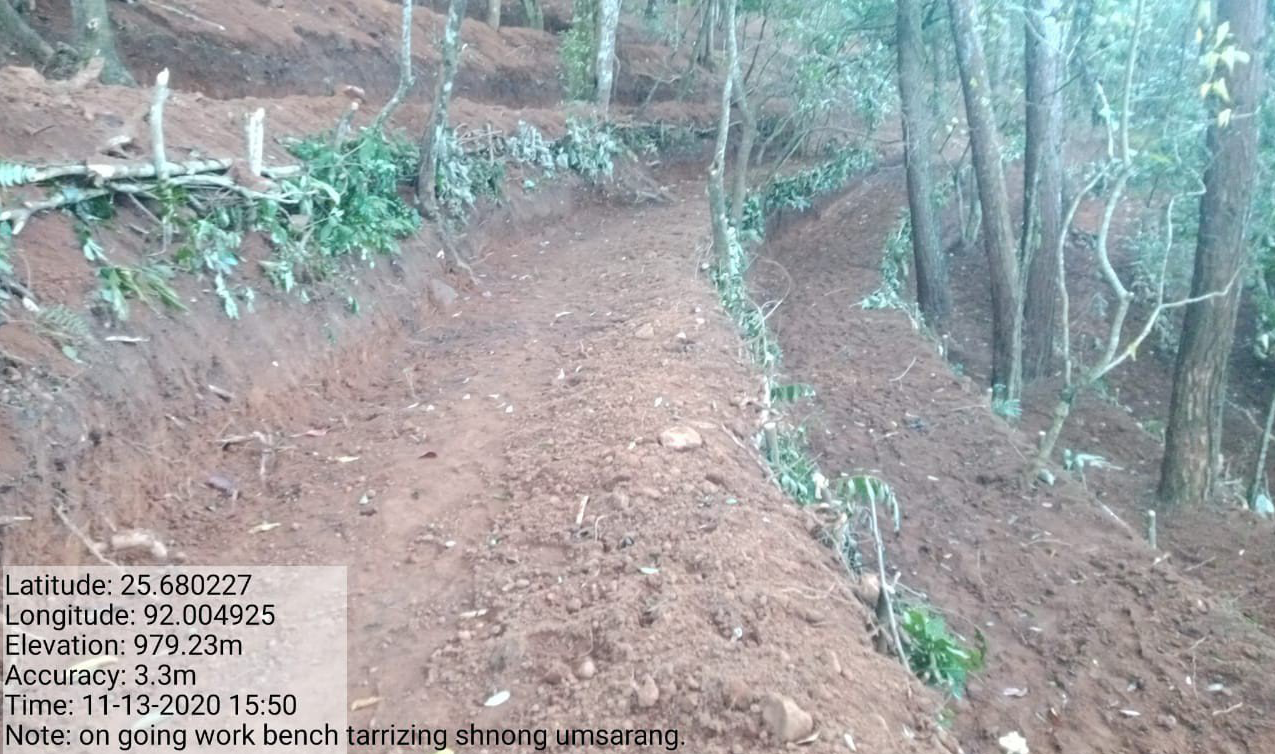
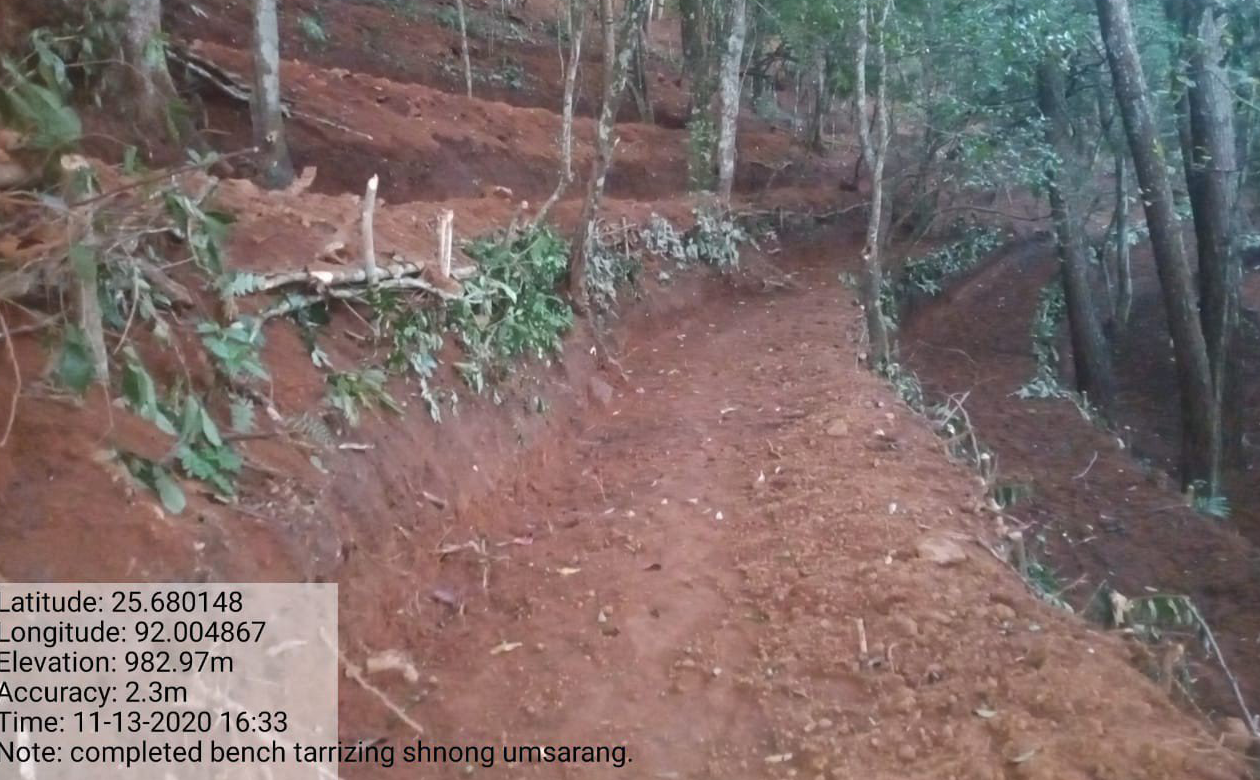
| INTERVENTION | SITE NAME | AMOUNT | WORK STATUS |
| Bench Terracing 2 | Kseh Kynjeng, East | 72,870 | Completed |
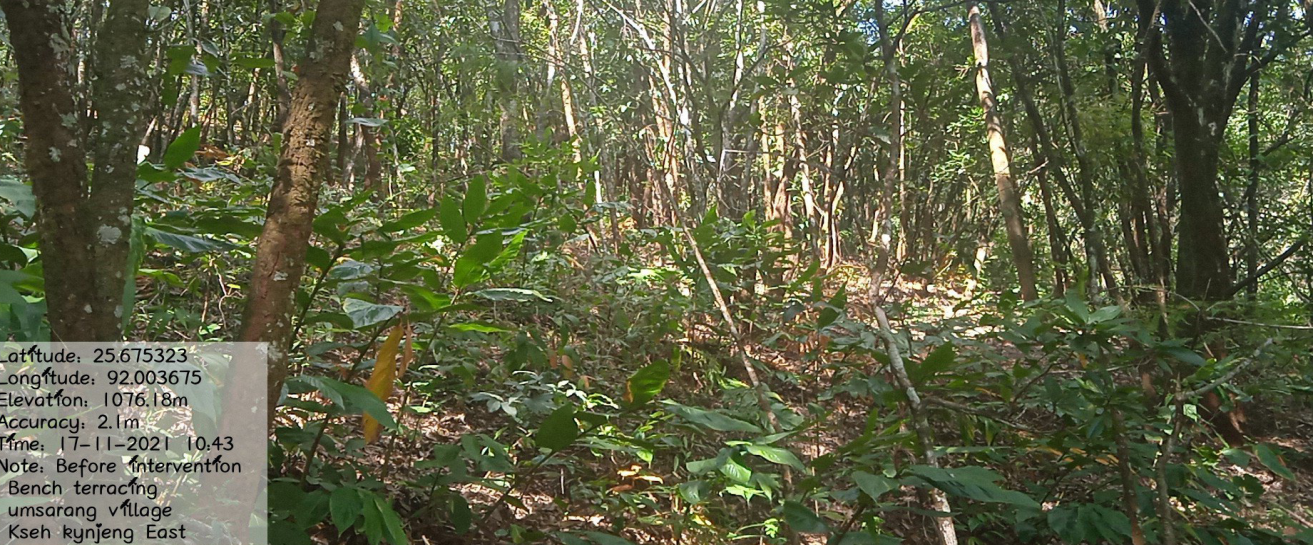
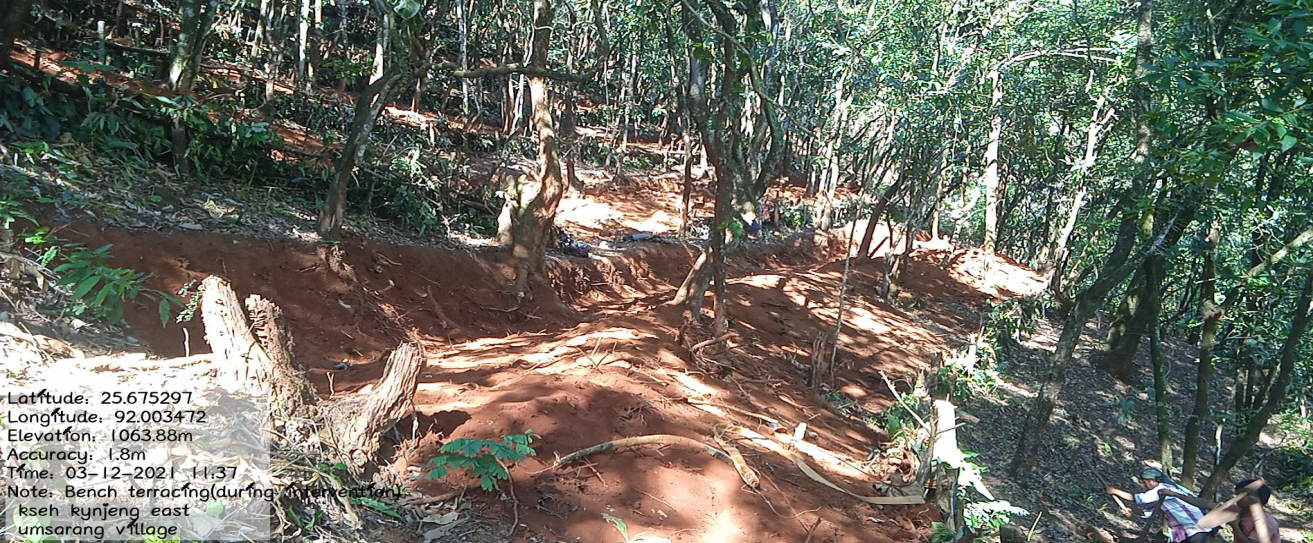
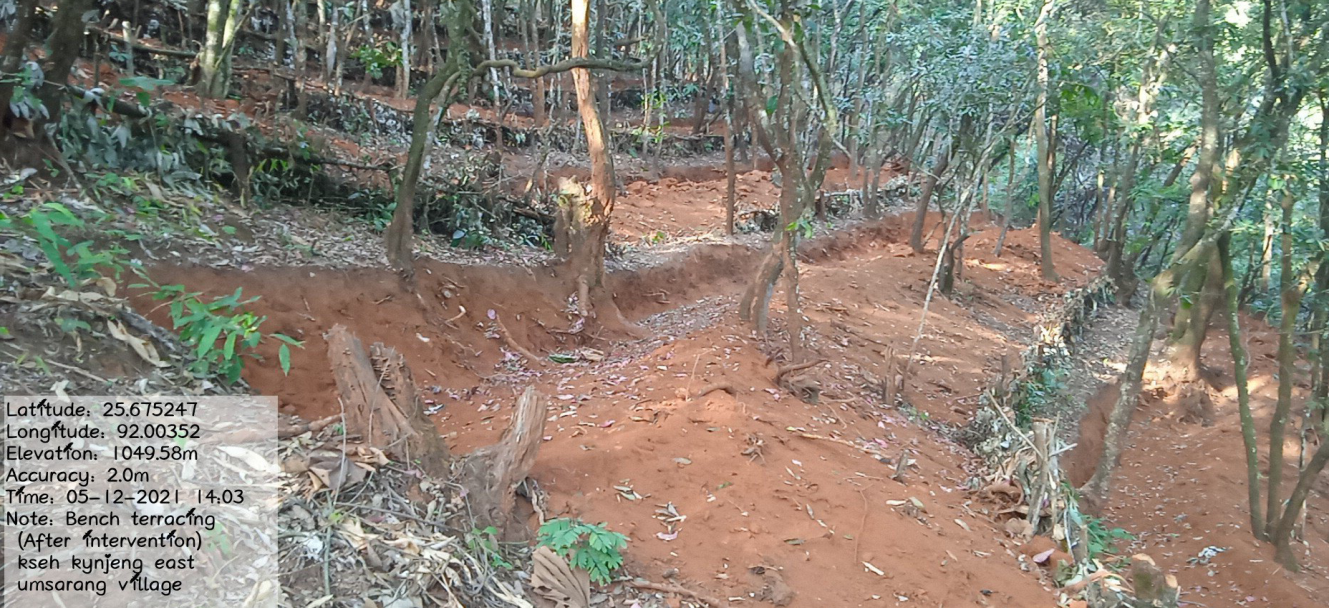
| INTERVENTION | SITE NAME | AMOUNT | WORK STATUS |
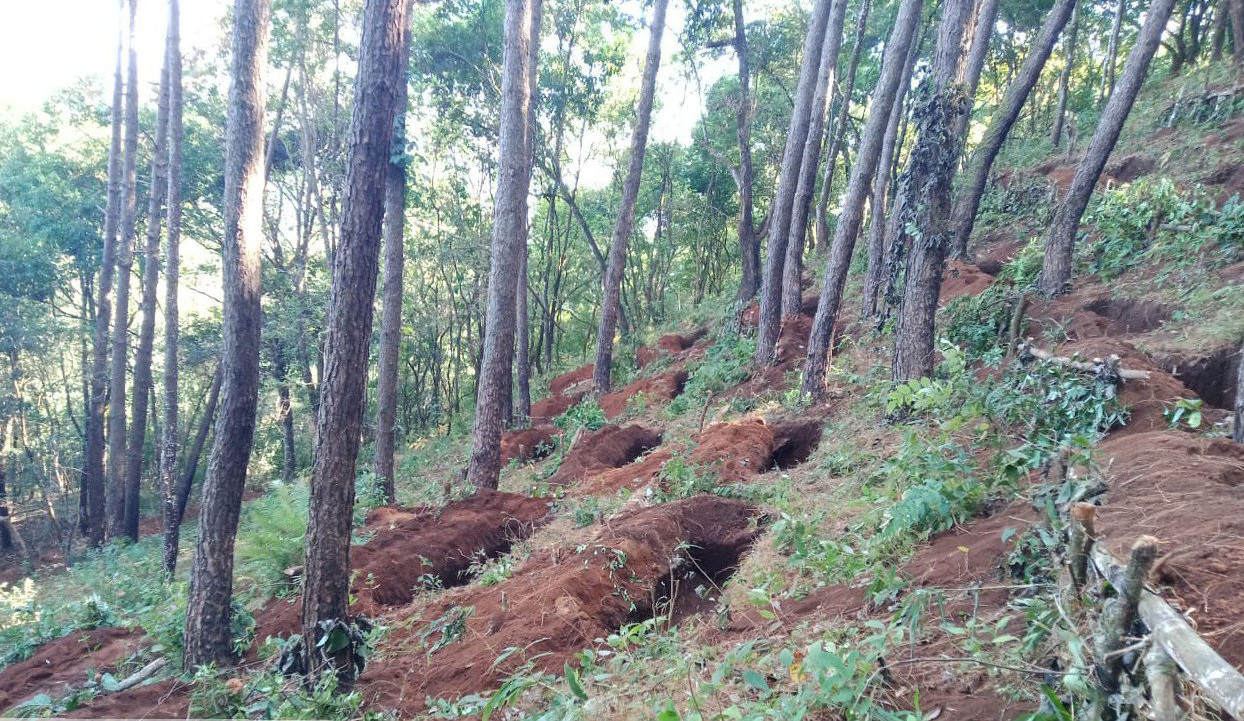
| Contour Trenches | Lum Kseh Kynjeng, East | 1,43,970 | Completed |
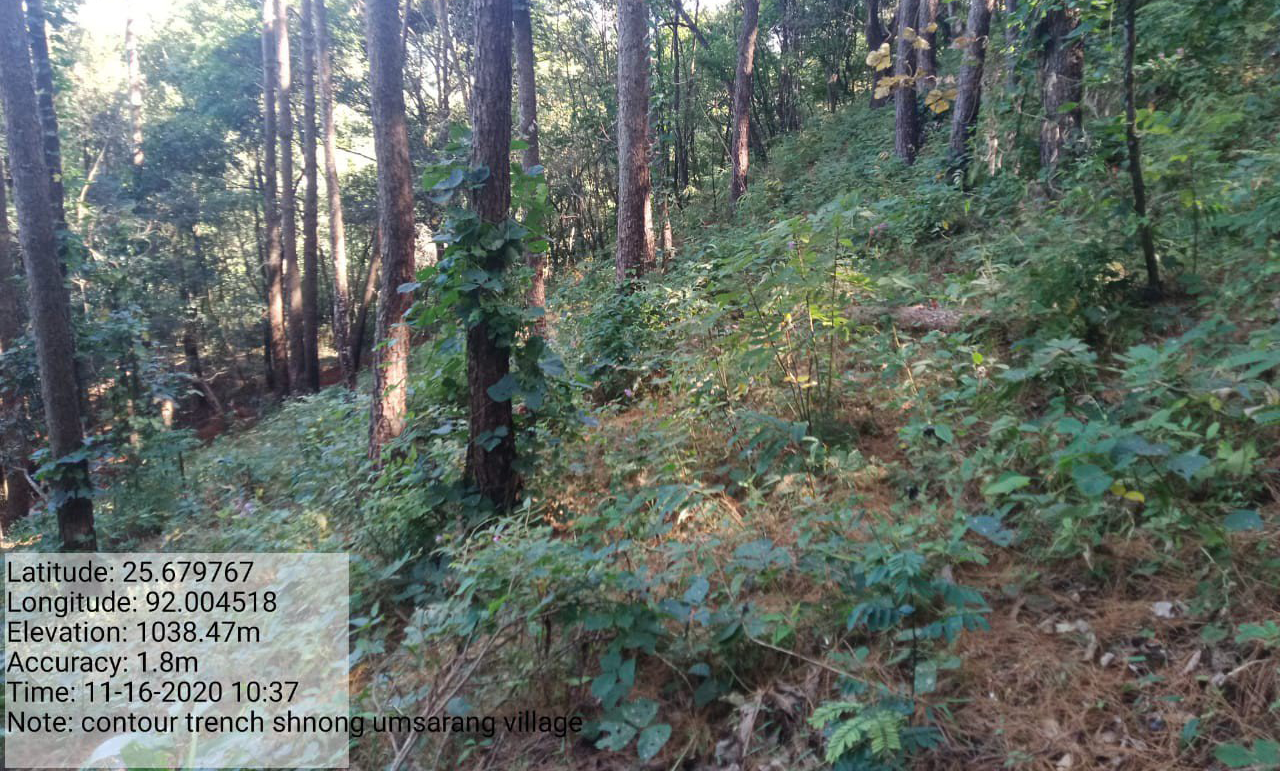
| INTERVENTION | SITE NAME | AMOUNT | WORK STATUS |
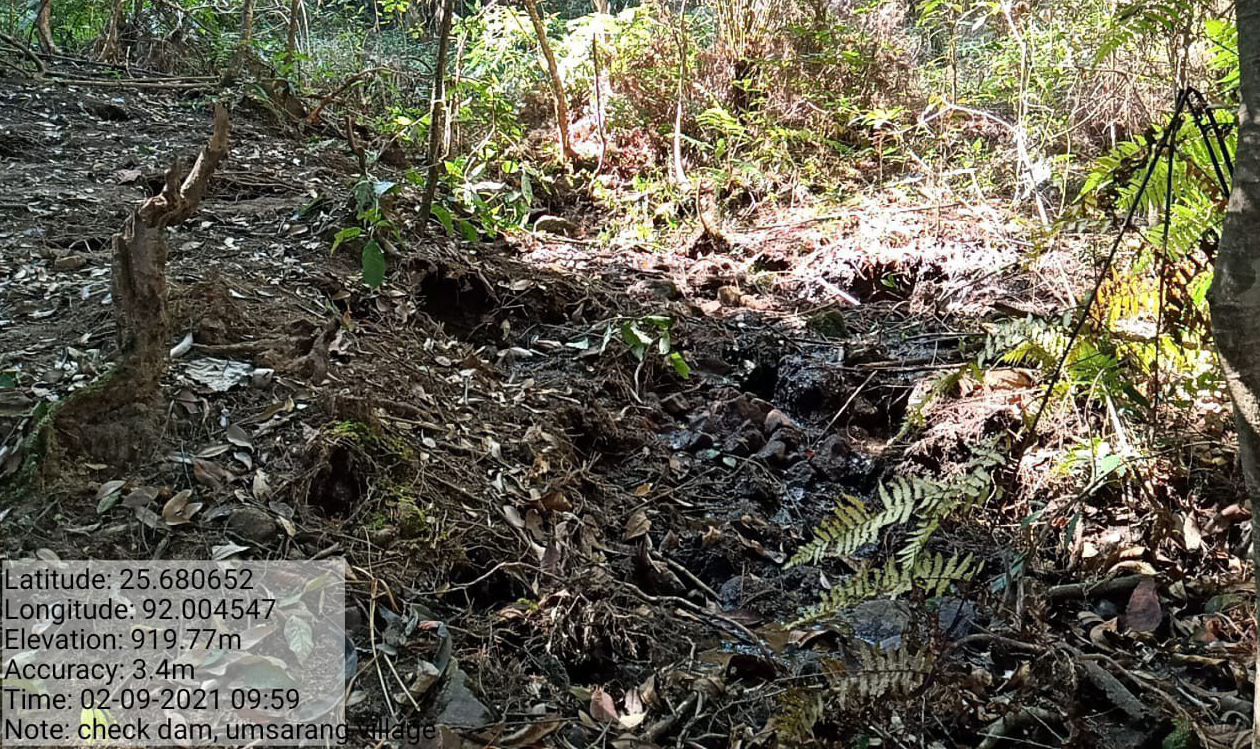
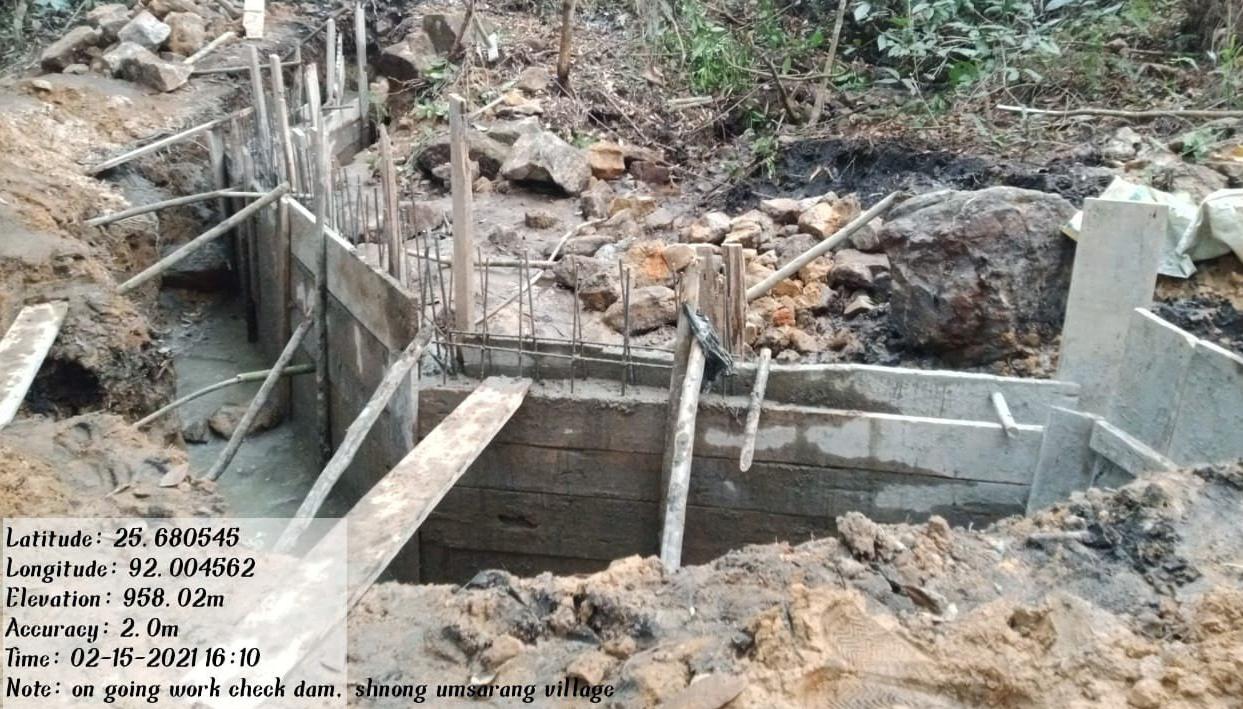
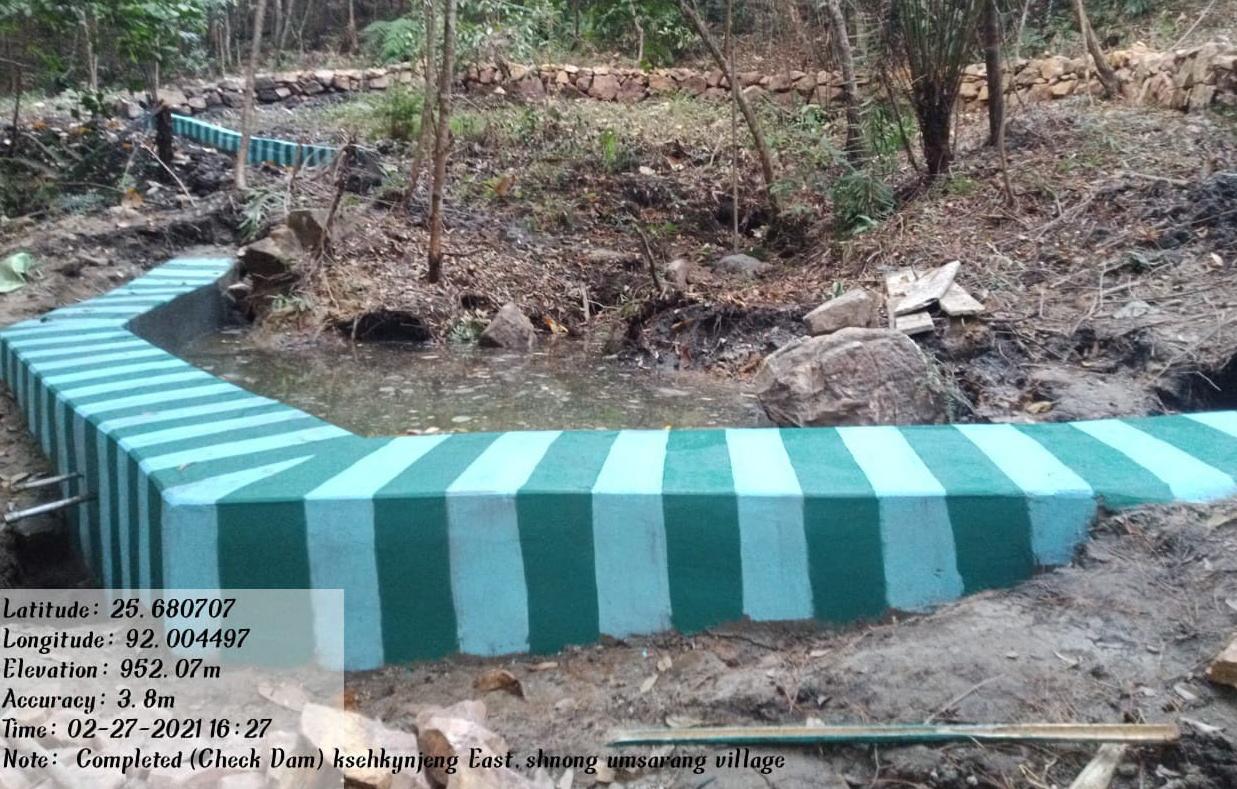
| Check Dam | Kseh Kynjeng | 2,05,570 | Completed |
| INTERVENTION | SITE NAME | AMOUNT | WORK STATUS |
| Head Work & Loose Boulder Bund | Them Kseh Kynjeng | 1,00,300 | Completed |
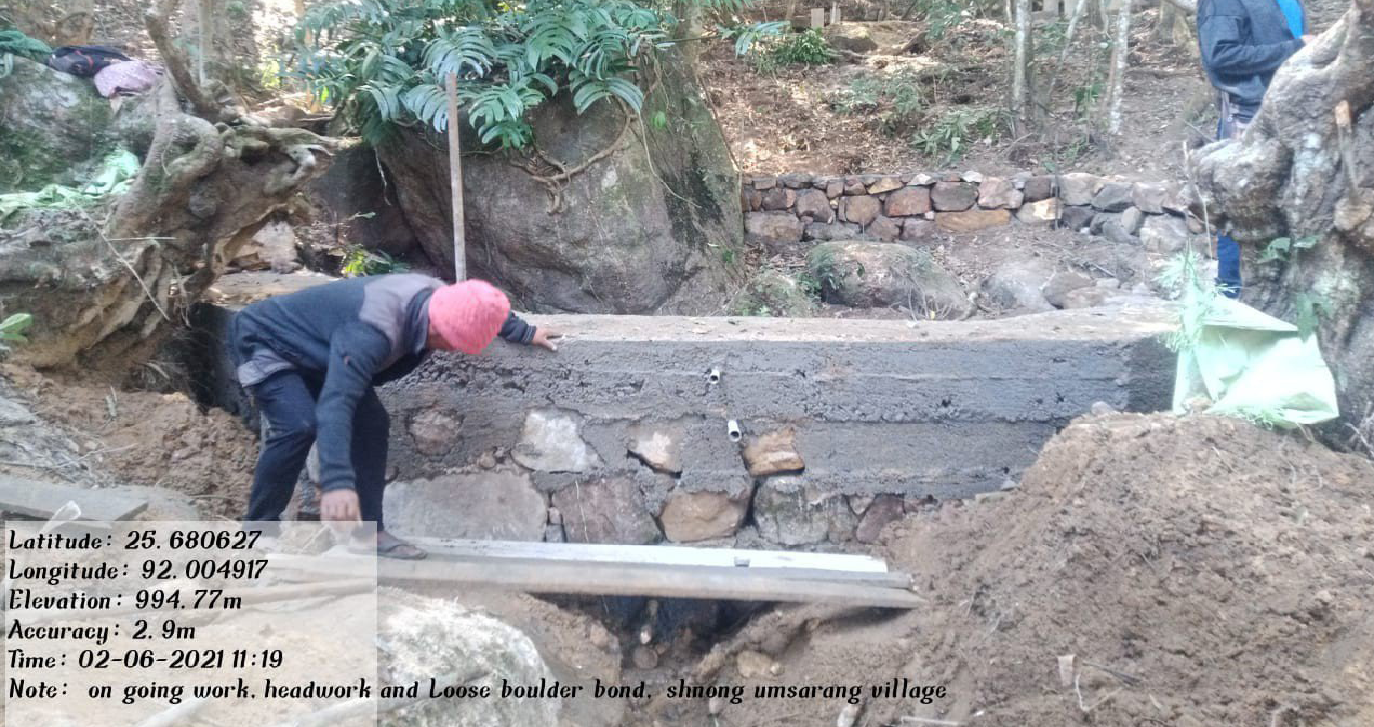
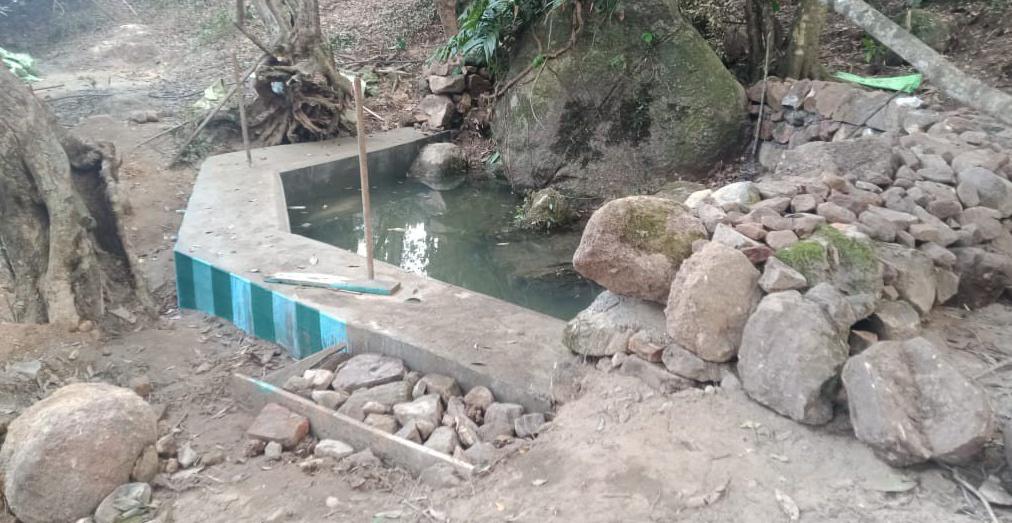
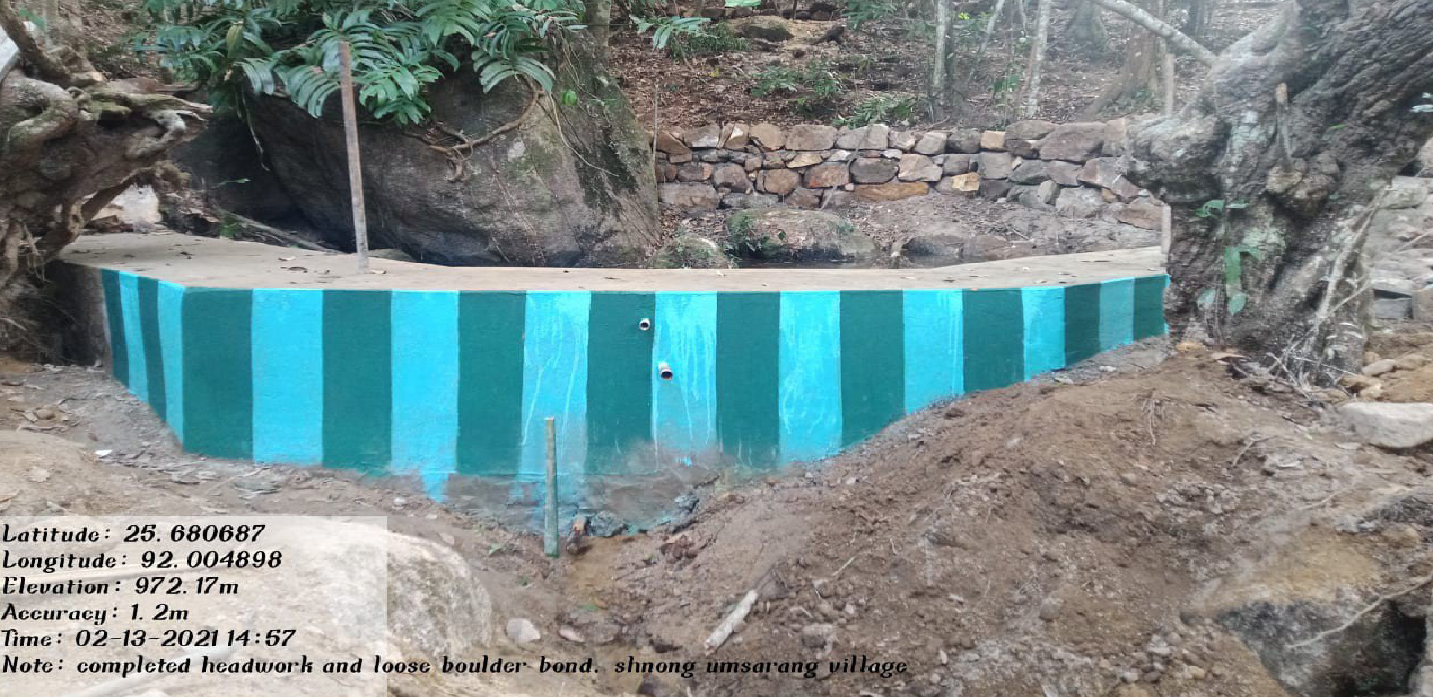
| INTERVENTION | SITE NAME | AMOUNT | WORK STATUS |
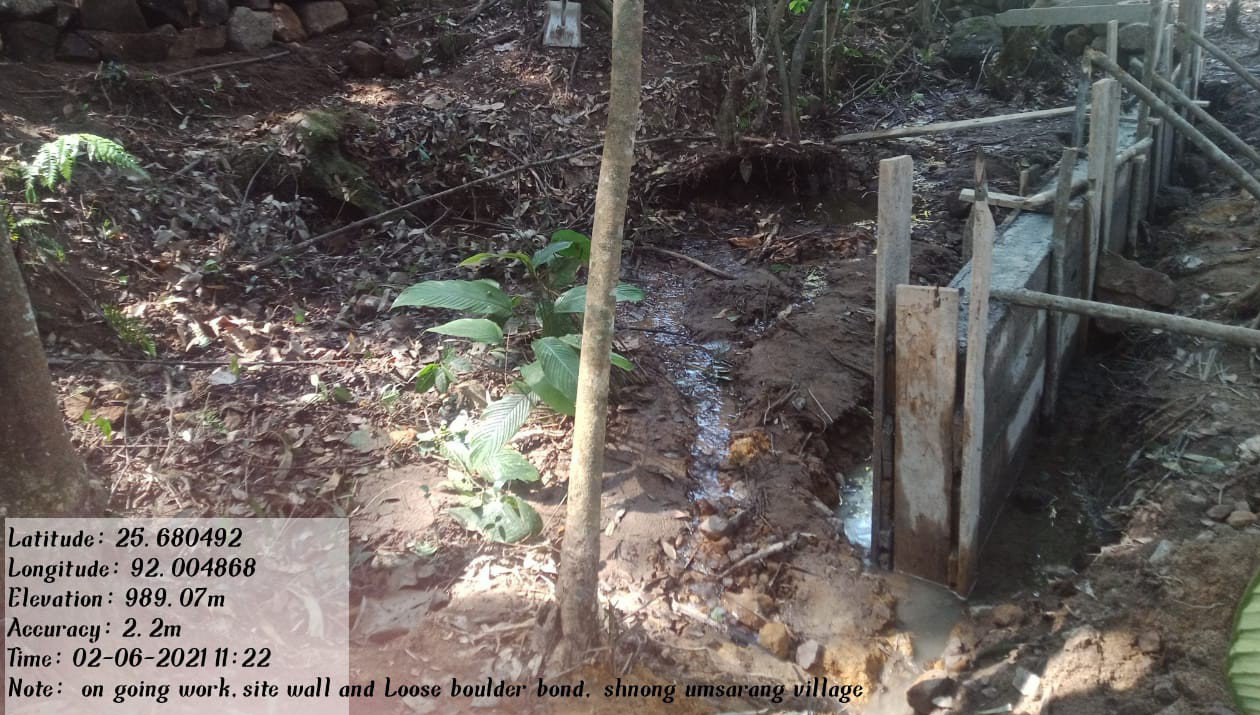
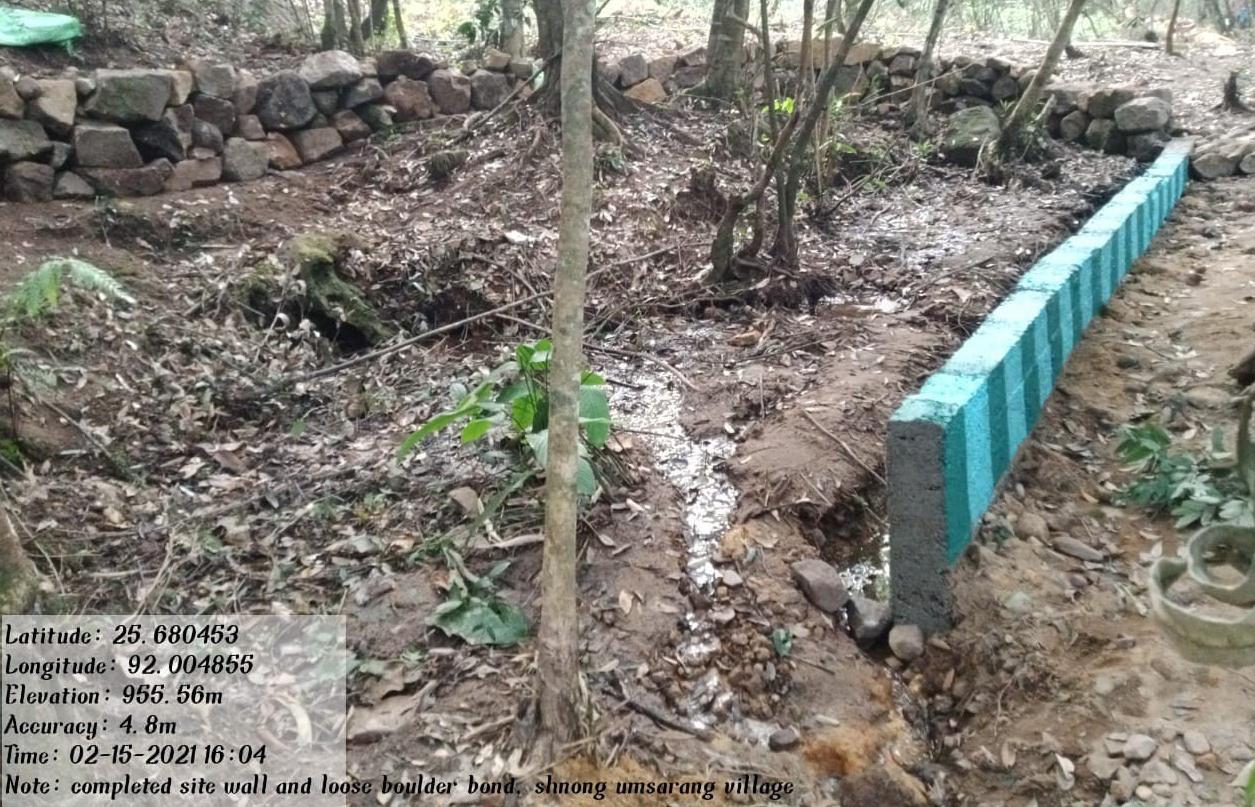
| Loose Boulder Bund & Side Wall | Them Kseh Kynjeng | 40,180 | Completed |
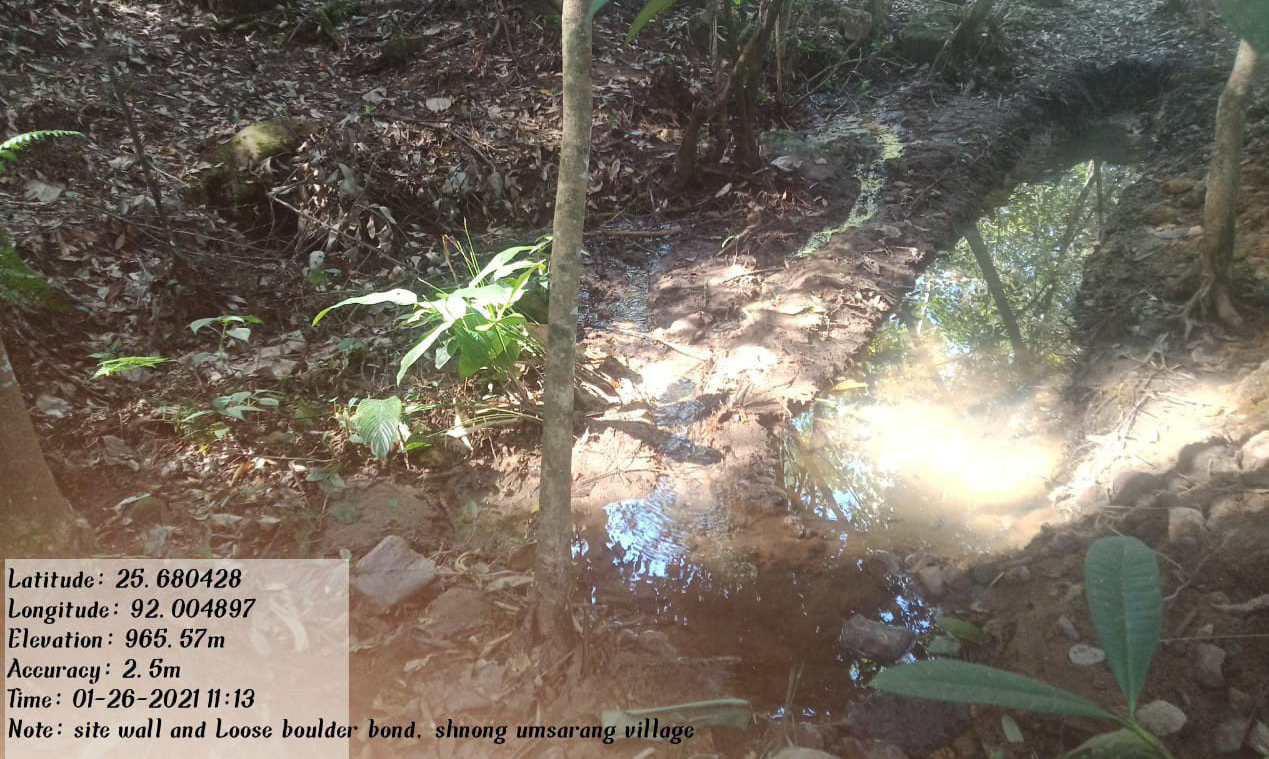
| INTERVENTION | SITE NAME | AMOUNT | WORK STATUS |
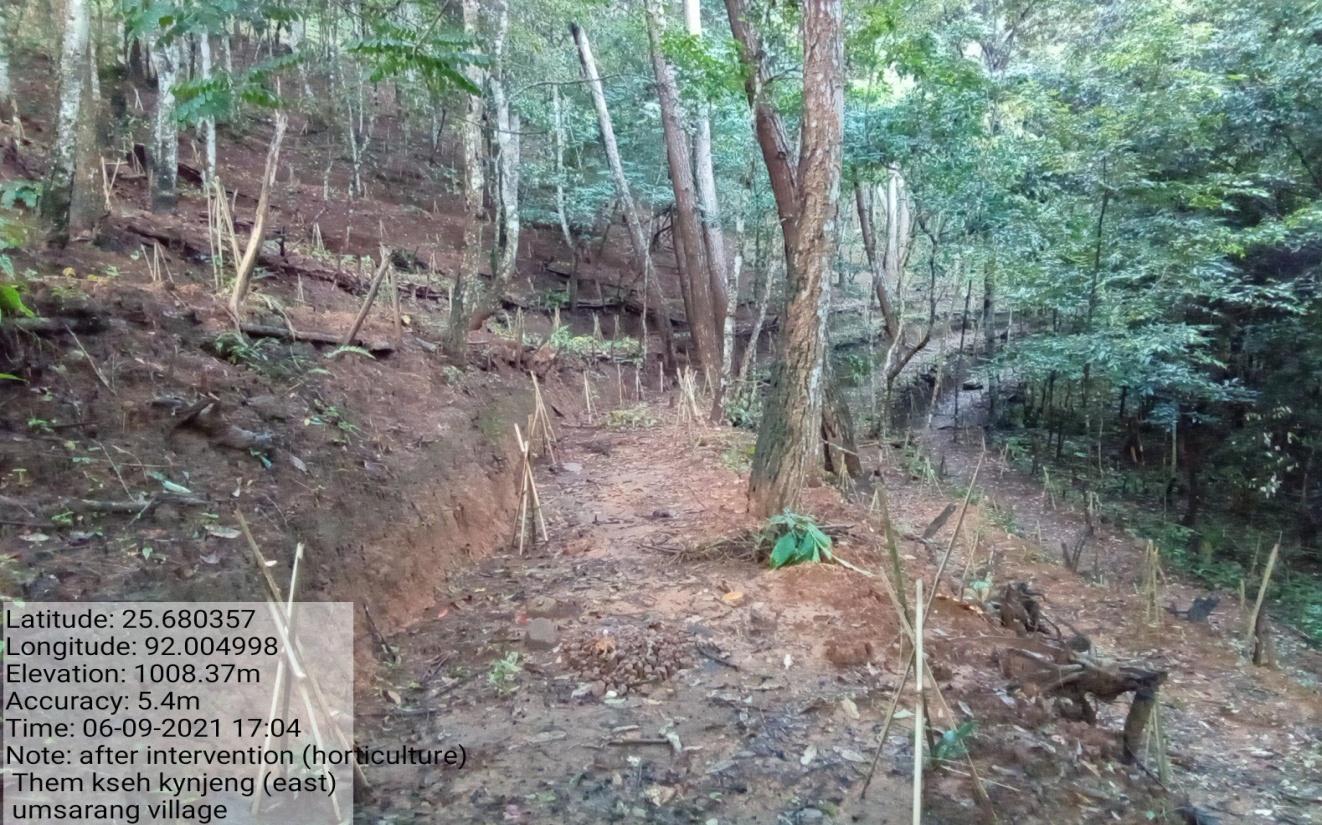
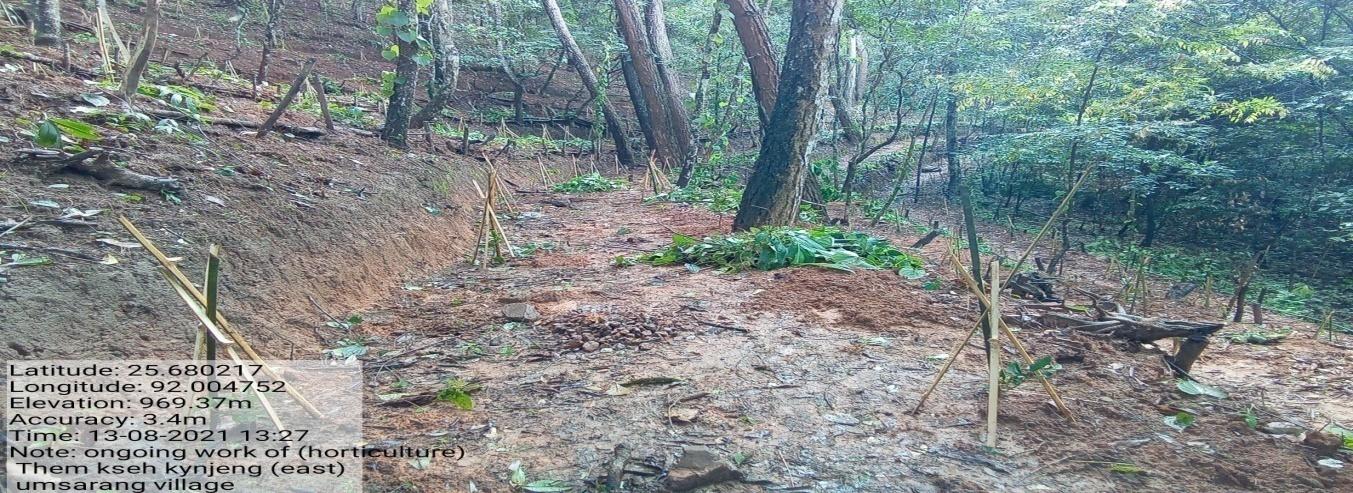
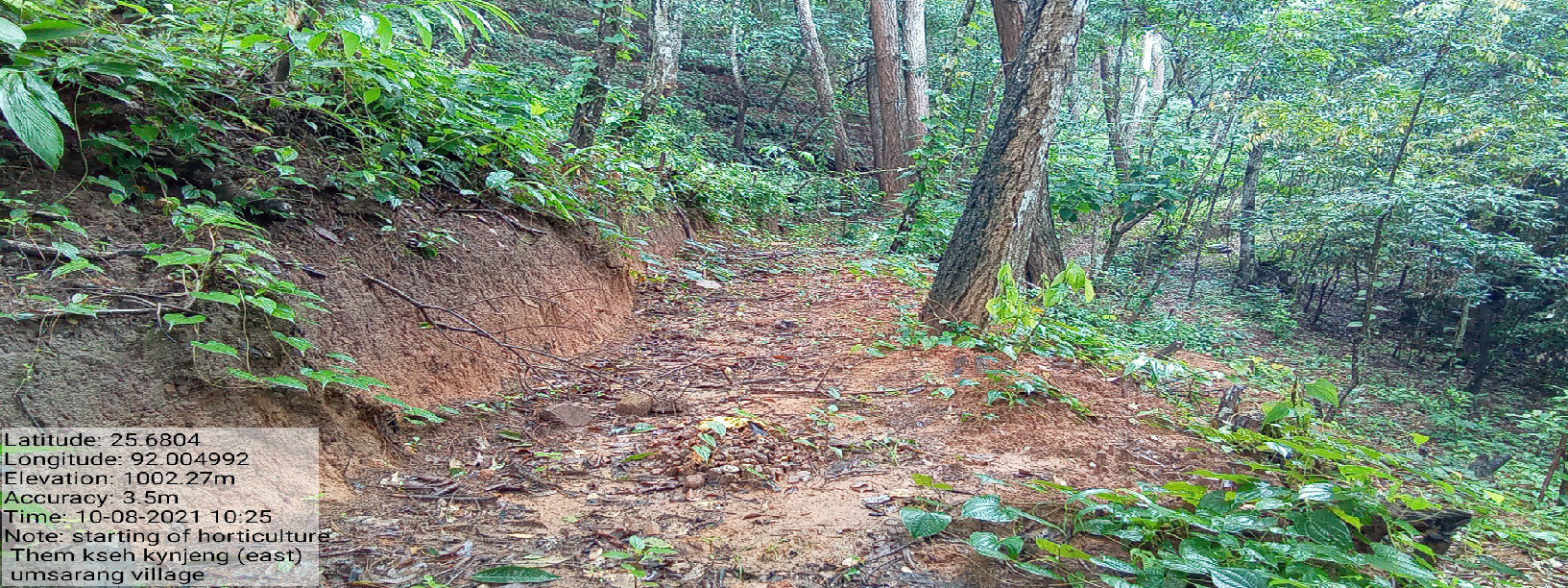
| Horticulture | Lum Shnong | 2,26,880 | Completed |
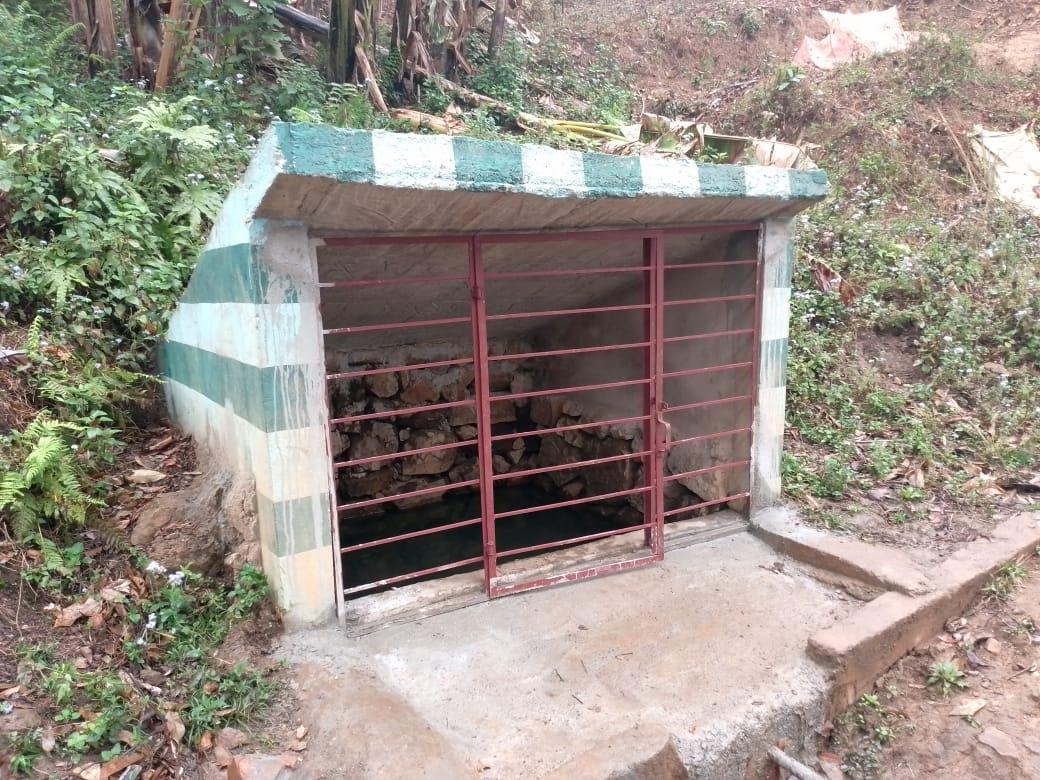
| INTERVENTION | SITE NAME | AMOUNT | WORK STATUS |
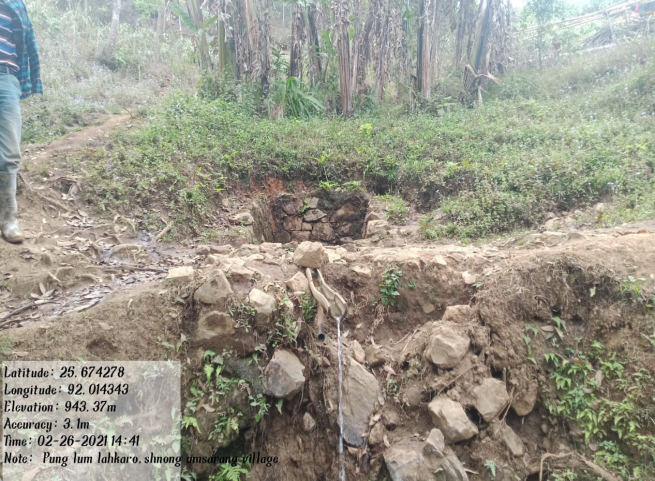
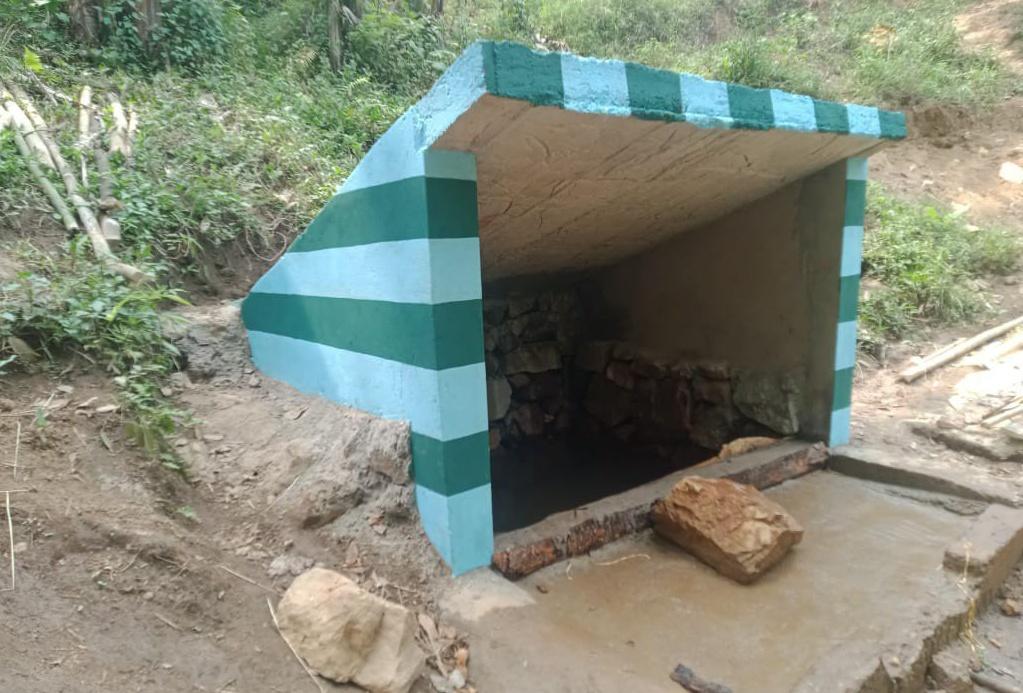
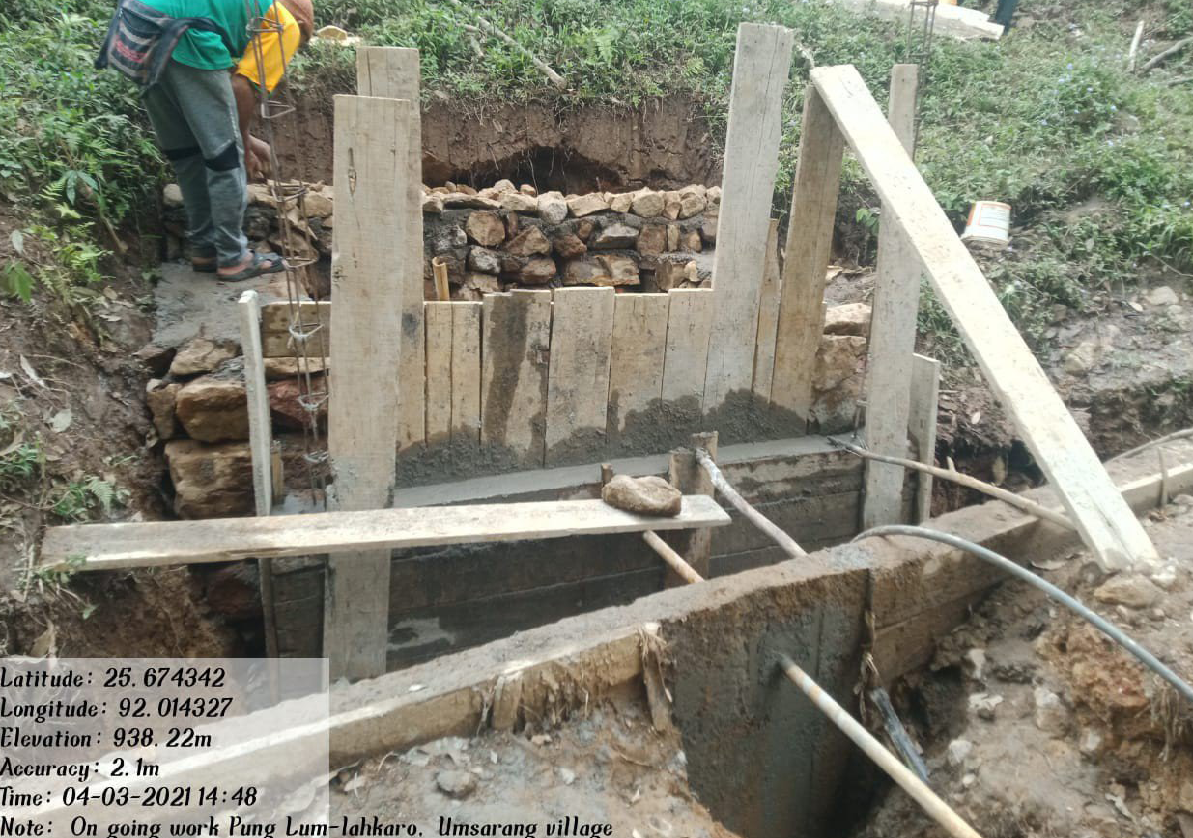
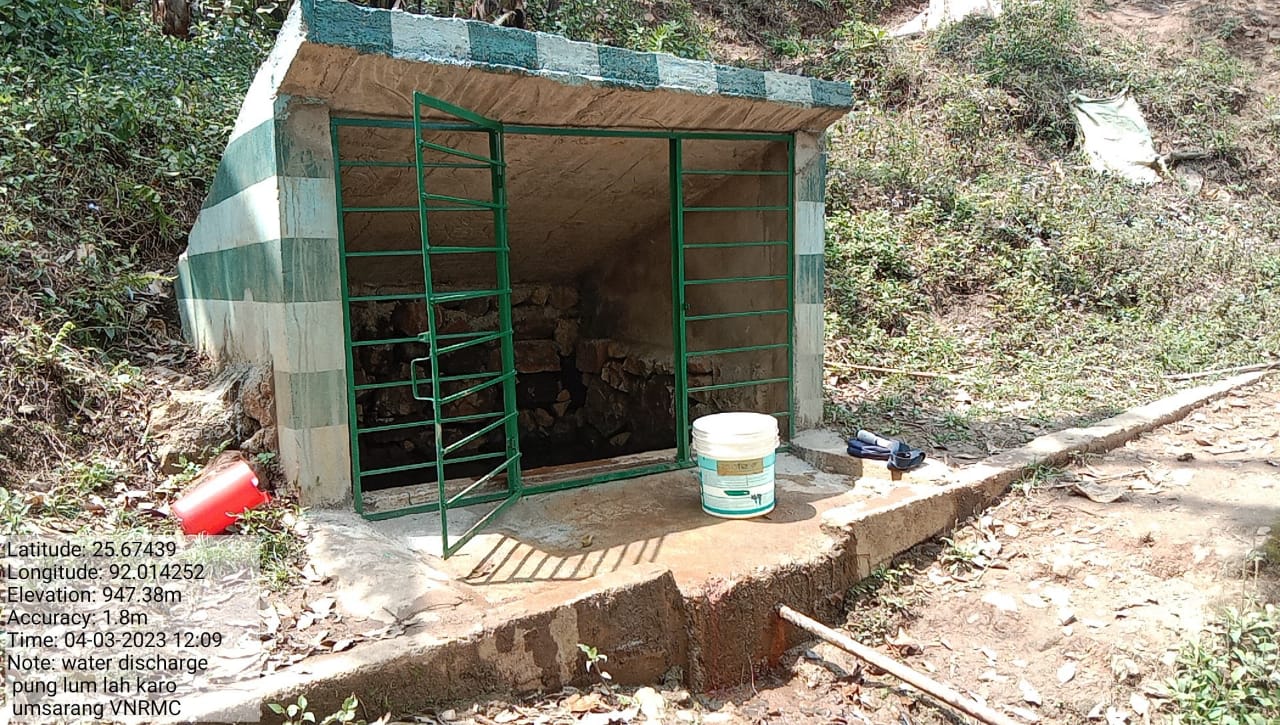
| Spring Chamber | Lum Lah Karo | 76,230 | Completed |
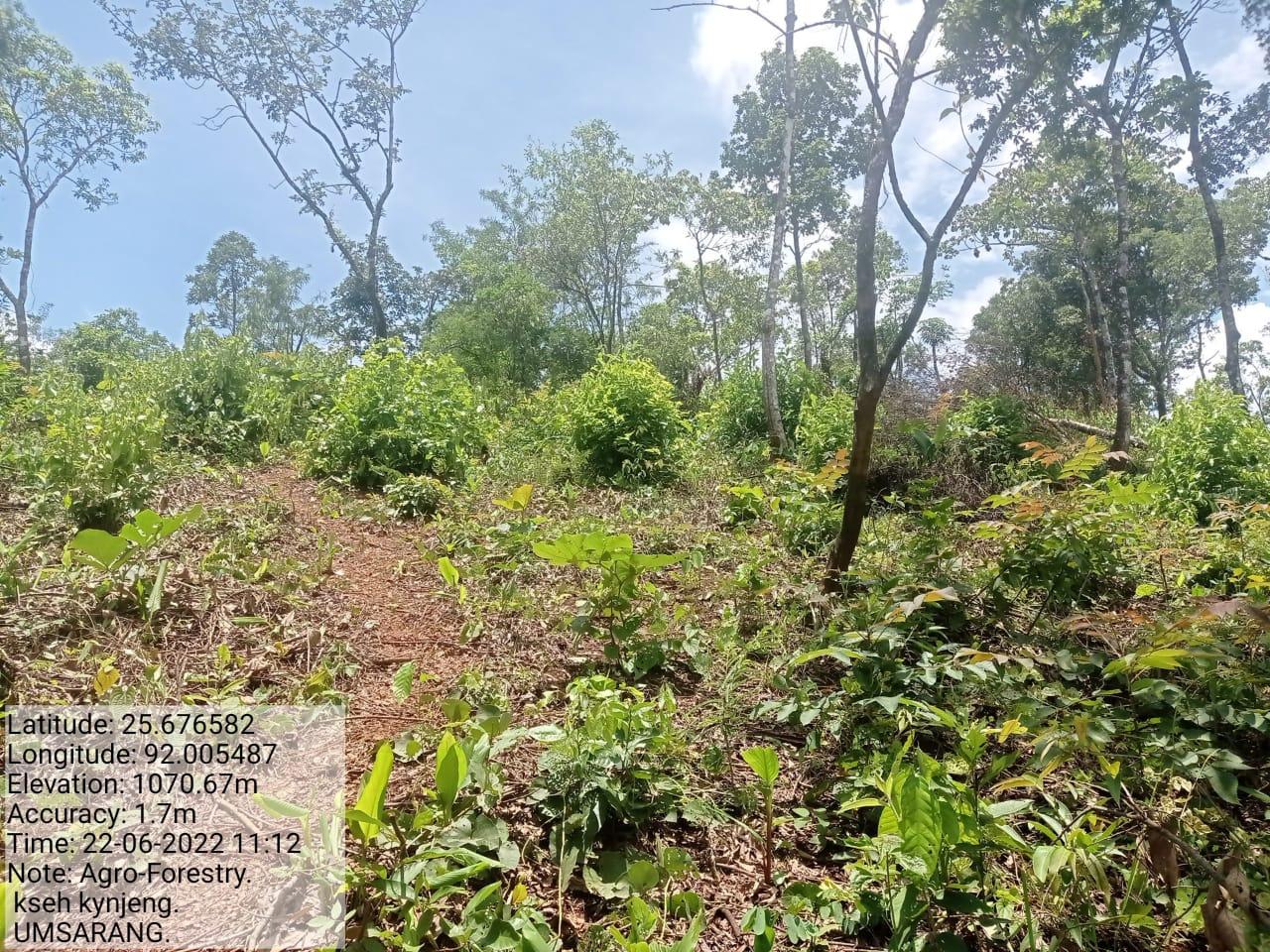
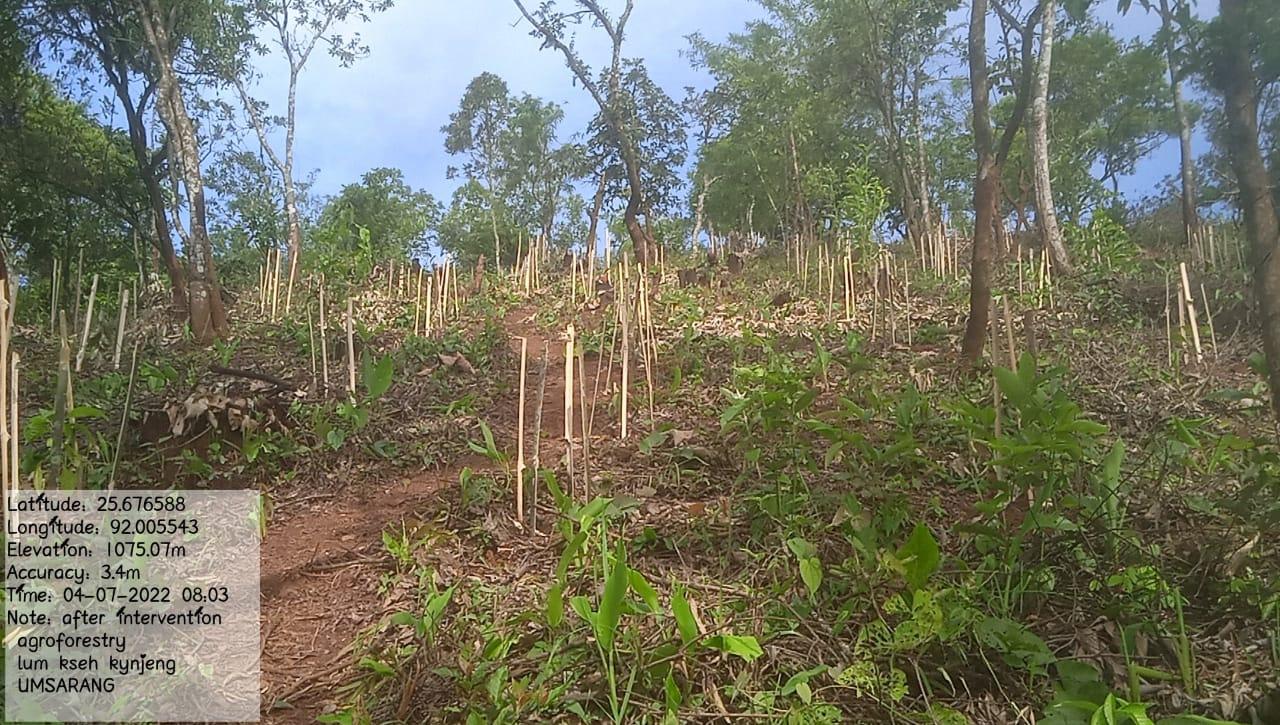
| INTERVENTION | SITE NAME | AMOUNT | WORK STATUS |
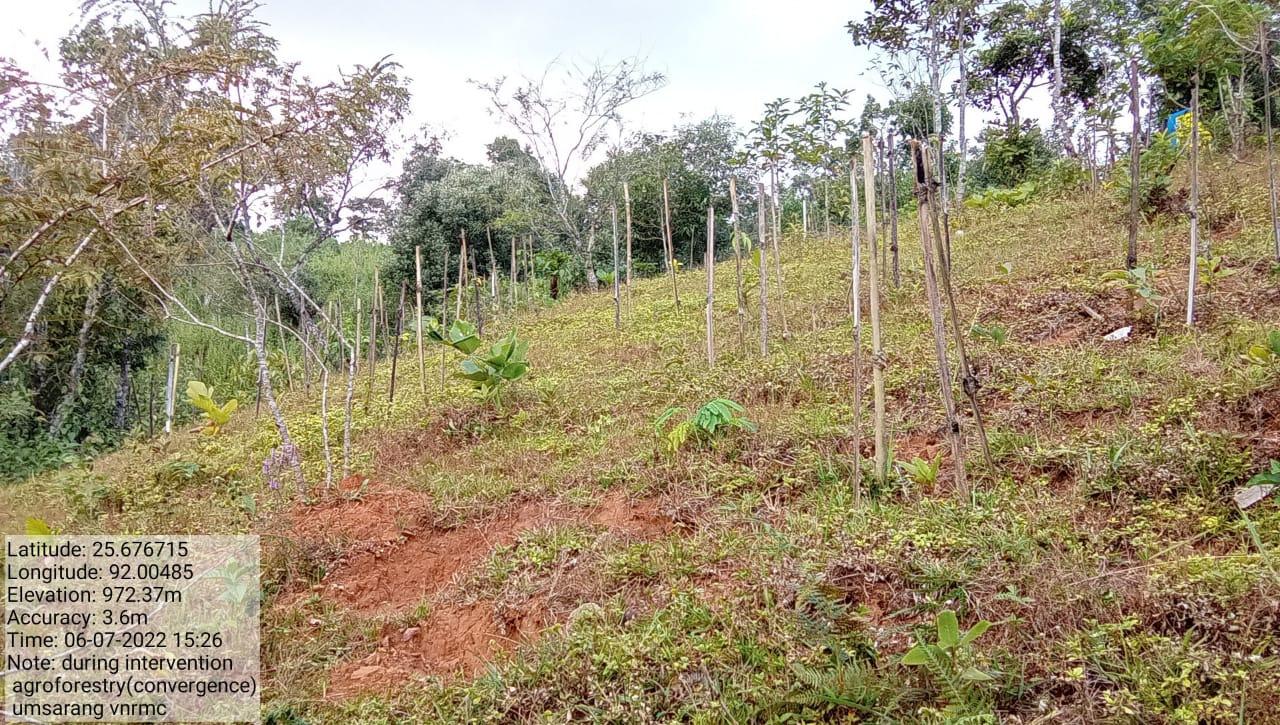
| Agro-Forestry 1 | Lum Kseh Kynjeng | 2,20,000 | Completed |
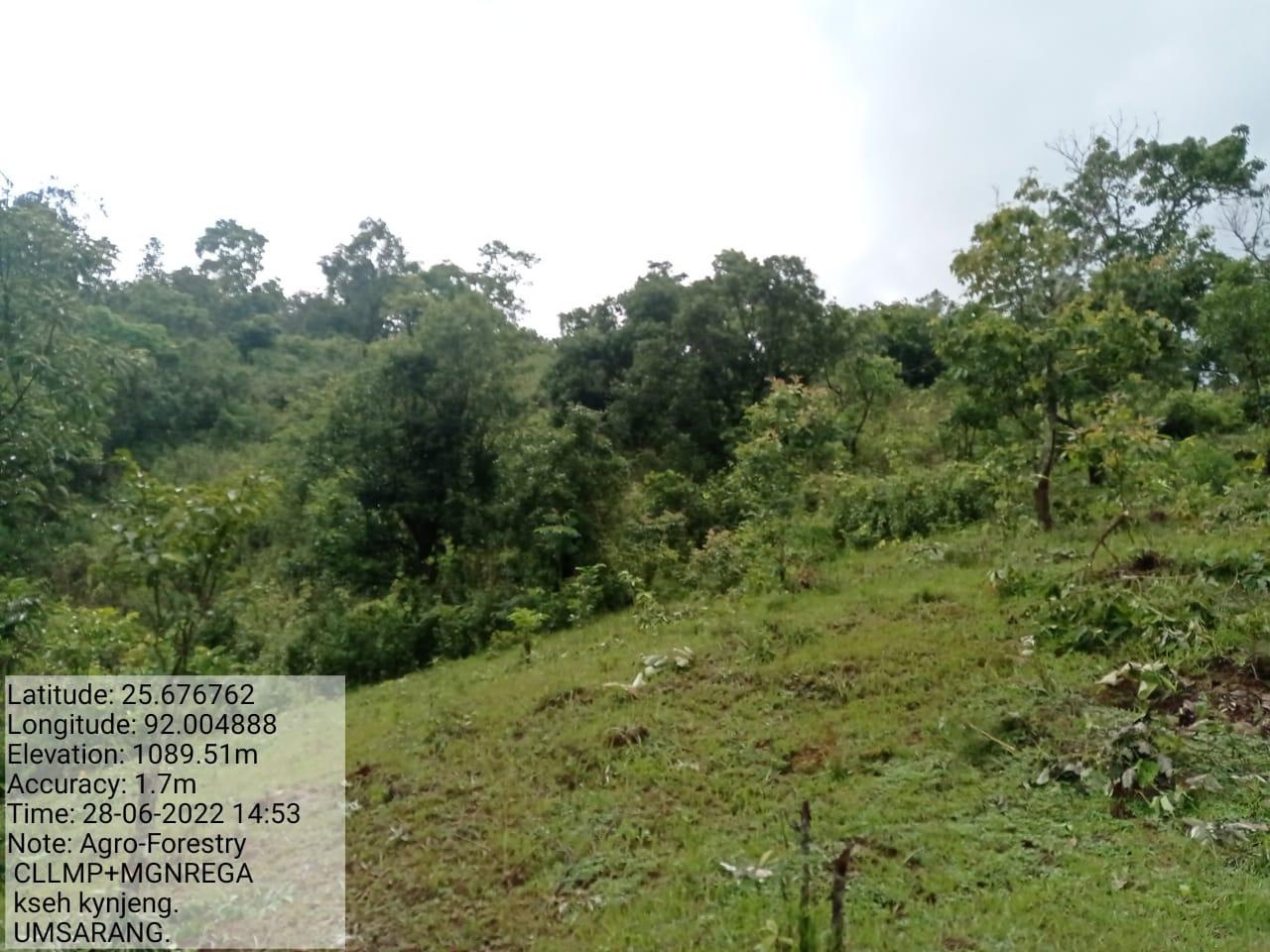
| INTERVENTION | SITE NAME | AMOUNT | WORK STATUS |
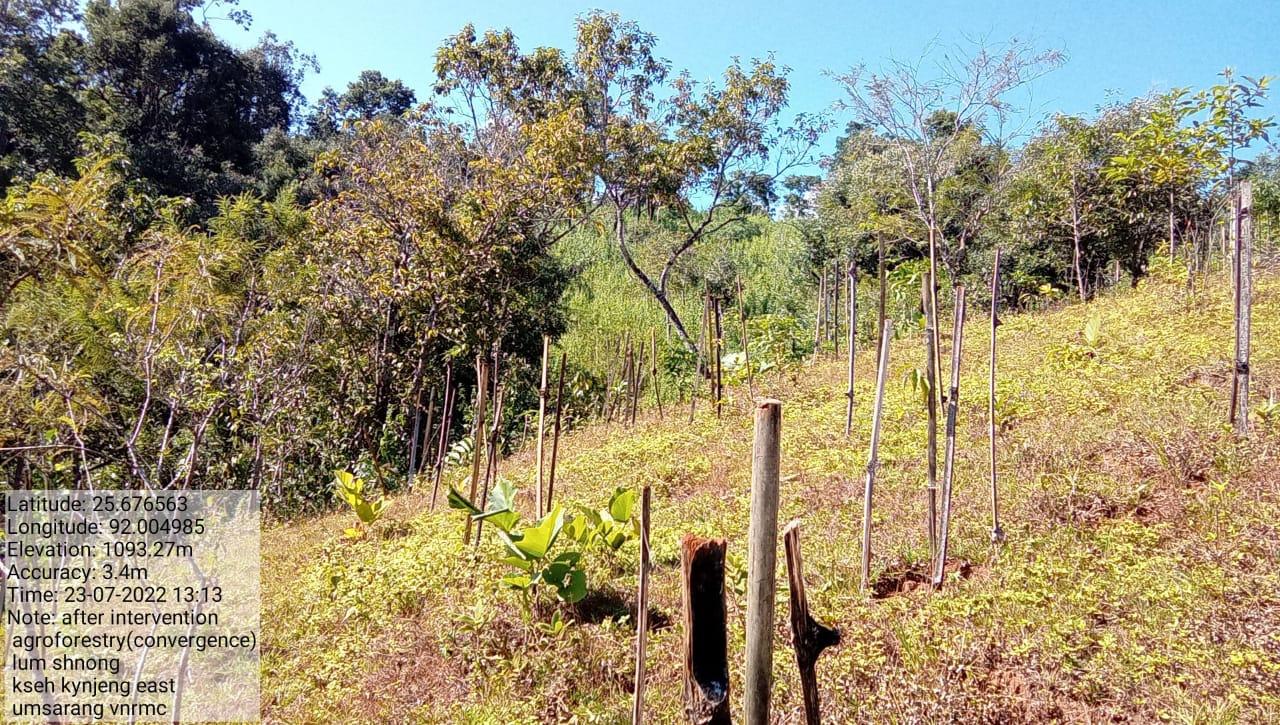
| Agro-Forestry 2-Convegence | Lum Kseh Kynjeng | 1,50,000 | Completed |
| INTERVENTION | SITE NAME | AMOUNT | WORK STATUS |
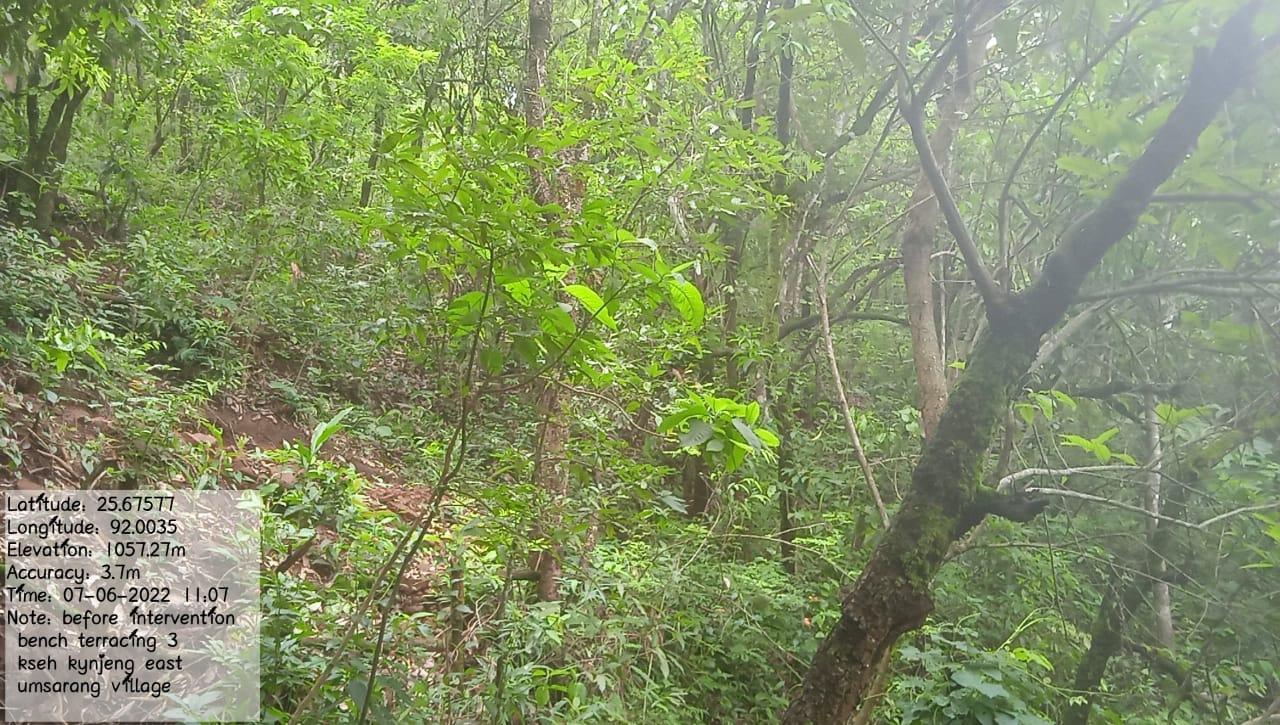
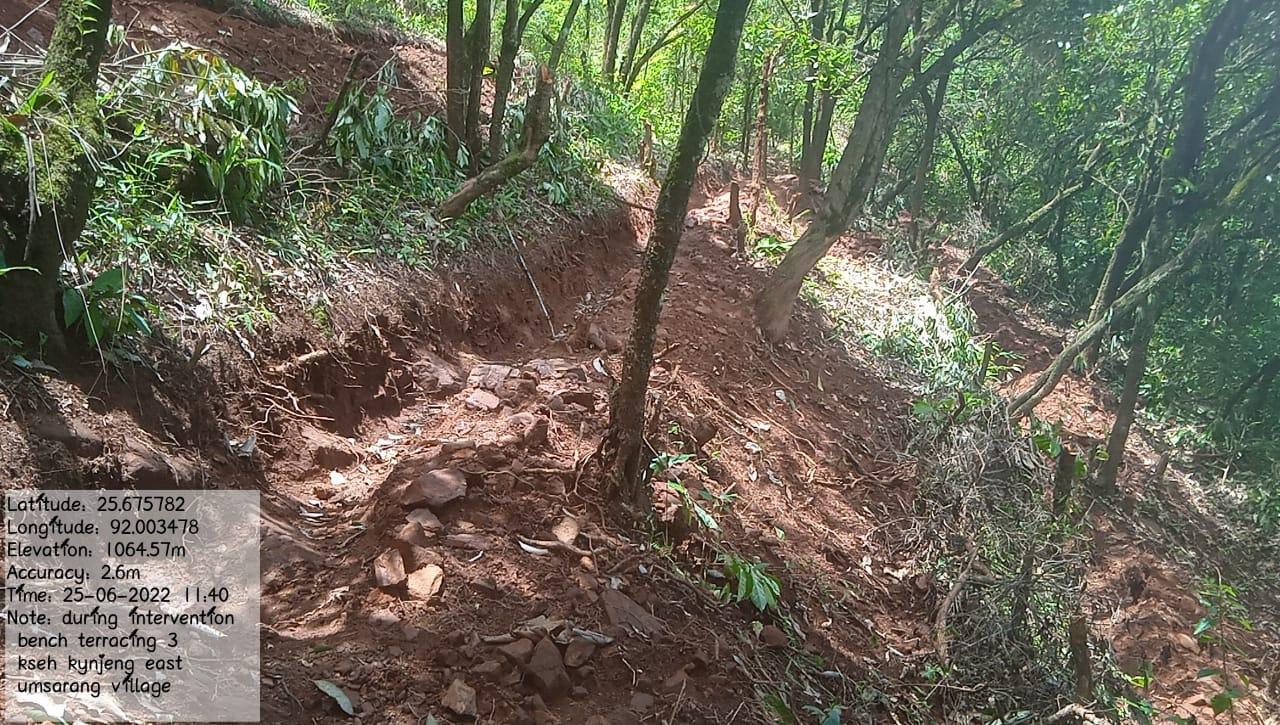
| Bench terracing 3 | Lum Kseh Kynjeng (East) | 3,50,000 | Completed |
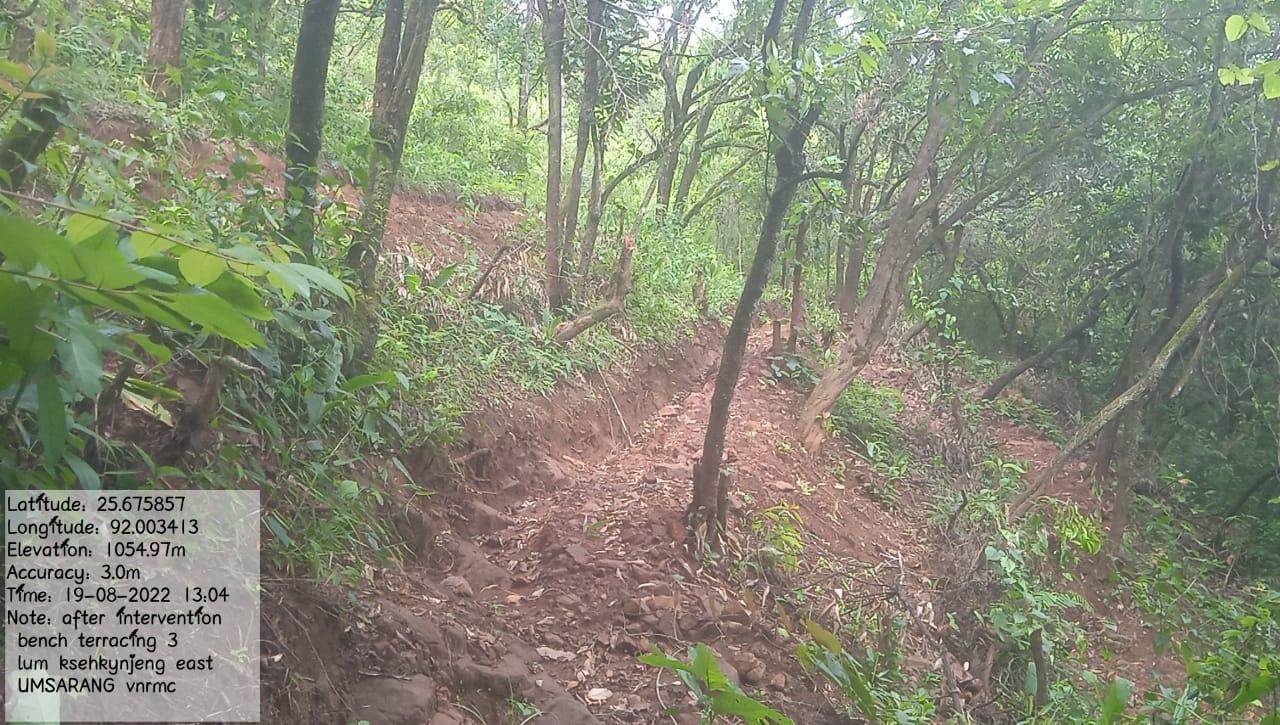
| INTERVENTION | SITE NAME | AMOUNT | WORK STATUS |
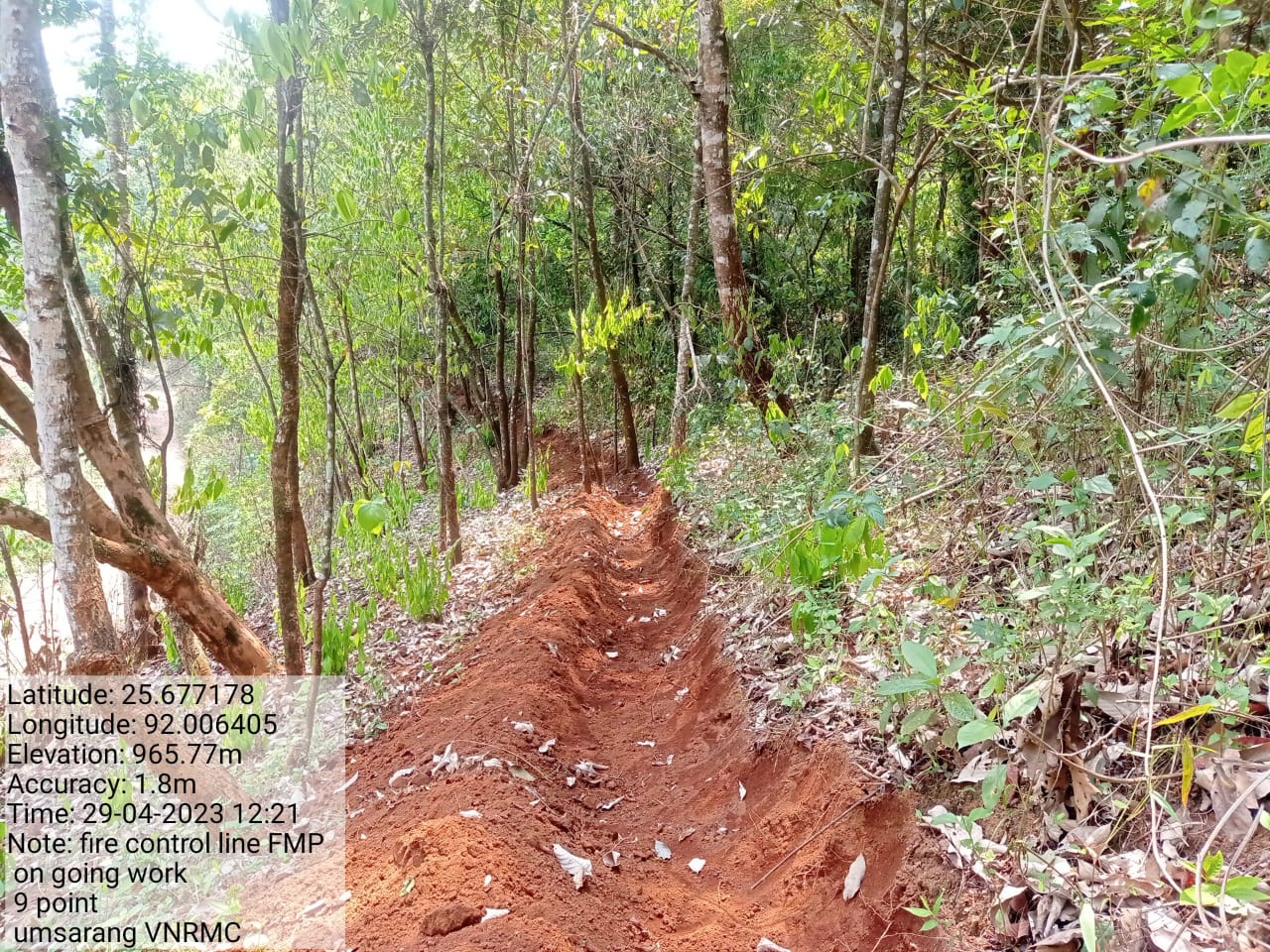
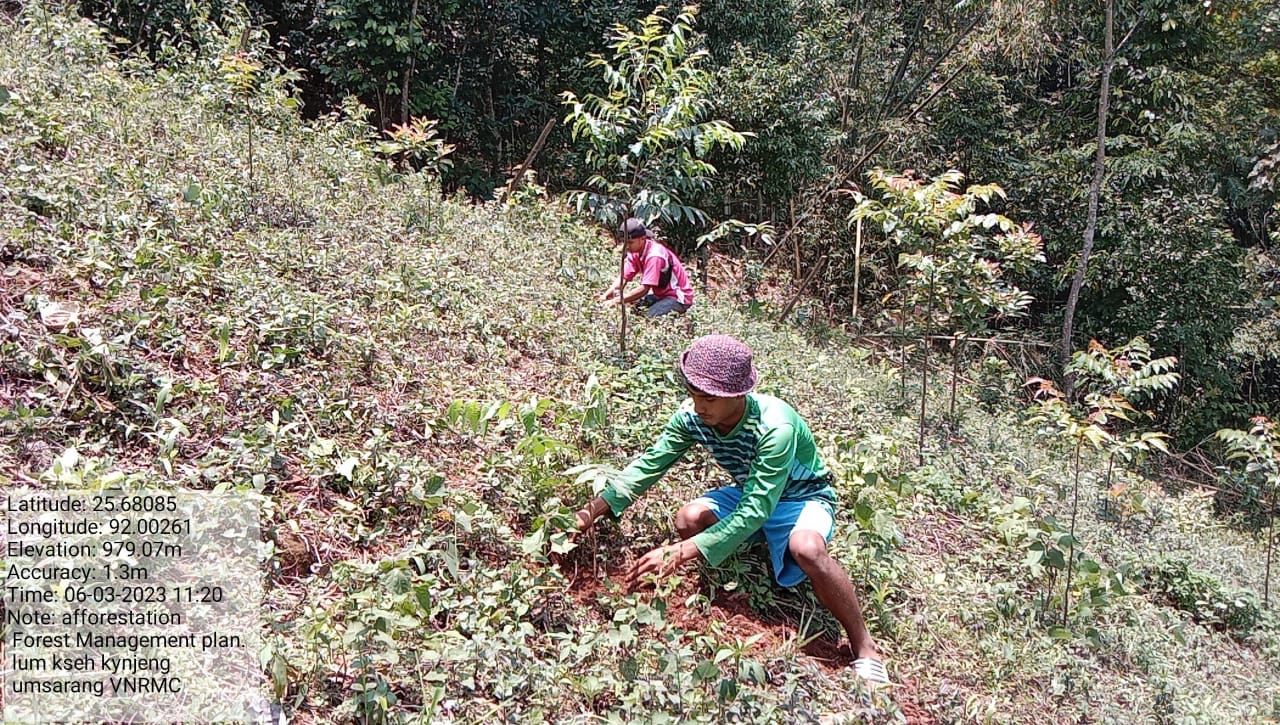
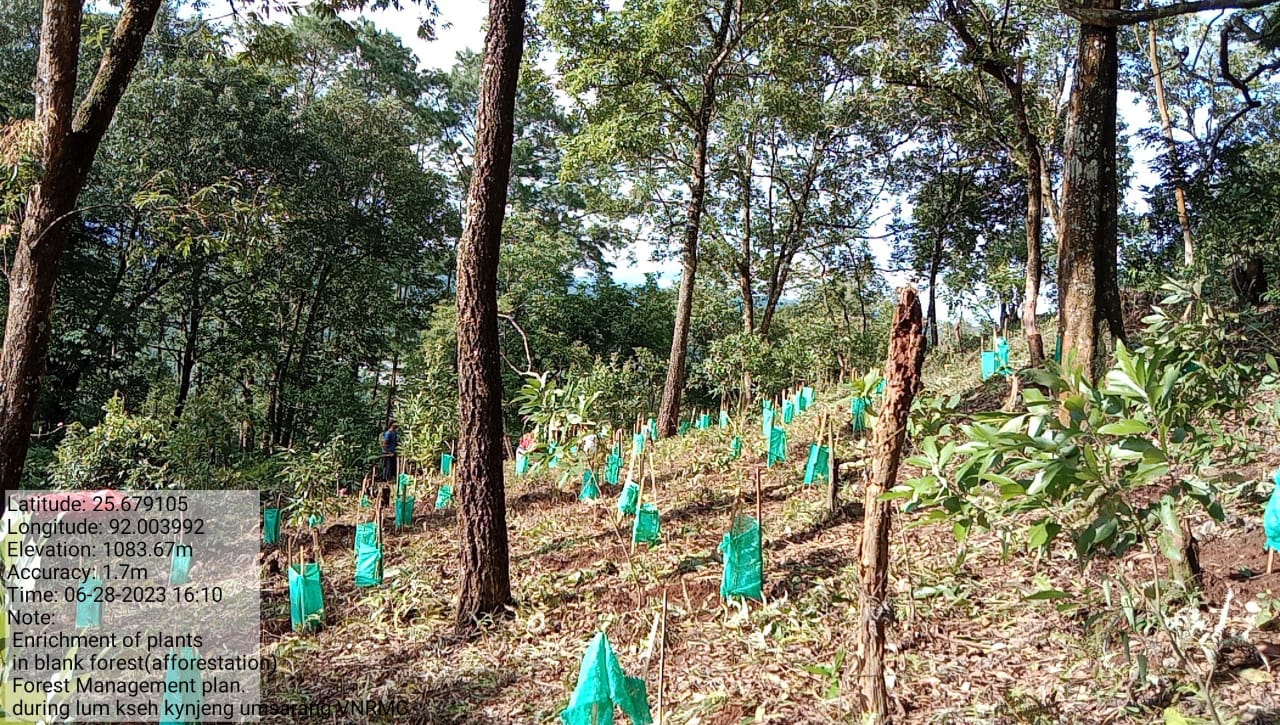
FMP Activities 1.Fire Control Line 2.Community Forest Boundary Survey 3.Assisted natural regeneration in open forest (Maintenance and bamboo plantation afforestation) 4.Enrichment planting in forest blanks (Afforestation) 5.In-situ & Ex-situ conservation of rare and endangered plants 6.Nursery for Food Forestry (Providing Seed Sapling for Existing Nursery) |
Community Land | 83815 7000 130268 15461 10000 11000 |
All Completed |
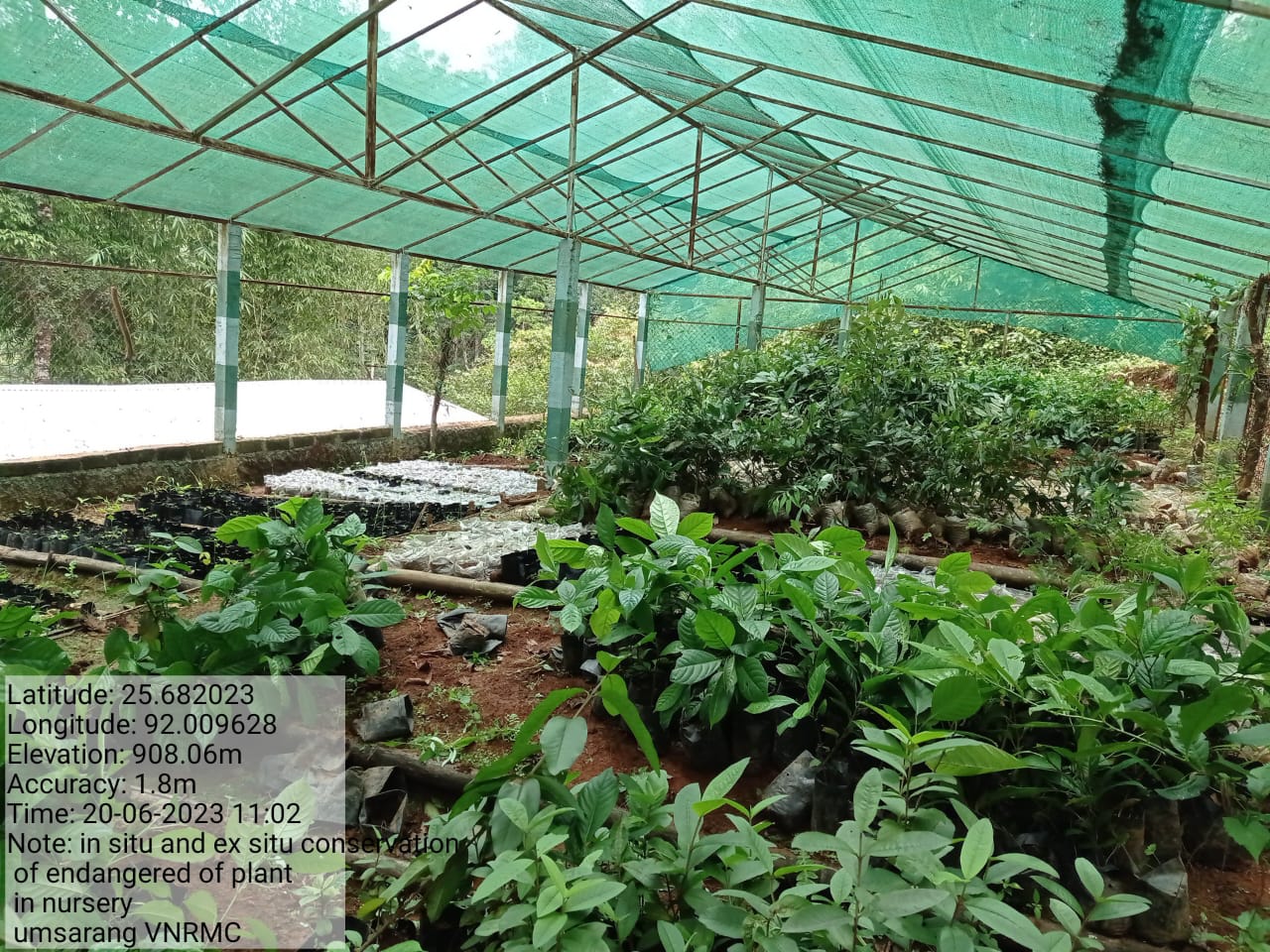
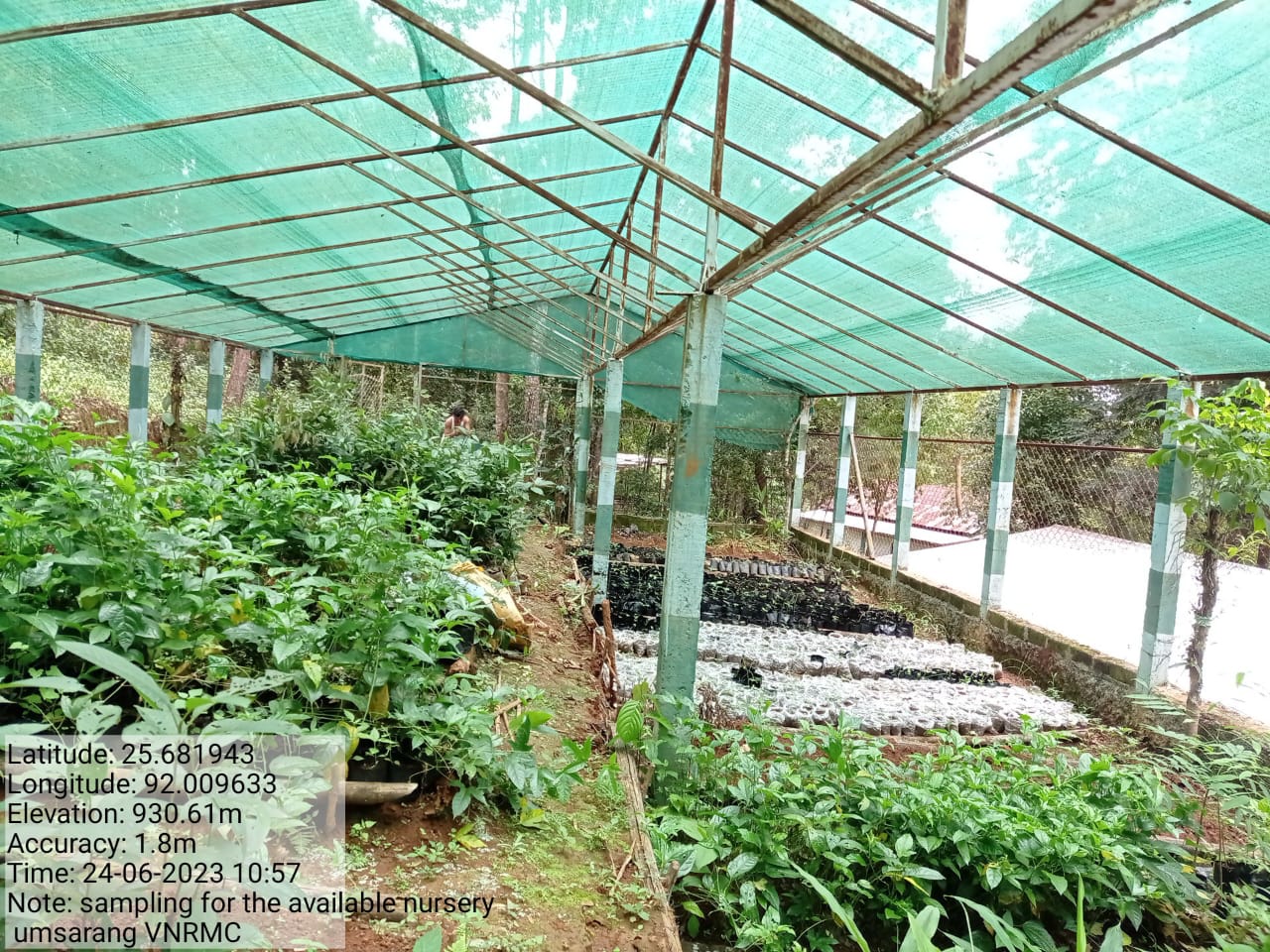
| Intervention | Site Name | Amount | Work Status |
| Gates for Spring Chamber | community land | 8615 | Completed |
TESTIMONIALS
President (Mebet Nongrum) 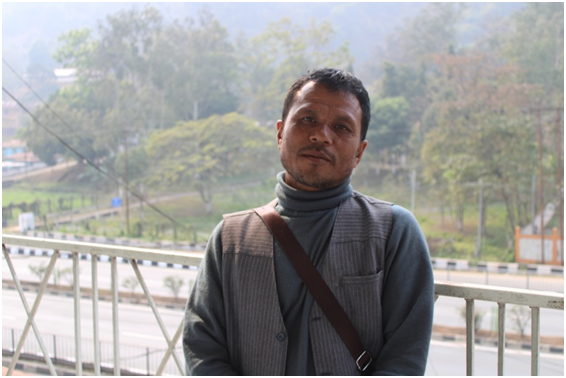
As a Leader I must say, Umsarang is a village fortunate enough to have been selected under the CLLMP (Community-led Landscape Management Project) and has experienced positive changes in Natural Resource Management (NRM). It's evident that the project's interventions have had a significant impact on the village's environment and the lives of its people.
I personally have seen the transformation from a "Syllen'' or Bald village to witnessing greenery through afforestation which is a remarkable achievement. By clearing off the majority of the forest area for livelihood purposes, my fellow villagers faced adverse consequences, such as drastic climate change and water scarcity. However, with the CLLMP's intervention, I and my people have gained awareness about the importance of NRM and its positive impacts on the environment and our daily lives.
The implementation of activities like afforestation, contour trenches, and horticulture has likely contributed to restoring the ecological balance in the area .Additionally; horticulture has brought economic benefits to the villagers, creating sustainable livelihood opportunities while promoting the cultivation of diverse plant species. This diversification of crops and vegetation not only ensures food security but also enhances the ecological resilience of the region.
Moreover, the positive impact on water availability for drinking, washing, bathing, and other purposes has likely enhanced the overall well-being and health of the community. Access to clean and sufficient water is vital for human survival and supports the development of various economic activities.
It's essential to acknowledge the role of the CLLMP in bringing about these positive changes. The project's approach seems to have been successful in building awareness, fostering community participation, and implementing sustainable NRM practices. It sets a great example for other regions facing similar challenges, highlighting the potential of community-driven initiatives in addressing environmental issues and improving livelihoods.
By witnessing these positive outcomes, I personally feel motivated to continue the efforts in conserving and sustainably managing the natural resources for the betterment of the present and future generations. The success of my village can also inspire neighbouring communities and contribute to broader regional and national efforts in environmental conservation and sustainable development.
Secretary (Shailinda Syiem) 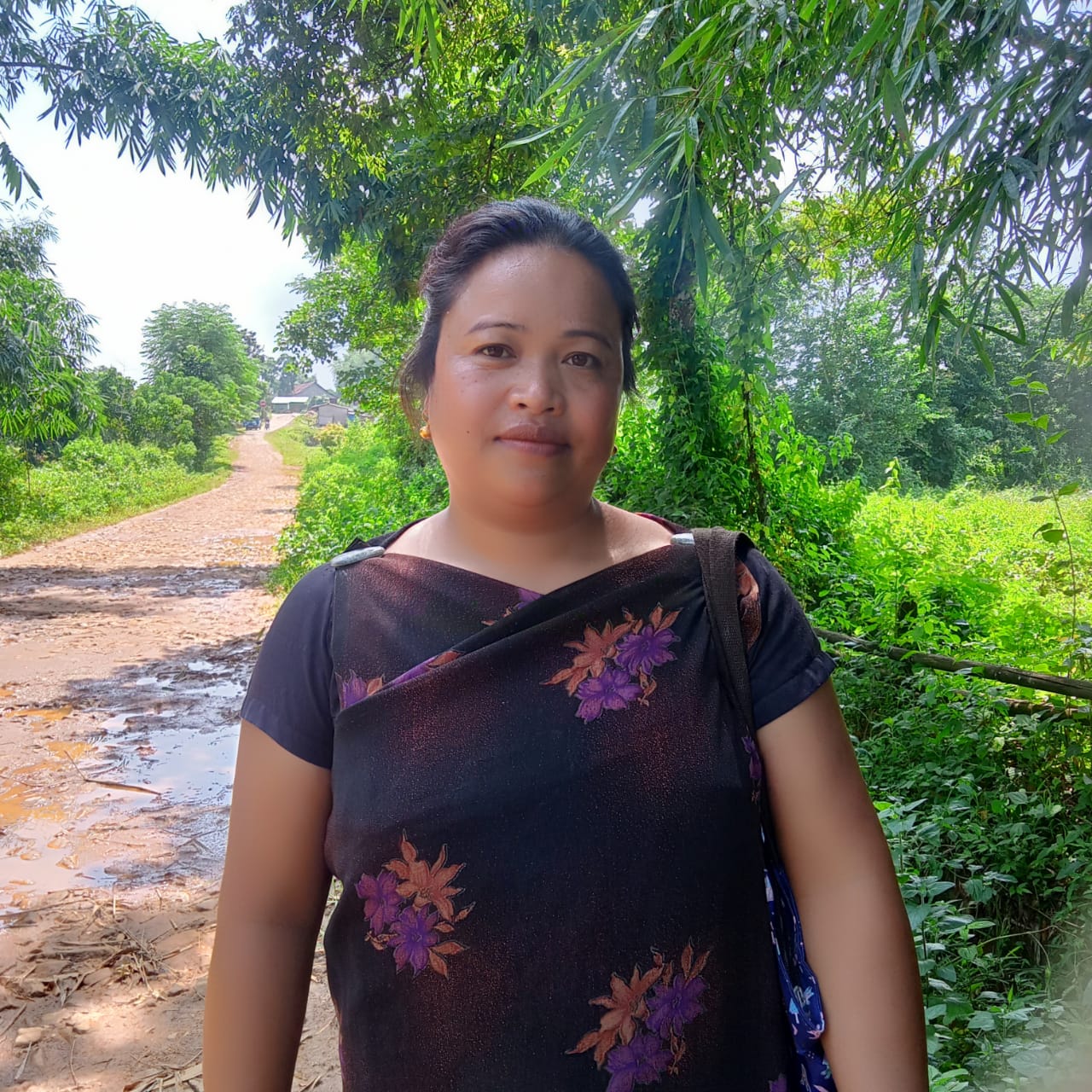
It's truly inspiring how the Community Led Landscape Management Project (CLLMP) funded by the World Bank has had such a positive impact on my life and the entire community. As a secretary, I have experienced personal growth and a newfound sense of empowerment through my involvement in the project.
The vision of creating a better tomorrow through CLLMP demonstrates the importance of community-driven initiatives in sustainable development. The fact that I have been able to discover my potential and grow as an individual is a testament to the project's effectiveness in fostering personal development and empowerment.
One of the key aspects of CLLMP is providing a platform for community members, including VNRMCS (Village Natural Resource Management Committee) members like myself, to participate in decision-making processes. This inclusive approach ensures that the voices of all community members are heard and considered when making important choices that affect the village and its resources.
By being given the opportunity to take part in decision-making, I have gained the confidence to raise concerns and voice my opinions in meetings and gatherings. This newfound confidence is invaluable, not just for my personal growth but also for the collective development of the community. When individuals like me feel empowered and confident to share their perspectives, it leads to more well-informed and inclusive decision-making processes.
My increased confidence and active participation in the project is likely to inspire others in the community to do the same. This ripple effect of empowerment and engagement can further strengthen the community's capacity to address challenges and seize opportunities for sustainable development.
Furthermore, as a secretary actively involved in the CLLMP, I play a vital role in the successful implementation and management of the project. My dedication and contribution are essential to ensuring that the project's goals are met and that the community continues to thrive.
Overall, my testimonial highlights the positive impact of CLLMP on both individuals and the community as a whole. It exemplifies how community-led projects can empower individuals, promote inclusive decision-making, and contribute to building a brighter and more sustainable future for all.
Cinovea Shangpru (VCF SM) 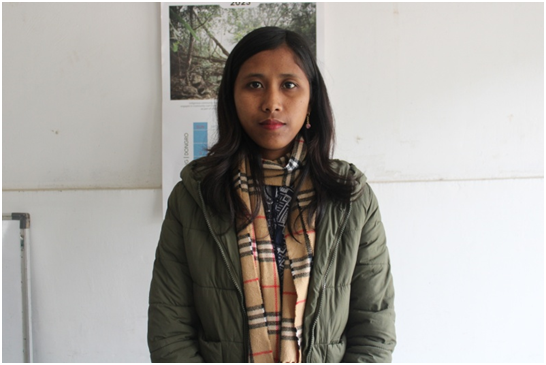
I, Cinovea Shangpru, would like to express my heartfelt gratitude to MBMA CLLMP (Meghalaya Basin Management Agency ) unde the Community Led Landscape Management Project, funded by World Bank for providing me with the opportunity to serve and contribute to the sustainable development of my village. As a Mobilizer, my primary role and responsibility involve creating awareness among the people in my village about the project and the implemented interventions, ensuring that everyone, regardless of their status, caste, creed, or religion, benefits from them.
I am immensely grateful to CLLMP for providing me with exposure to various training that align with my role. These training sessions have not only equipped me with the necessary knowledge and skills but have also significantly boosted my confidence beyond my expectations. I now feel more empowered to carry out my responsibilities effectively and make a positive impact in my community.
One of the most valuable experiences facilitated by CLLMP is the exchange learning exposure trips. These trips have not been limited to the district or state level but have provided Village community Facilitators (VCFs) like myself with the opportunity to travel to other states. These visits have allowed us to witness and learn about the best Natural Resource Management (NRM) practices being implemented in different regions. By bringing back these practices to our own village, we can contribute to building a better tomorrow for our community.
The exposure trips have been instrumental in broadening our horizons, fostering cross-learning, and enabling us to gain insights from diverse landscapes and communities. This exposure to different approaches and experiences has enriched our understanding of NRM and inspired us to implement innovative and effective strategies in our own village.
I am grateful to CLLMP for providing such transformative experiences and opportunities for personal growth. The knowledge and skills I have gained, coupled with the exposure to best practices, have empowered me to become a more effective mobilizer and advocate for sustainable development in my village.
Once again, I extend my heartfelt appreciation to MBMA CLLMP for their support, guidance, and belief in our collective ability to create positive change. I am committed to utilizing the knowledge and experiences gained through this project to contribute to the sustainable development of my village and inspire others to actively participate in the journey towards a better future.
Andywelborn Jyrwa (PM&M&E) 
I, Andywelborn Jyrwa, serving as the VCF in accounts & , Monitoring evaluation personnel, am immensely grateful to the CLLMP project. It has been an incredible journey filled with challenges and growth, providing me with numerous learning opportunities to support the members of VNMRCS (Village Natural Resource Management and Committee) and my entire village.
The exposure and experiences gained through CLLMP have been invaluable. Along with learning technical skills such as GPS training, filling out cash books, and UCS, the exchange learning through exposure visits has been particularly engaging and interesting. These visits have allowed me to witness firsthand various successful NRM practices and approaches implemented in other regions.
By taking part in these exposure visits, I have broadened my understanding of sustainable development and natural resource management. The knowledge gained from these experiences has empowered me to better guide and support the VNMRCS members and the entire community. It has equipped me with the tools and insights needed to make informed decisions and advocate for practices that protect and preserve Mother Nature.
I believe, Taking steps to protect mother nature is not only crucial for the well-being of the village but also for the broader environment and future generations. The CLLMP project has played a significant role in fostering a sense of responsibility and stewardship towards the natural resources within the community.
Through my involvement in CLLMP, I have not only enhanced my professional skills but also developed a deeper connection and appreciation for the environment. This newfound understanding has motivated me to actively contribute to the conservation and sustainable use of natural resources, ensuring a better and healthier tomorrow for my village and beyond.
Though the journey with CLLMP has presented challenges, the rewards in terms of personal growth, the positive impact on the community, and the opportunity to contribute towards safeguarding our natural heritage have been immeasurable. I am committed to continuing this journey, supporting the VNMRCS, and striving for a more sustainable and prosperous future for my village and the environment as a whole.
Banjop Jyrwa (Environment & GIS) 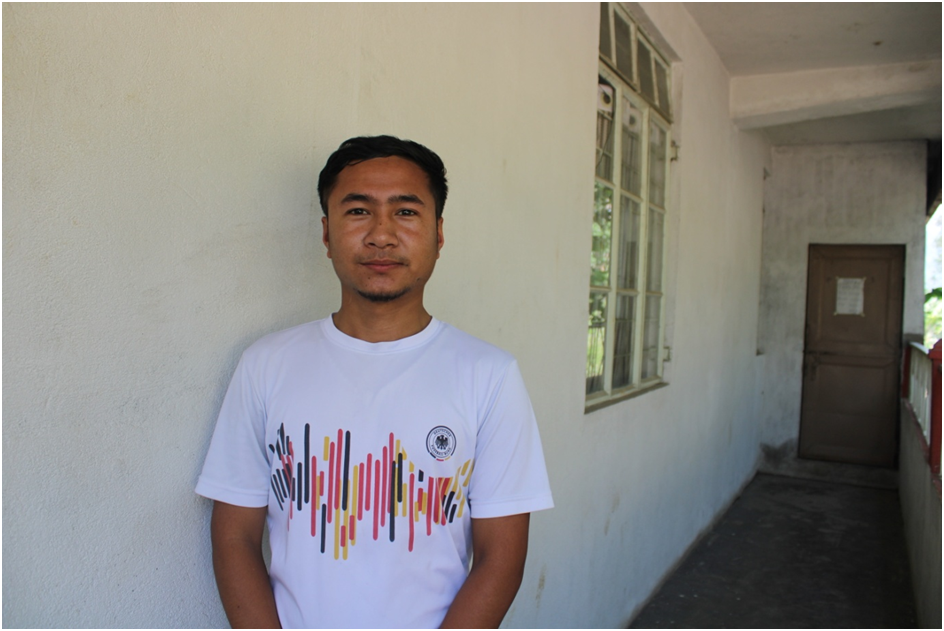
My Village ‘Umsarang’ is blessed to have been a part of CLLMP,a project funded by the World Bank.The sense of responsibility and stewardship towards natural resources that I have developed through CLLMP is crucial for building a sustainable and resilient community. My dedication to protecting Mother Nature is not only essential for my village's well-being but also contributes to the broader efforts in environmental conservation and addressing global challenges like climate change.
By equipping myself with valuable insights and tools, I have taken on a crucial role in guiding and supporting the VNMRCS members and the entire community. My ability to make informed decisions and advocate for practices that protect and preserve the environment is vital in ensuring the well-being of the village and leaving a positive impact on future generations.
The personal growth I have experienced through this journey is invaluable. As an Environment and GIS VCF my professional skills, my contribution to sustainable development becomes even more effective and impactful. My deeper connection and appreciation for the environment are powerful drivers in my pursuit to actively contribute to the conservation and sustainable use of natural resources.
The challenges I faced along this journey are a testament to my resilience and determination to make a difference. It's through overcoming obstacles and learning from experiences that true progress is made.
My commitment to continuing this journey and supporting the VNMRC reflects my dedication to creating a better, healthier, and more sustainable future for my village and beyond. My efforts will undoubtedly inspire others to follow a similar path and contribute to safeguarding our mother nature.
The CLLMP project and the positive impact within the community exemplify the power of community-driven initiatives in achieving sustainable development and environmental conservation. As I strive for a more prosperous future, I play a crucial role in shaping a better world for generations to come. Keep up the excellent work, and may my efforts continue to inspire positive change in my village and beyond.